Tag Archives: God’s Kingdom

The Inflection Point

The Inflection Point (CaD Mk 8) Wayfarer

[Jesus] then began to teach them that the Son of Man must suffer many things and be rejected by the elders, the chief priests and the teachers of the law, and that he must be killed and after three days rise again. He spoke plainly about this, and Peter took him aside and began to rebuke him.

But when Jesus turned and looked at his disciples, he rebuked Peter. “Get behind me, Satan!” he said. “You do not have in mind the concerns of God, but merely human concerns.”

Mark 8:31-33 (NIV)

Inflection point has become a buzzword in business during my career. And, it’s often misunderstood. The inflection point is the point on a line where the line changes its sign. It’s when the curve of that line reveals a shift of direction. When it ultimately shifts direction, that’s called the “turning point.” The turning point happens later. The inflection point is the subtle shift that precedes the turning point. If you see the inflection point, you can predict the turning point.

When the moving line turns red, that’s the inflection point.

In today’s chapter, the narrative of Mark’s version of Jesus’ story hits an inflection point. The majority of the first eight chapters is an endless stream of miracles, wonders, and exorcisms seasoned with Jesus parables and teachings. It has been all about Jesus interacting with people’s lives in this world. He’s feeding hungry people, healing sick people, delivering possessed people, and teaching people spiritual principles of God’s kingdom in contrast to the human religious system controlling most of their lives.

Out of the blue, Jesus tells his followers quite plainly that He will be rejected by the religious power-brokers in Jerusalem, He will be killed, and then in three days He will rise from the dead. We’re just half-way through Mark’s biography of Jesus and Jesus let’s fly with the greatest spoiler of all time without once issuing his listeners a Spoiler Alert.

This event is a narrative inflection point. From this point forward, Mark’s version of events will drive towards the very events Jesus predicts.

What really resonated in my heart and mind this morning was Peter’s reaction. Upon hearing Jesus explain the end game of His mission on earth, Peter pulls the master aside and “rebukes” Him. In the quiet, I imagined what Peter’s rebuke might have been…

“You can’t die! We’re just getting started!”

“The twelve of us have left everything to follow you assuming this was a long-term gig! How are we going to retire if you leave us in the lurch?”

“Jesus, dude, you’ve got what it takes to ride this wave all the way to the throne. With your powers and the people behind you, there’s nothing that can stop you from ruling the world!”

“Look! Your parables and stories are confusing, but they’re great. People love them. The miracles and the free fish sandwiches, that’s what the people want. If you go off-message and start tweeting about your death like some crazy-man, it’s over. You’ll lose your momentum. These people will stop following you. Then where will we be?”

He’ll be right where the powerful men atop the human religious racket can arrest Him, usher Him through their kangaroo court, and leverage their local power to convince Rome to execute this threat to all that they care about.

He’ll be right where He just predicted He’d end up.

It struck me this morning that this is more than just an inflection point in the storyline. This is also a spiritual inflection point in Jesus’ teaching.

I am so focused on this life. I am so concerned with my immediate circumstances. Virtually every moment of my day is concentrated on my place in this world. My time, energy, and resources are spent trying to make this earthly life last as long as possible (even if it ends up being no Life at all). I do all that I can not to think about death, talk about death, or consider the undeniable truth that my body is going to die.

“You’re right, Tom,” Jesus says through the text of today’s chapter. “Thanks for being honest. Because that is what needs to change. That is the inflection point…

“Anyone who intends to come with me has to let me lead. You’re not in the driver’s seat; I am. Don’t run from suffering; embrace it. Follow me and I’ll show you how. Self-help is no help at all. Self-sacrifice is the way, my way, to saving yourself, your true self. What good would it do to get everything you want and lose you, the real you? What could you ever trade your soul for?”
Mark 8:34-37 (MSG)

If I follow Jesus at this inflection point, then down the road a whole bunch of turning points in my words, decisions, actions, and relationships will reveal themselves. Consider Peter. It’s at Cornelius’ house in Acts 10 that the turning point is revealed.

In the quiet this morning, I find myself contemplating this spiritual inflection point at which Jesus asks me to consider God’s eternal Kingdom more real than this physical life, more important than the things of this world, more valuable than anything this life could afford.

This is also a point of tension. It doesn’t mean that I ignore this life, coast through this journey, live as if nothing on earth matters. It does! It matters enough for Jesus to come and do exactly as He predicted. The spiritual inflection point gets down to the motives at the core of my being.

What is it I want?

What is it I’m living for?

What does my head answer? What does my heart answer?

If there is ultimately no evidence of a turning point on my calendar, on my credit card statement, and on my task list, then the truth is that I missed the inflection point.

If you know anyone who might be encouraged by today’s post, please share.

A Good Day

Then James and John, the sons of Zebedee, came to him. “Teacher,” they said, “we want you to do for us whatever we ask.”
Mark 10:35 (NIV)

Every parent knows a set-up question when they hear it.

“Dad? I’m going to ask you something and you have to answer ‘yes.'”

“Mom? Haven’t I been really, really good this week?”

The set-up question is intended to get the desired answer from the real question. I remember being a young boy playing this game in my prayers with God. If I wanted the Vikings to win the game or my older brothers girlfriends to simply “stop by” our house (they always doted on me, and I loved it), then I would barter with the Almighty to get my wish. I might make the case for my good behavior to have been good enough to “earn” what it is I wanted. I might have promised all sorts of obedient services I could render on the back-end of my fulfilled wish should my Genie-God grant my self-centered request.

Obviously, as a young boy, I had a lot to learn about God, prayer, the Great Story, and my role in it. I’m grateful that God is eternally patient and faithful.

In today’s chapter, I found my lesson wrapped in the layout of events that Mark includes as Jesus prepares to enter Jerusalem for the climactic week of His earthly sojourn.

First, Jesus sends a rich, young man away sad because the man was unwilling to do the one thing that stood between him and God: sell everything he owned and give it to the poor. In the post-event discussion with His followers, Jesus reminds them that in the economy of God’s Kingdom (the real one, not the false one that the institutional church created for 1700 years) “the first will be last and the last will be first.”

The very next thing, Jesus tells #TheTwelve for the third time exactly what’s going to happen:

“We are going up to Jerusalem and the Son of Man will be delivered over to the chief priests and the teachers of the law. They will condemn him to death and will hand him over to the Gentiles, who will mock him and spit on him, flog him and kill him. Three days later he will rise.”

Sometimes I’ve noticed that the chapter breaks and headings that modern scholars have introduced into the text keep me from seeing the flow and connections between pieces of the story. Today was a great example. Jesus reminds the disciples that the first will be last, and then He gives them the ultimate example: I, the miracle-working Son of God who heals, frees, feeds, and raises people from the dead, am going to submit myself to suffer and die in order to redeem all things.

What happens next?

James and John come to Jesus with a “set-up question!”

“Um, Jesus? We want you to promise to do whatever it is we’re about to ask you.”

What was the question? They were looking out for numero uno. If Jesus was going to die, then the brothers Zebedee just wanted to tie up some loose ends. They wanted to make sure that their eternal future was secure. They wanted to ink the deal with Jesus, once and for all, to make sure they ended up “Top Dog” on the heavenly food chain.

I can hear the echo of Jesus’ words from what seems like every single chapter I’ve read the past two weeks: “Do you still not understand?”

For the record, James and John got about as far as I did with the Vikings winning the Super Bowl.

In the quiet, on this Good Friday morning, I am reminded of all the ways I have cast myself in the role of James and John. It might have been cloaked in religious set-up questions, bartered goodness, and the economics of a worldly institutional kingdom dressed in religious robes. The truth is what I’ve been quietly contemplating this week. In so many ways, I know that I still don’t completely get it.

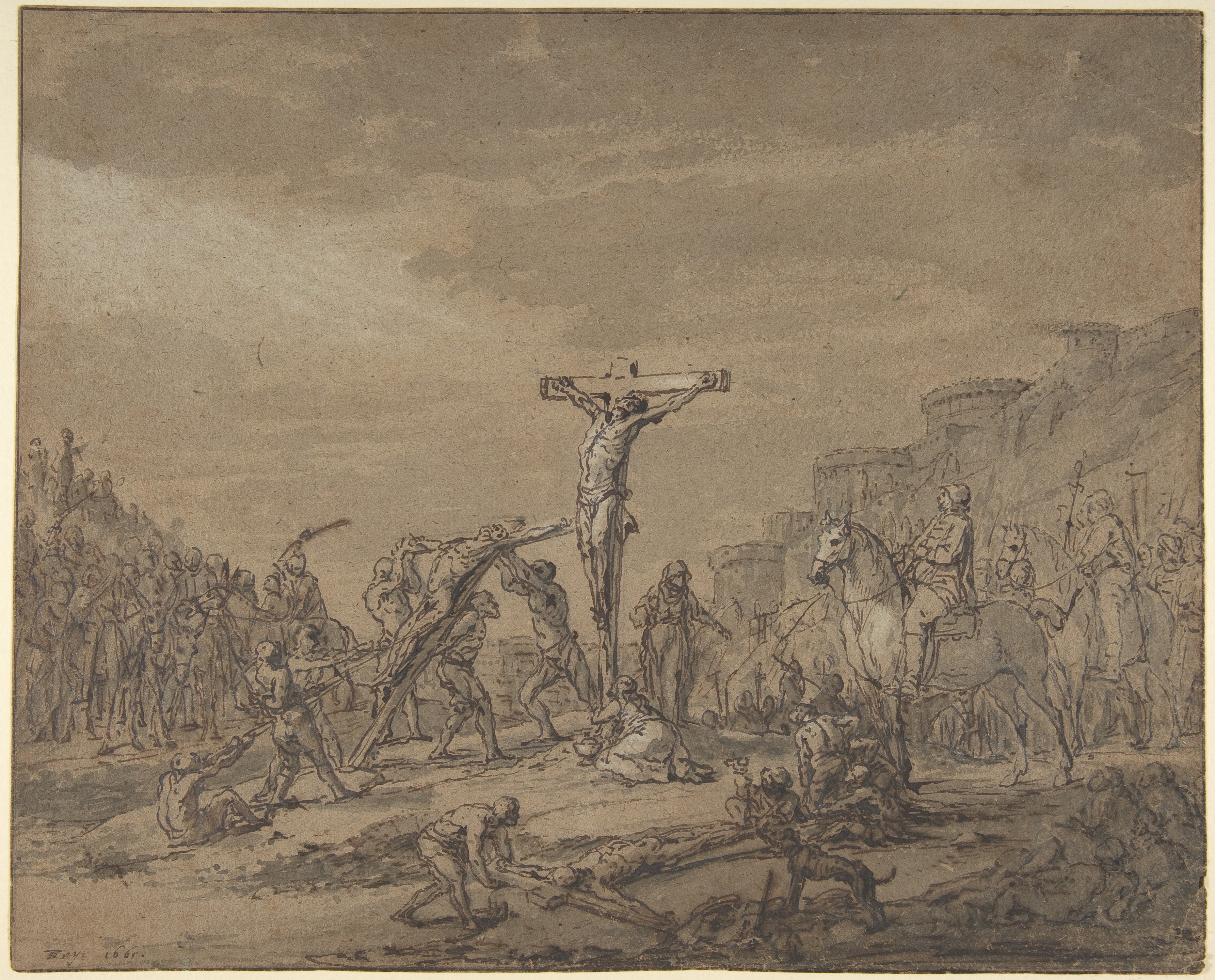
Good Friday. The secret trials. The kangaroo court. The beatings. The mocking. The jeering. The crowd screaming for blood. The scourging. The nails driven into wrists and feet. The hanging naked on a cross as public spectacle; Naked, bleeding and losing control of his bodily functions in front of His own mother. And, as He hangs there between heaven and earth on the cusp of death…

Making sure his mother will be cared for.

Forgiving His executioners.

Extending grace to a confessed and convicted thief.

“The first shall be last. If you want to be the greatest, you must become the servant of all.”

A good day to open my head and heart to continue understanding, to continue getting it, and continuing to let it change me.

A Very Different Economy

paycheck
paycheck (Photo credit: owaief89)

Chapter-a-Day Genesis 15

And Abram believed the Lord, and the Lord counted him as righteous because of his faith. Genesis 15:6 (NLT)

We live in a world where credit is earned. We work. We put in our time. We show up. We do the job. We are then credited for what we’ve earned. There is usually a direct line connecting our effort to our paycheck. If we do this job we earn this much money. Most of us are even given credit to receive an advance of money we haven’t earned if we want to purchase something for which we don’t have the money right now. If we handle that advance correctly, we earn a higher credit score and the ability to borrow even more money. It is a simple concept. You work to earn an income. You are merited for what you do.

No wonder it is so hard for us to grasp the very different economic system of God’s Kingdom. The verse above is one of the cornerstones of Kingdom Economics. Righteousness in God’s economy is not earned by what we do, but credited for our faith and trust in the Provider [read the fourth chapter of Paul’s letter to the Romans for more explanation]. It’s called grace. It is being given favor that is unearned or unmerited in any way. Our lives and good works are not to be motivated in an effort to earn God’s favor. In Kingdom Economics, our motivation to do good things is out of a sense of gratitude for God’s favor which we have already received and didn’t do anything to earn.

Today, I’m thinking about my life. I don’t want to just understand the concept of grace, but embrace it and live it out in my daily thoughts, words, and actions.