Tag Archives: Trust

Due Time

Humble yourselves, therefore, under God’s mighty hand, that he may lift you up in due time.
1 Peter 5:6 (NIV)

I sat at the local pub one afternoon journaling. Without warning a thunderstorm of ideas rolled in. I began thinking about all of the life lessons I have gained as a result of my career.

Customer complaints are rarely about the complaint.
Systems shape souls.”
Everyone wants to make rules out of exceptions.”

If you had told me when I was a teenager that I would spend over three decades of my life analyzing tens of thousands of business interactions between clients and their customers I would have invited you to go take a long walk off a short pier. That would have been among the last things on this earth I would want to spend my life doing. Besides, I had my entire life dream planned out.

College. Seminary. Pastoral ministry. Preacher. Author.

God had other plans.

Over 100,000 business phone calls, emails, and chats analyzed. Customer research.
Front-line coaching and training.
Executive strategy sessions.

I was good at it. My gifts and abilities dove-tailed perfectly with the job.

There I sat at the bar writing down all of the lessons I’d learned on this, long, strange trip I called a career. Not just business lessons. Life lessons. Spiritual lessons. Lessons about relationships and human interaction. Lessons about systems that apply universally across humanity. They poured right out of me onto the pages of my journal.

When the storm receded I looked at the list. This was the foundational content of a book. I just knew it.

That was well over a decade ago. The idea sat quietly in my journal for years. It wasn’t forgotten. I thought about it all the time. I even had one occasion in which I spoke seriously with a publisher about it, but the opportunity wasn’t right.

I waited. And, I waited.

My soul aches when I have to sit on a great idea.

Last May I was invited to a Zoom networking meeting with a man named Michael through another networking contact I know in Puerto Rico. I have these kinds of networking meetings all the time. You never know who you’re going to meet. I scheduled the meeting with Michael. I had no idea what he did.

As Michael began sharing his story, something funny happened. I discovered right up front that Michael was a believer. He and his wife had spent years working for a ministry I knew very well. I had a former employer who worked for the same ministry. Our stories were eerily similar.

We both chased ministry.
We both tasted disappointment.
God had rerouted both of us into business.

Michael became a publisher of books about business.

In today’s final chapter of Peter’s first letter, Peter tells his readers to humble themselves before God. I often think of humility as an attitude, but Peter speaks of it as being an action to be taken. Humility isn’t thinking lowly of myself, it’s placing myself willingly under God’s hand.

I’ve learned along my journey that humbling myself before God is really all about surrender.

“Whatever you want from me God.”
“I surrender my will as I embrace and pursue the passions you gave me.”
“I will continually ask, seek, and knock as I press on one day at a time.”

Approaching life with this posture, Peter writes that God “may lift you up in due time.”

Which means that humbling myself before God also requires that I trust God’s timing.

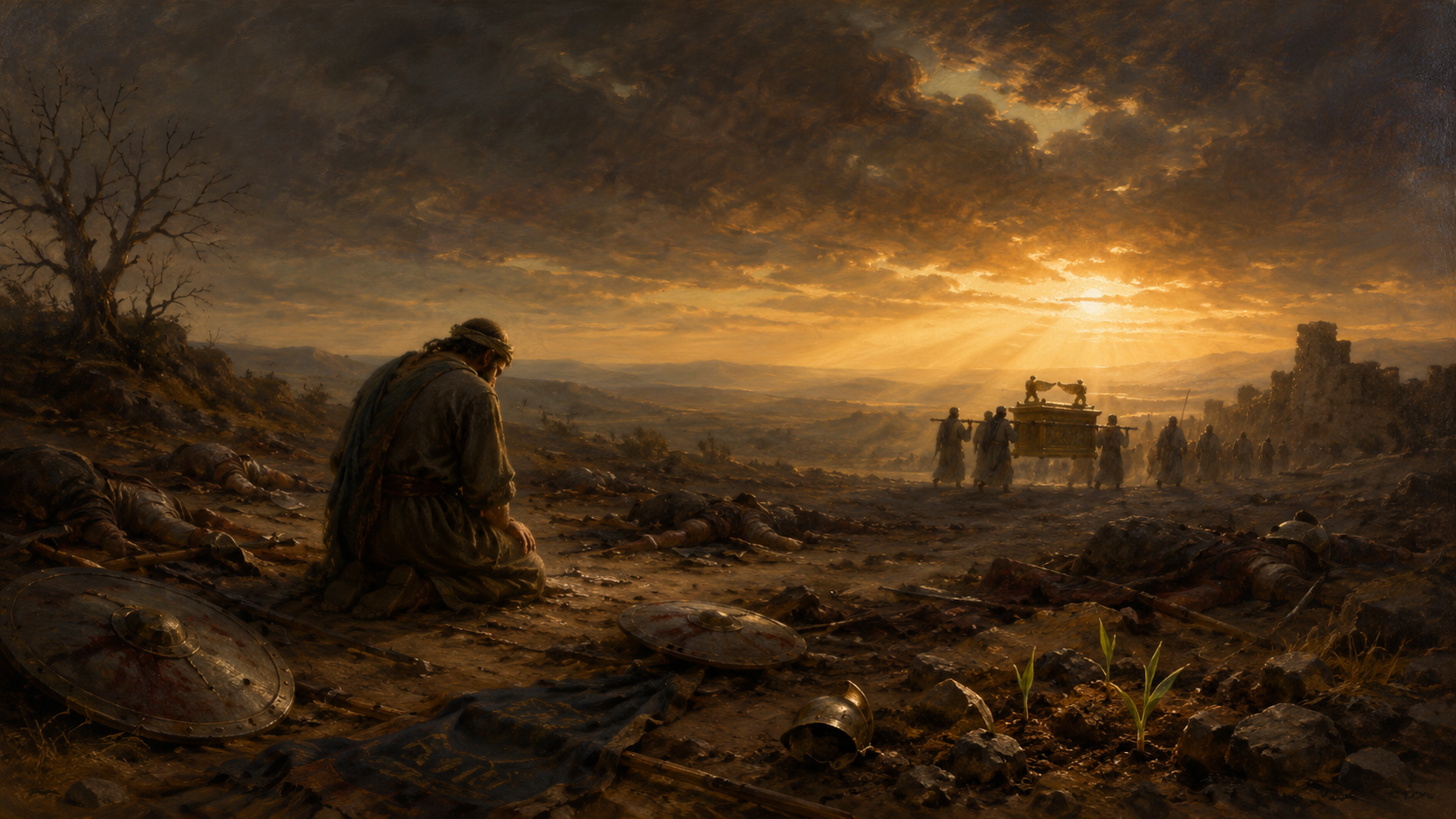
In a brainstorm at the pub God gave me the seeds of a book.
Then He buried it in the soil of time for over a decade

But that didn’t mean it was dead. I thought about it. The lessons marinated in my mind and soul. I added lessons to the list. I continued to make mental and spiritual connections.

The seeds germinated.

They grew roots.

Then one day I had a random Zoom meeting with a man name Michael.

The fruit will be available for you to taste in just a few weeks when the book is published.

I have learned along life’s road that there is a timing to the Story that God is authoring in me.

If I’m going to trust the Story. I have to trust His timing.

If you know anyone who might be encouraged by today’s post, please share.

Promotional graphic for Tom Vander Well's Wayfarer blog and podcast, featuring icons of various podcast platforms with a photo of Tom Vander Well.
These chapter-a-day blog posts are also available via podcast on all major podcast platforms including Apple, Google, and Spotify! Simply go to your podcast platform and search for “Wayfarer Tom Vander Well.” If it’s not on your platform, please let me know!
An orange square icon featuring an open book illustration in white outline.

A Land That Drinks Rain

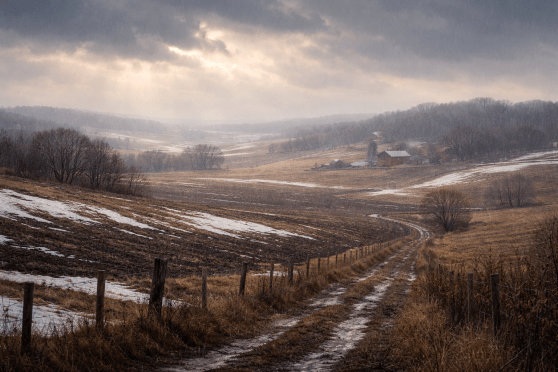
The land you are entering to take over is not like the land of Egypt, from which you have come, where you planted your seed and irrigated it by foot as in a vegetable garden. But the land you are crossing the Jordan to take possession of is a land of mountains and valleys that drinks rain from heaven.
Deuteronomy 11:10-11 (NIV)

It’s not even Christmas and our driveway has required shoveling more times already than a few entire winters of recent memory. Last weekend Wendy and I were driving through a snow storm.

“Well, the farmers will be happy,” Wendy said.

That is such an Iowa thing to say. When you live in a state that drives nearly $50 billion dollars in annual revenue from crop production, agriculture is always part of the conversation. But for children of Iowa, it’s more than just money. We know that the fertile fields of Iowa feed the world. Closer to home and hearth, we know that farming is the life-blood and legacy of families.

Growing up in Iowa, you quickly learn that weather isn’t just about comfort or recreation, it’s an essential element of life, provision, and prosperity.

On a macro level, Moses’ words to the Hebrews crossing into the Promised Land in today’s chapter are about the blessings of love, legacy, and loyalty contrasted with the curses of apathy, forgetfulness, and hearts that wander. Right in the middle of the chapter (ancient Hebrew writers loved to put the most important bits in the center of the text), is a fascinating reference. Meteorology as metaphor: rain.

Back in Egypt, Moses reminds his people, water had to be industrially stored and channeled. Irrigation systems required. Humans digging, tunneling, manufacturing ways to make water work for them—that’s human empire. Human ingenuity finding ways to do what God does naturally by divine means. Humans have been doing that since the Tower of Babel.

The Promised Land, Moses tells his children, is God’s country. It is a land God Himself waters with rain from heaven. Rain is God’s blessing on the land and the people. God’s blessing, however, requires…

Faith, not function
Trust, not contraptions
Love, not labor.

This is God through Moses laying another layer of metaphor to lovingly communicate what He’s been saying all along. I’ve chosen and called you to be different than this world and the kingdoms of this world. Not because you deserve it or earned it but because of my love, grace, and mercy. Love me, trust me, follow me and rain will fall from heaven and you will be blessed with abundance and prosperity you can scarcely imagine.

Then comes the hard side of love. It isn’t punishment, it’s consequence.

There is a consequence, a curse, that comes if love, trust, and fidelity fade and fail. The skies close up. Drought conditions set in. At some point things resort back to the function, labor, and contraptions. When that happens, God’s people will be just like all the other kingdoms of this world.

The message I found flowing through the chapter in the quiet this morning was that the danger is not rebellion or disobedience. The danger is forgetting. Moses’ mantra thus far in his deathbed message has been the steady rhythmic beat of Zakhor: remember, remember, remember. Remembering what God has done is the crucial first step and activating ingredient in Life and blessing. Forgetting leads down a very different path.

“Believe me,” Moses urges his children, “you don’t want to go there.”

In a little divine wink, I’ve been hearing waves of heavy rain hitting the window of my office as I’ve been writing these words. I pulled up the radar. It’s a chilly Iowa winter morning, but well above freezing. A heavy rain is melting the snow from last weekend’s storm and soaking the slumbering earth.

In coffee shops all over Iowa, farmers sitting patiently through the death of winter and looking to the promise of Spring are smiling. A soaking winter rain. It’s a good thing. Gotta love it. But, it’s not a guarantee. Gotta have faith, too. Spring is still a long season away.

Rain is a gift.
So is remembering.
And faith, like spring, is something we wait for—but also something for which we prepare.

If you know anyone who might be encouraged by today’s post, please share.

Promotional graphic for Tom Vander Well's Wayfarer blog and podcast, featuring icons of various podcast platforms with a photo of Tom Vander Well.
These chapter-a-day blog posts are also available via podcast on all major podcast platforms including Apple, Google, and Spotify! Simply go to your podcast platform and search for “Wayfarer Tom Vander Well.” If it’s not on your platform, please let me know!
Spotify logo with an orange background and an open book icon, representing the listening platform.

What’s In a Name?

For you are a people holy to the Lord your God. The Lord your God has chosen you out of all the peoples on the face of the earth to be his people, his treasured possession.
Deuteronomy 7:6 (NIV)

One of the things I love about living in a small town is being known. I love walking into a restaurant, a coffee shop, or the pub and being greeted by name. I suppose some people like to be anonymous, but research consistently shows that most of us truly want to know and be known. And the beginning of that relational journey is simply knowing one another by name.

The subject of names has been surfacing a lot in my conversations of late. My local gathering of Jesus’ followers is working on a short-term initiative intended to help people learn one another’s names. I just read a fantastic article about the neuroscience that proves just how powerful using a person’s name truly is. I talk about it in business all of the time as I deliver customer service training.

One of the things that I have learned about name-use over the years is that the deeper and more intimate the relationship the more likely we are to create nicknames and pet names for one another. Conversely, as relationships break down and marriages move toward divorce we stop using one another’s names and revert to using pronouns or impersonal descriptors like “my children’s mother.” Wendy is “my treasure.” From the very beginning of our relationship, it’s been a special moniker that is hers and only hers. Between the two of us it is a sign of affection, devotion, honor, and fidelity.

Today’s chapter is one of those chapters that is misunderstood in modern cultural context. It’s a love letter disguised as a battle plan. God reminds Israel that their chosenness isn’t about muscle or merit, but about affection and fidelity. They are to enter the land clear-eyed and clear-hearted—no half-measures, no flirtations with rival gods. Destruction of idols isn’t cruelty; it’s fidelity therapy.

God promises protection, fruitfulness, and flourishing—not as wages earned, but as the natural overflow of covenant intimacy. Obedience here is not stiff-backed compliance; it’s trust leaning its full weight into the arms of a faithful Lover.

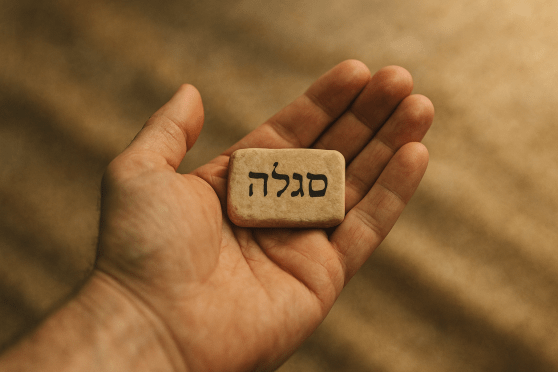
In Jewish tradition, Deuteronomy 7 is foundational for the concept of segulah—Israel as God’s treasured possession (v.6). This chosenness is not superiority; it is purpose and calling. Israel is set apart for something: to bear God’s name and reveal Him and His character in the world.

This covenant love is a foreshadowing of Jesus, who loved the world so much that He left heaven behind and became one of us. He treasured us so much that He suffered and died to pay the penalty for our sin. Then He called us to bear witness of God’s Kingdom through our love of Him and others.

The contrast could not be clearer.

The world chooses powerful.
God prefers the weak.
The world finds security in big numbers.
God prefers faith in a few.
The world indulges in surface sensual appetites.
God prescribes deep, exclusive and intimate relationship.
The world values self-centered personal ambition.
God values faithfully putting others ahead of ourselves.

In both today’s chapter and Jesus’ example, it is God who loves first. It is God who makes the covenant. It is God who promises fidelity, provision, protection, and blessing. We are the object of His love and affection.

We are His treasure.

He whispers, “My life for yours.”

When God speaks of loving His people in verses 7 and 8, the Hebrew word is ‘ahav. It is not a giddy infatuation, it’s a choice and a volitional act. In verse 9 God’s ‘ahav blesses a thousand generations of those who ‘ahav Him. God’s love invites reciprocity. Not because it needs it, but because it awakens it. And notice: God’s covenant loyalty flows toward those who love him—not as payment, but as shared intimacy.

This is mutual devotion, not transactional obedience.

In the quiet this morning, I’m reminded that God says that those who choose to follow have their names written in the Book of Life. My name is there. God knows my name. But today’s chapter reminds me that my name being written in the Book of Life is far more than just a “Hello My Name Is” name tag knowledge. That’s just the record like Wendy’s and my marriage certificate in the safe downstairs. I am God’s “treasure.” He gave His life that I might live. That kind of love awakens love in me.

Less Hallmark card, more keeping marriage vows at 3 a.m.

If you know anyone who might be encouraged by today’s post, please share.

Promotional graphic for Tom Vander Well's Wayfarer blog and podcast, featuring icons of various podcast platforms with a photo of Tom Vander Well.
These chapter-a-day blog posts are also available via podcast on all major podcast platforms including Apple, Google, and Spotify! Simply go to your podcast platform and search for “Wayfarer Tom Vander Well.” If it’s not on your platform, please let me know!
Logo of Bible Gateway featuring an open book icon in orange and white.

Prayer, Providence, & Planning

The king [Artaxerxes] said to me, “What is it you want?”
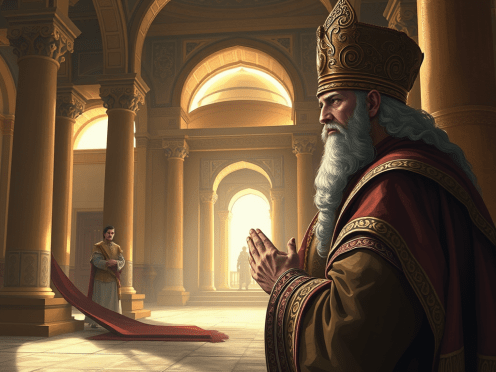
Then I prayed to the God of heaven, and I answered the king, “If it pleases the king and if your servant has found favor in his sight, let him send me to the city in Judah where my ancestors are buried so that I can rebuild it.”

Nehemiah 2:4-5 (NIV)

In the past few weeks I’ve mentioned that I’m currently writing a book. I’ve been getting up at 5:00 a.m. every morning to write for at least an hour when my heart and mind are fresh. The process consumes a lot of my time and thought right now, so forgive me if it bleeds into my daily quiet time, meditations, and blogposts/podcasts.

The idea for this book struck me about 15 years ago. In fact it was ten or twelve years ago that I sat down and outlined the guts of the book in my journal while I was enjoying a pint at the local pub. There in my journal it sat for over a decade. I thought about it often. I prayed that I might have an opportunity to make it a reality. I even reached out to a few publishers over the years. Nothing flowed.

Earlier this year there was a major shift and transition in our business. Many things got realigned. During that period of time I had a random networking contact who happened to be a publisher. I can’t even describe how everything in life aligned. This was the moment. It’s finally happening. God’s timing is perfect.

In today’s chapter, it’s been months since Nehemiah got word about the dire situation in Jerusalem. He’s been grieving and praying. There’s not much that Nehemiah can do about Jerusalem. He’s the right-hand advisor to the Persian emperor. The job doesn’t come with vacation time or PTO. In fact, just having a bad hair day was not allowed in that role and in that culture. When King Artaxerxes notices that Nehemiah is downcast, it could have been a life-threatening moment. Instead, it was a moment of divine providence.

Nehemiah throws up a quick popcorn prayer and shoots straight with Artaxerxes about why his face is downcast. Artaxerxes could have had Nehemiah killed for presuming to lay his burdens on the emperor. The whole matter could have been simply dismissed and Nehemiah could have been instructed to change his attitude, or else. Instead, Artaxerxes asks Nehemiah what might be done about his ancestral home of Jerusalem.

Nehemiah makes an audacious request for time-off, letters of safe passage, and building materials required to rebuild the walls and gates of Jerusalem. Artaxerxes agrees.

Along my life journey, I’ve learned that there is a certain flow to the story God is authoring in me. There is also a certain tension in trusting that story. If I’m passive and don’t prayerfully pay attention, then I totally miss out on what God’s doing. If I strive to try and make things happen, then I get in the way and muck up the works. When I pray, wait, and pay attention, trusting for God’s providence and timing, then at the right time everything flows.

Nehemiah is a great example of the same paradigm. He spent months praying about Jerusalem and what he might be able to do to help. He obviously had even been planning what he ideally might need and how he might go about the project if he was given the chance. Then, he waited. He trusted. God’s providence finally flowed and the planning kicked into gear.

In the quiet this morning, I’m reminded that on this journey I should never stop praying, never stop planning, and never stop paying attention. The hardest part is often waiting for God’s providence. But when it flows, and all the praying and planning fall into place, there’s no doubt that God is at work and I am in the midst of it.

If you know anyone who might be encouraged by today’s post, please share.

Promotional graphic for Tom Vander Well's Wayfarer blog and podcast, featuring icons of various podcast platforms with a photo of Tom Vander Well.
These chapter-a-day blog posts are also available via podcast on all major podcast platforms including Apple, Google, and Spotify! Simply go to your podcast platform and search for “Wayfarer Tom Vander Well.” If it’s not on your platform, please let me know!
Logo of a Bible study app featuring an open book icon in white on an orange background.

The Adopted One

Then Caleb silenced the people before Moses and said, “We should go up and take possession of the land, for we can certainly do it.”
Numbers 13:30 (NIV)

Just a month or two ago Wendy and I watched the Paramount Plus series Mobland starring Pierce Brosnan and Helen Mirren. It is a classic epic story of a mob family, this time set in the UK. It is gritty and raw like most mob family epics. One of the main characters in the film is played by Tom Hardy, who is not a biological son, but a fiercely loyal “fixer” who in many ways is more stable and trusted by the father than any of his biological children.

The theme of the adopted son is familiar. In The Godfather it was an Irish orphan named Tom Hagen who becomes the Godfather’s consigliere and fixer. In Yellowstone, it’s an orphan named Rip who becomes the right-hand man that John Dutton can depend on to fix things. Coincidentally, The Godfather, Yellowstone, and Mobland are all produced by Paramount. They know a successful storytelling formula when they see it.

The theme of the adopted one is much older, however. It’s ancient, and it has a deep spiritual context throughout the Great Story. In fact, in today’s chapter it is hiding in plain sight.

Ancient people groups were tribal by nature, and the Hebrews tribes were no different. It carried on through the centuries. The greatest struggle of the Jesus Movement after Jesus’ resurrection and ascension was the inclusion of non-Jewish believers, or Gentiles, into the flock of believers. It was so conflictive that it sparked terrible persecution. Jesus stood against His own people’s prejudice and persecution of those who didn’t belong to the tribe, and told His disciples, “I have other sheep that are not of this sheep pen. I must bring them also. They too will listen to my voice, and there shall be one flock and one shepherd.”

In today’s chapter, the Hebrews are already at the boundary of the land of Canaan, the land God promised to His people. They send 12 spies into the land to check things out. The tribe of Judah sends a man name Caleb. Caleb was a son of “Jephunneh the Kenizzite.” The Kennizite tribe were Edomites who were descendants of Esau, the impetuous and deceived brother of Jacob. Caleb was not a descendant of Jacob. Caleb didn’t belong to the tribe of Judah by blood. Caleb was adopted into the tribe.

When the spies return to report that the Promised Land was a land of plenty but that the people groups living there were large and intimidating, most of the spies said that they shouldn’t go in and take the land. Only Joshua, Moses’ chosen right-hand man, and Caleb the adopted one, who have the faith to suggest they move into the land immediately and trust God’s promise.

That’s the theme of the adopted one like Tom Hagen, Rip, and Tom Hardy’s character, Harry. Technically, they don’t belong to the family. They are hopeless orphans and outcasts who have been graciously adopted into the family. They see things from a different perspective than the rest of the family. They become gratefully loyal to the father. Caleb fits right in there, especially given that he is adopted by the tribe of Judah from which both King David and Jesus will spring.

But the theme of the adopted one flows spiritually to every believer. Paul, who was born into the Hebrew tribe of Benjamin and was at one time fiercely prejudiced against all non-Hebrews and the “blood traitors” of the Jesus Movement who welcomed Gentiles as equals. Paul, having met Jesus on the road to Damascus, learned what Jesus was doing. He saw the sheep of the other pen that Jesus had talked about. He became the most outspoken evangelist to those outside the tribe. And he was always writing about adoption.

For those who are led by the Spirit of God are the children of God. The Spirit you received does not make you slaves, so that you live in fear again; rather, the Spirit you received brought about your adoption to sonship. And by him we cry, “Abba, Father.”The Spirit himself testifies with our spirit that we are God’s children.
Romans 8:14-15 (NIV)

Paul’s extensive education also gave him the understanding that the adoption was not just non-Jewish Gentiles. The reality is that even the Jewish people were descendants of Abraham, with whom God graciously chose to make a covenant. Jew or Gentile, all believers are sinful outcasts and orphans in this fallen world, graciously adopted as children of the Heavenly Father through the grace and mercy of Jesus’ sacrifice.

As I meditate on the theme of the adopted one, it strikes me that this ancient theme resonates so deeply in us that Hollywood continues to tap it in their story-telling. I have observed along my spiritual journey that those believers who fully understand and acknowledge their own depravity, sinfulness, and shame become the most loyal and trusting of God. Those who approach faith with the smug self-righteousness and sense of privilege of the biological children tend to miss the point entirely. In fact, it was those smug, self-righteous, privileged children who murdered God’s own Son.

So, in the quiet this morning I find myself grateful to have been among the adopted ones. I am grateful for God’s grace. I didn’t earn a thing. I didn’t deserve a thing. I was graciously adopted into the family. Not only that, but I was made a co-heir with Jesus. As Paul continues in Romans 8:

The Spirit himself testifies with our spirit that we are God’s children. Now if we are children, then we are heirs—heirs of God and co-heirs with Christ, if indeed we share in his sufferings in order that we may also share in his glory.
Romans 8:16-18 (NIV)

The more deeply I absorb this, the more grateful I become, and the more it motivates me to be faith-fully obedient to anything and everything Father God asks of me.

I am the adopted one.

If you know anyone who might be encouraged by today’s post, please share.

Promotional graphic for Tom Vander Well's Wayfarer blog and podcast, featuring icons of various podcast platforms with a photo of Tom Vander Well.
These chapter-a-day blog posts are also available via podcast on all major podcast platforms including Apple, Google, and Spotify! Simply go to your podcast platform and search for “Wayfarer Tom Vander Well.” If it’s not on your platform, please let me know!
An illustration representing the biblical passage of Caleb encouraging the Israelites to take possession of the Promised Land.

The Shift

The rabble with them began to crave other food, and again the Israelites started wailing and said, “If only we had meat to eat!
Numbers 11:4 (NIV)

There is a classic family video of when the girls were toddlers. One of their favorite toys were Polly Pockets, tiny plastic dolls that came with their own little pocket-sized doll houses. The girls want to take their Polly Pockets to bed with them, and I wouldn’t let them because they were a choking hazard. Oh, my goodness. Complete and utter emotional breakdown. So much so, that I just had to grab the video camera and video tape the moment. It is etched in my memory and ever reminds me of life’s meltdown moments.

Along my life journey, I’ve come to observe that adults have similar emotional meltdowns as toddlers, we’re just more sophisticated at it. In fact, as I meditate on it I can think of at least two full-blown adult emotional meltdowns I’ve witnessed in the past two week. One was a meltdown into rage and anger, the other into fear, anxiety, and despair.

Today’s chapter marks a major shift in the book of Numbers and establishes a recurring theme through the rest of the book. To this point, the text has continually presented the Hebrew tribes as compliant and obedient to whatever God asked of them through Moses. Today’s chapter starts with the people complaining generally about their hardships, as if it’s overwhelming public sentiment in the camp. Then it’s rabble, or a smaller group of disgruntled people with a specific complaint about God not providing an expansive enough menu. The incessant whining sends Moses, like the parent of obstinate toddlers, into his own full “I can’t do this anymore” meltdown of complaints to the Almighty.

As I think back to being both a parent and a leader in business, community, and church, all I can say is, “Yep. Been there. Done that.”

I have also noticed along my life journey that we love to pick and choose certain verses to demand literal obedience, typically those that have to do with morality like not getting drunk on wine, or ritual like keeping the Sabbath holy. But then there are verses like “greet one another with a holy kiss” that we conveniently ignore.

One of the verses that I don’t think I’ve ever heard addressed in a sermon on Sunday is from Paul’s letter to the Philippians that we just trekked through on this chapter-a-day journey a few weeks ago. Paul writes:

“Do everything without grumbling or arguing…
Philippians 2:14 (NIV)

In the quiet this morning, it occurs to me that it’s very easy for me to think of examples both current and past in which I’ve had to endure the whining, complaining, grumbling, and arguing of others. If there’s anyone I identify with in the chapter this morning, it’s Moses. That said, I recognize that it’s easy for me to point the finger at others and ignore the three fingers pointing back at me.

Have I grumbled about anything or anyone in recent days?
Yes.
Have I been discontent with current circumstances or lot in life?
Yes.
Have I said things or acted out of either my complaints or discontent in ways that weren’t productive or conducive to building others up?
Yep.

Mea culpa.


As I head into this, another work week, today’s chapter is a good reminder about attitude, gratitude, and contentment. The Hebrews shifted from contentment and obedience to grumbling and complaining, and my observation is that this is a really easy shift for me to mindlessly make in my own heart, head, emotions, words, and behavior. The shift back to contentment and obedience requires discipline, contentment, and trust.

“Do everything without grumbling or arguing…

Lord, help me not ignore that one, and learn to trust You more.

If you know anyone who might be encouraged by today’s post, please share.

Promotional graphic for Tom Vander Well's Wayfarer blog and podcast, featuring icons of various podcast platforms with a photo of Tom Vander Well.
These chapter-a-day blog posts are also available via podcast on all major podcast platforms including Apple, Google, and Spotify! Simply go to your podcast platform and search for “Wayfarer Tom Vander Well.” If it’s not on your platform, please let me know!
A family video capturing toddlers playing with Polly Pocket dolls and experiencing emotional moments.

The Exodus Paradigm

…rather, [Jesus] made himself nothing
    by taking the very nature of a servant,
    being made in human likeness.

Philippians 2:7 (NIV)

Like millions of people around the world, Wendy and I have thoroughly enjoyed watching The Chosen, a retelling of Jesus’ story by Angel Studios. We have told countless people who are interested in watching the series to make sure you gut through the first three or four episodes. We are not the only ones who found the opening episodes of the series a bit slow. The action and the story don’t seem to really get rolling until you’re a few episodes in.

About a year ago before season four was about to drop, Wendy and I went back to binge the first three seasons in preparation. Guess what? Suddenly, the first three or four episodes came entirely to life for us. They were amazing in ways we couldn’t see until we knew more of the story. There was so many meaningful story seeds planted in those first few episodes that wouldn’t germinate and take root until later episodes and seasons. We could only see them once more of the story had bloomed.

That’s how it goes with good stories, and the Great Story.

One of the things that I’ve experienced on this chapter-a-day journey, and through my perpetual meditations on the Great Story, is that I have come to realize that entire sections of the Story that I once dismissed or largely ignored are essential to understanding the entirety of the Story itself, as well as the story God is authoring in me.

For example, the Exodus story was once simply a Charlton Heston epic movie I got to stay up past my bedtime to watch as a kid every Easter. Even after becoming a disciple of Jesus and reading my way through the entire Great Story, I didn’t see the paradigm. By the way, I credit The Bible Project for helping me really see it.

And, now that I see it, I realize that it’s everywhere.

The Exodus paradigm is simple:

The setting is slavery.
There is a road out of slavery.
There is a road through the wilderness.
There is a road into a Promised Land.

In today’s chapter, Paul shares one of the most famous passages about who Jesus was on a cosmic spiritual level. As I read the passage for the millionth time in the quiet this morning, I found the Exodus story hiding in plain sight. Let me unpack it.

Paul writes,

In your relationships with one another, have the same mindset as Christ Jesus:

Who, being in very nature God,
    did not consider equality with God something to be used to his own advantage;
rather, he made himself nothing
    by taking the very nature of a servant,
    being made in human likeness.

There’s the setting for Jesus’ own Exodus. He chose to empty Himself of the advantages equality with God and become a human, by very nature a servant. The Greek word also translates as “slave” in English.

And being found in appearance as a man,
    he humbled himself
    by becoming obedient to death—
        even death on a cross!

The road out for Jesus was being obedient in suffering and dying sacrificially for humanity. The road through the wilderness was not only through the suffering, but it was also through a wilderness we don’t talk much about except perhaps on a day called Holy Saturday between Good Friday and Easter. The road through the wilderness was through the grave. Jesus descended into hell and proclaimed “freedom” to those spirits who were imprisoned there (1 Peter 3:19).

Therefore God exalted him to the highest place
    and gave him the name that is above every name,
that at the name of Jesus every knee should bow,
    in heaven and on earth and under the earth,
and every tongue acknowledge that Jesus Christ is Lord,
    to the glory of God the Father.

The ascension was Jesus road into the Promise Land, to His eternal Kingdom where a throne awaited at the right hand of the Father Almighty.

So, in the quiet this morning, I am reminded that all good stories are a reflection of the Great Story. This means that my story is as well. Once enslaved in my sin, Jesus offered me a road out if I would surrender my life to Him. For almost 45 years He has led me through the wilderness that is my earthly journey. Like the Hebrew tribes, I’ve had to learn to trust God for my daily bread, resist the temptation to return to my chains, and have faith to follow Jesus into surprising and even scary places. Ultimately, He has promised that at the end of this wilderness I will cross through the Jordan River and into the Promised Land where He waits to welcome me to my new home.

The road out.
The road through.
The road in.

Time to lace ‘em up and hit the road through another Monday and into the wilderness of another work week.

Here we go!

If you know anyone who might be encouraged by today’s post, please share.

A collage featuring podcast icons and the image of a man smiling, accompanied by the text 'Wayfarer blog and podcast' and the name 'Tom Vander Well'.
These chapter-a-day blog posts are also available via podcast on all major podcast platforms including Apple, Google, and Spotify! Simply go to your podcast platform and search for “Wayfarer Tom Vander Well.” If it’s not on your platform, please let me know!
Logo of a Bible app featuring an open book icon with orange background and text below.

Life’s Chorus

Life’s Chorus (CaD Matt 21) Wayfarer

[The chief priests and Pharisees] looked for a way to arrest [Jesus], but they were afraid of the crowd because the people held that he was a prophet.
Matthew 21:15 (NIV)

In theatre, it’s called the Chorus.

Every major theatrical production has a Chorus. It’s where almost every actor begins their journey on stage. For me, it was the musical Mame my freshman year in high school. Craig got the lead as a sophomore because he was over six feet tall and the only dude in school who could naturally grow a full beard.

I was in the Chorus.

I was a minion switching costumes for each of the big production numbers. An anonymous party-goer at Mame’s New York City penthouse apartment in one scene, then suddenly a mint-julep sipping southern gentleman in a tux later in the show. A face in the crowd.

As I studied acting in college, I was taught the importance of doing a character study for any role I’m playing.

But what if I’m a member of the Chorus?

It’s a legitimate question. It’s a legitimate role.

In today’s chapter, the crowd plays a significant role.

The crowd welcomes Jesus to Jerusalem in a triumphant parade in which they shout His praises, wave palm branches, and spread their cloaks on the ground before His donkey.

The crowd has Jesus #trending. He’s who everyone is talking about. He’s all the buzz. So much so, in fact, that the religious leaders are indignant.

Later in the chapter, the indignant religious leaders try to trap Jesus in a debate. Jesus skirts His way out of the trap by leveraging his enemies’ fear of the crowd.

A third time (there’s that number three again) Matthew mentions Jesus’ enemies were so upset that they became determined to get rid of Him, but they were afraid of the crowd.

By the end of the week it will be a different scene in a different Act. The crowd will have switched costumes and will be calling on Pontius Pilate to crucify Jesus.

It’s easy to be dismissive of the Chorus in any musical, but it has a significant role to play. In the same way, it’s easy to pretend the crowd doesn’t exist in life, but it plays a larger role than I care to admit.

The number of “likes” and “comments” I get on social media from the crowd.

The movies, shows, and songs that the crowd is buzzing about.

The fashions and styles everyone in the crowd is wearing.

The fickle winds of popular opinion being tweeted, chanted, and shouted by the crowd online and in the media.

In the quiet this morning, I find myself wrestling with my own relationship with and participation in the crowd of life. I can’t escape it anymore than Jesus could escape it. He rode His donkey through the crowd shouting His praises. He knew the crush of the crowd following Him wherever He went for three years. He will feel the sting of the crowd turning on Him in the end. There is a Chorus in life whether I choose to recognize it or not. Sometimes I’m a part of it. Sometimes I’m on the outside being influenced by it.

As I ponder, I’m reminded of an observation that John made about Jesus and the crowd of Jerusalem:

Now while he was in Jerusalem at the Passover Festival, many people saw the signs he was performing and believed in his name. But Jesus would not entrust himself to them, for he knew all people. He did not need any testimony about mankind, for he knew what was in each person. John 2:23-25 (NIV)

I might not be able to escape the Chorus in my life’s production, but I can certainly be mindful of the role it’s trying to play in my story. I can be discerning. I can choose not to take the role when it’s offered. I, like Jesus, can choose whether to entrust myself to it or not. The further I get on this earthly journey, the more I think it wise to do so.

If you know anyone who might be encouraged by today’s post, please share.

These chapter-a-day blog posts are also available via podcast on all major podcast platforms including Apple, Google, and Spotify! Simply go to your podcast platform and search for “Wayfarer Tom Vander Well.” If it’s not on your platform, please let me know!

“Just Believe”

Overhearing what they said, Jesus told him, “Don’t be afraid; just believe.”
Mark 5:36 (NIV)

In our daily prayer together, Wendy and I try to regularly be grateful and recount all of the ways God has blessed us. I don’t do it because “giving thanks” is a command. I do it because when I stop for a moment to consider how blessed we really are, I am both grateful and humbled. And, I need a daily dose of gratitude and humility as much, if not more, than the small bowl of vitamins and supplements Wendy puts in front of me each morning.

As I get close the back-end of my sixth decade on this earthly journey, I have a lot of life and life experiences upon which to reflect. There are numerous waypoints on life’s road where my family and/or I have faced failures, tragedies, challenges, loss, struggles, and needs. In fact, I’m quite sure I have quite enough stories to take up a good part of your day and bore you to tears. After all, Jesus Himself told His followers, “In this world you will have troubles.” We all have them, don’t we?

In today’s chapter, Jesus confronts a trio of individuals in their very different but very real troubles. The first is a demon-possessed man, the second is a woman with a medical condition in which she had been bleeding for twelve-years which made her ritually unclean perpetually and a social outcast. Then there is a leader of the local synagogue who had a young daughter near death. Struggle and suffering come in many forms in this life, don’t they?

As Jesus is walking with the anxious father, word arrives from his household that his daughter had passed away. It was too late. Jesus happened to still be speaking with the woman healed from her bleeding. He was telling her that her faith had been the agent of her healing as He overhears the bad news the father just received. Jesus turns to the grieving father and immediately says, “Don’t be afraid; just believe.”

What a learning moment. The woman’s faith had precipitated her miraculous healing. The father had seen it. He was standing right there. Now Jesus calls on him to have the same kind of faith that the woman had. Not just the faith for healing from a medical condition, but faith to bring his daughter back from death.

One of the things that I’ve discovered along my life journey is that faith grows with every waypoint on life’s road in which one is required to trust and God is faithful in providing, healing, and delivering. By regularly recounting those waypoints and expressing gratitude for God’s faithfulness I am strengthening my faith for the unknown troubles, tragedies, and challenges that may be awaiting me just ahead. With them continually fresh in my memory it’s much more likely that I will react to the next challenge by hearing Jesus words, “Don’t be afraid; just believe” in my heart with faith and reacting with faith rather than fear.

By the way, Angel Studios’ production The Chosen did a masterful job of portraying the events in today’s chapter of the woman’s healing and the little girl’s rising. If you have a few minutes, it’s worth a watch. (There’s a link to it in the description of today’s podcast episode).

If you know anyone who might be encouraged by today’s post, please share.

Trust the Story

Trust the Story (CaD Ezk 17) Wayfarer

“‘This is what the Sovereign Lord says: I myself will take a shoot from the very top of a cedar and plant it; I will break off a tender sprig from its topmost shoots and plant it on a high and lofty mountain.’
Ezekiel 17:22 (NIV)

As I write this, the 2024 Presidential election is 47 days away. Yesterday morning, Wendy and I found ourselves finding other news to read. We are so tired of reading about the election and the prognostications about what will or won’t happen if one candidate or the other wins. There’s also the daily clairvoyant journalistic pieces about our enemies and what they must be thinking and preparing for should one candidate or the other win. It reminds me of 2004 when The Guardian published a piece about official predictions that in less than 20 years major European cities will drown under rising seas and Britain will become a Siberian-like climate. Well, it’s now 2024.

Editors know fortune telling and doomsday predictions always make good click-bait.

The political intrigue is, of course, real. Nations and empires are always posturing and looking out for their own interests. This has always been true in human history. Ezekiel’s prophetic message in today’s chapter is predicated on it.

Jerusalem and the nation of Judah happened to lie right at the crossroads between empires. Egypt to the southwest, Babylon and Assyria to the northeast, and the infant Greek and Roman empires soon to be birthed to the northwest. Empires, of course, compete with one another in a global game of King of the Mountain to control the most territory and wealth. As Ezekiel is writing the two super powers are Babylon and Egypt. Babylon has the upper-hand and Jerusalem is a vassal state of the Babylonian empire with a treaty to be loyal subjects.

The king in Jerusalem is a man named Zedekiah. He’s playing political poker and has gone all-in with Egypt, breaking his treaty with Babylon. Interesting to note that some scholars claim that treaties like that between the king of Babylon and the King of Judah were vows made to their respective deities, such as, “May my Lord slay me if I break this treaty.”

What’s fascinating about Ezekiel and the other prophets of his day, is that God is spiritually at work behind the scenes of the history taking place. The book of Daniel makes it clear that God is at work in the person of Babylon’s King Nebuchadnezzar. God is taking an intimate interest in the individuals and the empires.

In today’s chapter, Zeke’s message is an allegory addressing Zedekiah’s betrayal of his treaty with Nebuchadnezzar. God takes Zed’s betrayal personally and considers that Zed had broken a covenant with God himself, lending credence to the notion that when he swore an oath of loyalty to Nebuchadnezzar it was an oath made to the Lord. Once again, Zeke is delivering bad news. Jerusalem and Zedekiah will pay the consequences for Zedekiah’s bad gamble.

For the second chapter in a row, however, Zeke’s message ends with a Messianic prophecy of hope. God declares that He Himself will plant a sprig on top of the mountains of Israel that will grow into a proverbial Tree of Life. It’s branches will bear fruit (sound familiar?) and “bird of every kind” will nest in it and find shelter in its branches.

As a disciple of Jesus, I once again find in Ezekiel’s prophetic message some comfort in our own crazy political climate. I do believe that all of human history is part of the ebb and flow of the Great Story that God has authored from Genesis to Revelation. I do believe as a disciple of Jesus that my citizenship is ultimately in God’s Kingdom, and that I have a responsibility on this earthly journey to respect the human authority under which I reside. I’m called to honorably live and participate as a citizen. If I really believe what I say I believe, then I can trust that no matter what happens 47 days from now it is part of the Story.

I trust the Story.

If you know anyone who might be encouraged by today’s post, please share.