Tag Archives: Fool

An Observation

At the highest point along the way,
    where the paths meet, she takes her stand;
beside the gate leading into the city,
    at the entrance, she cries aloud…

Proverbs 8:2-3 (NIV)

I saw an individual the other day in a coffee shop.

I live in a small town, so this person is not strange to me. I know the story. I’ve heard it first hand from this person. I’ve heard other versions of it from this person’s loved ones and friends.

The story reads like a tragedy. Ill-fortune has been this person’s plight. Tragedy seems have followed them on the path, and they have been a victim of circumstance at every turn. Broken relationships lie in their wake along with failed opportunities and countless fruitless attempts at sustained, gainful employment. Addiction, according to the story, has been this persons constant companion though I honestly can’t tell if this is actually true, or if it’s simply a convenient excuse for the chaotic mess of the individual’s life.

In today’s chapter, Lady Wisdom makes clear that she is never hidden. She doesn’t lurk where others can’t find her. She is on the heights where she can bee seen from miles around. She is at the crossroads where traffic is heavy. She is there in public at the gates of the city where everyone passes by. She cries out like a street preacher on his soap box.

Along this life journey, I’ve come to realize that Wisdom is omnipresent. It’s always there for the taking. In every temptation, Wisdom is there to provide good counsel. In every mistake, Wisdom is there with meaningful instruction. In the dark valley of every tragedy, Wisdom is present with guidance and directions towards Light that is waiting just a little further up the road. I’ve not always listened to her, but I’d like to believe that I’ve gotten better at it the further I’ve progressed.

I have observed that Wisdom is never hidden, except for those who are spiritually blind and those who choose to ignore her. Temptations, tragedies, foolish mistakes, and the painful bedlam of our own poor choices are common waypoints on every human being’s life journey. It appears to me that those who listen to Wisdom learn from circumstance and allow these things to inform future thoughts, choices, and behavior. Those who choose to remain blind to her presence and deaf to her words tend to remain in the dark valley with tragedy, excuse and blame as a trio of companions.

Lord, have mercy.

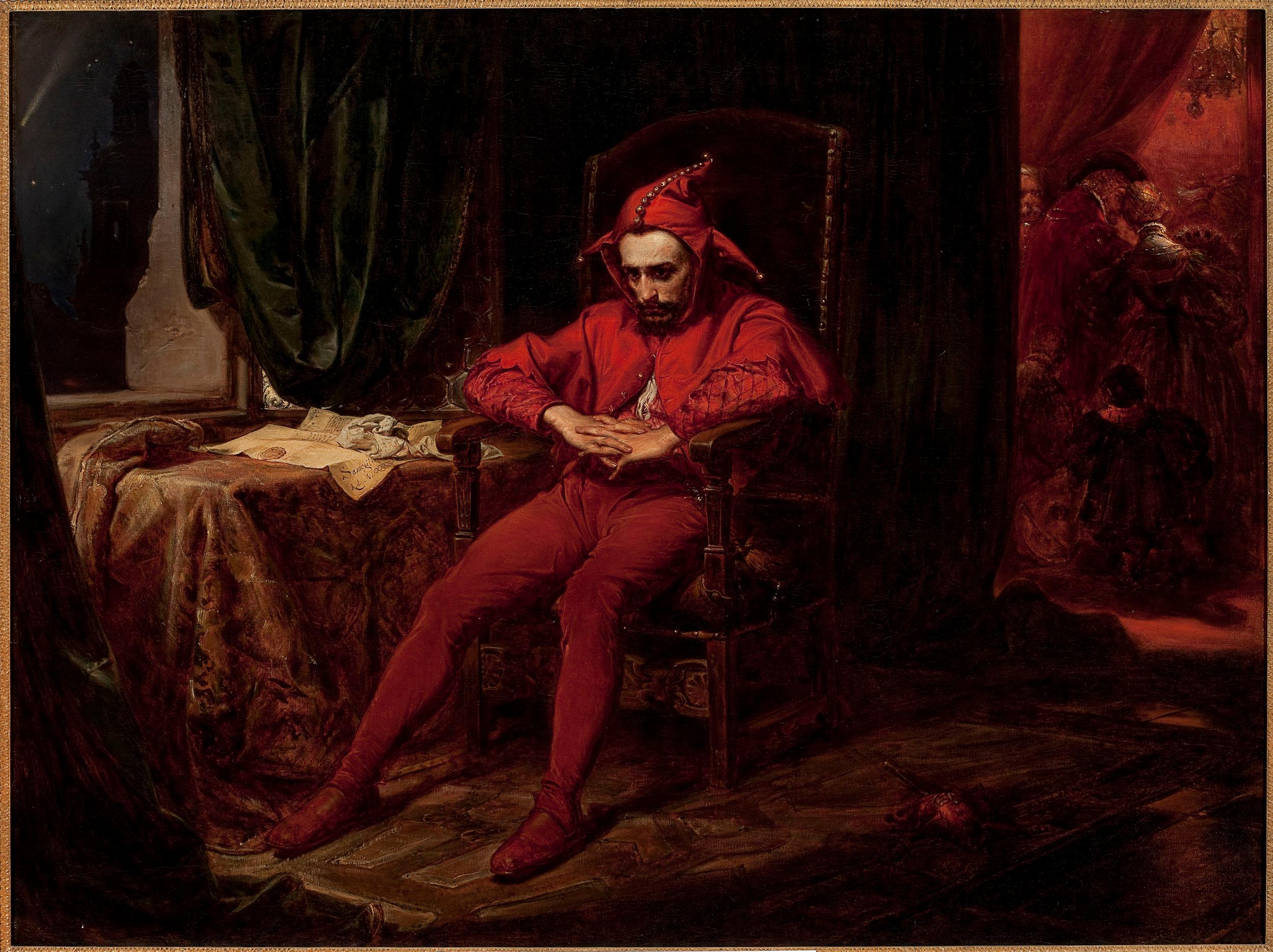
The Fool Who Speaks Truth

But as soon as Jeremiah finished telling all the people everything the Lord had commanded him to say, the priests, the prophets and all the people seized him and said, “You must die!”
Jeremiah 26:8 (NIV)

There is a device Shakespeare used in his plays in which the fool, the jester, or the lowly are the individuals who see and speak the truth while the high and mighty continue to live in their deceits and delusions. Great story tellers often use this device. There’s the simple, small Shire-folk who bring about the downfall of the Lord of the Rings, or the eccentric Professor Trelawney who spouts foolishness 99.9% of the time but on at least two rare occasions actually speaks a prophetic word (that she doesn’t even know she uttered). I’m sure you can think of others.

Today’s chapter in the anthology of Jeremiah’s prophetic works goes back in time to the early years of his career. Jeremiah goes to the Temple court and proclaims that God will destroy Jerusalem if the people don’t change their ways. His message of warning and doom is not well received. The leaders of the Temple and other prophets seize Jer in an attempt to kill him. A trial ensues. Even the King and the army want Jeremiah dead, just as they’d extradited and executed a similar prophet named Uriah.

Elders of the community defend Jeremiah, stating that there is plenty of precedent of prophets who spoke unpopular words but were not put to death for their message. A couple of high-ranking officials come to Jeremiah’s defense, and his life is spared.

Along my life journey I have learned that great stories echo wisdom of the Great Story. When emotions are high and “the crowd” is in an uproar (especially when stirred by those in institutional authority) I often perk up my ears to listen for a still, small, contrarian voice amidst the din. Throughout the Great Story I find that God’s messengers are typically unpopular with the crowd. That’s why Jesus told His followers, “You’re blessed when people revile and rebuke you – when they speak all manner of slander against you.”

This morning in the quiet I’m reminded that Truth is rarely popular. Jesus said that the road to Life is a narrow, dusty footpath. It isn’t particularly well-marked and the trek is challenging for the relative few who are willing to embark on the journey. By contrast, the super highway the crowd follows is an easy commute (though one typically has to deal with traffic jams). And so, at the beginning of another day I find myself pondering which path I will choose today. Which role will I choose to play in the Great Story? Am I, like Jeremiah, willing to play the role of “the wise fool” who speaks Truth?

I guess my answer will be revealed in the choices I make today.


Wisdom, Age and Suffering

source: mythoto via Flickr

Is not wisdom found among the aged?
Does not long life bring understanding?
Job 12:12 (NIV)

Wisdom is, indeed, found among the aged.
Still, I’ve known many an old fool.

Long life does not necessarily bring understanding, Job.
But, it seems to me that suffering does. If it doesn’t break you.

I just can’t always perceive the increase of understanding when I’m still in the midst of the pain.

Press on.

Relational Investment Choices

Friends talk
(Photo credit: Ruud Raats)

Do not speak to fools,
    for they will scorn your prudent words.
Proverbs 23:9 (NLT)

I have a retirement account and a person who manages my investments in that account. Each month I check the account to see how it is performing. I need my administrator to make wise investment choices for me. If it is invested well and I get a good return on my investment, the compounding interest will give me even bigger yields and provide for my future retirement.

As I get older I find that I look at relationships much like I do financial investments. The days roll by and I realize that I have limited time on this Earth. I want to invest my time, energy, and resources in relationships that are life giving and produce good results for both me and the other person in the relationship. My financial advisor would steer me away from foolish stock or mutual fund choices that would not be in my best interest. In the same way, I find myself evaluating the veritable plethora of choices before me regarding those with whom I spend my time and relational energy. 

I have no time for fools. That’s like throwing money into the stock of a company headed into bankruptcy. I find myself wanting to invest in a diverse portfolio of relationships with my limited means. Some relationships are sure things and safe investments. Investing in my wife and kids and family are no brainers and I need to invest heavily in those. Wise friends are like well performing funds which are solid, dependable and offer a good return on investment. I need to direct a good chunk of my relational investment in those. I also want to find those relationship investments which are diamonds in the rough. Like penny stocks, it may not seem like there’s much there, but a little investment could pay off substantially for both parties and bring great reward.

If you study Jesus relationship choices you’ll find that He made very clear and even harsh decisions about whom He would invest time, energy and resources. He rejected some who wanted to follow Him. He said “I have no time for you.” He chose three among his closest followers to pour a greater investment of Himself into, and in doing this He created hard feelings among the twelve. In his final three years of life on this Earth Jesus made conscious choices, as the eldest son of his earthly family, to pull investment out of his earthly family and pour it into a diverse portfolio of risky relationships. His twelve closest followers can be described as risky penny stocks at best, but Jesus saw the future yield His investment in them would produce.

This morning I’m asking myself these questions:

  • In whom am I investing my time, energy and resources (emotional, relational, and spiritual as well as financial)?
  • What foolish relational investments have I made which are draining my resources and leaving me with a personal deficit? From whom do I need to pull my relational investment away?
  • Who would it be wise for me to put more relational investment into? How can I make that happen?
  • Have I fallen into the trap of spreading my relational resources so thin across so many relationships that I can’t possibly manage it all well? Is it time for me to adjust my relational portfolio, make some tough choices and bring it into a manageable level?

[An index of all Tom’s chapter-a-day posts covering every book and chapter]

I’m Keeping My Mouth Shut

Detail from Netherlandish Proverbs
(Photo credit: Wikipedia)

It is foolish to belittle one’s neighbor;
    a sensible person keeps quiet.
Proverbs 11:12 (NLT)

One the reasons I value our daily venture into God’s Message is that it often reminds and keeps me from doing stupid things that I would later regret.

For example, there is a certain fool who operates within my circles of influence. I call him a fool because his actions have been consistent with those of a fool described right in the proverbs we’re reading. A while back he put himself in a high position and caused me and my pride an invisible little injury. It was not a major wound, but one of those nagging ones that starts to itch just when you think it’s healed over. Because of his foolishness, this “neighbor” of mine has given me plenty of opportunities to belittle him, and more than one opportunity to publicly humiliate him. I confess that I spent more time thinking about it than I should, but I’ve oublicly kept my mouth shut and constrained my conversation about the matter to my closest confidants.

As much as it would satisfy my pride and ego to take him down a notch or two, I have been continually reminded that my role is to forgive and not to seek out some sort of eye for an eye vengeance no matter how small the injury or the payback. This neighbor of mine is on his own journey. God is working in his life as well. I have already witnessed the truth of the proverbs as his foolishness has and will bring upon him its own negative consequences.

God is in control of the matter, and He does not need me and my desire for payback muddying up the works. It would only bolster my neighbors belief that I deserved the original injury he caused. And, it would ultimately hurt me more than it would him. So, I will keep my mouth shut, scratch the scab on the wound that itches me now and again, and choose to forgive one more time (I have a ways to go to reach the “seventy times seven” ;-)).

Chapter-a-Day John 9

David Tennant used the skull of pianist Andre ...
David Tennant used the skull of pianist Andre Tchaikowsky for Yorick's skull in a 2008 Royal Shakespeare Company production. (Photo credit: Wikipedia)

Then Jesus told him, “I entered this world to render judgment—to give sight to the blind and to show those who think they see that they are blind.” John 9:39 (NLT)

Wendy and I love Shakespeare, and we love to see Shakespeare staged whether it’s our local Pella Shakespeare Company‘s performance in the park or the Royal Shakespeare Company in England. One of the things that I’ve learned in watching the Bard’s work is that you always want to pay particular attention to the fool. The fool is never quite as foolish as you think he is, and quite often the fool winds up confounding the wise.

That’s why I’ve always loved today’s chapter. It has all the qualities of a great Shakespearean scene. On one side we have the wise, learned, pompous religious leaders with all of their power, wealth and education. Before them stands a lowly, poor, once blind beggar who is not the fool they think he is. Jesus gave physical sight to the blind fool so that the spiritual blindness of those who claim to see could be revealed. That’s great drama.

This morning I’m chewing on the reality that Jesus, while repeatedly reminding his followers that they were not to judge anyone, continually explained that He came to judge. I find that we love Jesus the lover and healer, but no one really wants much to do with Jesus the Righteous Judge. Today’s chapter reminds me that Jesus not only came to give sight to the blind, but to judge those who think they see for their spiritual blindness. Jesus said He came to both save and condemn. One without the other makes for both a boring story and a weak character.

Chapter-a-Day 2 Kings 7

Muchado1lr It happened that four lepers were sitting just outside the city gate. They said to one another, "What are we doing sitting here at death's door? If we enter the famine-struck city we'll die; if we stay here we'll die. So let's take our chances in the camp of Aram and throw ourselves on their mercy. If they receive us we'll live, if they kill us we'll die. We've got nothing to lose."  2 Kings 7:3-4 (MSG)

My wife and I are theatre people, and we have a love for the works of Shakespeare. We've been in productions of his works and have seen them produced in various settings. One of the things that makes the famous Bard's plays so timeless is the way he grasps the human condition and turns very common themes into both comedic and tragic plots and characters.

One of the themes we have noticed in Shakespeare's works is the way the archetype character of "the fool" ends up being the one who sees things to which the strongest heroes are blind. In Shakespeare's world, the fool often speaks with the greatest wisdom.

I have seen a similar theme throughout God's message. God delights in using the weakest, smallest, least important people to do great things. In today's chapter, it was four lepers who lived in the no man's land between the city wall (which they could not enter because of their disease) and the seiging Aramean army who surrounded the town. The lepers, in their desperation, had wisdom to see their only hope and grasp at it. They were rewarded with provision of the choicest plunder. Had the king or his guards discovered the empty Aramean camp themselves, the poor lepers would have been lucky to get some of the left-over scraps tossed to them from the city wall.

God delights in using the least important, weakest, most unlikely characters to do His will. Perhaps, like the lepers, it is because they have the least to lose in worldly standing.

Note to those reading this post Facebook: please forgive the spacing and formatting problems that occur in the auto-import from the original blog post.