Tag Archives: Cancer

Controlled Burns

If a man is found sleeping with another man’s wife, both the man who slept with her and the woman must die. You must purge the evil from Israel.
Deuteronomy 22:22 (NIV)

It’s a chilly winter morning in Iowa. The rolling fields lie barren — a mosaic of brown and gray, flecked with snow like the scattered brushstrokes of an Impressionist. When spring and summer return, new life will repaint the land in vivid color.

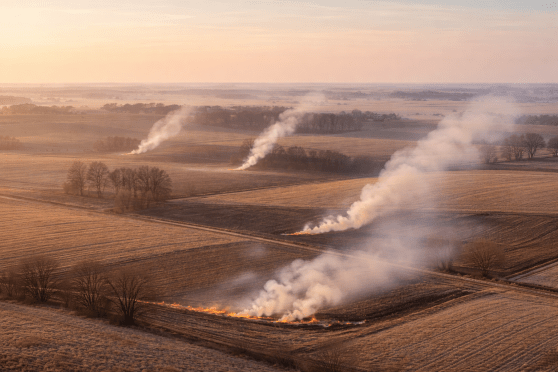
This past year I had the joy of accompanying a friend on a plane ride. It’s a beautiful way to gain a gorgeous perspective on the patchwork quilt that is the Iowa landscape from above. As we soared around the state I was struck by pillars of black smoke that rose from the green fields like little black threads emerging from the quilt.

Controlled burns.

Controlled burns are a part of the stewardship and management of the land. It’s not scorched earth. It’s agricultural surgery — burning away what would otherwise become terminal. It ensures that healthy new life can emerge and flourish from the land.

There is a repeated phrase God through Moses uses to address His Hebrew children as they prepare to enter the Promised Land:

“Purge the evil from among you.”

It clanks on the table every time God drops it into the text. It’s like cold iron. It sometimes feels like shackles of condemnation that don’t fit with the God who loosened the shackles of slavery and is all about freedom and life. I’ve been on this trek through the Great Story long enough to know that when the text chafes, it’s often not the original message, but the English translation. So, I went down the rabbit hole this morning to study the original Hebrew.

What I discovered is that what sounds like a scorched earth of condemnation in the English language is really God’s design for controlled burns that stem chaos and perpetuate Life.

The word for purge is actually more of an agricultural word used for burning chaff, removing what chokes growth, and clearing that which corrupts the whole.

The word for evil is not what is easily interpreted as “badness” (echoes of Santa’s naughty list) but in Hebrew is about that which breaks “shalom” within the whole. Less personal “naughty acts” (think a cancer cell) and more “that which leads to corruption” (think Stage 4 cancer spread).

The word for among you is equally as telling. It’s intimately internal. It’s womb-space where Life emerges. God is calling His people not to “destroy what’s out there” but to “address what’s inside me – that which will destroy from the inside out.”

  • Purge → controlled removal
  • Evil → that which fractures shalom
  • Among you → the inner, generative space

If I read today’s entire chapter through the lens of considering those attitudes and actions within me that can have devastating ripple effects in the lives around me and spread to the larger community, I begin to see it in a while new light.

I couldn’t help but notice that this phrase was directly linked to the sin of adultery. Both the man and the woman caught in the act of adultery were to be held accountable. Adultery tears at the fabric of relationships and trust. It tears souls apart. It tears lives and families apart. It consumes shalom in the backdraft of its blaze of unrestrained passion.

This thought immediately transported me to John 8. In front of Jesus is a naked, crying, humiliated woman. She was dragged from her adulterous bed by an angry mob and dragged before the Son of God. The mob of angry, self-righteous religious men have rocks in hand ready to carry out Deuteronomy 22:22 to the black-and-white letter of the law. They are ready to purge the evil of this wicked woman from among them.

But, where is the man who was in the adulterous bed with her?

The law demanded accountability from both. The mob delivered shame to one.

Jesus was facing what corrupted humanity does with God’s design. It rigs the system. The powerful get a pass. The despised are be self-righteously condemned and rejected. Hatred, prejudice, and injustice, masquerading as religion, flourish and cauterize the souls of those building their personal spiritual empires in God’s name. The men were following the letter of the God’s Law that served their self-righteous interests, but they completely ignored the heart of God’s Law with their actions. In so doing, they ensured the perpetual slow death of shalom among them.

This same religious mob would soon repeat the pattern. They will self-righteously proclaim to be keeping God’s Law as they ignore the very heart of it as they condemn the Son of God to die on a cross.

In the quiet this morning, God’s Spirit whispers for me to consider the direction of my gaze. Today’s chapter is not calling me to gaze “out there” for the evil around me to condemn and burn in my own version of a scorched earth inquisition. God in today’s chapter is calling me to gaze inside my inner place, into the very womb of my soul from which God wants to perpetuate radiating, freedom-producing, shalom-filled Life.

What spiritual cancer cells threaten to infect my soul?

Anger?
Hatred?
Selfishness?
Indifference?
Bitterness?
Scarcity?

It starts with me. If I want new Life to flourish in and around me like the gorgeous ocean of bumper crops in a late Iowa summer, then I have to consider the controlled burns required. I have to address that which threatens shalom in my own field; Those unhealthy attitudes and motives which, unaddressed, radiate out into my thoughts, words, and actions to infect my relationships and all of my circles of influence.

As I lace ‘em up for this another day on this earthly journey, I’m not so much thinking about what’s out there. I’m thinking about what’s in me. If I don’t take responsibility for what’s in me, I can’t pretend to be a solution for what’s out there.

If you know anyone who might be encouraged by today’s post, please share.

Promotional graphic for Tom Vander Well's Wayfarer blog and podcast, featuring icons of various podcast platforms with a photo of Tom Vander Well.
These chapter-a-day blog posts are also available via podcast on all major podcast platforms including Apple, Google, and Spotify! Simply go to your podcast platform and search for “Wayfarer Tom Vander Well.” If it’s not on your platform, please let me know!
An orange square icon featuring a simple white open book illustration.

Momento Mori

The Lord said to Moses, “Take vengeance on the Midianites for the Israelites. After that, you will be gathered to your people.”
Numbers 31:1 (NIV)

Along my life journey, I’ve experienced walking along side friends and loved ones who received tragic diagnoses. My mother had both auto-immune hepatitis and Alzheimer’s, both of them incurable and ultimately fatal. My father lives with Multiple Myeloma. It’s understandably unnerving to discover that this human body has fallen prey to an incurable disease that will cut one’s life shorter than expected and lead to death.

In walking along side individuals facing this tragic reality, I’ve found it fascinating to observe their attitudes and actions. It’s always a bit different, and I’ve come to understand that every individual has to find their own way through the experience. Not surprisingly, I commonly observe the stages of grief as individuals grapple with their difficult reality: denial, anger, bargaining, depression, and acceptance. I have also observed individuals getting stuck in one or more of those stages seemingly incapable of progressing to the place of acceptance. In other individuals, I’ve observed a gracious and spiritually mature embrace of the inevitable that I’ve admired and respected.

Today’s chapter begins with such a death sentence. God’s man, Moses, is told that he’s going to die. God has just one more task for Mo to carry out. Mo is tasked with leading God’s vengeance against the Midianites who had conscripted the seer Balaam to curse the Hebrews and then conspired to seduce and spiritually corrupt the Hebrew men into immorality and pagan worship.

Make no mistake, it’s a thorny chapter that caused me to wrestle with God in my meditations. Nevertheless, I kept coming back to that first verse. Moses’ death sentence.

What struck me is that Moses quickly and faithfully carries out the task God gives him the way he has faithfully carried out God’s instructions for decades. There’s no hint of grief, anger, bargaining, or depression. Moses was not like the depressed prophet Elijah who ran to Mount Sinai and wallowed in self-pity. Moses carries on. He is obedient. He does what he’s always done.

In walking with loved ones on their journey through terminal diagnoses and the road that follows, I’ve come to embrace the truth that every human being has a terminal diagnosis from the day we are born. We live in a fallen world under the curse of death. I am going to die. Medical science tells us that physical and mental development ends in our mid-twenties. After that, humans can only work to maintain optimal health for our age, but the body continues to age and that aging process is a slow descent toward a physical death no one escapes.

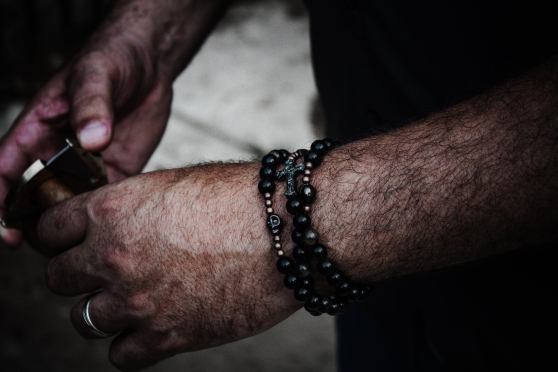
I have a bracelet I wear. Actually, it’s a Roman Catholic rosary, though I’m obviously not Catholic. The rosary, however, was crafted with a motif rooted in a medieval school of thought called Momento Mori that was adopted by monks and crusader knights alike.

Momento Mori is Latin and it translates “Remember your deathor more aptly “Remember you’re going to die.” It was a school of Christian thought in which individuals constantly kept the death sentence we all live under at the front of our conscious thought rather than stuffing it back in the recesses of cognitive denial. The notion of Momento Mori was that being daily reminded of, and meditating on, my mortality, it will motivate me to see this day differently, react differently, relate differently, and live differently. Momento Mori is working through the stages of grief and coming to acceptance of my impending death long before a doctor walks into the room and tells me I have cancer.

In the quiet this morning, I observe that Moses seems to have embraced the spirit of Momento Mori. Mo has humbly been obedient, despite being flawed and making tragic mistakes, ever since God appeared to him in the burning bush and announced He had a job. It isn’t recorded that he was rattled by the pronouncement that death will quickly follow this next task. He simply carries out the task.

Today is day 21,684 of my earthly journey. While it is probable that I will wake up to day 21,685 tomorrow morning, it is not guaranteed.

May I humbly live out this day faithfully following Jesus and being obedient to those things to which God has called me.

Momento Mori.

For anyone interested, the bracelet I reference, also pictured in today’s featured photo can be purchased from Crux Invicta.

If you know anyone who might be encouraged by today’s post, please share.

Promotional graphic for Tom Vander Well's Wayfarer blog and podcast, featuring icons of various podcast platforms with a photo of Tom Vander Well.
These chapter-a-day blog posts are also available via podcast on all major podcast platforms including Apple, Google, and Spotify! Simply go to your podcast platform and search for “Wayfarer Tom Vander Well.” If it’s not on your platform, please let me know!
A bracelet designed with a 'Momento Mori' motif, symbolizing the reminder of mortality, possibly displayed alongside a Bible or spiritual context.

Best of 2023 #8: Busy Livin’

Busy Livin' (CaD Job 17) Wayfarer

“…where then is my hope—
    who can see any hope for me?

Job 17:15 (NIV)

There is a classic scene in The Shawshank Redemption in which Andy and Red are sitting in the prison yard discussing hope of life on the outside. Andy shares his dreams of getting out, moving to Mexico, and living a quiet life on the coast. Red, who has no hope of getting out of prison, fears he wouldn’t know how to live on the “outside” and he chastises Andy for his pipe dream of life in Mexico. Andy then shares with Red the simple truth he has embraced: “You either get busy living, or you get busy dying.”

Along my life journey, I’ve known multiple individuals who have been given a terminal diagnosis. A business colleague of mine was diagnosed with cancer and was dead in 10 weeks. When my father was diagnosed with Myeloma, his doctor gave him the statistical probability he’d be dead, if I remember correctly, about four or five years ago. Not only is he still around, but on top of the Myeloma he survived a potentially fatal infection a few years ago. His stained-glass won a third-place ribbon at the Iowa State Fair this week, and he’s currently working on crafting a prayer bench for a friend (Way to go, Dad!).

I once had a friend who told me that he had an agreement with his physician that if he was ever diagnosed with cancer, the doctor was forbidden from sharing it with him. He told me that, as a pastor, he’d seen too many of his parishioners die from the diagnosis. Once the doctor told them they had cancer, they “got busy dying.” While I disagree with my friend’s solution to live in ignorance, I’ve never forgotten the lesson that led to his decision.

As I meditated on today’s chapter, I observed that Job appears to be “busy dying.” Given the tragic circumstances he’s experienced, it’s easy to understand why. He can’t see beyond his troubles. In Job’s mind, the agony has been so great that the anticipation of death feels like a relief. Job’s only hope, he states, is the grave. Like Red in The Shawshank Redemption, Job can’t imagine life outside the prison of his suffering, beyond the barbed wire of his pain.

One of the things that Jesus perpetually taught His disciples was to think outside the prison of our momentary circumstances, and to see beyond our finite earthly existence:

“Do not store up for yourselves treasures on earth, where moths and vermin destroy, and where thieves break in and steal. But store up for yourselves treasures in heaven, where moths and vermin do not destroy, and where thieves do not break in and steal. For where your treasure is, there your heart will be also.” Matthew 6:19-21 (NIV)

This is not to say, as the saying goes, that I “become so heavenly minded that we’re no earthly good.” Rather, a Kingdom world-view changes the way I see my earthly troubles. Paul’s earthly, real-life circumstances included, but were not limited to, the following experiences he shared with Jesus’ disciples in Corinth:

I have worked much harder, been in prison more frequently, been flogged more severely, and been exposed to death again and again. Five times I received from the Jews the forty lashes minus one. Three times I was beaten with rods, once I was pelted with stones, three times I was shipwrecked, I spent a night and a day in the open sea, I have been constantly on the move. I have been in danger from rivers, in danger from bandits, in danger from my fellow Jews, in danger from Gentiles; in danger in the city, in danger in the country, in danger at sea; and in danger from false believers. I have labored and toiled and have often gone without sleep; I have known hunger and thirst and have often gone without food; I have been cold and naked.
2 Corinthians 11:23-27 (NIV)

Despite this, Paul wrote in the same letter:

Therefore we do not lose heart. Though outwardly we are wasting away, yet inwardly we are being renewed day by day. For our light and momentary troubles are achieving for us an eternal glory that far outweighs them all. So we fix our eyes not on what is seen, but on what is unseen, since what is seen is temporary, but what is unseen is eternal.
2 Corinthians 4:16-18 (NIV)

So in the quiet this morning, I once again feel for Job and his sufferings. I don’t blame him for his very human reaction to unbelievable tragic circumstances. His anger and his sense of hopelessness are natural human emotions that he has to work through. He can’t see beyond the grave. As a disciple of Jesus, however, I am called to look beyond the grave. That’s what Jesus’ resurrection was about and it set up a spiritual paradox through which I, as a follower of Jesus, should view my circumstances. Though my earthly circumstances are terminal, because the reality is that every human being’s existence on this earth is terminal, I can still, in the midst of them, “get busy living” because this world is not my home.

As the song goes, this wayfaring stranger is headed home, over Jordan. There is no sickness, no toil, or danger in that bright land to which I go.

If you know anyone who might be encouraged by today’s post, please share.

Busy Livin’

Busy Livin' (CaD Job 17) Wayfarer

“…where then is my hope—
    who can see any hope for me?

Job 17:15 (NIV)

There is a classic scene in The Shawshank Redemption in which Andy and Red are sitting in the prison yard discussing hope of life on the outside. Andy shares his dreams of getting out, moving to Mexico, and living a quiet life on the coast. Red, who has no hope of getting out of prison, fears he wouldn’t know how to live on the “outside” and he chastises Andy for his pipe dream of life in Mexico. Andy then shares with Red the simple truth he has embraced: “You either get busy living, or you get busy dying.”

Along my life journey, I’ve known multiple individuals who have been given a terminal diagnosis. A business colleague of mine was diagnosed with cancer and was dead in 10 weeks. When my father was diagnosed with Myeloma, his doctor gave him the statistical probability he’d be dead, if I remember correctly, about four or five years ago. Not only is he still around, but on top of the Myeloma he survived a potentially fatal infection a few years ago. His stained-glass won a third-place ribbon at the Iowa State Fair this week, and he’s currently working on crafting a prayer bench for a friend (Way to go, Dad!).

I once had a friend who told me that he had an agreement with his physician that if he was ever diagnosed with cancer, the doctor was forbidden from sharing it with him. He told me that, as a pastor, he’d seen too many of his parishioners die from the diagnosis. Once the doctor told them they had cancer, they “got busy dying.” While I disagree with my friend’s solution to live in ignorance, I’ve never forgotten the lesson that led to his decision.

As I meditated on today’s chapter, I observed that Job appears to be “busy dying.” Given the tragic circumstances he’s experienced, it’s easy to understand why. He can’t see beyond his troubles. In Job’s mind, the agony has been so great that the anticipation of death feels like a relief. Job’s only hope, he states, is the grave. Like Red in The Shawshank Redemption, Job can’t imagine life outside the prison of his suffering, beyond the barbed wire of his pain.

One of the things that Jesus perpetually taught His disciples was to think outside the prison of our momentary circumstances, and to see beyond our finite earthly existence:

“Do not store up for yourselves treasures on earth, where moths and vermin destroy, and where thieves break in and steal. But store up for yourselves treasures in heaven, where moths and vermin do not destroy, and where thieves do not break in and steal. For where your treasure is, there your heart will be also.” Matthew 6:19-21 (NIV)

This is not to say, as the saying goes, that I “become so heavenly minded that we’re no earthly good.” Rather, a Kingdom world-view changes the way I see my earthly troubles. Paul’s earthly, real-life circumstances included, but were not limited to, the following experiences he shared with Jesus’ disciples in Corinth:

I have worked much harder, been in prison more frequently, been flogged more severely, and been exposed to death again and again. Five times I received from the Jews the forty lashes minus one. Three times I was beaten with rods, once I was pelted with stones, three times I was shipwrecked, I spent a night and a day in the open sea, I have been constantly on the move. I have been in danger from rivers, in danger from bandits, in danger from my fellow Jews, in danger from Gentiles; in danger in the city, in danger in the country, in danger at sea; and in danger from false believers. I have labored and toiled and have often gone without sleep; I have known hunger and thirst and have often gone without food; I have been cold and naked.
2 Corinthians 11:23-27 (NIV)

Despite this, Paul wrote in the same letter:

Therefore we do not lose heart. Though outwardly we are wasting away, yet inwardly we are being renewed day by day. For our light and momentary troubles are achieving for us an eternal glory that far outweighs them all. So we fix our eyes not on what is seen, but on what is unseen, since what is seen is temporary, but what is unseen is eternal.
2 Corinthians 4:16-18 (NIV)

So in the quiet this morning, I once again feel for Job and his sufferings. I don’t blame him for his very human reaction to unbelievable tragic circumstances. His anger and his sense of hopelessness are natural human emotions that he has to work through. He can’t see beyond the grave. As a disciple of Jesus, however, I am called to look beyond the grave. That’s what Jesus’ resurrection was about and it set up a spiritual paradox through which I, as a follower of Jesus, should view my circumstances. Though my earthly circumstances are terminal, because the reality is that every human being’s existence on this earth is terminal, I can still, in the midst of them, “get busy living” because this world is not my home.

As the song goes, this wayfaring stranger is headed home, over Jordan. There is no sickness, no toil, or danger in that bright land to which I go.

If you know anyone who might be encouraged by today’s post, please share.

Spiritual Self-Examination

Examine yourselves to see whether you are in the faith; test yourselves.
2 Corinthians 13:5a (NIV)

I have basically gone to the same family doctor since I was twelve years old and he pulled a big chunk of a splintered, wooden skateboard out of my left thigh. He’s treated my grandparents, my parents, my siblings, and me for almost 40 years. He’s what I call an “old world doc.” He’s a great diagnostician, he takes the time to listen, and he’s a straight shooter to the point of being uncomfortably blunt.

As I grew up, Doc taught me a lot about self-examination relative to my own health. He taught me that a man’s periodic self-examination  for testicular cancer was every bit as important as women doing a self-examination for breast cancer. As I developed a number of moles on my body he took the time to teach me what to be wary of with the regard to skin cancer and encouraged me to pay attention to moles and spots as they appeared over the years. Based on my family history, he would grill me on warning signs for different things that run in the family. He told me of symptoms I didn’t have to worry about and the things I should definitely be worried about if I noticed them.

We all know that self-examination is important to our physical health. We want to catch small problems before they become big ones. In today’s chapter Paul reminds the followers of Jesus in Corinth that spiritual self-examination is critical, as well. I believe it has eternal consequences. Step Four of the Twelve Steps is that we “made a searching and fearless moral inventory of ourselves.”

Along life’s journey I’ve attended a host of Twelve Step groups and meetings, and I noticed that it is quite common to stall out after Step Three.  Self examination was a foreign spiritual (or moral) concept to me at first. It was scary, awkward, and uncomfortable. Searching myself fearlessly and making a thorough moral inventory felt like a lot of work and I wasn’t sure I wanted to admit to or deal with what I might find.

A self-examination of my skin might reveal a fast growing, oddly shaped growth than could indicate a more serious issue with cancer. Testing it, I might not like the blunt news from Doc, but addressing it quickly and early might stave off a premature death. In the same way, I found that a searching and fearless self-examination of the soul leads me to honest conversation, wise counsel, and to addressing relational and behavioral issues that just might stave off both spiritual and relational death.

This morning I did a search for “Step Four Questions” in my favorite browser and I quickly found a host of different lists of questions for adolescents, adults, and Twelve Step groups of different varieties. There is no one magic list. It’s relatively easy for me to pull one up and dive right in.

This morning I’m remembering starting down the path of Step Four for the first time. It was scary, awkward, and uncomfortable when I embarked on the process of writing my answers to the host of questions that had been given to me. What I discovered what that those questions led me to healthy, life-giving places. I’ve never regretted learning the process of self-examination.

Embracing Our “Lot in Life”

“…but the hill country shall be yours, for though it is a forest, you shall clear it and possess it to its farthest borders; for you shall drive out the Canaanites, though they have chariots of iron, and though they are strong.”
Joshua 17:18 (NRSV)

Yesterday afternoon my sister, my father, and I met with a medical professional in the retirement community where my folks live. We met to discuss my parents current needs. We needed to talk about my mom’s progression of Alzheimer’s, how it’s affecting my dad’s health in his fight against cancer, and to map out thoughts and ideas for how we monitor and address the situation going forward.

These are strange conversations that we weren’t even contemplating just a few years ago. It’s strange when things in life don’t turn out as you had envisioned. It can be unsettling, to say the least.

On the drive home my daughter asked me how I was doing with all of this, and what I was feeling. I was honest with her that I’m feeling all of the natural stages of grief that come with such events on life’s road. I then shared with her something that I feel God has been impressing on me in recent days.

Jesus said that He came that we might have “abundant life.” We often interpret that to mean life that is void of pain, sorrow, struggle, tragedy, or suffering. Yet, elsewhere in God’s message we are told to rejoice in our suffering, to consider it joy when we encounter trials, and to give thanks in all circumstances. We are told the godliness with contentment is the “means of great gain.” I’m beginning to understand that abundant life is not the absence of pain and struggle but the contented embracing of life in all of its diverse circumstances from tragedy to victory.

In todays’ chapter the family of Manasseh were not content with the inheritance they’d been given and they complained to Joshua. They wanted more. Joshua told them they could have the forest (which would have to be cleared), and a valley filled with strong enemies that would have to be overcome. The tribe complained that they weren’t happy with what Joshua was giving them. Joshua countered that his decision was final. In essence, Joshua countered their complaints by saying: “This is your lot in life.”

Today I’m reminded that we don’t always get to choose our lot in life. Things are not always going to turn out the way I planned. I can gripe and complain and play the victim. Or, I can embrace life in all of its diverse moments. I can learn to find contentment amidst the struggle, to consider it joy in the trials, to rejoice in my suffering. I’m slowly learning that an abundance of life includes the tough lots as well as the easy ones.


chapter a day banner 2015

Hope

The_Vision_of_The_Valley_of_The_Dry_BonesThey say, ‘Our bones are dried up and our hope is gone; we are cut off.’ Therefore prophesy and say to them: ‘This is what the Sovereign Lord says: My people, I am going to open your graves and bring you up from them….”
Ezekiel 37:11b-12a (NIV)

Over the past year, the news on the Vander Well home front has been less than encouraging. Late last summer my mother was diagnosed in the early stages of Alzheimer’s disease. In February of this year my dad was diagnosed with multiple myeloma, a treatable but incurable form of cancer in his bone marrow. This past Sunday dad told us that, based on the available data and the doctors’ formulas, they guesstimate that he has around 3.5 years left in this life journey.

As I read this morning’s chapter, I found myself identifying with the groans of the Hebrew exiles. There are times in life when we feel dried up, cut off, and without hope. But, the point of today’s chapter was God’s response which was to provide a word of hope. To an exiled people who had seen more than their fair share of death, God delivered through Ezekiel a message of homecoming, resurrection, and life.

I have known many who have battled terminal illnesses over the years. I have observed that one of the key differences in outcomes is determined by simple differences in attitudes. I am reminded this morning of God saying, “I have set before you life and death. Now, choose life, so that you and your children may live.” I recognize that there are stretches in each of our life journeys when we are free to choose to focus on despair and hopelessness, or to choose to focus on life and hope.

I pray that I always choose the latter.