Tag Archives: Level 1

Controlled Burns

If a man is found sleeping with another man’s wife, both the man who slept with her and the woman must die. You must purge the evil from Israel.
Deuteronomy 22:22 (NIV)

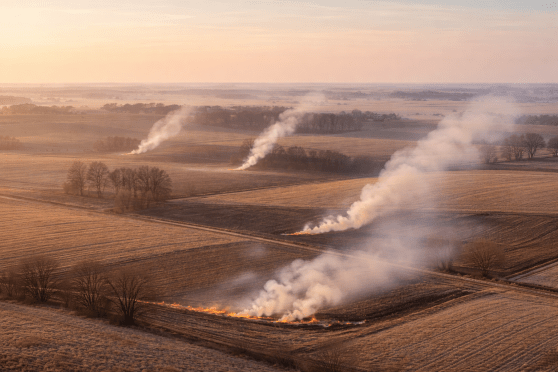
It’s a chilly winter morning in Iowa. The rolling fields lie barren — a mosaic of brown and gray, flecked with snow like the scattered brushstrokes of an Impressionist. When spring and summer return, new life will repaint the land in vivid color.

This past year I had the joy of accompanying a friend on a plane ride. It’s a beautiful way to gain a gorgeous perspective on the patchwork quilt that is the Iowa landscape from above. As we soared around the state I was struck by pillars of black smoke that rose from the green fields like little black threads emerging from the quilt.

Controlled burns.

Controlled burns are a part of the stewardship and management of the land. It’s not scorched earth. It’s agricultural surgery — burning away what would otherwise become terminal. It ensures that healthy new life can emerge and flourish from the land.

There is a repeated phrase God through Moses uses to address His Hebrew children as they prepare to enter the Promised Land:

“Purge the evil from among you.”

It clanks on the table every time God drops it into the text. It’s like cold iron. It sometimes feels like shackles of condemnation that don’t fit with the God who loosened the shackles of slavery and is all about freedom and life. I’ve been on this trek through the Great Story long enough to know that when the text chafes, it’s often not the original message, but the English translation. So, I went down the rabbit hole this morning to study the original Hebrew.

What I discovered is that what sounds like a scorched earth of condemnation in the English language is really God’s design for controlled burns that stem chaos and perpetuate Life.

The word for purge is actually more of an agricultural word used for burning chaff, removing what chokes growth, and clearing that which corrupts the whole.

The word for evil is not what is easily interpreted as “badness” (echoes of Santa’s naughty list) but in Hebrew is about that which breaks “shalom” within the whole. Less personal “naughty acts” (think a cancer cell) and more “that which leads to corruption” (think Stage 4 cancer spread).

The word for among you is equally as telling. It’s intimately internal. It’s womb-space where Life emerges. God is calling His people not to “destroy what’s out there” but to “address what’s inside me – that which will destroy from the inside out.”

  • Purge → controlled removal
  • Evil → that which fractures shalom
  • Among you → the inner, generative space

If I read today’s entire chapter through the lens of considering those attitudes and actions within me that can have devastating ripple effects in the lives around me and spread to the larger community, I begin to see it in a while new light.

I couldn’t help but notice that this phrase was directly linked to the sin of adultery. Both the man and the woman caught in the act of adultery were to be held accountable. Adultery tears at the fabric of relationships and trust. It tears souls apart. It tears lives and families apart. It consumes shalom in the backdraft of its blaze of unrestrained passion.

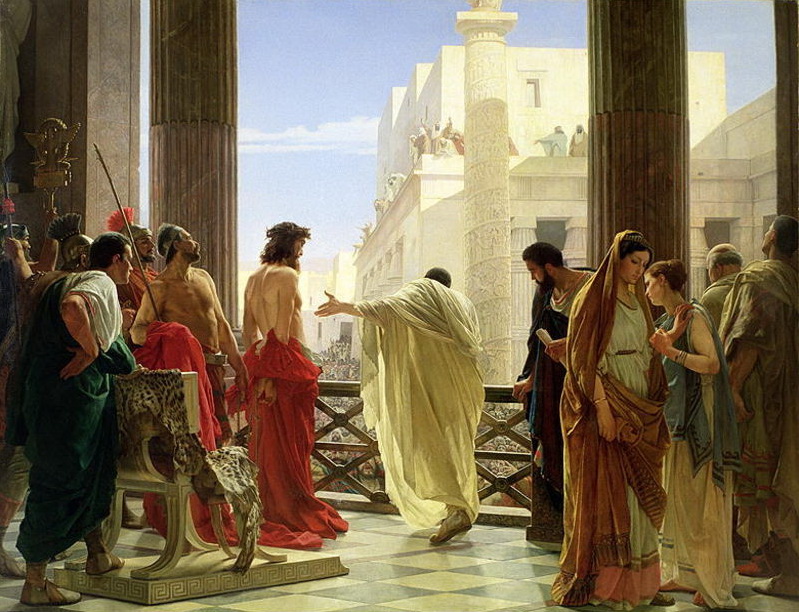
This thought immediately transported me to John 8. In front of Jesus is a naked, crying, humiliated woman. She was dragged from her adulterous bed by an angry mob and dragged before the Son of God. The mob of angry, self-righteous religious men have rocks in hand ready to carry out Deuteronomy 22:22 to the black-and-white letter of the law. They are ready to purge the evil of this wicked woman from among them.

But, where is the man who was in the adulterous bed with her?

The law demanded accountability from both. The mob delivered shame to one.

Jesus was facing what corrupted humanity does with God’s design. It rigs the system. The powerful get a pass. The despised are be self-righteously condemned and rejected. Hatred, prejudice, and injustice, masquerading as religion, flourish and cauterize the souls of those building their personal spiritual empires in God’s name. The men were following the letter of the God’s Law that served their self-righteous interests, but they completely ignored the heart of God’s Law with their actions. In so doing, they ensured the perpetual slow death of shalom among them.

This same religious mob would soon repeat the pattern. They will self-righteously proclaim to be keeping God’s Law as they ignore the very heart of it as they condemn the Son of God to die on a cross.

In the quiet this morning, God’s Spirit whispers for me to consider the direction of my gaze. Today’s chapter is not calling me to gaze “out there” for the evil around me to condemn and burn in my own version of a scorched earth inquisition. God in today’s chapter is calling me to gaze inside my inner place, into the very womb of my soul from which God wants to perpetuate radiating, freedom-producing, shalom-filled Life.

What spiritual cancer cells threaten to infect my soul?

Anger?
Hatred?
Selfishness?
Indifference?
Bitterness?
Scarcity?

It starts with me. If I want new Life to flourish in and around me like the gorgeous ocean of bumper crops in a late Iowa summer, then I have to consider the controlled burns required. I have to address that which threatens shalom in my own field; Those unhealthy attitudes and motives which, unaddressed, radiate out into my thoughts, words, and actions to infect my relationships and all of my circles of influence.

As I lace ‘em up for this another day on this earthly journey, I’m not so much thinking about what’s out there. I’m thinking about what’s in me. If I don’t take responsibility for what’s in me, I can’t pretend to be a solution for what’s out there.

If you know anyone who might be encouraged by today’s post, please share.

Promotional graphic for Tom Vander Well's Wayfarer blog and podcast, featuring icons of various podcast platforms with a photo of Tom Vander Well.
These chapter-a-day blog posts are also available via podcast on all major podcast platforms including Apple, Google, and Spotify! Simply go to your podcast platform and search for “Wayfarer Tom Vander Well.” If it’s not on your platform, please let me know!
An orange square icon featuring a simple white open book illustration.

Wrestling with Subjection to Authority

Let everyone be subject to the governing authorities, for there is no authority except that which God has established. The authorities that exist have been established by God.
Romans 13:1 (NIV)

For the record, I don’t belong to any political party.

I was just reminded this morning of a passage in The Lord of the Rings when Pippin asks the Ent, Treebeard, whose side he was on. “Side?” Treebeard replies. “I’m on no one’s side, because no one is on my side.”

Along my life journey I have respected certain leaders from both of the major parties here in the States, and I have had personal disdain for leaders from both of the major parties. I’m thankful for living in a representative republic. There is always the possibility of change in every election cycle.

Paul is writing his letter to followers of Jesus in Rome during the time of the Roman Empire. One of the reasons the Romans were able to control such a large area of the western world for such a large period of time was the fact that Rome tended to bring and maintain a certain amount of law and order wherever they ruled. While there were always those unhappy with Roman occupation, there was a certain understanding among the common population that the system of Roman law and order was better than the chaos which was often the reality when a local tyrant or warlord reigned.

In today’s chapter Paul provides a fascinating perspective as he tells the followers of Jesus living in Rome itself to be subject to governing authorities, to pay their taxes, and to respect those in authority. This is the Roman Empire. The Jewish authorities in Jerusalem, whom Paul once worked for, have an entire terrorist network developing which is going to erupt into outright rebellion in about 20 years from the writing of Paul’s letter. Even one of the Twelve apostles came out of the anti-Roman Zealots. But Paul is direct, authoritative and unequivocal in stating that authority is a construct of God, so we must respectfully subject ourselves to government authority.

A couple of thoughts on this. Underneath Paul’s teaching on this matter is an understanding that on the eternal, cosmic, Level 4, Great Story perspective all things are moving toward the end of the Story, which is already written. If we want to get into the notion of God and eternity existing outside of the dimension of time then one might argue that it’s already happened. Maybe you need another cup of coffee before wrapping your brain around that.

There is also plenty of precedent from the Old Testament (Paul was a lawyer by training, remember) that God raises up and uses certain kings and rulers (Pharaoh and Nebuchadnezzar, for example) who were not the most benevolent leaders. Even David respected and viewed Saul as God’s appointed authority and refused to depose and kill the mad king when he had every reason and opportunity to do so. In telling the Roman believers to subject themselves to their Roman authorities, Paul was channeling thinking and teaching that was quite ancient.

Then there is the most fascinating fact that Paul is a Roman citizen. This is no small detail. It’s a huge deal in his day and age. Roman citizenship was extremely hard to come by and afforded the person all sorts of perks in Roman society. Paul states elsewhere that he was born a Roman citizen, so he grew up enjoying the protection and status of that citizenship. Paul will soon use that status to appeal his upcoming conviction to Caesar himself. Paul will end up a prisoner in Rome itself.

What’s ironic is that Paul and the believers he’s writing to in Rome will be scapegoated by Caesar, blamed for the Great Fire of Rome to cover up Caesar’s own culpability, and they will be persecuted mercilessly. The Roman authorities to whom Paul is telling the believers to submit will throw them in prison, cover them in wax and light them on fire (while still alive) to illuminate Caesar’s garden, feed them to the lions in the Coliseum, and execute Paul by chopping of his head. By the way, beheading was another perk of Roman citizenship. If Paul had not been a citizen he’d have suffered a much more agonizing death by crucifixion, which was the gruesome fate awaiting Peter in Rome.

Would knowing the end awaiting him change Paul’s charge to subject themselves to Rome’s authority? I don’t think so. A few weeks ago I reminded our local gathering of Jesus followers that Jesus told Peter about the death by crucifixion that was awaiting him after His resurrection. Once again, the present, Level 1 daily circumstances were lived with an eternal, Level 4 perspective.

This is one of those mornings when, in the quiet, I have more questions than answers. What about…? What if…? Despite all the questions, I’m reminded that I’m not always going to like those in authority. I’m reminded that being respectful and lawful is part of being a “living sacrifice” (see yesterday’s post). I’m reminded that Jesus subjected himself to cruelty and a completely unjust execution after a series of kangaroo court trials before religious, secular, regional, and Roman authorities to whom He was always respectful. He knew that his Level 1 circumstances had Level 4 purpose. So did Peter. So did Paul.

That is whose footsteps I’m following.

Level 1 Pain; Level 4 Purpose

But he said to me, “My grace is sufficient for you, for my power is made perfect in weakness.” Therefore I will boast all the more gladly about my weaknesses, so that Christ’s power may rest on me.
2 Corinthians 12:9 (NIV)

A week ago Sunday I had the privilege of giving the message amidst my local gathering of Jesus followers. As I’ve mentioned in previous posts, we’re in the middle of a one-year journey through the book, The Acts of the Apostles, more commonly referred to as simply Acts. The reason that we’re making our way through 2 Corinthians is that I wanted to read through all of Paul’s letters in the order he wrote them in conjunction with my local gathering’s journey through Acts.

In my message last week I noted that there are four levels at which the story in Acts is happening. Level 1 is the personal, individual story level in which individuals are having experiences and having a personal, relational interaction with God. Level 4 is the eternal, cosmic, heavenly realm of the Spirit. I observed in my message that if my spiritual world-view remains confined to Level 1, then I will always struggle against the inequities of circumstance. It’s been fascinating how this simple theme has suddenly seemed to present itself in a myriad of ways. Like, today’s chapter.

As I read through today’s chapter, I found it (once again) one of the most extraordinary things Paul ever wrote. Paul writes in the third person of “a man” who had a Level 4 experience. By the way, using the third person was a commonly used literary device in Paul’s day so writers would present something that may be perceived as boastful about themselves with humility. Paul explains a mysterious experience in which he was caught up in heaven. The whole thing is mystical and mysterious and Paul explains that he’s not permitted to reveal some of what he saw, heard, and/or experienced.

Paul then immediately explains that he was subsequently given “a thorn in the flesh” to keep him humble. In other words, there was some kind of Level 1 suffering that Paul was experiencing. Scholars have debated and argued for years regarding what this “thorn in the flesh” was. We’ll never know for sure. What it was is not the point. Anyone whose had the experience of being pierced with an object which remained buried in the flesh knows that it’s an on-going, ever-present form of suffering.

What I noticed in the chapter this morning was, once again, I find this weaving together of Level 4 and Level 1, the eternal and the temporal.  Paul pleaded with God to remove this Level 1 “thorn in the flesh” that was causing him physical suffering only to come to a Level 4 perspective of his affliction. Paul is told: “My grace is sufficient for you, for my power (Level 4) is made perfect in weakness (Level 1).” By the way, the word “power” that Paul uses is the same Greek word “dynamos” that is used by Jesus in Acts 1:8 : “But you will receive power when the Holy Spirit comes on you.” He’s definitely talking about Spiritual, eternal, Level 4 “power”

In the quiet this morning I continue to find myself mulling over a number of things. Paul’s mystical, mysterious experience is intriguing. This description and meaning of the “third heaven” is another point of intense debate among scholars. Then there’s question about exactly what Paul’s “thorn in the flesh” referred to. Speculation and discussion about these things can be an interesting and entertaining. What is clear, and what I walk away with as I enter my day, is the reminder that the troubles and sufferings we experience can have spiritual purposes.