Tag Archives: Diagnosis

Momento Mori

The Lord said to Moses, “Take vengeance on the Midianites for the Israelites. After that, you will be gathered to your people.”
Numbers 31:1 (NIV)

Along my life journey, I’ve experienced walking along side friends and loved ones who received tragic diagnoses. My mother had both auto-immune hepatitis and Alzheimer’s, both of them incurable and ultimately fatal. My father lives with Multiple Myeloma. It’s understandably unnerving to discover that this human body has fallen prey to an incurable disease that will cut one’s life shorter than expected and lead to death.

In walking along side individuals facing this tragic reality, I’ve found it fascinating to observe their attitudes and actions. It’s always a bit different, and I’ve come to understand that every individual has to find their own way through the experience. Not surprisingly, I commonly observe the stages of grief as individuals grapple with their difficult reality: denial, anger, bargaining, depression, and acceptance. I have also observed individuals getting stuck in one or more of those stages seemingly incapable of progressing to the place of acceptance. In other individuals, I’ve observed a gracious and spiritually mature embrace of the inevitable that I’ve admired and respected.

Today’s chapter begins with such a death sentence. God’s man, Moses, is told that he’s going to die. God has just one more task for Mo to carry out. Mo is tasked with leading God’s vengeance against the Midianites who had conscripted the seer Balaam to curse the Hebrews and then conspired to seduce and spiritually corrupt the Hebrew men into immorality and pagan worship.

Make no mistake, it’s a thorny chapter that caused me to wrestle with God in my meditations. Nevertheless, I kept coming back to that first verse. Moses’ death sentence.

What struck me is that Moses quickly and faithfully carries out the task God gives him the way he has faithfully carried out God’s instructions for decades. There’s no hint of grief, anger, bargaining, or depression. Moses was not like the depressed prophet Elijah who ran to Mount Sinai and wallowed in self-pity. Moses carries on. He is obedient. He does what he’s always done.

In walking with loved ones on their journey through terminal diagnoses and the road that follows, I’ve come to embrace the truth that every human being has a terminal diagnosis from the day we are born. We live in a fallen world under the curse of death. I am going to die. Medical science tells us that physical and mental development ends in our mid-twenties. After that, humans can only work to maintain optimal health for our age, but the body continues to age and that aging process is a slow descent toward a physical death no one escapes.

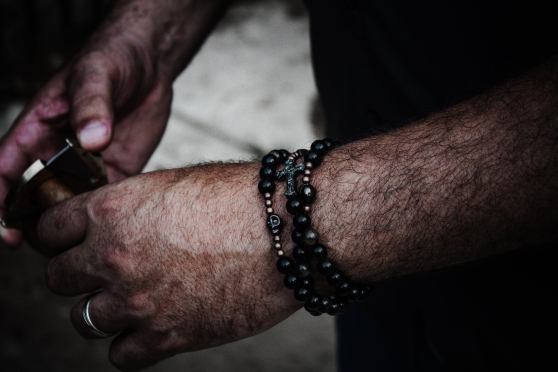
I have a bracelet I wear. Actually, it’s a Roman Catholic rosary, though I’m obviously not Catholic. The rosary, however, was crafted with a motif rooted in a medieval school of thought called Momento Mori that was adopted by monks and crusader knights alike.

Momento Mori is Latin and it translates “Remember your deathor more aptly “Remember you’re going to die.” It was a school of Christian thought in which individuals constantly kept the death sentence we all live under at the front of our conscious thought rather than stuffing it back in the recesses of cognitive denial. The notion of Momento Mori was that being daily reminded of, and meditating on, my mortality, it will motivate me to see this day differently, react differently, relate differently, and live differently. Momento Mori is working through the stages of grief and coming to acceptance of my impending death long before a doctor walks into the room and tells me I have cancer.

In the quiet this morning, I observe that Moses seems to have embraced the spirit of Momento Mori. Mo has humbly been obedient, despite being flawed and making tragic mistakes, ever since God appeared to him in the burning bush and announced He had a job. It isn’t recorded that he was rattled by the pronouncement that death will quickly follow this next task. He simply carries out the task.

Today is day 21,684 of my earthly journey. While it is probable that I will wake up to day 21,685 tomorrow morning, it is not guaranteed.

May I humbly live out this day faithfully following Jesus and being obedient to those things to which God has called me.

Momento Mori.

For anyone interested, the bracelet I reference, also pictured in today’s featured photo can be purchased from Crux Invicta.

If you know anyone who might be encouraged by today’s post, please share.

Promotional graphic for Tom Vander Well's Wayfarer blog and podcast, featuring icons of various podcast platforms with a photo of Tom Vander Well.
These chapter-a-day blog posts are also available via podcast on all major podcast platforms including Apple, Google, and Spotify! Simply go to your podcast platform and search for “Wayfarer Tom Vander Well.” If it’s not on your platform, please let me know!
A bracelet designed with a 'Momento Mori' motif, symbolizing the reminder of mortality, possibly displayed alongside a Bible or spiritual context.

Best of 2023 #8: Busy Livin’

Busy Livin' (CaD Job 17) Wayfarer

“…where then is my hope—
    who can see any hope for me?

Job 17:15 (NIV)

There is a classic scene in The Shawshank Redemption in which Andy and Red are sitting in the prison yard discussing hope of life on the outside. Andy shares his dreams of getting out, moving to Mexico, and living a quiet life on the coast. Red, who has no hope of getting out of prison, fears he wouldn’t know how to live on the “outside” and he chastises Andy for his pipe dream of life in Mexico. Andy then shares with Red the simple truth he has embraced: “You either get busy living, or you get busy dying.”

Along my life journey, I’ve known multiple individuals who have been given a terminal diagnosis. A business colleague of mine was diagnosed with cancer and was dead in 10 weeks. When my father was diagnosed with Myeloma, his doctor gave him the statistical probability he’d be dead, if I remember correctly, about four or five years ago. Not only is he still around, but on top of the Myeloma he survived a potentially fatal infection a few years ago. His stained-glass won a third-place ribbon at the Iowa State Fair this week, and he’s currently working on crafting a prayer bench for a friend (Way to go, Dad!).

I once had a friend who told me that he had an agreement with his physician that if he was ever diagnosed with cancer, the doctor was forbidden from sharing it with him. He told me that, as a pastor, he’d seen too many of his parishioners die from the diagnosis. Once the doctor told them they had cancer, they “got busy dying.” While I disagree with my friend’s solution to live in ignorance, I’ve never forgotten the lesson that led to his decision.

As I meditated on today’s chapter, I observed that Job appears to be “busy dying.” Given the tragic circumstances he’s experienced, it’s easy to understand why. He can’t see beyond his troubles. In Job’s mind, the agony has been so great that the anticipation of death feels like a relief. Job’s only hope, he states, is the grave. Like Red in The Shawshank Redemption, Job can’t imagine life outside the prison of his suffering, beyond the barbed wire of his pain.

One of the things that Jesus perpetually taught His disciples was to think outside the prison of our momentary circumstances, and to see beyond our finite earthly existence:

“Do not store up for yourselves treasures on earth, where moths and vermin destroy, and where thieves break in and steal. But store up for yourselves treasures in heaven, where moths and vermin do not destroy, and where thieves do not break in and steal. For where your treasure is, there your heart will be also.” Matthew 6:19-21 (NIV)

This is not to say, as the saying goes, that I “become so heavenly minded that we’re no earthly good.” Rather, a Kingdom world-view changes the way I see my earthly troubles. Paul’s earthly, real-life circumstances included, but were not limited to, the following experiences he shared with Jesus’ disciples in Corinth:

I have worked much harder, been in prison more frequently, been flogged more severely, and been exposed to death again and again. Five times I received from the Jews the forty lashes minus one. Three times I was beaten with rods, once I was pelted with stones, three times I was shipwrecked, I spent a night and a day in the open sea, I have been constantly on the move. I have been in danger from rivers, in danger from bandits, in danger from my fellow Jews, in danger from Gentiles; in danger in the city, in danger in the country, in danger at sea; and in danger from false believers. I have labored and toiled and have often gone without sleep; I have known hunger and thirst and have often gone without food; I have been cold and naked.
2 Corinthians 11:23-27 (NIV)

Despite this, Paul wrote in the same letter:

Therefore we do not lose heart. Though outwardly we are wasting away, yet inwardly we are being renewed day by day. For our light and momentary troubles are achieving for us an eternal glory that far outweighs them all. So we fix our eyes not on what is seen, but on what is unseen, since what is seen is temporary, but what is unseen is eternal.
2 Corinthians 4:16-18 (NIV)

So in the quiet this morning, I once again feel for Job and his sufferings. I don’t blame him for his very human reaction to unbelievable tragic circumstances. His anger and his sense of hopelessness are natural human emotions that he has to work through. He can’t see beyond the grave. As a disciple of Jesus, however, I am called to look beyond the grave. That’s what Jesus’ resurrection was about and it set up a spiritual paradox through which I, as a follower of Jesus, should view my circumstances. Though my earthly circumstances are terminal, because the reality is that every human being’s existence on this earth is terminal, I can still, in the midst of them, “get busy living” because this world is not my home.

As the song goes, this wayfaring stranger is headed home, over Jordan. There is no sickness, no toil, or danger in that bright land to which I go.

If you know anyone who might be encouraged by today’s post, please share.

Busy Livin’

Busy Livin' (CaD Job 17) Wayfarer

“…where then is my hope—
    who can see any hope for me?

Job 17:15 (NIV)

There is a classic scene in The Shawshank Redemption in which Andy and Red are sitting in the prison yard discussing hope of life on the outside. Andy shares his dreams of getting out, moving to Mexico, and living a quiet life on the coast. Red, who has no hope of getting out of prison, fears he wouldn’t know how to live on the “outside” and he chastises Andy for his pipe dream of life in Mexico. Andy then shares with Red the simple truth he has embraced: “You either get busy living, or you get busy dying.”

Along my life journey, I’ve known multiple individuals who have been given a terminal diagnosis. A business colleague of mine was diagnosed with cancer and was dead in 10 weeks. When my father was diagnosed with Myeloma, his doctor gave him the statistical probability he’d be dead, if I remember correctly, about four or five years ago. Not only is he still around, but on top of the Myeloma he survived a potentially fatal infection a few years ago. His stained-glass won a third-place ribbon at the Iowa State Fair this week, and he’s currently working on crafting a prayer bench for a friend (Way to go, Dad!).

I once had a friend who told me that he had an agreement with his physician that if he was ever diagnosed with cancer, the doctor was forbidden from sharing it with him. He told me that, as a pastor, he’d seen too many of his parishioners die from the diagnosis. Once the doctor told them they had cancer, they “got busy dying.” While I disagree with my friend’s solution to live in ignorance, I’ve never forgotten the lesson that led to his decision.

As I meditated on today’s chapter, I observed that Job appears to be “busy dying.” Given the tragic circumstances he’s experienced, it’s easy to understand why. He can’t see beyond his troubles. In Job’s mind, the agony has been so great that the anticipation of death feels like a relief. Job’s only hope, he states, is the grave. Like Red in The Shawshank Redemption, Job can’t imagine life outside the prison of his suffering, beyond the barbed wire of his pain.

One of the things that Jesus perpetually taught His disciples was to think outside the prison of our momentary circumstances, and to see beyond our finite earthly existence:

“Do not store up for yourselves treasures on earth, where moths and vermin destroy, and where thieves break in and steal. But store up for yourselves treasures in heaven, where moths and vermin do not destroy, and where thieves do not break in and steal. For where your treasure is, there your heart will be also.” Matthew 6:19-21 (NIV)

This is not to say, as the saying goes, that I “become so heavenly minded that we’re no earthly good.” Rather, a Kingdom world-view changes the way I see my earthly troubles. Paul’s earthly, real-life circumstances included, but were not limited to, the following experiences he shared with Jesus’ disciples in Corinth:

I have worked much harder, been in prison more frequently, been flogged more severely, and been exposed to death again and again. Five times I received from the Jews the forty lashes minus one. Three times I was beaten with rods, once I was pelted with stones, three times I was shipwrecked, I spent a night and a day in the open sea, I have been constantly on the move. I have been in danger from rivers, in danger from bandits, in danger from my fellow Jews, in danger from Gentiles; in danger in the city, in danger in the country, in danger at sea; and in danger from false believers. I have labored and toiled and have often gone without sleep; I have known hunger and thirst and have often gone without food; I have been cold and naked.
2 Corinthians 11:23-27 (NIV)

Despite this, Paul wrote in the same letter:

Therefore we do not lose heart. Though outwardly we are wasting away, yet inwardly we are being renewed day by day. For our light and momentary troubles are achieving for us an eternal glory that far outweighs them all. So we fix our eyes not on what is seen, but on what is unseen, since what is seen is temporary, but what is unseen is eternal.
2 Corinthians 4:16-18 (NIV)

So in the quiet this morning, I once again feel for Job and his sufferings. I don’t blame him for his very human reaction to unbelievable tragic circumstances. His anger and his sense of hopelessness are natural human emotions that he has to work through. He can’t see beyond the grave. As a disciple of Jesus, however, I am called to look beyond the grave. That’s what Jesus’ resurrection was about and it set up a spiritual paradox through which I, as a follower of Jesus, should view my circumstances. Though my earthly circumstances are terminal, because the reality is that every human being’s existence on this earth is terminal, I can still, in the midst of them, “get busy living” because this world is not my home.

As the song goes, this wayfaring stranger is headed home, over Jordan. There is no sickness, no toil, or danger in that bright land to which I go.

If you know anyone who might be encouraged by today’s post, please share.

Hope

The_Vision_of_The_Valley_of_The_Dry_BonesThey say, ‘Our bones are dried up and our hope is gone; we are cut off.’ Therefore prophesy and say to them: ‘This is what the Sovereign Lord says: My people, I am going to open your graves and bring you up from them….”
Ezekiel 37:11b-12a (NIV)

Over the past year, the news on the Vander Well home front has been less than encouraging. Late last summer my mother was diagnosed in the early stages of Alzheimer’s disease. In February of this year my dad was diagnosed with multiple myeloma, a treatable but incurable form of cancer in his bone marrow. This past Sunday dad told us that, based on the available data and the doctors’ formulas, they guesstimate that he has around 3.5 years left in this life journey.

As I read this morning’s chapter, I found myself identifying with the groans of the Hebrew exiles. There are times in life when we feel dried up, cut off, and without hope. But, the point of today’s chapter was God’s response which was to provide a word of hope. To an exiled people who had seen more than their fair share of death, God delivered through Ezekiel a message of homecoming, resurrection, and life.

I have known many who have battled terminal illnesses over the years. I have observed that one of the key differences in outcomes is determined by simple differences in attitudes. I am reminded this morning of God saying, “I have set before you life and death. Now, choose life, so that you and your children may live.” I recognize that there are stretches in each of our life journeys when we are free to choose to focus on despair and hopelessness, or to choose to focus on life and hope.

I pray that I always choose the latter.