Tag Archives: Imprisonment

Darkness & Chains

You know that everyone in the province of Asia has deserted me, including Phygelus and Hermogenes.
2 Timothy 1:15 (NIV)

I have a stack of letters from my college and young adult years. My friend Dave and I became pen pals during those years. It wasn’t something we consciously intended to do. He was still a senior in high school and I was a freshman in college. I told Dave to write me sometime. This was 1984. There was no internet or email. Cell phones were over a decade away from becoming a thing. Long distance phone calls were expensive. Snail mail was the go-to channel of communication for poor students like me.

When I got a letter from Dave, I immediately wrote him back. Then he wrote me back, and we never stopped. Dave went on to study and teach in France. The stack of letters and postcards I have from him in those years number into the hundreds.

Without the immediacy of digital communication, there was a lot that could happen in life between letters. I remember times in which I poured my heart onto the page knowing that Dave would not read it for a week or more and it would be another week or more before I got his response. It was a very different reality.

That reality is evident between Paul’s first letter to Timothy that we finished yesterday and his second letter we begin today. So much has happened between the two letters that it’s impossible to understand the full context of Paul’s words and emotions without knowing the events.

Paul had been a prisoner in Rome previous to the writing of 1 Timothy. He was arrested for creating a public disturbance in Jerusalem. He appealed his case to Caesar as was his right as a Roman Citizen. He sailed to Rome and lived under house arrest while awaiting trial. Eventually, he was released.

Whether his case was dismissed or he was released on furlough, we’ll never know. Paul began traveling and visiting the local gatherings of Jesus’ followers he’s established in various cities. That was the context of 1 Timothy as Paul instructed his young protégé and urged him to pray for all rulers and authorities, which included Roman Emperor Nero “that we may live quiet and peaceful lives.”

Sometimes our prayers don’t yield the results we desire, even for Paul.

Rome burned and the populace blamed Nero. Nero needed a political scapegoat to redirect the blame. He chose a pesky Jewish sect that had been on the rise and creating conversation across the empire. They were called Christians and they were an easy target. Nero blamed the burning of Rome on the Christians. He ordered the rounding up Christians that they might be tortured and executed in the most heinous of ways, and Rome had sadistically created many heinous forms of torture and execution.

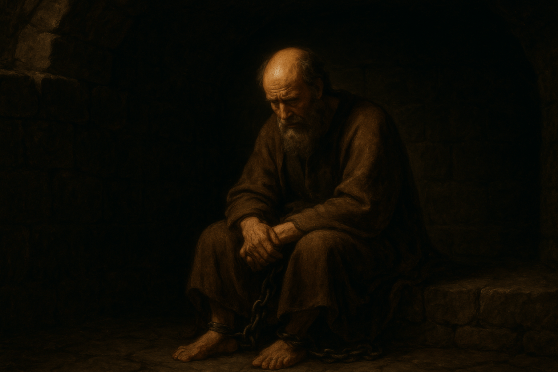
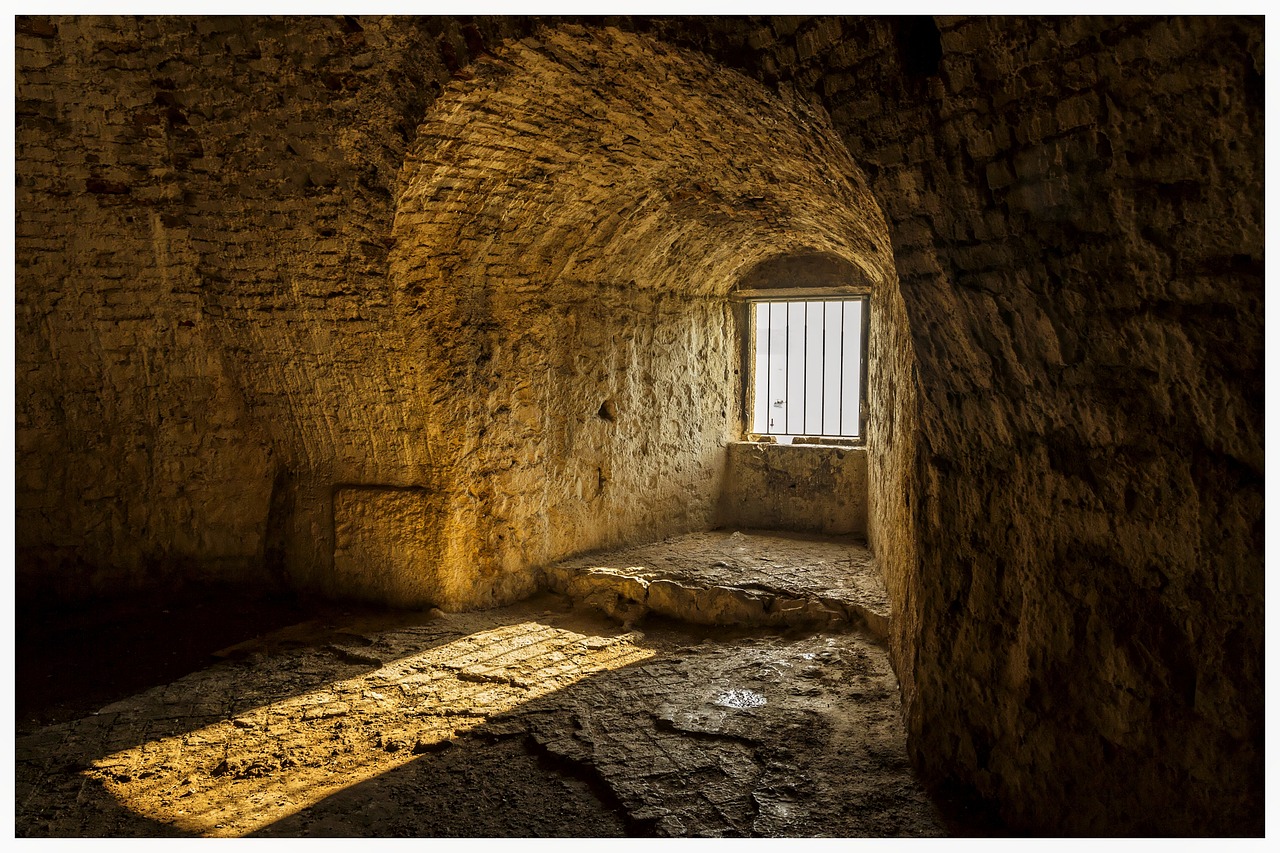
Paul, the firebrand preacher who stirred things up wherever he went, was arrested. No house arrest this time. Paul was thrown into a deep, dark dungeon. He was chained to a wall in the dark. With the Romans arresting, torturing, and executing Christians, many followers decided that maybe they didn’t believe after all. Others distanced themselves from Paul, not wanting to get swept up in his wake and find themselves chained next to him in the dungeon.

Paul was alone in the dark in his chains. He felt abandoned. He knew that his time was short. There would be no dismissing of the charges this time. There would be no furlough. His execution is imminent. His second letter to Timothy is Paul’s final letter. It’s his swan song and his last will and testament.

In today’s opening chapter, Paul is torn in two directions. With his impending death, he knows that Timothy is going to find himself leading the gathering of believers in Ephesus without Paul’s tutelage. He wants to encourage Timothy and provide some final instructions before he dies. At the same time, Paul is desperate for Timothy’s company and wants Timothy to visit him.

Stay and lead well, or leave to be with Paul in Rome?

Yes. The opening of the letter expresses the inner conflict and emotions with which Paul was struggling in his dire circumstances.

There was no postal service in the Roman Empire. You had to find people to carry and deliver letters for you. As Timothy cracks open the letter to read it, there is the added emotion of knowing that Paul might have even been executed in the time it took for the letter to reach him. If he does leave Ephesus to visit Paul in Rome, will he even find Paul alive? Will he be thrown into prison and executed with Paul. Colleagues like Phygelus and Hermogenes had clearly decided that they’d rather not risk their own necks to be associated with Paul. Timothy was faced with the same dilemma.

Meditating on the depressing realities that Paul and all believers were facing under Nero’s persecution, I am once again reminded that life in this fallen world does not always turn out the way we’d hoped. Sometimes prayers for lives of peace and safety are answered with the violence of the kingdoms of this world. Not just for Paul in Rome, but for believers around the world today.

Believers in China and North Korea regularly find themselves at risk for persecution, imprisonment, torture, and execution. Christins in Nigeria are being rounded up and slaughtered. It is estimated that 52,000 Christians have been killed by Muslim militants since 2009. Five million people have been displaced because of persecution against Christians.

In the quiet this morning, I find myself grateful for the peace, the quiet, and the safety with which I can currently pursue my faith and my life. I’m whispering a prayer for those who, like Paul, lie in darkness and chains. Those who feel alone and abandoned in their persecution. Those who face the possibility of being tortured or executed this day because of their faith in Jesus.

Lord, have mercy.

If you know anyone who might be encouraged by today’s post, please share.

Promotional graphic for Tom Vander Well's Wayfarer blog and podcast, featuring icons of various podcast platforms with a photo of Tom Vander Well.
These chapter-a-day blog posts are also available via podcast on all major podcast platforms including Apple, Google, and Spotify! Simply go to your podcast platform and search for “Wayfarer Tom Vander Well.” If it’s not on your platform, please let me know!

Political Imprisonment

Political Imprisonment (CaD Acts 24) Wayfarer

At the same time {Governon Felix] was hoping that Paul would offer him a bribe, so he sent for him frequently and talked with him.
Acts 24:26 (NIV)

Wendy and I are long-time readers of the Wall Street Journal. Over the past year, we’ve been following the case of Evan Gershkovich, a WSJ journalist in Russia, who has been arrested and imprisoned on a trumped-up charge of espionage. It is a game the Putin regime plays on a regular basis, arresting high-profile individuals who can be traded for his henchmen who have been captured in the West. It’s a terrible situation for the victims like Gershkovich who’s done nothing to deserve his fate, but it has worked time-and-time-again for Putin, so he’ll keep doing it. It’s the way the world works.

In today’s chapter, Paul is tried before the Roman Governor, a corrupt and incompetent leader named Felix. Felix only lasted a few years as Governor and was eventually recalled to Rome to answer for his poor leadership.

It’s easy to miss the political game into which Paul has been swept, but it’s important context. Paul has one motivation: To be a witness of Jesus, His resurrection, and the eternal salvation He offers. For every other player in the events of these final chapters of Acts, their motivations are personal and political.

The Roman Empire holds sway throughout the Western world. The Empire’s prevailing desire is to maintain power, maintain peace, and keep tax revenues flowing to Rome. In Judea, keeping the peace means dealing with the Jewish leaders who control the Jewish population. The Jews hate the Romans and the Romans despise the Jews, but they have to deal with one another.

To complicate the issue, Paul was born a Roman citizen. His parents were tentmakers in Tarsus, and were likely providers of tents for the Roman legions. It’s speculated that their family may have been granted citizenship for their service in outfitting Roman armies, or perhaps they were wealthy enough to purchase citizenship.

Being a citizen of Rome was not something every person born in the Empire received like you do in countries like the United States. Citizenship had to be purchased or granted, and relatively few people had it. Roman citizenship was more like having an elite status with the airlines that gave you all sorts of perks like free first-class upgrades that the majority of fliers back in economy class could only dream about.

The Jewish ruling council couldn’t just deal with Paul as they did Jesus, who was a nobody in Rome’s eyes. Rome took care of its citizens, which means Felix has a political blue-chip in Paul. The Jews want Paul dead, but Felix holds the power to give them what they want or hold on to Paul and string them along just to make them mad. Furthermore, being a citizen was typically a sign of wealth, and Paul’s testimony was that he came to Jerusalem with money for the poor. If Paul has access to money, perhaps he will offer Felix a bribe for his release. Felix doesn’t care about Paul. He cares about himself, his pocketbook, and his power.

The thing I found fascinating as I meditated on the chapter this morning is to compare Paul to everyone else in the situation. Paul is simply a disciple of Jesus who is focused entirely on bringing God’s Kingdom to earth in any and every way he can. This is such a contrast to both Felix and the Jewish leaders who represent people of this world, living for this world, and representing kingdoms of this world. Felix keeps summoning Paul for conversations hoping Paul will offer him a bribe. Why would Paul offer Felix a bribe? Paul cares more about the opportunity to talk to Felix, the Roman Governor, about Jesus than he cares about his freedom.

In the quiet this morning, I can’t help but wonder how I might fare if I were unjustly arrested and detained simply because of my faith. As I think about it, I tend to think that the situation would reveal a lot about me and that which I believe. If I am focused on this life and the things of this world, then it would likely cause all sorts of spiritual, mental, and physical anguish. If, however, I am focused on God’s Kingdom and His righteousness, then I suspect I have a completely different attitude entirely.

Of course, I hope never to end up in those circumstances. Yet, as I reflect on it in the quiet, I realize that the same contrast exists today as I live in freedom and affluence. Do my life and my actions reflect a person who is living for this world and the things of this world, or do they reflect a person living to bring God’s Kingdom to earth?

If you know anyone who might be encouraged by today’s post, please share.

Suffering Granted

Suffering Granted (CaD Php 1) Wayfarer

For it has been granted to you on behalf of Christ not only to believe in him, but also to suffer for him.
Philippians 1:29 (NIV)

There was an interesting article in the Free Press recently written by a scientist who confesses that he purposely chose not to tell the whole truth in order to get his article published in a prestigious magazine. He brazenly admits he did so for personal gain. As a scientist and an academic, getting published is crucial to his career. He goes on to explain that it is currently impossible to get published if he doesn’t stick to the narrative that the magazine editors demand.

He writes:

In theory, scientific research should prize curiosity, dispassionate objectivity, and a commitment to uncovering the truth. Surely those are the qualities that editors of scientific journals should value. 

In reality, though, the biases of the editors (and the reviewers they call upon to evaluate submissions) exert a major influence on the collective output of entire fields. They select what gets published from a large pool of entries, and in doing so, they also shape how research is conducted more broadly. Savvy researchers tailor their studies to maximize the likelihood that their work is accepted. I know this because I am one of them.

When I was a young man and a relatively new disciple of Jesus, I observed that Christian fundamentalists wanted power to control the speech and behavior of everyone. For the record, I never agreed with this tactic and I still don’t. I find it the direct opposite of what Jesus calls me to do and be. What has been fascinating is to watch the pendulum swing in my lifetime. It is another type of fundamentalism that seeks to use power and fear to control both speech and behavior in culture today. One of the things I continue to observe in many different pockets of our current culture is the refusal to say what one believes or knows out of fear of being ostracized or canceled. I see it happening in business, entertainment, politics, religion, as well as in science and education at every level.

Today I begin the short, four-chapter trek through Paul’s letter to the followers of Jesus in the Roman city of Philippi. Paul writes the letter from imprisonment in Rome. He was actually under house arrest in a dwelling he had to pay for himself. It was a time when being a follower of Jesus could get you persecuted and canceled in the Roman Empire for a number of reasons by different constituencies.

In the opening of his letter, Paul expresses contentment in his circumstances of incarceration He finds a silver lining in the fact that his Roman guards are a captive audience to hear about Paul’s faith, and while under house arrest he could receive visitors. Paul also expresses appreciation for the fact that his imprisonment has prompted others not to be so afraid of identifying themselves as followers of Jesus, even if it means being canceled.

Paul then writes something that I found extraordinary as I read it in the quiet this morning: “For it has been granted to you on behalf of Christ not only to believe in him, but also to suffer for him….”

I read these words having just finished this chapter-a-day trek through the book of Job. The prevailing attitude in the Job story is that suffering is bad and a sure sign of God’s punishment for sin while prosperity is a sign of God’s approval and blessing. I observe that this prevailing attitude remains fairly entrenched, and this makes Paul’s statement downright counter-cultural!

Suffering for being a follower of Jesus is a privilege granted by the Almighty.

As I continue to observe and ponder the trends I see in our current culture, I also see that being a follower of Jesus seems to be increasingly out of vogue. Please don’t read what I’m not writing. I’m not trying to be hyperbolic or claim some sort of victim status. I am simply stating what I have observed as a growing trend in which, for the first time in my lifetime, it seems even possible that I could be canceled because of my faith. I hope this is not true, but just the possibility is sobering.

I head into my day reminded that Jesus told his disciples to expect suffering. As Paul writes to the disciples in Philippi, I’m to consider it a privilege if it were to happen. This is a teaching that many regular church attenders have never heard, and don’t want to hear. Even churches have their own version of cancel culture.

If you know anyone who might be encouraged by today’s post, please share.

God and His Resources

paul before felix

At the same time he hoped that money would be given him by Paul, and for that reason he used to send for him very often and converse with him. After two years had passed, Felix was succeeded by Porcius Festus; and since he wanted to grant the Jews a favor, Felix left Paul in prison. Acts 24: 26-27 (NRSV)

Over two years Paul was imprisoned by Governor Felix. Over two years he lived under house arrest. No crowds got to hear Paul speak. Paul did not get to journey from town to town speaking to and encouraging fellow believers. For over two years Paul basically had an audience of one Roman Governor and his wife who would occasionally send for him to have a conversation.

I’ve learned along life’s road that God’s ways are not always our ways. We tend to look at Paul’s imprisonment and think what a waste to have Paul languishing under house arrest when there were so many other things he could have been doing with his time and talents. I wonder if Paul thought that too, or if he was content knowing that he was right where he was supposed to be and doing what he was supposed to do.

Sometimes we have to trust that God knows what He is doing with the use of His resources.