Tag Archives: Foreigner

“Because You Were Foreigners”

He defends the cause of the fatherless and the widow, and loves the foreigner residing among you, giving them food and clothing. And you are to love those who are foreigners, for you yourselves were foreigners in Egypt.
Deuteronomy 10:18-19 (NIV)

I dropped my car off to be serviced yesterday. I was given a ride home and had a very enjoyable conversation with the young man who was tasked with driving me. He was raised in a very different place and culture and was obviously getting used to the quirks of living in a community built by Dutch settlers. He asked if I was from Pella.

I laughed.

With the last name Vander Well, I told him that he had made a safe assumption. Then I informed him that when I moved into the community over 20 years ago, it was obvious that everyone who was from Pella knew that Vander Well is not a Pella Dutch name. My great-grandfather settled in northwest Iowa.

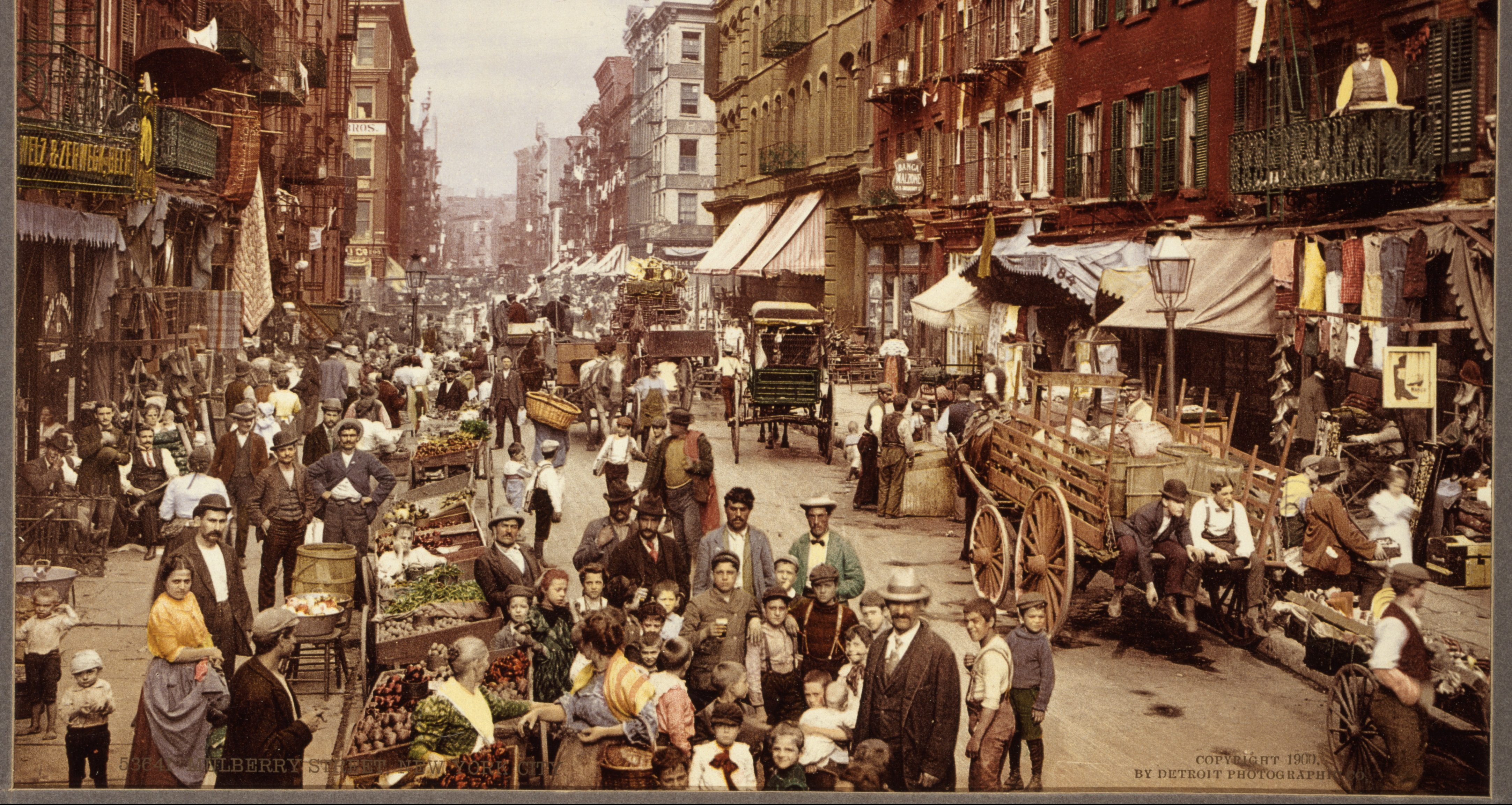
I am of the third generation of a Dutch immigrant in America. I live in a community settled and created by Dutch immigrants. As I’ve studied the history of the great Dutch migration in the 19th century and the history of our community, I’ve discovered a double-edged sword.

On one hand, there is a lot for which to be grateful. There is a legacy of faith, industriousness, frugality, and pride. These are the foundation of an amazing community and heritage we perpetually honor and celebrate. On the other edge of the sword is self-righteousness religiosity, legalism, judgement, and prejudice. I’ve heard many painful stories. Individuals outcast and ostracized. Divisions leading to hatred and resentment. Outsiders unwelcome.

Welcome to humanity.

Moses is leading a similarly human people, which is why in yesterday’s chapter he reminded them three times that God’s choosing them and giving them the Promised Land was not because they earned it or deserved it. Quite the opposite, they had perpetually proven themselves stubborn, whiny, ungrateful, disobedient, and faithless. Which is why today’s chapter is so powerful.

God tells Moses to chisel out two stone tablets to replace the ones he’d smashed. It’s God saying, “Come back up the mountain. I’ll make you a copy of the Ten Words. Oh, and bring a box, an ark, to provide a womb for my Words.”

Second chances. Their brokenness and failure does not negate God’s love, His covenant, or His gracious faithfulness. He is going with them. He will live among them, smack-dab in the middle of their camp. He will fulfill His plans for them, work His purposes through them, and deliver on His promises to give them possession of the land. All this despite them being stubborn, whiny, ungrateful, disobedient, and faithless.

This is the gospel before the Gospel.

The chapter then shifts. In light of God’s grace and mercy what does He ask of His people?

This is the heart of God and the heartbeat of His Great Story. This chapter is what Jesus channels and quotes repeatedly.

Circumcise your hearts. This isn’t about religious observation, but about transformation of spirit that leads to grateful love of God and the tangible love of others.

Love God. Love others. Jesus said those two commands summed up the whole of the Law of Moses.

Then God reminds His people – again – that if they are going to truly love others they need to love the ones He loves. The orphan. The widow. The outcast. The foreigner. The immigrant. The outsider.

Moses is building on zachor – moral memory – that flowed through yesterday’s chapter. God whispers: “Remember your chains. Remember your story – your history – being foreigners and slaves in the land of another people. Treat foreigners among you with the love, grace, and hospitality you wished Egypt had shown you. Be different. Follow my ways, not the ways of the world.”

As I meditated on these things in the quiet this morning, I was amazed at how much it resonated with our current culture and headlines. Borders, immigration, ICE raids, deportations, foreigners, and migrant workers fill never ending news cycles. Ancient Hebrews. 19th century Dutch settlers. 21st century foreigners and immigrants. What goes around comes around.

Welcome to humanity.

I don’t control national policy. I live far from my country’s borders. But, I can take to heart what God asks of me. The very thing He asked of His people through Moses. Love Him. Love others. Especially those who aren’t like me.

As we pulled into the driveway of our home, I thanked my young chauffeur sincerely. I wished him well. He was from a very different place, a very different people, and a very different heritage. He was a fine young man. I liked him a lot. He’s going to do really well here in our community. We’re fortunate he’s here, even if his name makes it obvious that he’s not from around here.

If you know anyone who might be encouraged by today’s post, please share.

Promotional graphic for Tom Vander Well's Wayfarer blog and podcast, featuring icons of various podcast platforms with a photo of Tom Vander Well.
These chapter-a-day blog posts are also available via podcast on all major podcast platforms including Apple, Google, and Spotify! Simply go to your podcast platform and search for “Wayfarer Tom Vander Well.” If it’s not on your platform, please let me know!
Logo of the Bible Gateway website, featuring an open book icon in orange on the left and the website name in black text.

“Jesus People Very Nice”

“Jesus People Very Nice” (CaD Ex 23) Wayfarer

You shall not oppress a resident alien; you know the heart of an alien, for you were aliens in the land of Egypt.
Exodus 23:9 (NIV)

My Vander Well family in America is here because of one ancestor, Walter Vander Well (born Wouter van der Wel) who came to the States from South Holland and settled in northwest Iowa in the 1880s. He was part of multiple waves of Dutch immigrants who settled across Michigan and Iowa, founding rural towns like the one Wendy and I call home today. Five generations later there’s a small army of Walter’s descendants spread across the continent from Michigan to Iowa, Canada, and all the way to the west coast.

Immigration is a fascinating thing. Wendy and I were privileged to see a play at London’s National Theatre back in 2009. It was called England People Very Nice by Richard Bean. The setting of the play is a poor tenement building in London and a neighborhood pub. It humorously chronicles the multiple waves of immigrants to flood into Britain over time from French, to Irish, to Jewish, and Bangladeshi. Each wave lands in the low-rent tenement building and raises the ire of the locals in the pub. The previous wave who was hated by the locals, now find themselves being the locals hating the next wave of immigrants. It continues to stir conversation for Wendy and me in light of the immigration issues of our day.

I have observed this same pattern in the experience of my Dutch ancestors who initially struggled to acclimate to life in America. The Dutch huddled together in small communities and clung to their Dutch neighbors, language, and way of life. This often fueled local resentment towards them. My grandparents were both the first generation born in the States and they both spoke Dutch fluently. They refused to teach my father and his brother because of prejudice against the Germanic sounding language during World War II. Our little town, both steeped in its Dutch heritage and proud of its successful American experience, is now sometimes criticized (a la England People Very Nice) of being closed to aliens moving in.

In today’s chapter, God continues to provide the ancient Hebrews with specific rules for life. God repeats the rule mentioned in yesterday’s chapter about treating foreigners living among them with deference. Fascinating that it’s mentioned twice in such proximity to one another in the text. It leads me to wonder if the repetition speaks to the importance God places on it, or the knowledge that it will a tough one to obey given human nature. I personally conclude that it’s a case of “both, and.”

As I mulled this over in the quiet this morning I couldn’t help but think, once again, beyond the letter of the law in the text, to the Spirit of the law to which Jesus pointed time and time again. Far from being obedient to the command, Jesus’ people separated themselves from the aliens living among them. They treated foreigners and those of mixed-race, like the Samaritan people, as inferior. They created systemic social and religious barriers much like the ones we are addressing in our own culture today.

When Jesus told the story of the Good Samaritan, when He spoke to the Samaritan woman at the well, and when He commanded His followers to take His message to Samaria, He was addressing systemic racial prejudice. Jesus was pointing His own people back to the heart of God that motivated the law repeated twice in yesterday’s chapter and today’s. He was, essentially, pointing to His own law of love: “Love your neighbor as yourself.” Isn’t that what God says in the text? “You’ve been an alien in a foreign land. You know what it’s like. You’ve been the victim of prejudice and hate. So treat the aliens living among you with loving-kindness the way you wished you’d been treated in Egypt.”

Jesus’ followers did just that and “turned the world upside-down.

I’m reminded this morning that Jesus was not about adherence to textual rules. Jesus was about following God’s Spirit to speak, act, and relate to others in accordance with God’s heart. As a follower of Jesus, I’m called to do just that in my own world and my own culture. That’s what I want to do. That’s who I want to be, increasingly, this day and each day of this earthly journey.

Of course, that requires me to act differently than human nature has led people to behave in ancient Judea, in London tenement houses, and in Dutch-settlements in America, along with almost every other people group on the earth. May I speak and behave in such a way, with anyone with whom I interact, regardless of what they look like or where they are from, that it would be said of me: “Jesus’ people very nice.”

If you know anyone who might be encouraged by today’s post, please share.

Spiritual Bankruptcy

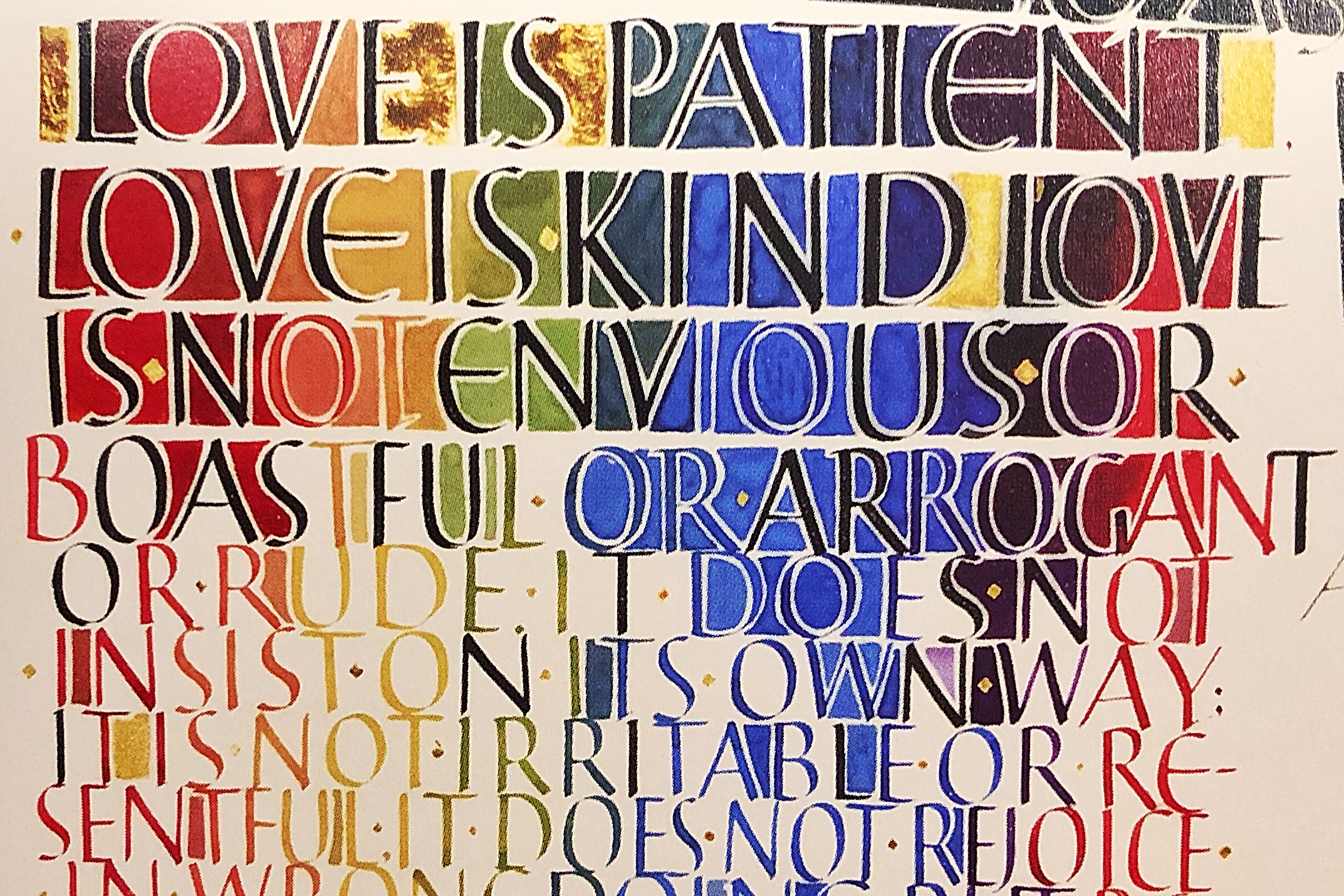
If I speak with human eloquence and angelic ecstasy but don’t love, I’m nothing but the creaking of a rusty gate.

If I speak God’s Word with power, revealing all his mysteries and making everything plain as day, and if I have faith that says to a mountain, “Jump,” and it jumps, but I don’t love, I’m nothing.

If I give everything I own to the poor and even go to the stake to be burned as a martyr, but I don’t love, I’ve gotten nowhere. So, no matter what I say, what I believe, and what I do, I’m bankrupt without love.
1 Corinthians 13:1-7 (MSG)

It is possible to be religious, but not loving.
It is possible to be righteous, but not loving.
It is possible to be generous, but not loving.
It is possible to be doctrinally sound, but not loving.
It is possible to be right, but not loving.
It is possible to be politically correct, but not loving.
It is possible to be a defender of truth, but not love your enemy.
It is possible to know all scripture, but not love those who mock you.
It is possible to have spotless church attendance, but not love.
It is possible to have spiritual discipline, but not love.
It is possible to have success, but not love.
It is possible to have a million followers, but not love.
It is possible to have good intentions, but not love.

Jesus said there were two basic laws:
1) Love God with all your heart, soul, mind, and strength.
2) Love your neighbor as you love yourself.

When pressed to define who He meant by “neighbor,” Jesus told the story of the Good Samaritan. In the story, the person who had love was a foreigner and an immigrant. The person who had love carried scars from being the victim of racial prejudice, injustice and systemic social, political, and economic ostracization. The person who had love held heretical doctrinal beliefs. The person who had love stood condemned by the prevailing  institutional religion of which Jesus was a part. But, the hated, heretical, outcast foreigner had love, and Jesus’ story made clear that love was the one thing that mattered to God.

On this life journey I’ve taken a good  hard look at myself, and the prevailing institutional religion of which I am a part.

We still haven’t learned the simple and most basic lesson Jesus ever taught. All of my spirituality, righteousness, and religion is bankrupt without love.

Lord, help me love.

featured image is a detail from the St. John’s Bible

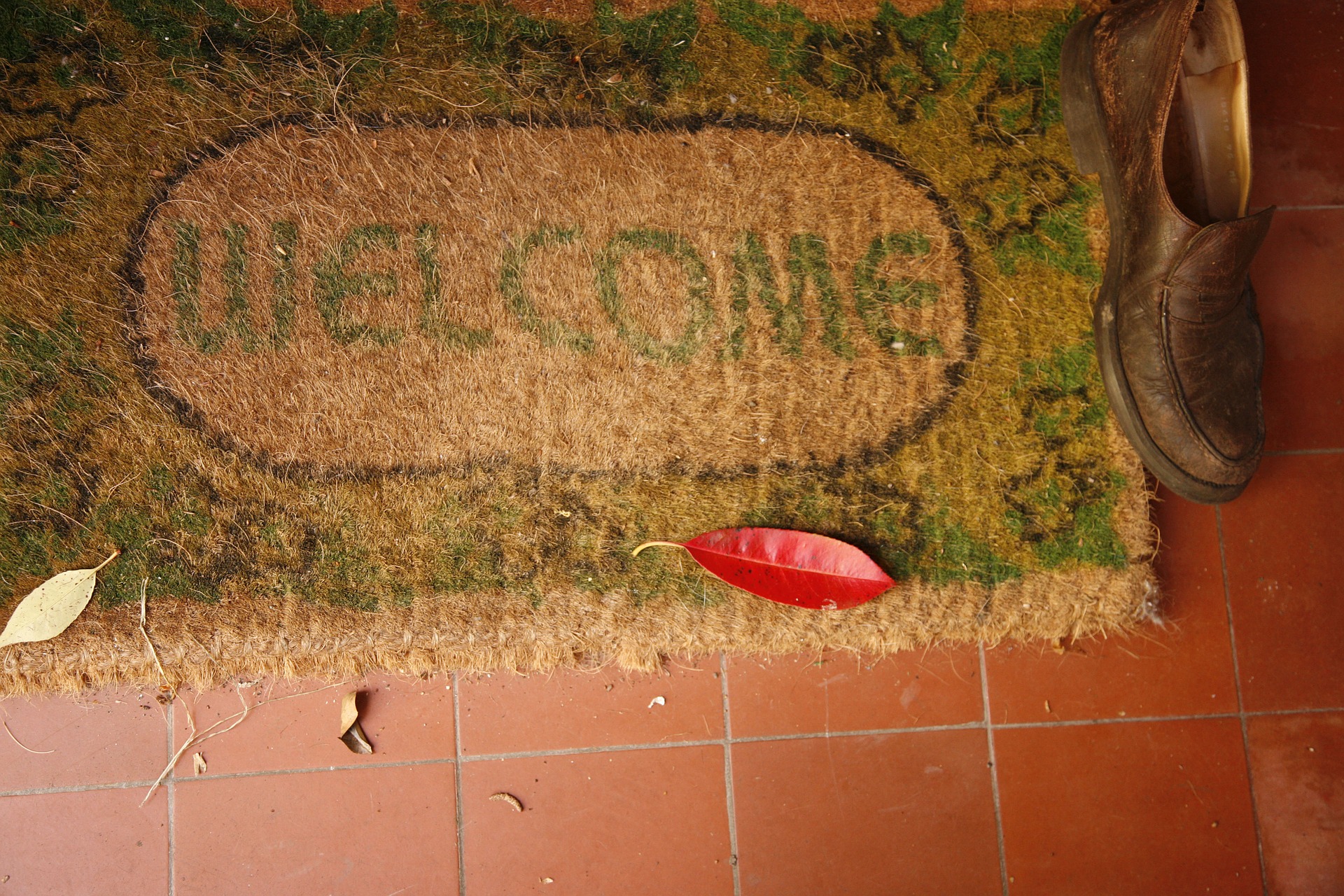
Everyone Welcome (…or not)

Do not forget to show hospitality to strangers, for by so doing some people have shown hospitality to angels without knowing it.
Hebrews 13:2 (NIV)

When I was young, my parents continually told me and my siblings “Your friends are always welcome in our house.” They meant it. I can remember nights when entire groups of my brothers’ friends would show up. My brothers weren’t home, but their friends would sit around the living room with my parents for long chats. As the youngest sibling, I observed the warmth of my parents hospitality and the effect on those high schoolers.

As I got older, I never hesitated to offer to have an impromptu social at our house with entire throngs of my friends. Wendy has convinced me, in retrospect, that it would have been more respectful if I had actually called my parents to ask permission or to give them a little warning. My parents, nevertheless, always laughed and rolled with it. I even told college friends to call my parents if they needed a place to crash on their drive home to the west coast. That happened, and my parents still enjoy telling the story.

I endeavored to have the same hospitality that I witnessed in my parents. I want our home to be a place of welcome, warmth, conversation, and love. I never want visitors to feel like a burden.

Along my life journey I’ve come to realize that hospitality is not a strong suit of my culture. I’ve attended predominantly black churches and received warm welcome that I knew would not be equally reciprocated if they came to my church on Sunday. I grieve this truth.

When I travelled in the middle east I regularly encountered the unbelievable hospitality of Muslims whom I expected to treat me like an enemy. Our daughters have experienced the same in their travels and missions overseas. I will never forget our daughter’s observation that the most Christ-like people she’d encountered were not her missions team, but a Muslim shopkeeper and his wife who invited her to dinner. Once again, we know in our hearts that our foreign hosts would likely not receive an equally hospitable welcome in our community. I grieve this truth.

This morning I’m thinking about my own posture towards hospitality. It’s easy to be hospitable to people of my choosing, with whom I am comfortable. I am reminded of Jesus’ parable of the Good Samaritan. In Jesus’ estimation, the one who truly loved his neighbor was the one who showed sacrificial hospitality to a perfect stranger in need who didn’t look like him, come from the same community as him, or believe the same things. I confess this morning that if you measure my hospitality by Jesus’ definition, I am found wanting.

Lord, have mercy on me.

I have some work to do.