Tag Archives: Daniel 1

Serving the Enemy

Serving the Enemy (CaD Dan 1) Wayfarer

The king talked with them, and he found none equal to Daniel, Hananiah, Mishael and Azariah; so they entered the king’s service.
Daniel 1:19 (NIV)

Over the past several months, this chapter-a-day journey has traversed the history of the period of the monarchy of the ancient nation of Israel as told in the books of Samuel and Kings. That period of history ends with the destruction of Jerusalem by the Babylonians in 586 B.C. At that point, a new period of history began known as “the exile.”

The nature of empire-building evolved in ancient history. As emerging empires captured more and more territory, they had to learn how to exert power and control over kingdoms and cities that were in increasingly remote locations. The way the Babylonians did it was to bring all of the prominent peoples of a conquered kingdom (politicians, religious leaders, and nobility) into captivity. This allowed the empire to keep its eyes on those most likely to rebel, and those most likely to rebel found themselves in the heart of enemy territory where they would be impotent to instigate a rebellion back home.

Since we’ve already come this far in the journey, I thought it would make sense to follow these captives to Babylon. Today, we pick up the story in the book of Daniel. Daniel was a young man from Judah who was among the first captives taken to the land of his enemy in Babylon. In today’s chapter, he and three of his friends are among those chosen for the king of Babylon’s “re-education” program. They were taught to become Babylonians. They learned the language, the stories, and the customs of the Babylonians. They were given new names to go along with their new lives and circumstances.

The story of Daniel is fascinating from a historical perspective, but I find what’s happening spiritually to be even more fascinating. This exile had been prophetically proclaimed by the Hebrew prophets for years. In fact, prophets like Jeremiah made it clear that the king of Babylon was acting as God’s servant in the event:

Therefore the Lord Almighty says this: “Because you have not listened to my words, I will summon all the peoples of the north and my servant Nebuchadnezzar king of Babylon,” declares the Lord, “and I will bring them against this land and its inhabitants and against all the surrounding nations.
Jeremiah 25:8-9 (NIV)

Going even further, God tells the captives like Daniel to embrace their new lives in enemy territory and bless their enemies:

This is what the Lord Almighty, the God of Israel, says to all those I carried into exile from Jerusalem to Babylon: “Build houses and settle down; plant gardens and eat what they produce. Marry and have sons and daughters; find wives for your sons and give your daughters in marriage, so that they too may have sons and daughters. Increase in number there; do not decrease. Also, seek the peace and prosperity of the city to which I have carried you into exile. Pray to the Lord for it, because if it prospers, you too will prosper.”
Jeremiah 29:4-7 (NIV)

Through the 102 chapters of ancient history that we’ve just traversed on this chapter-a-day journey, the narrative has been focused on God’s people and what God was doing in and through them. Suddenly, God tells them that He is also working in and through their enemy. Like yesterday’s chapter, God makes it clear that He has a purpose for them in the wilderness of their captivity. God wants them to bless their enemies, serve them, and pray for them.

On a national, geopolitical level this is a massive shift. But it’s a foreshadowing of the very heart of what Jesus would bring down to a personal, individual level:

“You have heard that it was said, ‘Love your neighbor and hate your enemy.’ But I tell you, love your enemies and pray for those who persecute you, that you may be children of your Father in heaven. He causes his sun to rise on the evil and the good, and sends rain on the righteous and the unrighteous. If you love those who love you, what reward will you get? Are not even the tax collectors doing that? And if you greet only your own people, what are you doing more than others? Do not even pagans do that?”
Matthew 5:43-47 (NIV)

In the quiet this morning, it strikes me how often along my spiritual journey I’ve had an “us vs. them” mentality politically and religiously. The history of the Babylonian exile and the shift in God’s paradigm with His people reminds me that God’s love is for all people. His purposes are for all people. If I am going to truly follow where Jesus leads, then I have to let go of my notions of “them.” I have to be willing to see God’s love for my enemy, live in the land of my enemy, bless my enemy, and even serve my enemy.

That’s at the heart of what He calls me to be and do.

If you know anyone who might be encouraged by today’s post, please share.

Chorus to a Tale of Pain & Purpose

In the third year of the reign of Jehoiakim king of Judah…
And Daniel remained there until the first year of King Cyrus.
Daniel 1:1a, 21 (NIV) 

In the history of theatre, Greece was the first great age. The Greeks developed several theatrical conventions that are still widely used today including the use of what was called a Chorus to prepare the audience for what they are about to watch and to narrate the events. Shakespeare used the same convention widely in his plays, as do many modern productions.

The first chapter of Daniel is the literary equivalent of a Chorus. The author, traditionally ascribed to Daniel himself, uses the opening of the book to provide a quick lay of the land with regard to the background of the story and introduces us to the major players. The fact that the chapter describes Daniel and his companions as being learned young men who were then given a thorough course in Babylonian literature and culture, is ironic. It seems to me that the chapter itself gives evidence to this in its structure and content.

In the next year, our local gathering of Jesus’ followers will be studying the theme of exile. I’ve written in previous posts about the theme of wilderness throughout the Great Story. The exile of God’s people in Babylon is one of the major examples and many casual readers don’t realize just how many characters, psalms, and books come out of this period. Jeremiah, Lamentations, Daniel, Esther, Ezekiel, and Nehemiah are all books that chronicle parts of the Babylonian exile and return.

In today’s chapter, Daniel provides bookend dates of the story he’s about to pen. It starts in the “third year of Jehoiakim king of Judah” and ends the first year of King Cyrus. A little study shows this to be 605-539 B.C. In other words, Daniel was an educated young man from nobility in Israel’s southern kingdom of Judah. His hometown is destroyed in a long Babylonian siege in which Daniel watched people starve to death and, according to the prophet Jeremiah, reduced to cannibalism to survive.

Out of this horrific event, Daniel is taken captive by his enemy. He is torn from his family, his people, and his hometown which has been reduced to rubble. He ends up in the capital city of his enemy, Babylon, and finds himself subject to indentured servitude to his people’s enemy number one: King Nebuchadnezzar. Daniel’s own name is taken from him and he is given a new name. He is forced for three years to learn everything about the history, culture, and literature of his enemy.

A young man of God forced to live in captivity and exile and to serve his enemies for about 65 years. Welcome to the story of Daniel, whom many people only know from brightly illustrated children’s books in the dusty Sunday School memory bins of their brains.

But the real story is far deeper and more complex than that, as Daniel tries to tell me as a reader in his opening Chorus. It is the story of a young man who finds a way to survive. He courageously maintains and lives out his faith in the midst of the unbelievably difficult circumstances that make up nearly his entire life.

In the quiet this morning I find myself mulling over the common misperception I observe followers of Jesus often have, and that I confess I find myself unconsciously falling into from time to time. It’s partially driven, I believe, by the American Dream and the Protestant work ethic. If we believe, work hard, and live good lives then life should be a breeze of material blessing and pain-free existence. But as I journey through God’s Message I find that this has never been the message. Daniel fires an explosive shot across the bow of that notion from the very beginning of his story.

Trauma, suffering, starving, captivity, bondage, indentured servitude, and life-long exile in the land of his enemies serving a mad king.

I find God’s purpose in my pain. That’s the message Daniel foreshadows in the Chorus of his book, and the one I’ve been reminded of over and over again on my life journey.


Choosing In

An engraving on an eye stone of onyx with an inscription of Nebuchadnezzar II. Anton Nyström, 1901. Source: Wikipedia

Then the king ordered Ashpenaz, chief of his court officials, to bring into the king’s service some of the Israelites from the royal family and the nobility— young men without any physical defect, handsome, showing aptitude for every kind of learning, well informed, quick to understand, and qualified to serve in the king’s palace. He was to teach them the language and literature of the Babylonians.
Daniel 1:3-4 (NIV)

At the beginning of every script, the playwright “sets the scene.” Perhaps it’s my years of working on stage, but whenever I launch into reading a book I’m always wanting to “set the scene” before I begin. For the story of Daniel and his three friends, I think it’s critical to understand the context.

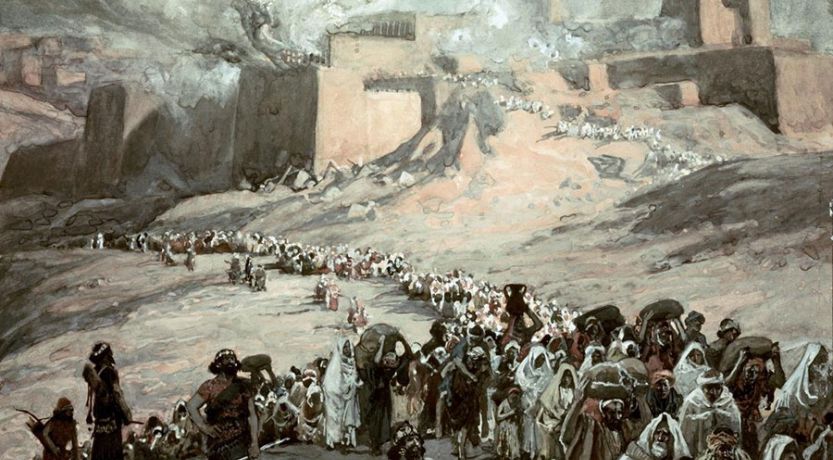
The Babylonian (modern day Iraq) army swept into Palestine and laid siege to the city of Jerusalem. It was an ugly time. People were starving. The prophet Jeremiah describes people reduced to cannibalizing their own children to survive. Jerusalem eventually fell and the Babylonians ransacked the city. They burned the city, tore down its protective walls, and destroyed the beautiful temple of Solomon that had been one of the wonders of the ancient world. Daniel and his friends would have been witness to a horrific holocaust at the hands of these enemies. And now, they are enslaved to their enemy and expected to serve Nebuchadnezzar, the king of the Babylonians.

I think it’s hard to imagine what it must have felt like for these four young men. It’s very likely that their own families had died during the siege or had been slaughtered by the Babylonians. Their homes and families were decimated. The level of despair laced with rage that they felt had to have been off the charts. I’m reminded of the song lyrics of these Babylonian exiles in Psalm 137:

     By the rivers of Babylon we sat and wept
         when we remembered Zion.
     There on the poplars
         we hung our harps,
     for there our captors asked us for songs,
         our tormentors demanded songs of joy;
         they said, “Sing us one of the songs of Zion!”

How can we sing the songs of the Lord
    while in a foreign land?
If I forget you, Jerusalem,
    may my right hand forget its skill.
May my tongue cling to the roof of my mouth
    if I do not remember you,
if I do not consider Jerusalem
    my highest joy.

Remember, Lord, what the Edomites did
    on the day Jerusalem fell.
“Tear it down,” they cried,
    “tear it down to its foundations!”
Daughter Babylon, doomed to destruction,
    happy is the one who repays you
    according to what you have done to us.
Happy is the one who seizes your infants
    and dashes them against the rocks.

In today’s chapter we find Daniel and his friends choosing a path of righteous rebellion. Their choice was to serve God and be faith-full in the midst of their terrible predicament.

We all go through periods of tragedy in our lives, even if the pale in comparison to what Daniel and the boys experienced. Nevertheless, I find that when people experience intense suffering and injustice they spiritually tend to go one of two ways. They become angry with God for their circumstances, flip Him off and walk away, or they choose in to believing that God has some ultimate purpose for them in the inexplicable pain.

Today, I’m appreciative of the mettle it took for these young men to choose in and to cling to their faith in God despite all they had seen and experienced. We will see that there was, indeed, eternal purposes in their dire circumstances. They will see and experience things they could have never imagined. I’m reminded this morning of the adventure of choosing in.

Chapter-a-Day Daniel 1

Sign on the dotted line.  But Daniel appealed to a steward who had been assigned by the head of the palace staff to be in charge of Daniel, Hananiah, Mishael, and Azariah: "Try us out for ten days on a simple diet of vegetables and water. Then compare us with the young men who eat from the royal menu. Make your decision on the basis of what you see." Daniel 1:11-13 (MSG)

The consulting group I work with was founded with a stated mission of applying Biblical principles in our work. We're certainly not perfect, but we do make an honest and sincere effort to apply God's word to what we do. For example, many businesses and firms who operate on a contractual basis will try to sign long-term contracts clients. The idea is that the longer the contract you can convince your client to sign, the greater security you have. However, our group does not believe that our security lies in contracts or clients. So, we have never agreed to a contract longer than twelve months. The underlying idea is that we must be good stewards of the annual contractual opportunities our clients give us and continually prove our worth if we hope to have our contract renewed.

That principle is expanded in the way our group approaches potential new clients. We typically ask a new client only to sign up for a "pilot project" that may last 60-90 days. We ask them to give us an opportunity to show them what we can do. If they find measurable value in that project, we'll ask them to commit to a broader annual offering. It's the same thing that Daniel did when he asked the king's steward to give his diet a chance and make his judgement based on the result. Give it a chance. Put it to the test. Then make the decision.

Many people will only make decisions based on the results they see, not just onthe pitch they hear.

Creative Commons photo courtesy of Flickr and macroberts