Tag Archives: Abstract

Boundary Stones

“The Lord said to Moses,“Command the Israelites and say to them: ‘When you enter Canaan, the land that will be allotted to you as an inheritance is to have these boundaries…
Numbers 34:1-2 (NIV)

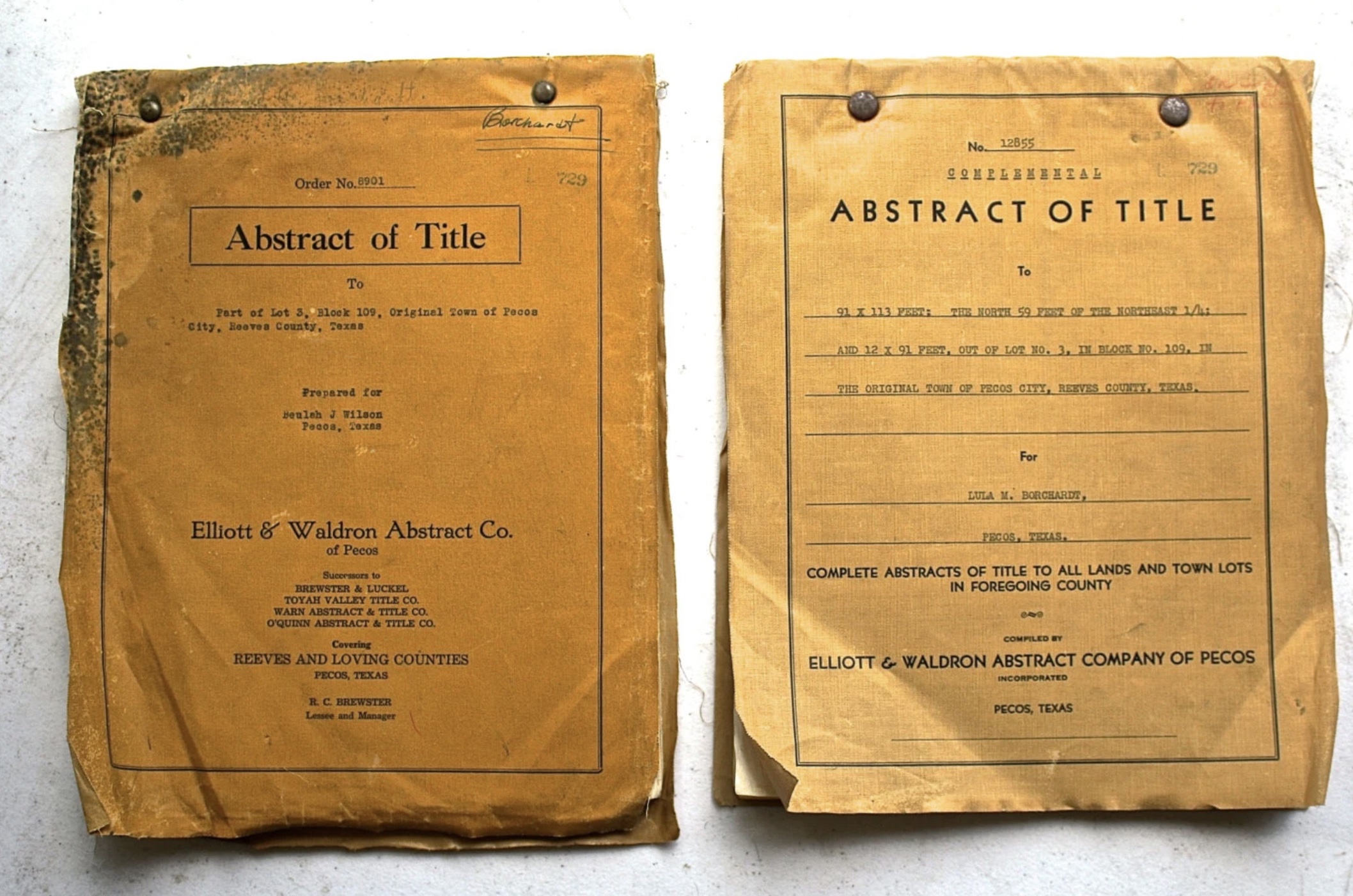
For a brief period season in my college years I worked as an abstractor. An abstract is a legal record of the history of a plot of land. For most people it’s a whole lot of indecipherable legalese, but it’s a necessary part of lawfully setting and keeping boundaries. And, in some cases when you learn to read through the legalese you can learn all sorts of interesting tidbits about the history of a property, the people who owned it, what was built on it, how it may have been contested, and how it changed hands through the generations.

As we get near the end of this chapter-a-day trek through the book of Numbers we run into some classically boring chapters. Today’s chapter is one of those. Moses and the Hebrew tribes are making preparations to enter the Promised Land, and God through Moses lays out instructions for the boundaries and how to allot land to the tribes and their families. In essence, God is being an ancient abstractor. The process isn’t willy-nilly. It’s not a situation in which the most powerful get whatever they can take and maintain. The process is orderly and structured so as to create equitable allotments and boundaries in which every family and every tribe can find protection, build fruitful lives, and flourish.

As I meditated on this in the quiet this morning, I was reminded of a season of my own life journey in which everything fell apart. When you go through a divorce life can seem like boundaries are erased. Everything moves and shifts, what was once established is now contested and negotiated. All parties in the family both nuclear and extended get pulled into the ripple effects of the boundary lines of family and life shifting. It is not a pleasant experience even when it is a relatively mutual parting of ways.

In the wake of this season, I had a prophetic friend who had received a word for me from the Holy Spirit. It’s written down. I still have it:

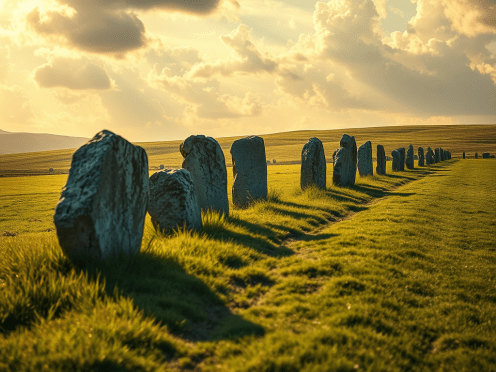
“I saw like in Ireland they have those, those stones where they mark “this is the edge of my property.” I saw that those stones had been burned, that they’d been turned down, they’d been removed in your life. And the Father said, “This is the season. I’m going to restore all the boundaries, all the things that I’ve designed for you to walk in.” 

Boundary stones and abstracts are good things. Having them means you have a plot on which to live, flourish, and be protected in a place you call home. Christian commentators through the ages have noted that while the Hebrews were given physical boundaries and allotted physical land in Numbers this was just a metaphorical foreshadowing of the spiritual Promised Land, allotment, and inheritance that Jesus would provide to every believer.

After all, Jesus told us that our hearts were soil and on that soil things grow and are built. Jesus cautioned us to grow good fruit and to be careful how and what we build on that soil in our hearts. Jesus’ teaching provides boundaries intended for my safety, my security, for growing good things, storing eternal treasures, and building those things that will equally last for eternity.

Looking back, I can testify that my prophetic friend channeled a good Word from God’s Spirit. The boundary stones were re-established and restored. Within those boundary stones God has blessed me and I have flourished in ways that I once thought were simply not possible.

I hear the Psalmists words echo in my heart this morning:

Your boundary lines mark out pleasant places for me. Indeed, my inheritance is something beautiful.
Psalm 16:6 (GW)

If you know anyone who might be encouraged by today’s post, please share.

Promotional graphic for Tom Vander Well's Wayfarer blog and podcast, featuring icons of various podcast platforms with a photo of Tom Vander Well.
These chapter-a-day blog posts are also available via podcast on all major podcast platforms including Apple, Google, and Spotify! Simply go to your podcast platform and search for “Wayfarer Tom Vander Well.” If it’s not on your platform, please let me know!
A Bible verse citation with an orange icon of an open book and the text 'Bible Gateway' below it.

My Inheritance

My Inheritance (CaD Jos 13) Wayfarer

But to the tribe of Levi he gave no inheritance, since the food offerings presented to the Lord, the God of Israel, are their inheritance, as he promised them.
Joshua 13:14 (NIV)

I worked many different jobs earning my way through college back in the day. One of the more fascinating jobs was as an abstractor. An abstract is a legal document that provides the description and history of a plot of land. The abstract gets continually updated whenever something legal happens to that land such as changing ownership, a tax lien placed against the property, a mortgage, or a release of that mortgage. It’s full of legalese, but an abstract can provide fascinating tidbits about the history of a property.

In today’s chapter, we enter a section of the book of Joshua that served as a kind of ancient abstract for the twelve Hebrew tribes as the Promised Land was divided and each tribe was assigned a section of land. It’s about as spiritually inspiring as, well, reading an abstract. However, just as with an abstract, there are some worthwhile tidbits amidst all the legalese.

The abstract of the Promised Land begins in today’s chapter with what is essentially an ancient form of the legal description of the lands east of the River Jordan that had been assigned by Moses at the request of the tribes of Reuben, Gad, and half of the tribe of Manasseh. It’s formally structured and begins with a summary description of the land given to those two-and-a-half tribes. It then provides a description of each tribe’s allotted land.

The thing that stands out is that in verses 13 and 44, the tribe of Levi is reminded that they will not be allotted any land. God assigned the tribe of Levi to serve all of the tribes by serving the Temple and being God’s spiritual servants among all the tribes. The offerings and sacrifices of the 11 other tribes provided the Levites with their life’s provision, but never would they have an earthly plot of land to call their own. As verse 33 puts it: “the LORD, the God of Israel, is their inheritance.”

What struck me as I mulled this over in the quiet this morning, is the fact that the Levitical design will be expanded by Jesus. During His earthly ministry, Jesus instructed His followers to spiritually live like the tribe of Levi:

“Don’t hoard treasure down here where it gets eaten by moths and corroded by rust or—worse!—stolen by burglars. Stockpile treasure in heaven, where it’s safe from moth and rust and burglars. It’s obvious, isn’t it? The place where your treasure is, is the place you will most want to be, and end up being…

What I’m trying to do here is to get you to relax, to not be so preoccupied with getting, so you can respond to God’s giving. People who don’t know God and the way he works fuss over these things, but you know both God and how he works. Steep your life in God-reality, God-initiative, God-provisions. Don’t worry about missing out. You’ll find all your everyday human concerns will be met.” Matthew 6:19-21;31-32 (MSG)

Like the Levites, followers of Jesus were dispersed throughout the entire world to serve God, to be focused on the matters of Spirit, and to trust God for their provision. As the old-timey gospel song put it: “This world is not my home, I’m just a passin’ through.”

As a follower of Jesus, I am a spiritual descendant of the Levites. My treasure, my spiritual inheritance, doesn’t have an earthly abstract or legal description. Jesus said He would go and prepare a place for me. As the author of Hebrews put it: “For here [on earth] we do not have an enduring city, but we are looking for the city that is to come.”

In the meantime, just like the Levites, I serve God where I’m planted, wherever I go, and wherever I might be scattered.

If you know anyone who might be encouraged by today’s post, please share.

“Give Me Land, Lots of Land…”

So they finished dividing the land.
Joshua 19:51 (NRSV)

When I was in college I took a semester off and worked as an abstractor. It was tedious, monotonous work. In the morning a stack of property abstracts sat on my desk in the Polk County Office Building. One by one I would walk a legal history of property around the Recorder’s Office checking various land and tax records for buyers, sellers, and the property itself to make sure that the abstract was accurate and no one was trying to pull something (on at least one occasion, I caught people attempting to do just that).

That semester my acquaintance with property records and their arcane legal descriptions gave me an appreciation for the value and importance we humans place on land.

“Give me land, lots of land, with the starry sky above!”

I finished my college career and a few years later found myself leading a congregation in a small Iowa farm town of 300. As a city boy, this was my first real exposure to the way farming exists for so many in my home state: legacy, business, family, inheritance, and life. It is hard to appreciate just how inseparable people become with the land they and their family possess.

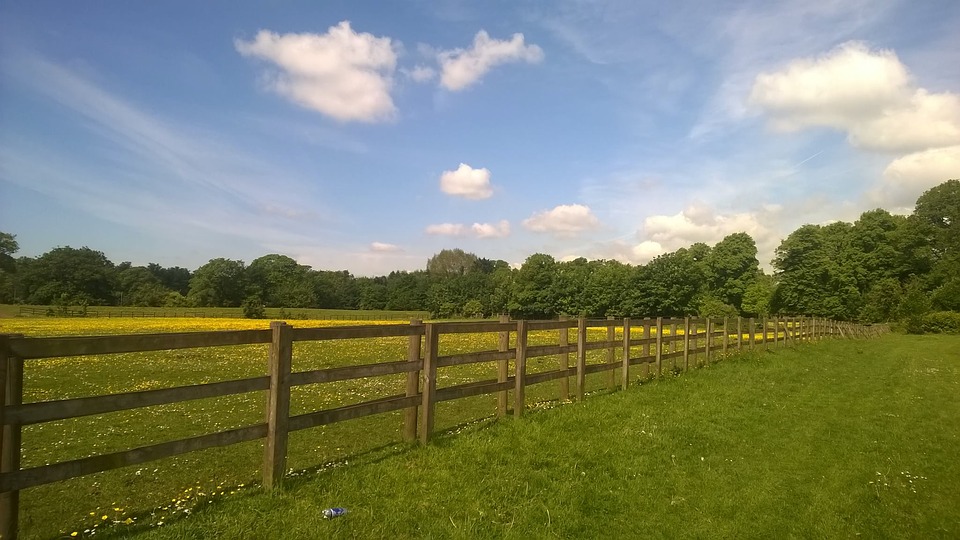
Every Sunday there two old farmers who sat in the back pews as far away from one another as possible. The two had a long standing dispute over a boundary line and fence between their adjacent properties. They never spoke to one another.

As I read through today’s chapter, which is basically an ancient abstract, I had all sorts of thoughts about land and the value we place on it. The property descriptions laid out in these chapters are so black and white, but you have to believe that there are all sorts of stories and emotions that the book of Joshua does not record. Families feeling cheated that another tribe got more land. A tribe thinking they should have such and such a village, river, well, forest amidst their property. Tribes disputing exactly how to interpret what it meant that the boundary “touched Tabor.” In time, these tribes would end up in a bloody civil war. How much bad blood was rooted in resentments hidden in these property descriptions.

This morning I’m thinking about God’s original admonishment that we should “subdue” the earth, and how we may have misinterpreted His intent. History teaches me that we’re really good at misinterpreting things. I’m thinking about Jesus who owned so little and encouraged his followers to hold on loosely to the things of this earth (including, I imagine, the earth itself). I’m thinking about Iowans intimate relationship with the land from which we make our livings and feed the world. I’m pondering the ways that possessions, including that same land, can end up coming before and between relationships.

I’m happy not to be an abstractor.