Tag Archives: Cost

A Dinner Dripping with Intrigue

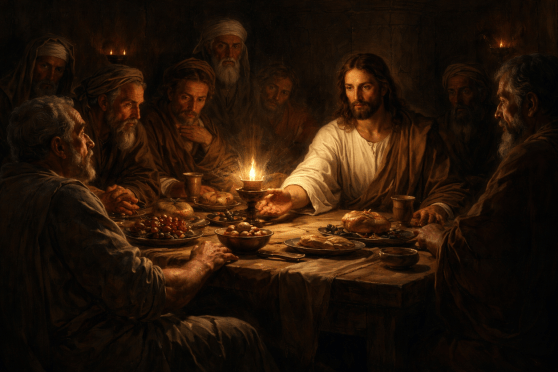
One Sabbath, when Jesus went to eat in the house of a prominent Pharisee, he was being carefully watched.
Luke 14:1 (NIV)

Context is essential.

The episodes of today’s chapter lie with concentric circles of context that Luke has carefully laid.

Way at the beginning he introduces us to baby Jesus, the Son of God, come to earth. At his dedication, Simeon prophesies:

“This child is destined to cause the falling and rising of many in Israel, and to be a sign that will be spoken against, so that the thoughts of many hearts will be revealed.” (2:34-35)

In chapter 9, Jesus “resolutely” sets out for Jerusalem, having predicted that:

“The Son of Man must suffer many things and be rejected by the elders, the chief priests and the teachers of the law, and he must be killed and on the third day be raised to life.” (9:22)

Today’s chapter begins with a simple statement.

Easily overlooked.

Jesus went to eat in the house of a prominent Pharisee, he was being carefully watched.

Most people read that and forget it. But wait…

Everything in today’s chapter happens in this context.

The baby Messiah who will cause “the rise and fall of many in Israel,” and who will reveal the thoughts of their hearts.

The Messiah on a mission — heading to Jerusalem to be rejected by the religious power brokers – to be killed by them.

And, He is dining with one of those very men…
….at his house.
…under his critical gaze.

This isn’t a casual dinner.
This is a set-up.
The table is dripping with intrigue and tension.

They think they’re watching Him.
But He’s the one setting the table…

He prods His enemies. He pokes at them at every turn.

“Is it lawful to heal on the Sabbath?” (He knows His host thinks it is.)
He heals a man with abnormal swelling sitting in the room.

[Poke]

Watching the prominent religious leaders vying for the seats of honor at the table. He calls them out. Directly.

“But when you are invited, take the lowest place, so that when your host comes, he will say to you, ‘Friend, move up to a better place.’ Then you will be honored in the presence of all the other guests. For all those who exalt themselves will be humbled, and those who humble themselves will be exalted.” (vs 10-11)

[Poke]

Jesus then tells a parable. A great banquet feast is given. All the high-and-mighty guests on the list beg off. The host sends servants to bring in the lowly, the poor, the marginalized, the foreigners, the outcasts.

Translation: You are leaders of God’s people. He sent me to invite you to His great banquet. You’ve rejected me, so I’m inviting others.

[Poke]

Jesus then surveys the room. Some of the powerful religious leaders have been following Jesus. They’ve been listening. Some have even tried to befriend Him. In yesterday’s chapter, it was they who warned Jesus that Herod wanted to kill him — begging Him not to proceed to Jerusalem.

I believe Jesus’ final words at the party are for them.

It’s decision time, gentlemen.

Time to fish, or cut bait.

They are riding the fence. They enjoy the pomp and prominence of their position. They live lives of relative ease. Their names are etched in the boxes at the top of the Temple org chart.

If you’re truly going to follow me, you have to give it all up.

Count the cost, gentlemen.
You can’t sip the Kingdom wine I offer and keep your seat at Herod’s table.

“Those of you who do not give up everything you have cannot be my disciples.”

[Poke]

If you follow the tension in the room. It leads somewhere.

It is Good Friday as I write this post. On this annual day to remember Jesus’ execution on a Roman cross, I’m reminded…

Jesus was resolute in walking toward suffering and death.

Jesus prodded His enemies, and provoked their actions against Him.

Still, He didn’t run.

He went to their houses for dinner. He sat in their midst.
He gave His enemies another chance…
to hear
to see
to choose
to follow

As Jesus hung on three nails between heaven and earth.

He was not a victim.

He was the Son of Man on a mission.

A suffering servant.
A sacrifice, once – for all.

For me.

If you know anyone who might be encouraged by today’s post, please share.

Promotional graphic for Tom Vander Well's Wayfarer blog and podcast, featuring icons of various podcast platforms with a photo of Tom Vander Well.
These chapter-a-day blog posts are also available via podcast on all major podcast platforms including Apple, Google, and Spotify! Simply go to your podcast platform and search for “Wayfarer Tom Vander Well.” If it’s not on your platform, please let me know!
Logo featuring an open book icon on an orange background.

Turning in the Opposite Direction

Then Shekaniah son of Jehiel, one of the descendants of Elam, said to Ezra, “We have been unfaithful to our God by marrying foreign women from the peoples around us. But in spite of this, there is still hope for Israel. Ezra 10:2 (NIV)

The word repentance means to turn and go in an opposite direction. Those who repent of their actions are deciding they are no longer going to do those things, but will turn their lives in an opposite direction.

When I decided to follow Jesus there were a number of things from which I needed to repent. I needed to turn my life, my thoughts, and my actions around and to move in the opposite direction. To do so meant moving in a direction opposite of some people in my life with whom I had been close friends. It was a natural consequence of the repentance process. I couldn’t turn and move in an opposite direction and continue walking down the same old path with those friends at the same time.

There is a lot about this morning’s chapter with which I struggle to understand. As I mentioned in yesterday’s post, I believe that there are major cultural and historical differences that we scarcely understand today. But I do know this: Ezra and the exiles were experiencing a time of intense corporate confession and repentance. They had just returned, rebuilt the temple, and were trying to be the first of their people for an entire generation to re-establish a good relationship with God.

It was a season of intense repentance, and they recognized that they had allowed themselves to be greatly influenced by the culture and peoples around them. In today’s chapter, they are moving in the opposite direction, and they recognize that moving in the opposite direction necessitates separating themselves from those who have had negative spiritual influence on their lives. It is difficult to realize that this meant separation from their own family members, but I am also reminded that Jesus said sometimes the cost of following is leaving family behind.

Today, I am reminded that along our journey there are times in which, for our own spiritual health, we need to repent, to turn around, and to move in an opposite direction. I’m reminded that there is a cost associated with repentance, and I’m reminded that I can’t move in the opposite direction and keep moving in the same direction at the same time.

“If You Can’t Do the Time…”

david absalomAbsalom behaved in this way toward all the Israelites who came to the king asking for justice, and so he stole the hearts of the people of Israel. 2 Samuel 15:6 (NIV)

Being forgiven does not erase the fact that we must face the natural consequences of our actions. After being confronted by the prophet Nathan regarding his adultery with Bathsheba and subsequent conspiracy to commit murder, David showed great remorse and sought God’s forgiveness but the events sewed seeds of scandal, anger and resentment both inside David’s family and in the public. Nathan’s prophetic word that the sword would never depart David’s house is fulfilled as the consequences of David’s blind spots now bear bitter fruit.

David’s children knew their father’s weaknesses both as a father and as a king. In today’s chapter, Absalom masterfully exploits his father’s scandal and weak leadership in a brilliantly planned and executed coup d’etat. David was forced to make hasty preparation to escape the city with his closest followers and arrange for spies to gather inside information regarding his the rebels’ plot. David’s very own son had stolen his kingdom and was reaching out to steal his crown.

Today I am reminded of many mistakes I’ve made along the journey and their residual effect on relationships, circumstances, and perceptions. Jesus advised people to “count the cost” before agreeing to follow Him. The same advice might also be given when tempted. There is a cost to wrong-doing and we are all wise to give consideration to the tragic consequences that might arise in the wake of our poor choices. As the saying goes, “If you can’t do the time, don’t do the crime.”

Enhanced by Zemanta