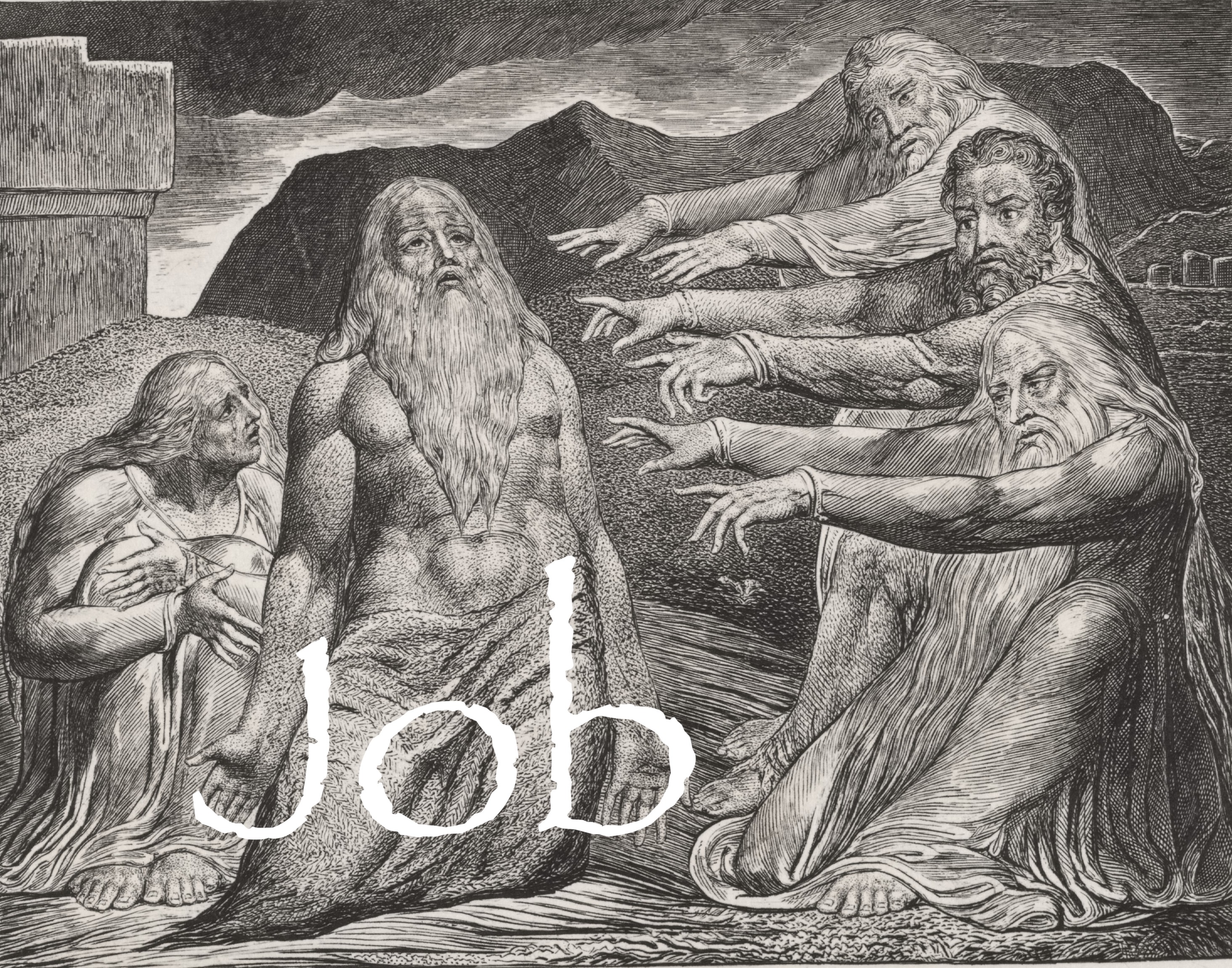
Tag Archives: Suffering

Contrasting Statements

Contrasting Statements (CaD Jhn 16) Wayfarer

“I have told you these things, so that in me you may have peace. In this world you will have trouble. But take heart! I have overcome the world.”
John 16:33 (NIV)

Contrasting statements. On the desk in my office is a list of fourteen contrasting statements. These contrasting statements are key differences in understanding between members of a certain team of people. They are the source of conflict within the system and because of them, every member of the team is experiencing a lack of peace on multiple levels.

Systemic conflict lies at the heart of the Great Story. In the beginning, God creates the universe and everything in it. He caps off creation with a man and a woman, places them in the Garden, and calls it “very good.” There is shalom, the experience of wholeness, goodness, completeness, and peace. Then the evil one enters the garden and introduces both doubt and temptation to the man and woman. Interestingly, the evil one’s basic tactic in the disruption of shalom was the introduction of contrasting statements: “Did God really say…? You won’t certainly die!

From that original sin, humanity has been yearning for shalom and God has been actively acting to restore it. That’s the Great Story in a nutshell.

In today’s chapter, we are approaching the climactic event of the entire Story. The key players are all involved. At the beginning of his account, John introduced us to Jesus as the God of Creation who came to Earth in human form. The evil one, having successfully filled the head of Judas Iscariot with contrasting statements, has put the wheels into motion to have Jesus arrested and killed. Both Jesus’ followers, His enemies, and the crowds are the humans across the spectrum of belief to whom Jesus seeks to provide restoration, redemption, and the new life of shalom.

Jesus’ followers have no idea of what’s about to happen. They are expecting the restoration of shalom the only way the world, and the Prince of this World, knows how to deliver it: gain power, exert force, suppress resistance, maintain control. God, however, had long ago tried to explain to humanity that His ways are not our ways. He will provide shalom, not by power but by suffering, not by force but by surrender, not through the suppression of resistance but through love, forgiveness, and freedom from sin and death.

Throughout Jesus’ final discourse to His followers, He continues to bring up the peace that He will provide. In the same manner, this peace is not like the peace the world seeks or promises. The shalom Jesus provides is not peace from trouble, but peace in the midst of trouble. Jesus continues to warn His followers of the trouble, persecution, resistance, and suffering that will be theirs to experience and endure. At the same time, Jesus promises them the peace of God’s Spirit to, as Paul put it to the believers in Philippi, “guard their hearts and minds” as they experience trouble and walk in Jesus’ footsteps of suffering, surrender, and love.

In the quiet this morning, my mind is on contrasting statements that don’t appear to offer a path forward. Then I think about the contrast between the world’s way and God’s way. As a disciple of Jesus, I have been provided the footsteps to follow into humility, surrender, and maybe even suffering. The way of Jesus reveals to me that death is the path to new life. And, I will find peace along this path.

If you know anyone who might be encouraged by today’s post, please share.

Best of 2023 #8: Busy Livin’

Busy Livin' (CaD Job 17) Wayfarer

“…where then is my hope—
    who can see any hope for me?

Job 17:15 (NIV)

There is a classic scene in The Shawshank Redemption in which Andy and Red are sitting in the prison yard discussing hope of life on the outside. Andy shares his dreams of getting out, moving to Mexico, and living a quiet life on the coast. Red, who has no hope of getting out of prison, fears he wouldn’t know how to live on the “outside” and he chastises Andy for his pipe dream of life in Mexico. Andy then shares with Red the simple truth he has embraced: “You either get busy living, or you get busy dying.”

Along my life journey, I’ve known multiple individuals who have been given a terminal diagnosis. A business colleague of mine was diagnosed with cancer and was dead in 10 weeks. When my father was diagnosed with Myeloma, his doctor gave him the statistical probability he’d be dead, if I remember correctly, about four or five years ago. Not only is he still around, but on top of the Myeloma he survived a potentially fatal infection a few years ago. His stained-glass won a third-place ribbon at the Iowa State Fair this week, and he’s currently working on crafting a prayer bench for a friend (Way to go, Dad!).

I once had a friend who told me that he had an agreement with his physician that if he was ever diagnosed with cancer, the doctor was forbidden from sharing it with him. He told me that, as a pastor, he’d seen too many of his parishioners die from the diagnosis. Once the doctor told them they had cancer, they “got busy dying.” While I disagree with my friend’s solution to live in ignorance, I’ve never forgotten the lesson that led to his decision.

As I meditated on today’s chapter, I observed that Job appears to be “busy dying.” Given the tragic circumstances he’s experienced, it’s easy to understand why. He can’t see beyond his troubles. In Job’s mind, the agony has been so great that the anticipation of death feels like a relief. Job’s only hope, he states, is the grave. Like Red in The Shawshank Redemption, Job can’t imagine life outside the prison of his suffering, beyond the barbed wire of his pain.

One of the things that Jesus perpetually taught His disciples was to think outside the prison of our momentary circumstances, and to see beyond our finite earthly existence:

“Do not store up for yourselves treasures on earth, where moths and vermin destroy, and where thieves break in and steal. But store up for yourselves treasures in heaven, where moths and vermin do not destroy, and where thieves do not break in and steal. For where your treasure is, there your heart will be also.” Matthew 6:19-21 (NIV)

This is not to say, as the saying goes, that I “become so heavenly minded that we’re no earthly good.” Rather, a Kingdom world-view changes the way I see my earthly troubles. Paul’s earthly, real-life circumstances included, but were not limited to, the following experiences he shared with Jesus’ disciples in Corinth:

I have worked much harder, been in prison more frequently, been flogged more severely, and been exposed to death again and again. Five times I received from the Jews the forty lashes minus one. Three times I was beaten with rods, once I was pelted with stones, three times I was shipwrecked, I spent a night and a day in the open sea, I have been constantly on the move. I have been in danger from rivers, in danger from bandits, in danger from my fellow Jews, in danger from Gentiles; in danger in the city, in danger in the country, in danger at sea; and in danger from false believers. I have labored and toiled and have often gone without sleep; I have known hunger and thirst and have often gone without food; I have been cold and naked.
2 Corinthians 11:23-27 (NIV)

Despite this, Paul wrote in the same letter:

Therefore we do not lose heart. Though outwardly we are wasting away, yet inwardly we are being renewed day by day. For our light and momentary troubles are achieving for us an eternal glory that far outweighs them all. So we fix our eyes not on what is seen, but on what is unseen, since what is seen is temporary, but what is unseen is eternal.
2 Corinthians 4:16-18 (NIV)

So in the quiet this morning, I once again feel for Job and his sufferings. I don’t blame him for his very human reaction to unbelievable tragic circumstances. His anger and his sense of hopelessness are natural human emotions that he has to work through. He can’t see beyond the grave. As a disciple of Jesus, however, I am called to look beyond the grave. That’s what Jesus’ resurrection was about and it set up a spiritual paradox through which I, as a follower of Jesus, should view my circumstances. Though my earthly circumstances are terminal, because the reality is that every human being’s existence on this earth is terminal, I can still, in the midst of them, “get busy living” because this world is not my home.

As the song goes, this wayfaring stranger is headed home, over Jordan. There is no sickness, no toil, or danger in that bright land to which I go.

If you know anyone who might be encouraged by today’s post, please share.

Best of 2023: #9: Relationship & Communication

Relationship & Communication (CaD Job 11) Wayfarer

“Will your idle talk reduce others to silence?
Will no one rebuke you when you mock?
You say to God, ‘My beliefs are flawless
    and I am pure in your sight.'”
Job 11:4-5 (NIV)

Much of my career has been spent in the analysis of conversations between the employees of our clients and the customers who call them. I have analyzed conversations ranging from a receptionist getting a caller to the right department to a collections specialist trying to recover money from a customer who literally owes them millions of dollars. I can tell you with certainty that virtually every customer service problem can be traced back to a breakdown in communication: the message that was given, the message that was heard, the information that wasn’t provided, the information that wasn’t received, and the assumptions that were made. Add human emotion, temperament, and attitude on both sides of the conversation and you’ve mixed yourself quite a cocktail.

In today’s chapter we meet the third of the trio of friends sitting with the suffering Job. Zophar, whom I will refer to simply as Z, is as blunt as Bill was in his response to Job. As with Eli and Bill, Z is contends that Job must somehow deserve the suffering he finds himself experiencing; There must be sins that lie at the root of what’s happened to him. Z even says that God has forgotten some of Job’s sins, implying that if all Job’s sins were taken into account, he deserves worse than what he’s experiencing.

What I found fascinating about Z’s discourse is that he opens with an accusation that Job is mocking God and claiming that he is flawless and pure. In both cases, Z has heard what Job never said. Job has questioned whether God has acted justly in his circumstances and whether God really cares about him and his suffering, but that’s not mocking God. Job has not cursed God as Satan expected him to, even if he has emotionally questioned what he as assumed to be God’s actions. Likewise, Job has never claimed sinlessness or moral purity. In fact, just the opposite. Job has owned up to being less than perfect. He said he was “blameless” (9:21) of anything deserving the level of suffering he’s experienced.

Ironically, Job’s claim of being “blameless” is the same Hebrew word that God used when telling Satan that Job was “blameless” (1:8).

In the quiet this morning, I am mindful that my observations about what lies at the root of the customer service conflicts I examine and analyze in my vocation also applies to virtually every human conflict and misunderstanding. In what is said and unsaid, done and not done, lies a breakdown in what is being communicated between two parties and what is being received. On top of this is a layer of misunderstanding and assumption between the two parties regarding motives and intentions. By its very nature, relationship is built on the quality of communication between two parties.

Of course we get this in terms of two human beings, but I believe it is equally true of myself and God. My friend, Matthew, has observed in his daily vocation as a therapist: “Everyone is having a conversation with Life.” God says that He is constantly communicating with me through creation (Rom 1:20) and a host of other ways. His stated desire throughout the Great Story is to be in a relationship with me. That relationship, or lack thereof, is also built on the quality of communication between me and God.

If you know anyone who might be encouraged by today’s post, please share.

Suffering Granted

Suffering Granted (CaD Php 1) Wayfarer

For it has been granted to you on behalf of Christ not only to believe in him, but also to suffer for him.
Philippians 1:29 (NIV)

There was an interesting article in the Free Press recently written by a scientist who confesses that he purposely chose not to tell the whole truth in order to get his article published in a prestigious magazine. He brazenly admits he did so for personal gain. As a scientist and an academic, getting published is crucial to his career. He goes on to explain that it is currently impossible to get published if he doesn’t stick to the narrative that the magazine editors demand.

He writes:

In theory, scientific research should prize curiosity, dispassionate objectivity, and a commitment to uncovering the truth. Surely those are the qualities that editors of scientific journals should value. 

In reality, though, the biases of the editors (and the reviewers they call upon to evaluate submissions) exert a major influence on the collective output of entire fields. They select what gets published from a large pool of entries, and in doing so, they also shape how research is conducted more broadly. Savvy researchers tailor their studies to maximize the likelihood that their work is accepted. I know this because I am one of them.

When I was a young man and a relatively new disciple of Jesus, I observed that Christian fundamentalists wanted power to control the speech and behavior of everyone. For the record, I never agreed with this tactic and I still don’t. I find it the direct opposite of what Jesus calls me to do and be. What has been fascinating is to watch the pendulum swing in my lifetime. It is another type of fundamentalism that seeks to use power and fear to control both speech and behavior in culture today. One of the things I continue to observe in many different pockets of our current culture is the refusal to say what one believes or knows out of fear of being ostracized or canceled. I see it happening in business, entertainment, politics, religion, as well as in science and education at every level.

Today I begin the short, four-chapter trek through Paul’s letter to the followers of Jesus in the Roman city of Philippi. Paul writes the letter from imprisonment in Rome. He was actually under house arrest in a dwelling he had to pay for himself. It was a time when being a follower of Jesus could get you persecuted and canceled in the Roman Empire for a number of reasons by different constituencies.

In the opening of his letter, Paul expresses contentment in his circumstances of incarceration He finds a silver lining in the fact that his Roman guards are a captive audience to hear about Paul’s faith, and while under house arrest he could receive visitors. Paul also expresses appreciation for the fact that his imprisonment has prompted others not to be so afraid of identifying themselves as followers of Jesus, even if it means being canceled.

Paul then writes something that I found extraordinary as I read it in the quiet this morning: “For it has been granted to you on behalf of Christ not only to believe in him, but also to suffer for him….”

I read these words having just finished this chapter-a-day trek through the book of Job. The prevailing attitude in the Job story is that suffering is bad and a sure sign of God’s punishment for sin while prosperity is a sign of God’s approval and blessing. I observe that this prevailing attitude remains fairly entrenched, and this makes Paul’s statement downright counter-cultural!

Suffering for being a follower of Jesus is a privilege granted by the Almighty.

As I continue to observe and ponder the trends I see in our current culture, I also see that being a follower of Jesus seems to be increasingly out of vogue. Please don’t read what I’m not writing. I’m not trying to be hyperbolic or claim some sort of victim status. I am simply stating what I have observed as a growing trend in which, for the first time in my lifetime, it seems even possible that I could be canceled because of my faith. I hope this is not true, but just the possibility is sobering.

I head into my day reminded that Jesus told his disciples to expect suffering. As Paul writes to the disciples in Philippi, I’m to consider it a privilege if it were to happen. This is a teaching that many regular church attenders have never heard, and don’t want to hear. Even churches have their own version of cancel culture.

If you know anyone who might be encouraged by today’s post, please share.

Answers in Questions

Answers in Questions (CaD Job 39) Wayfarer

“Does the hawk take flight by your wisdom
    and spread its wings toward the south?”
Job 39:26 (NIV)

Jesus occasionally and famously answered questions with questions. When His enemies were trying to trap Him into saying something they could use against Him, He turned the tables and asked them whether his cousin, John the Baptist, baptized people with divine authority or if he was a crackpot who should be ignored. It was a lose-lose question for the powerful religious leaders. If they said John baptized with divine authority the crowds would ask why it was that they were so critical and dismissive of the John. If they said the popular desert preacher was a crackpot they would take a huge hit in their public approval ratings. Jesus’ enemies refused to answer His question, so He refused to answer theirs.

God has two discourses in which He speaks. to Job out of the storm. In each, God answers Job with rhetorical questions that Job could never answer. He begins with questions of the universe, the spirit realm, and the cosmology of the earth then switches to questions about the animal kingdom. With each question, Job’s ignorance and lack of knowledge is apparent, as is God’s power and sovereignty.

Like Jesus with His accusers, God refuses to answer Job’s questions unless Job can answer His. Job’s suffering is never mentioned. There is not even an acknowledgment of Job’s circumstances, his mock trial, his prosecutorial examination. or his “signed defense.”

As I pondered this in the quiet this morning, I heard the echo of God’s words through the prophet Isaiah:

“For my thoughts are not your thoughts,
    neither are your ways my ways,”
declares the Lord.
“As the heavens are higher than the earth,
    so are my ways higher than your ways
    and my thoughts than your thoughts.”

A few chapters back, I posited that when it comes to others lives and troubles “we don’t know what we don’t know.” Now God takes that reality to the highest level. I am ignorant of God’s designs and purposes. My finite mind can’t fully grasp the infinity of God’s power. Yet, as a disciple of Jesus I am assured in the Great Story that, ultimately and eternally, all things work together for good.

I can have faith in God and His promise that there is a plan and purpose into which my life and my troubles are woven.

Like Jesus’ enemies, I can also choose to walk away.

If you know anyone who might be encouraged by today’s post, please share.

Closing Argument

Closing Arguments (CaD Job 31) Wayfarer

“Oh, that I had someone to hear me!
    I sign now my defense—let the Almighty answer me;
    let my accuser put his indictment in writing.”

Job 31:35 (NIV)

A year or so ago I was talking with a life-long friend. We were discussing the state of cancel culture that exists today in which a person can lose their job and be effectively pilloried for foolish choices made when he or she was young. My friend expressed that this was an ever-present fear, confessing that if even a fraction of the stupid things done during high school were to come to light, their life would be utterly ruined. My friend was not exaggerating. I know some of the stories. Today’s cancel culture would have a field day.

Today’s chapter is the third and final phase of Job’s closing defense arguments in his mock trial with God. It is actually a poetically beautiful summation in which Job makes seven “if” statements that assert his blamelessness. In Biblical numerology, seven is the number of “completion” and Job’s seven “if” statements echo the Mosaic laws of retaliation in Exodus and Leviticus. In essence, Job is saying “if” I am guilty of breaking any of these laws of morality, community, or justice “then” let me suffer the consequences, either natural or prescribed by law. He asserts, however, that he is blameless (not sinless, but blameless) in each case and calls upon the Almighty to prove His case. Job then verbally puts his John Hancock on his defense and calls on God to make His case.

As I read through Jobs defense in the quiet this morning, three prevailing thoughts crowded my mind. First, like my friend’s very real fear regarding cancel culture, I am definitely not blameless. I can easily be accused and found guilty of a large majority, if not all, of the seven moral assertions Job makes.

Second, I continue to be reminded that God has not accused Job of anything. In fact, the whole of what God has said about Job amounts to praise for Job’s faith, blamelessness, and goodness.

Third, the whole of Job’s argument rests on a world-view in which there is always a cause-and-effect to suffering. In his case, Job’s suffering is happening precisely because his faith, blamelessness, and goodness placed him in the crosshairs of the evil one.

As a disciple of Jesus, I can’t escape the fact that Jesus told His followers to expect unjust suffering just as He would unjustly suffer.

From that time on Jesus began to explain to his disciples that he must go to Jerusalem and suffer many things at the hands of the elders, the chief priests and the teachers of the law… Matt 16:21

Jesus replied, “To be sure, Elijah comes and will restore all things. But I tell you, Elijah has already come, and they did not recognize him, but have done to him everything they wished. In the same way the Son of Man is going to suffer at their hands.” Matt 17:11-12

“Then you will be handed over to be persecuted and put to death, and you will be hated by all nations because of me…” Matt 24:9

To Peter, Jesus said, “Very truly I tell you, when you were younger you dressed yourself and went where you wanted; but when you are old you will stretch out your hands, and someone else will dress you and lead you where you do not want to go.” John 21:18

Along my spiritual journey I have had to embrace the truth that Jesus never promised His followers an earthly life of health, wealth, and earthly prosperity. Quite the opposite, in fact. Jesus told His followers to expect trouble, difficulty, persecution, suffering, injustice, and even a death one doesn’t deserve. This earthly life, Jesus told His followers, was simply a shadow of the Life to come. If my treasure is here on this earth, then I am naturally going to feel trouble, difficulty, persecution, suffering, and injustice more acutely. If my treasure is in heaven, where Jesus tells me to place it, then I am going to consider any trouble, difficulty, persecution, suffering, and injustice completely differently.

It even changes the way I consider Job’s suffering.

If you know anyone who might be encouraged by today’s post, please share.

The Thread

The Thread (CaD Job 26) Wayfarer

“And these are but the outer fringe of his works;
how faint the whisper we hear of him!
Who then can understand the thunder of his power?”
Job 26:14 (NIV)

I am surprised that I’ve never seen anyone try to stage the book of Job. 

Job and his three friends remain sitting on the ash heap where people burn their garbage. What a setting.

Job, emaciated, almost naked, and covered head-to-foot with festering sores, continues to scrape at his scabs with pieces of broken pottery. His friends, healthy, hardy, and dressed in their fine robes sit silently around him. What a visual. 

For twenty-two chapters, Job and his friends have gone back and forth in contemplation of his tragic circumstances and intense suffering. With Bill’s brief words in yesterday’s chapter, the friends appear to have nothing further to say. In today’s chapter, Job replies specifically to Bill. The Hebrew pronouns Job uses are singular rather than plural. 

It appears that Job is at the end of his patience with his friends as the conversation wanes. Job’s reply drips with bitter sarcasm:

“How you have helped the powerless!

    How you have saved the arm that is feeble!

What advice you have offered to one without wisdom!

    And what great insight you have displayed!

Who has helped you utter these words?

    And whose spirit spoke from your mouth?”

Job then proceeds to poetically contemplate God’s immense power that lies beyond human understanding. It feels as if he is talking more to himself than to his three friends. If I were directing this as a scene on stage, I would block it in such a way that it became clear Job is delivering his words to himself, to the audience like a soliloquy in Shakespeare. Why? Because he alone is privy to the depth of this insight. He sees God revealed in creation: the vastness of space, the rage of a thunderstorm, and the untamed seas. Job then recognizes that all of this is but “the outer fringe” of God’s power. He foreshadows the words of Paul who describes God as the One who can do “exceeding, abundantly, beyond all that we could ask or imagine.”

What is fascinating about Job’s beautiful description of God’s power that lies beyond imagination is that back in chapter 11 his friend Z accused Job of being unable to fathom the mysteries of God. In ten verses, Job has proved Z wrong. It is fitting that we don’t hear from Z again. In his painful cries out to God, Job may not even recognize that his suffering is giving him depths of clarity and insight to the divine that his friends will never fathom. There are spiritual insights learned amidst suffering that cannot be learned by any other means. This is why suffering is a requisite for spiritual maturity. This is why I believe Job’s is speaking to himself; He is speaking to me.

Throughout Job’s story, if I am willing to see it, I am witness to his spiritual maturation. His friends, confident in their status, education, and false sense of security, remain unchanged.

When I was a young man, I thought I had things figured out. Then life happened. Moral failure, financial failure, and divorce were among the many things that sobered me up to just how little I actually knew. Job’s suffering was perpetrated by the evil one. My suffering has largely been perpetrated by my own poor choices. Nevertheless, along my spiritual journey, suffering through the consequences of my own actions, I have humbly realized that all that I know is but the “outer fringe.” God is exceeding, abundantly beyond all that I can imagine. I am the bleeding woman simply trying to reach out with my finger to make contact with that single piece of thread dangling off the hem at the bottom of Jesus’ robe. I feel Job reaching for it, as well.

And, just that touch changes everything.

If you know anyone who might be encouraged by today’s post, please share.

Unrelated

Unrelated (CaD Job 20) Wayfarer

The heavens will expose [the wicked man’s] guilt;
    the earth will rise up against him.
Job 20:27 (NIV)

When I was a young teenager, I spent the night at a friend’s house. There was a pizza joint down the street from his house, so we walked there for a late dinner. It was a Friday night and the place was absolutely packed. When we were finished eating my friend said, “Come on,” and he proceeded to walk right out the door without paying the tab. When I suggested we should pay for our meal, he shrugged it off and continued to walk towards home.

I had never done anything quite so brazenly wrong in my life, and I remember having a hard time sleeping that night at my friends house. Every time I heard a police siren in the distance I was convinced they were coming for us. I guess I had a pretty healthy conscience!

Here’s the thing. We got away with it. The cops never showed up. I woke up the next morning and went home the next day. The pizza shop owner took the loss along with our server. I’m sure it happens all the time. I went on with my adolescent life the next day and forgot all about it.

At the end of yesterday’s chapter, Job makes the comment to his three friends that, given the way they are treating him with their accusations and lack of kindness, they should be fearing the same wrath of God that they say Job is experiencing.

Z takes this as a personal affront, and his friend quickly intervenes. Z’s discourse is another Hebrew wisdom poem on the fate of the wicked. The theme of the poem is that the wicked always come to ruin.

Except, they don’t. Not always. I walked out on my dinner tab and experienced no ill effects other than about twelve-hours of acute guilt and shame. Z’s poem speaks in grandiose black-and-white terms of the wicked having unbridled craving for wickedness that lead to God’s unleashed just desserts. Except, they know Job, and they know that he has never acted like the description of the wicked in Z’s poem. They are looking at life with a simplistic equation:

Sin leads to suffering and tragedy therefore suffering and tragedy must be the evidence of sin.

Not only is this not a true statement, but I believe it leads one to believe an equally incorrect spiritual assumption that Job’s friends are asserting:

Sin leads to suffering and tragedy therefore the lack of suffering and tragedy must be evidence of a person’s righteousness.

This type of thinking leads to me live by keeping up self-righteous, religious appearances and hiding my own sinfulness from the world. It also leads to self-righteousness by bank ledger. I walked out on my pizza tab, but it was just once and I was a good, church going kid who typically didn’t do that sort of thing, so I on the balance my pizza theft is not such a big deal.

Except, it is.

Jesus called all of this out in His message on the mountainside (Matthew 5-7). In God’s Kingdom economy, Jesus stated, I only have to look lustfully at a woman and I’m guilty of adultery. I only have to call another person an “idiot” and I’m guilty of murder. In His parable of the sheep and goats (Matthew 25:31-46), Jesus states quite directly that on Judgment Day there will be many who appeared to be good religious and righteous people who never got what Jesus was about. At the same time, there will be many who never appeared to be either religious or righteous who still got what Jesus was all about and treated life and others that way.

In the quiet this morning, my thoughts wandered back to a message I gave a few weeks ago in which I talked about “outside-in” spirituality and “inside-out” spirituality. Job’s friends have their hearts and minds stuck in “outside-in” mode. They see Job’s outer tragedy and suffering and conclude that it must be evidence of an inner spiritual problem. Job is arguing that there is nothing inside his life that justly warrants the outside tragedy and suffering he’s experiencing. Not one of the four has yet considered that perhaps there is tragedy and suffering that exists in a fallen world where evil exists along with billions of sinful people which is not connected in any way to an individual person’s sinfulness, thoughts, words, or actions.

I can’t control every circumstance of this earthly life. Sometimes the wicked prosper and escape earthly justice. Sometimes the righteous and innocent unjustly suffer. It is what it is.

All that I can do is to manage those things which I do control. As a disciple of Jesus, that means to live authentically from the inside out. A couple of years after I became a disciple I remembered the night of the great pizza heist. I stopped by the pizza joint after school, confessed to the manager, and gave him enough money to cover the loss.

If I remember correctly, it was about the same time I fell in gym and tore all the ligaments in my ankle.

My right action, and my tragic circumstances were unrelated.

If you know anyone who might be encouraged by today’s post, please share.

Busy Livin’

Busy Livin' (CaD Job 17) Wayfarer

“…where then is my hope—
    who can see any hope for me?

Job 17:15 (NIV)

There is a classic scene in The Shawshank Redemption in which Andy and Red are sitting in the prison yard discussing hope of life on the outside. Andy shares his dreams of getting out, moving to Mexico, and living a quiet life on the coast. Red, who has no hope of getting out of prison, fears he wouldn’t know how to live on the “outside” and he chastises Andy for his pipe dream of life in Mexico. Andy then shares with Red the simple truth he has embraced: “You either get busy living, or you get busy dying.”

Along my life journey, I’ve known multiple individuals who have been given a terminal diagnosis. A business colleague of mine was diagnosed with cancer and was dead in 10 weeks. When my father was diagnosed with Myeloma, his doctor gave him the statistical probability he’d be dead, if I remember correctly, about four or five years ago. Not only is he still around, but on top of the Myeloma he survived a potentially fatal infection a few years ago. His stained-glass won a third-place ribbon at the Iowa State Fair this week, and he’s currently working on crafting a prayer bench for a friend (Way to go, Dad!).

I once had a friend who told me that he had an agreement with his physician that if he was ever diagnosed with cancer, the doctor was forbidden from sharing it with him. He told me that, as a pastor, he’d seen too many of his parishioners die from the diagnosis. Once the doctor told them they had cancer, they “got busy dying.” While I disagree with my friend’s solution to live in ignorance, I’ve never forgotten the lesson that led to his decision.

As I meditated on today’s chapter, I observed that Job appears to be “busy dying.” Given the tragic circumstances he’s experienced, it’s easy to understand why. He can’t see beyond his troubles. In Job’s mind, the agony has been so great that the anticipation of death feels like a relief. Job’s only hope, he states, is the grave. Like Red in The Shawshank Redemption, Job can’t imagine life outside the prison of his suffering, beyond the barbed wire of his pain.

One of the things that Jesus perpetually taught His disciples was to think outside the prison of our momentary circumstances, and to see beyond our finite earthly existence:

“Do not store up for yourselves treasures on earth, where moths and vermin destroy, and where thieves break in and steal. But store up for yourselves treasures in heaven, where moths and vermin do not destroy, and where thieves do not break in and steal. For where your treasure is, there your heart will be also.” Matthew 6:19-21 (NIV)

This is not to say, as the saying goes, that I “become so heavenly minded that we’re no earthly good.” Rather, a Kingdom world-view changes the way I see my earthly troubles. Paul’s earthly, real-life circumstances included, but were not limited to, the following experiences he shared with Jesus’ disciples in Corinth:

I have worked much harder, been in prison more frequently, been flogged more severely, and been exposed to death again and again. Five times I received from the Jews the forty lashes minus one. Three times I was beaten with rods, once I was pelted with stones, three times I was shipwrecked, I spent a night and a day in the open sea, I have been constantly on the move. I have been in danger from rivers, in danger from bandits, in danger from my fellow Jews, in danger from Gentiles; in danger in the city, in danger in the country, in danger at sea; and in danger from false believers. I have labored and toiled and have often gone without sleep; I have known hunger and thirst and have often gone without food; I have been cold and naked.
2 Corinthians 11:23-27 (NIV)

Despite this, Paul wrote in the same letter:

Therefore we do not lose heart. Though outwardly we are wasting away, yet inwardly we are being renewed day by day. For our light and momentary troubles are achieving for us an eternal glory that far outweighs them all. So we fix our eyes not on what is seen, but on what is unseen, since what is seen is temporary, but what is unseen is eternal.
2 Corinthians 4:16-18 (NIV)

So in the quiet this morning, I once again feel for Job and his sufferings. I don’t blame him for his very human reaction to unbelievable tragic circumstances. His anger and his sense of hopelessness are natural human emotions that he has to work through. He can’t see beyond the grave. As a disciple of Jesus, however, I am called to look beyond the grave. That’s what Jesus’ resurrection was about and it set up a spiritual paradox through which I, as a follower of Jesus, should view my circumstances. Though my earthly circumstances are terminal, because the reality is that every human being’s existence on this earth is terminal, I can still, in the midst of them, “get busy living” because this world is not my home.

As the song goes, this wayfaring stranger is headed home, over Jordan. There is no sickness, no toil, or danger in that bright land to which I go.

If you know anyone who might be encouraged by today’s post, please share.

The Two Core Questions

The Two Core Questions (CaD Job 15) Wayfarer

What do you know that we do not know?
    What insights do you have that we do not have?

Job 15:9 (NIV)

Every morning when I peruse the news of the day, I observe corruption and deceit in the halls of human power brokers. Powerful and wealthy individuals rig systems for their personal gain of more power and wealth, then use their power to escape being investigated or justly held accountable. They make laws, regulations, and rules for the masses that they shamelessly break themselves. This is the way the world works, and it happens on both sides of the proverbial political aisle as well as in the c-suites of business and the not-so-hallowed halls of religion.

I share this rather cynical observation in response to today’s chapter, in which we begin a second round of discourses from Job’s three friends. Eli once again leads off and he chastises Job for questioning God or the suffering he is enduring. When Eli rhetorically asks Job, “What do you know that we do not know? What insights do you have that we do not have?” My spirit rushed to Job’s defense.

Suffering, Eli. Job knows suffering on a level you can’t even fathom. Turn and look at his emaciated body covered in festering sores. Have you suffered like this ever in your life, Eli? When did all of your children die in one day? Maybe cut your friend a little slack. You accuse Job of pride and lack of piety, but it’s you, Eli, who appear to lack humility, gentleness, and kindness in my eyes.

Eli goes on to basically repeat himself from his first discourse. He is stuck on one side of the Santa Clause: the wicked always suffer so Job must, therefore, be wicked in some way to be suffering this fate.

I don’t know what life was like in Job and Eli’s day, but in today’s world the wicked don’t always suffer. Perhaps there is negative spiritual, relational, and mental consequences of their sins, but I can point to plenty of examples of people who have done quite well in their wickedness from and earthly perspective. They certainly don’t suffer anything like what Job is experiencing.

One of the commentaries I read this morning observed that as long as Eli is myopically focused on his insistence that the wicked suffer God’s wrath, he avoids having to address Job’s core argument: sometimes the innocent suffer unjustly.

In the quiet this morning, I find myself pondering the two core questions that the story of Job has presented to humans for thousands of years. Why is it that sometimes the innocent suffer unjustly? Why is it that sometimes the wicked prosper unjustly? To deny the truth behind either question, as Eli does, one must put on mental blinders and ignore a host of examples from the daily headlines and all of human history.

I refuse to wear those blinders. I prefer to wrestle with the questions. I prefer to gently and kindly empathize with those who unjustly suffer. I prefer to stand and cry out for justice for the wicked who use their wealth and power to gain more wealth and power so as to escape accountability for their wickedness.

At the same time, I embrace the spiritual reality that Jesus taught. Being His obedient disciple does not exempt me from suffering, nor does it assure me of prosperity. Being an obedient disciple of Jesus teaches me to be content with my earthly circumstances and focus myself on those things that matter eternally. Paul listed them: faith, hope, and love. The most important being love.

If you know anyone who might be encouraged by today’s post, please share.