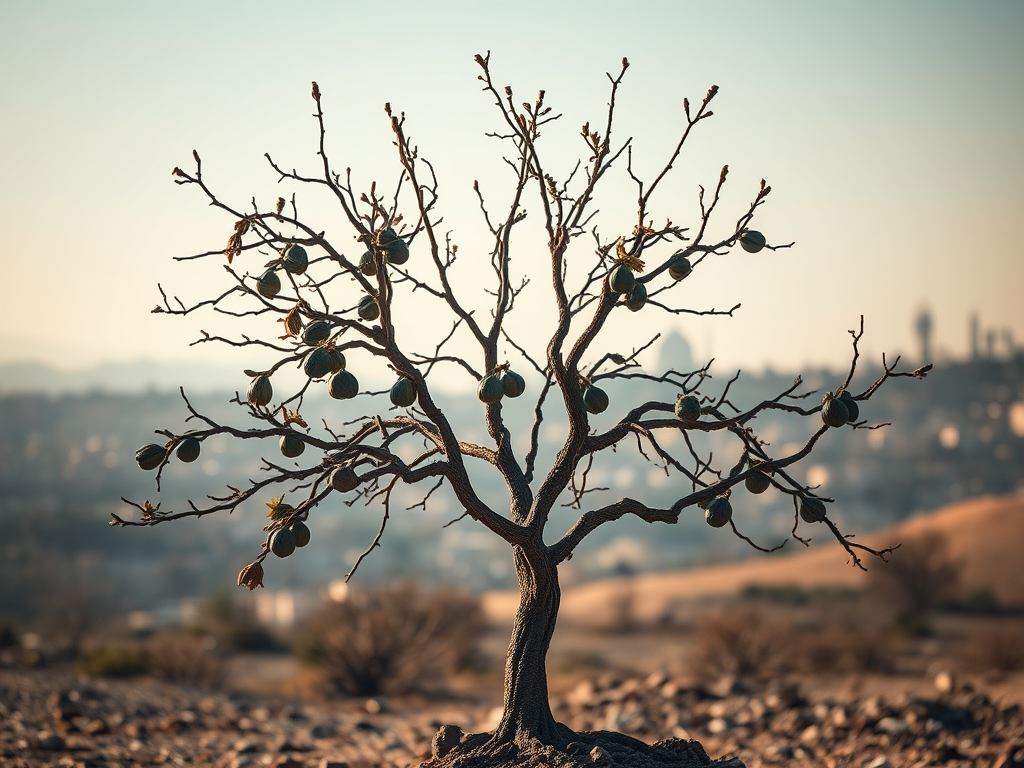
In the morning, as they went along, they saw the fig tree withered from the roots. Peter remembered and said to Jesus, “Rabbi, look! The fig tree you cursed has withered!”
Mark 11:21-22 (NIV)
This past summer, Wendy and I began avidly working at keeping a small little herb garden alive, along with some other house plants that include a Christmas cactus. I have joked on many occasions about having a brown thumb. Here I live on arguably the most productive farmland in the world, and all my life I’ve struggled to keep a simple houseplant growing and blooming.
Today’s chapter contains one of the strange, head-scratching episodes in the entire Jesus Story. It is the final week of Jesus’ earthly life. Jesus and His entourage are in Jerusalem along with thousands from all over the world to celebrate the Passover, a festival celebrating God’s deliverance of the Hebrews from slavery in Egypt back in the story of Exodus. Jesus and His followers are on their way to the Temple in the morning and Jesus checks out a fig tree to see if it has any figs on it, but it doesn’t, so He says, “May no one ever eat from you again.” He then goes to the Temple and famously drives out the money-changers, who were part of a extortion racket the Temple leaders had running. It was a money-making scheme that preyed on the poor and pilgrims visiting for the festival. On their way back to the Temple the next morning, Peter notices that the fig tree Jesus had cursed had withered.
Why on earth would Jesus curse and kill a fig tree? It seems so random and out of character for Jesus.
As we’ve made this chapter-a-day trek through Mark, I’ve talked a lot about God’s base language of metaphor. With today’s chapter, we have another opportunity to see how metaphor helps unlock some of the mysteries of the Great Story.
Fruit is a theme throughout the Great Story. In Eden, God provides the fruit of the entire Garden for Adam and Eve, but forbids them from eating just one kind. We all know what happens. As the end of the Great Story, as John describes his vision of the eternal city God is preparing, there is a river flowing from God’s throne and on each side of the river stands the Tree of Life which bears a new crop of fruit every month. So the Story begins and ends with fruit. In between, there are countless references to fruitfulness. Jesus Himself spoke about being able to determine what’s going on in a person’s soul by looking at the fruit of their lives.
And, this is the key to understanding the mysterious episode of the fig tree. The tree, wasn’t bearing fruit, so Jesus cursed it. He then goes to the center of Hebrew worship, God’s people who God had faithfully delivered from slavery, and exile. But the leaders who were supposed to be fruitfully serving God and the people had turned into money-grubbing elites padding their pockets and clinging to power by turning God’s Temple and its system of worship into a racket. The leaders of God’s own people were, once again, not being fruitful in the ways God had always said He desired of them.
Notice how the story of the fig tree is wrapped around this episode of Jesus driving the money-changers out of the Temple. They are connected. The Temple system and the unfruitful old ways will wither and die, as they crucify God’s Son. As Jesus is crucified and resurrected, a new covenant will be put in place. Old things pass away, and new things come. And God’s desire remains the same: that I become one with Jesus, that I remain in Jesus, and that I bear the fruit that God desires in my life.
In just three nights from the events of today’s chapter, Jesus will be with His closest followers in a garden on the night before his crucifixion. He will say to them:
“I am the vine; you are the branches. If you remain in me and I in you, you will bear much fruit; apart from me you can do nothing. If you do not remain in me, you are like a branch that is thrown away and withers; such branches are picked up, thrown into the fire and burned. If you remain in me and my words remain in you, ask whatever you wish, and it will be done for you. This is to my Father’s glory, that you bear much fruit, showing yourselves to be my disciples.”
John 15:5-8 (NIV)
Along my life journey, I’ve observed that people often misunderstand what being a disciple of Jesus is all about. It’s not about rules, regulations, judgement and condemnation – though some people twist it into that. Jesus is about experiencing life in a way that produces the fruit of God’s Spirit in my daily thoughts, words, relationships, and actions. It’s evidenced by an increasing yield of love, joy, peace, patience, kindness, goodness, faithfulness, and self-control in my life.
By the way, our Christmas cactus has tiny blooms sprouting, and I just culled some fresh Basil and Rosemary this past week. Maybe I’m finally getting this growing and bearing fruit thing on a whole new level!

If you know anyone who might be encouraged by today’s post, please share.