Tag Archives: Alexander the Great

Kingdoms Fall

Kingdoms Fall (CaD Ezk 26) Wayfarer

 therefore this is what the Sovereign Lord says: I am against you, Tyre, and I will bring many nations against you, like the sea casting up its waves.
Ezekiel 26:3 (NIV)

This past Sunday I delivered a message among my local gathering of Jesus’ followers and I voiced the fact that the entire Great Story from Genesis to Revelation is really about the conflict between God’s Kingdom and human empire.

Human history is a study in the rise and fall of human empires. Some are long-lasting like that of the Byzantine Empire which lasted of 1100 years. The rise and fall of the Third Reich in the 20th century was, by grateful comparison, a blip on the radar at 25 years.

When it comes to the ancient Hebrew prophets, it’s really about human empires, and there was a slew of them rising and falling during the period of the prophets from 875-430 B.C. When reading the prophets like Ezekiel, it helps to have some historical context to inform the reading of the text.

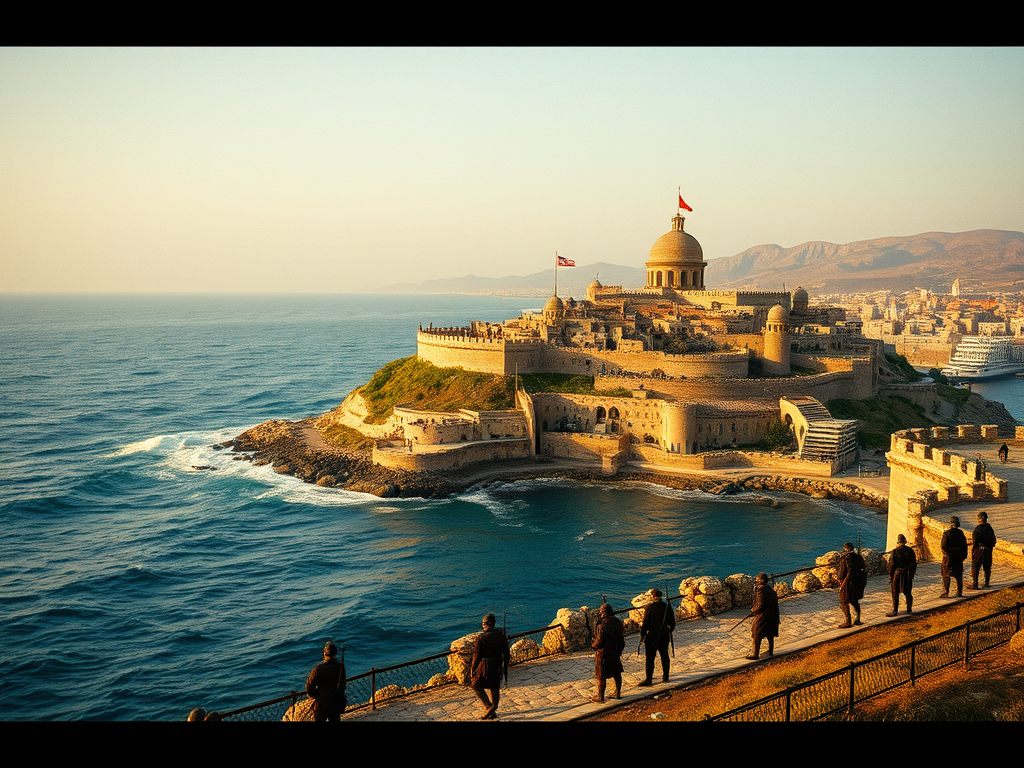
The Kingdom of Tyre (modern day Lebanon) was a prominent and wealthy trading port north of Israel. There were actually two cities. One was a fortified island just off the main land. The other was on the mainland itself. The Kingdom was known for their cedar forest and those cedars were exported by kings in the region for their pet building projects. Solomon used the cedars of Tyre for building his temple.

The relationship between ancient Israel and Tyre was testy. Evil Queen Jezebel was a princess of Tyre who was married to Ahab as a political alliance. She famously tried to rid Israel of the worship of Yahweh and import her native Baal worship. God raised up the prophet Elijah to oppose Jezebel and things didn’t end well for her.

Today’s chapter is the first of three prophetic messages against Tyre. In Ezekiel’s day, prophesying the fall of Tyre would probably have made his listeners laugh. Tyre seemed indestructible. First, it was a major trade port, the source of tremendous wealth, and strategic trade partner with it’s ships bringing in goods from all over the Mediterranean and northern Africa. Then, of course, was the fact that it was two cities. If you destroyed the mainland city, you still had to figure out how to lay siege to the island city.

Ezekiel prophesies that “many nations” would come against Tyre and lay siege to it. Verses 8-9 are a very succinctly detailed description of the stages of siege warfare in that day (Ezekiel and his fellow exiles were living witnesses of how it worked):

He will ravage your settlements on the mainland with the sword

A big part of the success of siege warfare on a walled city was to starve the people inside. The army would start by getting control of the settlements around the city that helped provide crops and food inside the city. This broke off supply lines and starvation would ultimately occur within the walled city.

he will set up siege works against you, build a ramp up to your walls and raise his shields against you.

The next phase of the siege was to get to the top of the walls to take out the city’s defenses. Defenders would stand on the wall and shoot down at the sieging army or pour boiling oil on top of them. A ramp was typically constructed leading up a section of the city wall and “siege towers” would be constructed and rolled up the ramp to get to the top of the wall and eliminate the defenders there.

He will direct the blows of his battering rams against your walls and demolish your towers with his weapons.

Once in control of the top of the wall, the siege army could concentrate on breaking down a section of wall so that the army could flood in. There were multiple ways they could accomplish this. The gates were so fortified that sometimes it was easier to ram through a weaker section or to dig a tunnel under the wall to weaken the wall and cause it to collapse.

Ezekiel’s prophecy was actually fulfilled. Nebuchadnezzar laid siege to Tyre for thirteen years. He destroyed the city on the mainland and was particularly ruthless given how long it took. Babylon didn’t have a lot of experience with naval warfare and he failed to take the island city. A hundred or so years later Alexander the Great would come through and finish the job. He was even more ruthless than Nebuchadnezzar, and historians were aghast at the slaughter. He killed 10,000 men, women, and children, sold 30,000 into slavery, and had all the young men of fighting age crucified.

In the quiet this morning, it leaves me pondering the rise and fall of empires. My friend, Chuck, was head of marketing for Billy Graham films when they made The Hiding Place. It’s the story of Corrie Ten Boom whose family helped hide Jews from the Nazis. Her whole family were sent to concentration camps. She was the only one who survived, released from the camp because of a clerical error. When Chuck asked her why she wanted to make a movie of her story she answered, “To prepare American Christians for what they are going to have to go through someday.”

Chuck told me this when I was in high school. It’s seemed crazy back then. After the last eight years or so, I’m not so sure. I am pretty sure that it’s much like the people of Ezekiel’s day thinking he was crazy to predict the fall of Tyre. History teaches me that kingdoms rise and kingdoms fall. Sometimes the fall is sudden and unexpected. Who knows what the future holds. I prefer to know and trust Who holds the future.

If you know anyone who might be encouraged by today’s post, please share.