Tag Archives: Matthew 14

“Why Do We Pray Before Meals?”

“Why Do We Pray Before Meals?” (CaD Matt 14) Wayfarer

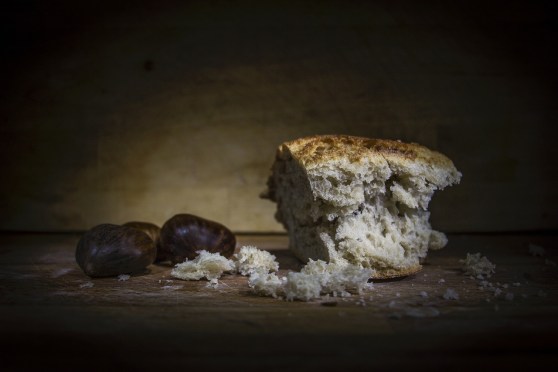
And he directed the people to sit down on the grass. Taking the five loaves and the two fish and looking up to heaven, he gave thanks and broke the loaves. Then he gave them to the disciples, and the disciples gave them to the people. They all ate and were satisfied, and the disciples picked up twelve basketfuls of broken pieces that were left over.
Matthew 14:19-20 (NIV)

“Why do we pray before meals?” Wendy asked me yesterday morning after I had prayed before breakfast.

It was a simple enough question. There are so many things in life that we do because they are habitual or traditional. We rarely stop to ask “Why?”

The question came back to mind as I read the chapter this morning. Jesus famously feeds a hungry crowd of 5,000 followers with just a handful of bread loaves and a couple of fish. Yet, there is so much more to this story than the surface event. It even addresses Wendy’s question.

We are blessed to live in the most affluent empire in human history during the most affluent age in human history. Never in the history of humanity has the simple human need for food been so abundantly satiated on our planet. I’m not saying that there aren’t places and people in the world who are struggling for their “daily bread,” but never in history has that number been so small. That is just the facts. Not only that, but here in America we have long struggled with the opposite problem. Food is so abundantly available that we have a problem with obesity.

Yet, for the crowds following Jesus to an isolated place to hear Him preach, and for God’s people leaving slavery in Egypt and wandering into the wilderness, the need for food simply to survive was critically real. And, this episode in today’s chapter is connected to the story of the Hebrews in the wilderness. It’s connected to the Lord’s Prayer that Jesus taught His followers to pray: “Give us this day our daily bread.”

For the Hebrews in the wilderness, God provided a miraculous bread from heaven called “manna.” Every morning when they woke up the manna covered the ground like dew. It was always just enough for that day, and if someone collected more than they needed for themselves and their family that day it would grow horribly rotten.

The spiritual lesson of manna, and of the loaves and fish, is profound in its simplicity: Trust God for what you need each and every day.

When I began work for our company, Intelligentics, back in 1994 it was unlike any job I’d ever held. No one in our company, including the founder and owner, has ever drawn a salary. Every person gets paid by the amount of time we charge clients within projects. Which means if we don’t have any clients or projects then no one gets paid. Our founder set up the business this way to mirror the spiritual principle of daily bread.

For over 30 years I have never had the simple assurance of next month’s paycheck or how much it would be.

God has always provided for our needs despite the fact that across the 30-plus years there have been months of proverbial feast and famine. Nevertheless, like the story of the loaves and fish in today’s chapter, there has always been “leftovers” in the end.

As I meditated on this simple life lesson in the quiet this morning, Holy Spirit raised within my memory one of my favorite verses in the entire Great Story. It comes from the time of the Hebrews in the wilderness as God is instructing them in their new way of life. The hard reality of slavery is that your Master has the responsibility of protecting and providing for his investment with housing and food, meager as it might be. Wandering in the wilderness is a very different reality. Freedom required faith that God would provide. And when God did provide, Moses instructed God’s people:

“When you have eaten and are satisfied, praise the Lord your God for the good land he has given you.
Deuteronomy 8:10 (NIV)

I love the fact that Jesus not only provided a filet-o-fish feast, but Matthew was careful to record that everyone “ate and was satisfied.” Matthew the Quirk was also careful to record the numbers like the math geek he was. Five loaves and two fish feed 5,000 with twelve baskets full of leftovers (that’s one basket for every one of the twelve tribes of Hebrews wandering in the wilderness back in Deuteronomy.

Matthew was also careful to record that Jesus “broke the bread,” giving us the colloquialism that we still use today for gathering together with friends or loved ones for a meal. Jesus also “gave thanks” in anticipation of God’s provision for the “daily bread” God was about to provide. While Matthew doesn’t say it specifically, I know for certain that everyone was obediently obeying Deuteronomy 8:10 and praising God after the fish feast was over that day.

So, there’s the answer to Wendy’s question. We pray before meals because it’s the spiritual pattern God wove into our daily lives. Trust God each and every day for my daily bread. Thank Him for His provision as I break my bread. Praise Him each time I am satiated and there are leftovers.

When I begin to trust and depend on myself for my daily bread, I’ve completely lost the plot.

If you know anyone who might be encouraged by today’s post, please share.

These chapter-a-day blog posts are also available via podcast on all major podcast platforms including Apple, Google, and Spotify! Simply go to your podcast platform and search for “Wayfarer Tom Vander Well.” If it’s not on your platform, please let me know!

Between Quiet and Noise

Between Quiet and Noise (CaD Matt 14) Wayfarer

After [Jesus] had dismissed [the crowd], he went up on a mountainside by himself to pray. Later that night, he was there alone…
Matthew 14:23 (NIV)

I remember seeing a news story many years ago that talked about a special breed of audiophiles who try to get high-definition recordings of pure nature sounds. They’re the ones who record the sounds that end up on our noise machines or sound effect apps that help us sleep at night. This particular news story was about the fact that their job is getting increasingly harder. The problem is that the noise of civilization is crowding in everywhere, making it difficult to find the pure sounds of creation without planes, trains, automobiles, and cells phones interrupting.

Caught between the quiet and the noise of life. Now there’s a metaphor that resonates with me.

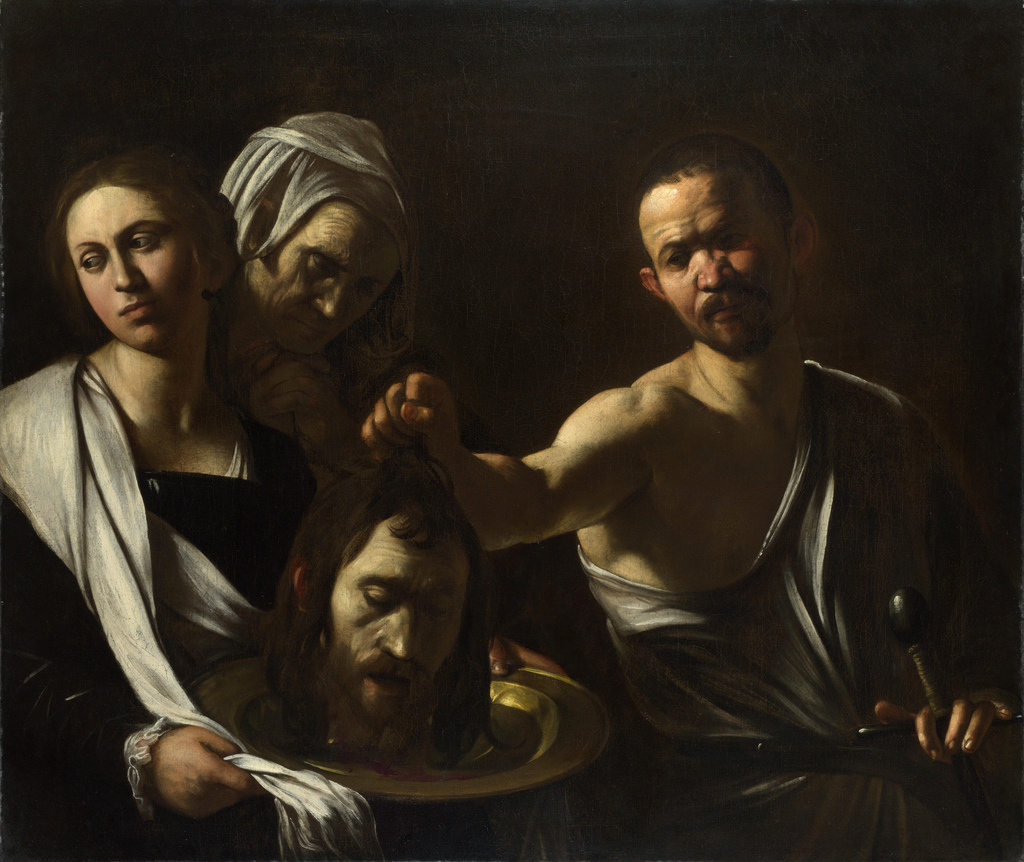
Today’s chapter begins with the unjust and tragic execution of John the Baptist, who was killed because a spoiled, drunken, frat-boy king got turned on watching his niece/step-daughter shake her booty at his high society soiree. Promising to grant her any wish, her mother prompted her to ask for John’s head on a platter.

John’s disciples bury the body and immediately find Jesus to tell him the news. I find it so easy to dehumanize Jesus as I read and reread the stories. Today, I found myself imagining Jesus’ reaction to the news. John was Jesus’ cousin, born within a few months of one another. Their mothers experienced miraculous conceptions and pregnancies together. They knew one another since they were kids. Our daughters Taylor and Madison each have a cousin born within months of one another. I’ve witnessed the special bond they continue to have. That was Jesus and John. Just a few chapters ago, Jesus said of his cousin, “There is no one greater than John!”

When Jesus hears the news, Matthew records that He immediately got in a boat and withdrew to a solitary place. How human. Being fully human, Jesus is going to grieve in all of the emotional stages of human grief: denial, anger, bargaining, depression, then acceptance. He wants to be alone.

In the quiet privacy of a boat, Jesus seeks an equally quiet, solitary place out in nature to be alone, to grieve. But He can’t escape the din of civilization:

Hearing of this, the crowds followed him on foot from the towns.

By the time Jesus lands onshore in a solitary place, the crowd is already assembled. He can’t escape.

I felt that tension this morning as I read about Jesus healing the sick, working miracles, and feeding the thousands. Inside, He’s grieving. Inside, He’s tired. Inside, He just wants to be left alone.

The need to be alone in the quiet leads Jesus to send the disciples on ahead in the boat. Jesus dismisses the crowd.

After Jesus had dismissed the crowd, he went up on a mountainside by himself to pray.

In the quiet this morning, I found myself identifying with the tension that Jesus must have felt at that moment. I feel the pull to quiet. I need to withdraw, to feel, to ponder, to pray, to rest, to sit in the silence. But, life doesn’t stop. The task list that’s never empty, the needs of loved ones, the deadlines at work, the commitments I’ve made, the friends’ requests, the responsibilities of everyday life… every time I withdraw to a solitary place, I find them all noisily waiting for me when I arrive.

Jesus had compassion. Jesus took care of the crowds, but He didn’t give up on His need for quiet. If anything, the crowds only intensified His determination to make it happen. No crowds, no disciples even.

“Hey! Everyone? Leave me.”

Along this life journey, I’ve learned that quiet time is necessary. I may not always succeed in shutting out the world and finding the quiet. I may find the quiet only to find it encroached by interruptions. Like Jesus, I don’t want to get angry with the interrupters. I want to be compassionate. I also don’t want to give up seeking quiet. It may just have to intensify my effort to find it.

If you know anyone who might be encouraged by today’s post, please share.

What We Find in Our Fears

Herod wanted to kill John, but he was afraid of the people, because they considered John a prophet.

The king (Herod) was distressed, but because of his oaths and his dinner guests, he ordered that her request be granted and had John beheaded in the prison.
Matthew 14:5,9-10 (NIV)

A few weeks ago we journeyed through the account of Herod the Great killing all of the baby boys of Bethlehem under the age of two, fearing that the Messiah born there (as reported to him by the wise men from the east) would grow up to supplant him. Herod was more afraid of losing his worldly power than anything else.

One of the little confusions in the story of Jesus is the fact that the Herod who killed the babies (that would be Herod the Great) is not the same Herod as the one we read about in today’s chapter. Herod the Great died (doesn’t matter how hard you cling to power and riches, death gets everyone in the end) and his kingdom was split up and given to three of Herod’s sons [cue: theme from My Three Sons]. The Herod who killed John the Baptist in today’s chapter is Herod Antipas, son of Herod the Great.

Now think about Herod Antipas for a moment. He is the son of a brutal and ruthless tyrant and watched his father desperately clinging to power. Think about the sibling rivalry among Herod’s sons for the throne and all that came with it. Think about the fear, machinations, and intrigue that may have been present between the three brothers. Think about their inherited lust for power and desire to cling to it.

Matthew gives us a couple of fascinating clues about the mind of Herod Antipas. Herod Antipas wanted to kill John. He had learned a lot about rubbing out your enemies to solidify your power from his father Herod the Great (“Leave the knife; Take the humus.”). The goal of Herod Antipas was holding onto what power he’d inherited, and John the Baptist was very popular with the people. Killing John might create a riot among the commoners, which the Romans would then have to deal with. The Romans didn’t like uprising and unrest in their Empire. Caesar Augustus in Rome might choose to replace Herod Antipas just as he replaced Herod Antipas’ brother, Herod Archelaus, years earlier.

A few verses later we learn that Herod Antipas got played by his lover, who also happened to be his sister-in-law, his other brother Philip’s wife. Remember what I said about fraternal competition? Herod Antipas has stolen Philip’s wife who tempts Herod with her own daughter, his niece. Seriously, this is like a soap opera. Now, Herod Antipas is stuck with a house full of guests and his niece has publicly challenged H.A. to bring her the head of John the Baptist on a platter. Herod is afraid of the riot, but he’s even more fearful of looking weak in front of the rich and powerful players in the room. He’s stuck. Herod must choose between competing fears and their threat to his pride, prestige, and power.

This morning I’m thinking about Herod Antipas. He feared losing power. He feared losing face. What he obviously did not fear (and seemingly gave no thought to) was God or anything to do with the things of the Spirit. He was oblivious to the Great Story in which he and his father were playing, and would continue to play, a significant part.

Our fears tell us a lot about ourselves, our priorities, and our faith (or lack thereof). What are my fears? What do they say about me? Do my fears reveal a soul clinging to that which I can never really have, have enough of, or keep in the eternal perspective? Am more like Herod, or more like John and Jesus?

“Do not be afraid of those who kill the body but cannot kill the soul. Rather, be afraid of the One who can destroy both soul and body in hell.”
-Jesus


Chapter-a-Day Matthew 14

'curb it'
Image by natashalcd via Flickr

“All we have are five loaves of bread and two fish,” they said. Matthew 14:17 (MSG)

It’s clean up week in my town. People can go through their homes and put large, bulky things they don’t want on the curb for the garbage truck to haul away. The result is an ant-like army scurrying around town picking up trash off other people’s yards. My wife and I like to put things on the curb and guesstimate how long it’s going to last before someone stops and takes it. There have been times when I’ve hauled something to the curb and someone has stopped to take it before I could walk back to my house. There’s generally not much of anything left for the garbage man.

Over the last few years, I’ve had a goal of simplifying my life. I’m a work in progress, but I have a genuine desire to get rid of stuff I don’t need or use. I really do want to do more with less. One of the most fascinating things about clean up week is that many of the people who I see running around picking up other people’s trash are those who really appear not to need it. They have plenty of money and plenty of junk. How fascinating, this allure to hoard more.

How fascinating the disciples thinking. “All we have…” That’s scarcity thinking: “It’s not enough.” That’s shame thinking: “What we have is worthless for the task.”

I’ve learned a few things in my journey towards simplicity.  I’ve learned that I can actually get by with far less than I already have. I’ve also learned that less clutter and less crap creates a greater sense of peace, and more room for the things of God. The more I have, the more for which I’m responsible. The more I have to store. The more I have to think about. The more to which I must tend.

Jesus’ lesson to me today is a reminder that I have more than enough to do what He wants me to do. No thinking “If only I had…” or “I don’t have…” or “As soon as I get…” or “But, all I have is…” I am blessed with more than what is sufficient for the task.

Fish sandwich, anyone?

Enhanced by Zemanta