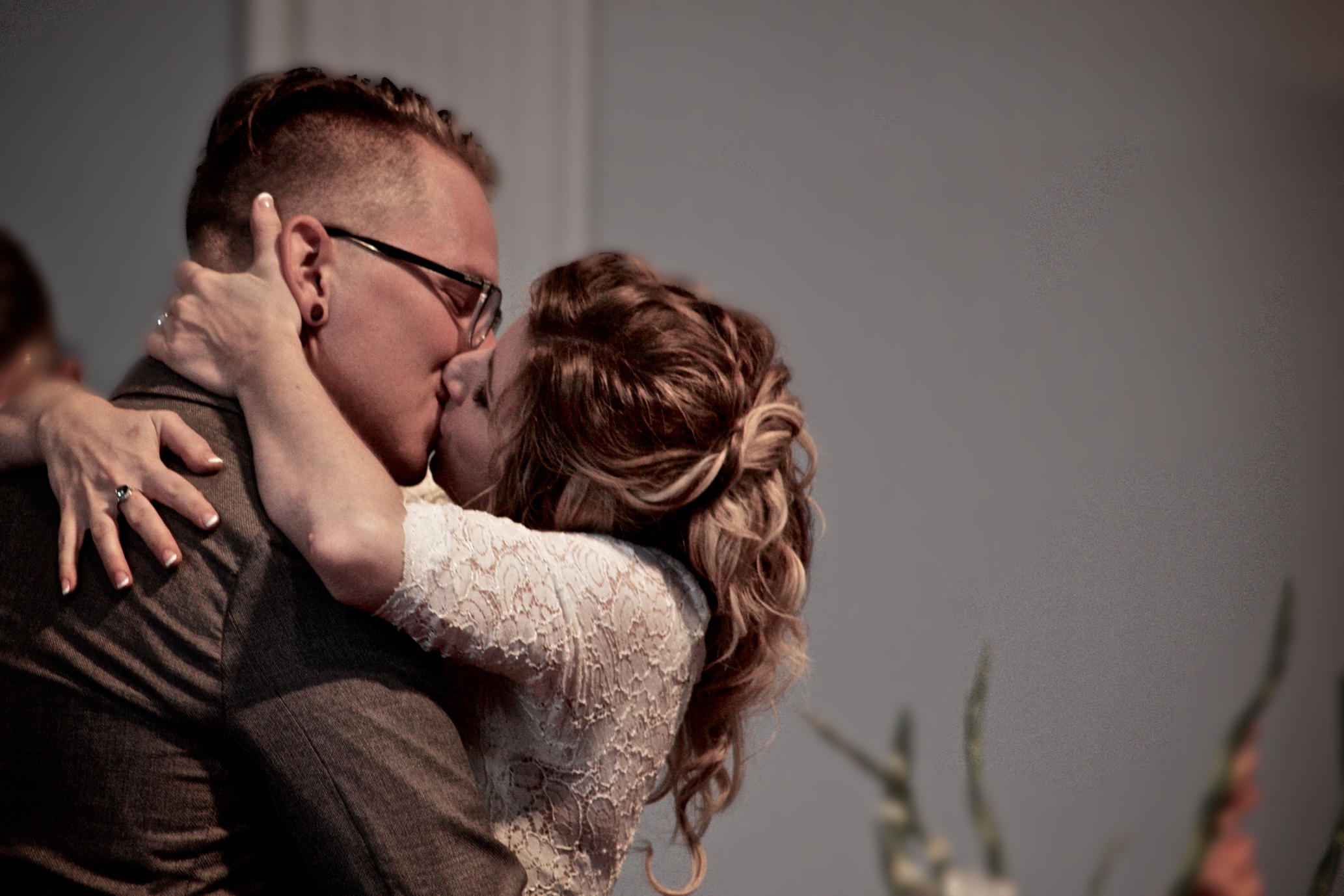
Tag Archives: Wedding

Presence, not Possession

If what a prophet proclaims in the name of the Lord does not take place or come true, that is a message the Lord has not spoken. That prophet has spoken presumptuously, so do not be alarmed.
Deuteronomy 18:22 (NIV)

It is New Year’s Eve day. It’s always a special day for Wendy and me as we celebrate our anniversary. This year marks 20 years, which makes it all the more special. There are many things I love about having our anniversary on New Year’s Eve. We always have the evening off, along with the rest of the world. I have never forgotten my anniversary. And, it’s already a fun day of celebration, so celebrating our marriage just adds another layer to the festivity.

On the day of our wedding, I remember feeling another apt connection with holiday. Old things pass away. New things come.

New Year’s by its nature causes a pause for reflection on what has been. It prompts a view toward the road ahead with a curiosity for the path forward and what lies ahead. There will be many prognosticators and prophets throughout media today making proclamations and predictions.

In a very similar fashion, the Hebrews in our chapter-a-day trek through Deuteronomy stand at a precipice in time. The wanderings are over. The promised land awaits on the other side of Jordan. Moses’ message in the entirety of Deuteronomy is a father’s heartfelt preparation for his children and grandchildren regarding what has been, and what is yet to come. Today’s chapter whispers wisdom for me on this precipice of time between 2025 and 2026.

The chapter begins with a reminder that the tribe of Levi will not inherit land once the dust settles in the promised land. No acreage. No deed. No security blanket tucked into a filing cabinet. “The Lord is their inheritance.”

It’s a strange economy, isn’t it?
Everyone else gets fields and vineyards. The priests get… presence.

Not everything valuable can be owned. Kingdom economics never promises deeds, dividends, or earthly security. Jesus asks me to forego earthly treasure and invest in valuables of an eternal kind . Some callings are intentionally unmoored. Some lives are meant to be lean so they can listen. As the year exhales its last breath, that question hovers: What have I been holding that was never meant to be possessed?

Then Moses turns, almost urgently, to forbidden shortcuts.
No divination.
No sorcery.
No necromancers knocking on the thin wall between worlds.

Why? Because uncertainty makes us desperate—and desperation makes us sloppy lovers of truth. When the future feels slippery, we reach for anything that promises control. The people are warned not against curiosity, but against counterfeit certainty. And counterfeit certainty comes cloaked in many guises.

Ouija boards.
Retirement funds.
Spreadsheets and infographics.
Fundamentalist rulebooks.
Charismatic leaders.
Preachers with prophesies.

Counterfeit certainty seduces me into believing I don’t need faith..

But, without faith, it is impossible to please God.

And here—oh here—is the heart of the chapter. Moses promises his Hebrew progeny that God will not leave them guessing.

“The Lord your God will raise up for you a prophet like me from among you… You must listen to him.”

This is not a vague spiritual shrug. It is intimacy offered. God knows their fear—that unmediated holiness once made them beg at Sinai, “Do not let God speak to us or we will die.” And so God leans closer, softer, clothed in flesh and voice and language they can bear.

The true prophet, Moses says, is not measured by charisma or confidence, but by fidelity. Does the word align with the character of God? Does it call people forward into faithfulness rather than sideways into fear? Does it come true—not because it was clever, but because it was obedient?

False prophets, by contrast, speak with urgency but no authority. They rush. They seduce. They promise control instead of covenant.

And that brings me back to New Year’s Eve. To the road forward and what awaits Wendy and me the 21st year of our marriage. What awaits this nation in the celebration of 250 years. What awaits our globe in the approximately 2026th journey around the sun since Jesus’ own earthly journey.

Moses wisdom whispers to my soul at this precipice of time.

Presence. Faith. Listening with discernment.

As the year turns its page, that distinction matters. Not every loud voice is a true one. Not every confident prediction deserves my trust. And not every silence means God has stopped speaking—sometimes it means He is waiting to be trusted.

If you know anyone who might be encouraged by today’s post, please share.

Promotional graphic for Tom Vander Well's Wayfarer blog and podcast, featuring icons of various podcast platforms with a photo of Tom Vander Well.
These chapter-a-day blog posts are also available via podcast on all major podcast platforms including Apple, Google, and Spotify! Simply go to your podcast platform and search for “Wayfarer Tom Vander Well.” If it’s not on your platform, please let me know!
Logo of Bible Gateway, featuring an open book icon against an orange background with the text 'Bible Gateway' below.

Second Marriage

“We assume the responsibility for carrying out the commands…
Nehemiah 10:32a (NIV)

Among some of the historical family ephemera in my personal archives is a marriage certificate for my great-grandparents. The certificate is for their second wedding. They were married, then got divorced, and then got remarried. Ironically, I think I have the second marriage certificate for our daughter, as well. It’s funny how history repeats itself.

Some relationships are like that. They work, and then they don’t, and then the parties work through their differences and return to covenant. They recommit.

In today’s chapter, Nehemiah and the returned Hebrew exiles in Jerusalem return to their covenant with God. It’s a covenant that God refers to as a marriage on numerous occasions. In essence, the document that they sign and seal is a new marriage certificate. In yesterday’s chapter they confessed that they had broken faith and walked away from the marriage. Now, they are getting remarried.

In this marriage certificate, Nehemiah lists a number of things to which they are committing to make the relationship work. They agree to live according to the principles God laid out in the Law of Moses, to keep the sabbath, to be generous, and to be faithful to the system of worship God prescribed.

Nehemiah 10 invites me to ask not just “What do I believe?” but “What am I willing to commit to — publicly, practically, persistently?” The ink on Nehemiah’s covenant scroll reminds me that faith needs form the way that saying “I do” at the wedding needs daily relational acts that put flesh on the commitment. Promises whispered in private take root when I bind them to community, to habit, to rhythm.

I’m reminded in the quiet this morning that my relationship with God is a marriage, and each new day is like my own “signing day.” It’s a daily covenant renewal of the soul:

  • To rest when the world demands endless work.
  • To give generously when culture teaches us to hoarding.
  • To honor sacred time and sacred space.
  • To live and love distinctively, not for separation’s sake, but so that light may be visible in the dark.

Nehemiah and the Hebrews’ story is really a love story between God and a people saying again: “We’re still yours.” And that’s a sentiment I whisper in my actions each day to both God and Wendy.

If you know anyone who might be encouraged by today’s post, please share.

Promotional graphic for Tom Vander Well's Wayfarer blog and podcast, featuring icons of various podcast platforms with a photo of Tom Vander Well.
These chapter-a-day blog posts are also available via podcast on all major podcast platforms including Apple, Google, and Spotify! Simply go to your podcast platform and search for “Wayfarer Tom Vander Well.” If it’s not on your platform, please let me know!
An image featuring two marriage certificates, showcasing historical family ephemera, symbolizing commitment and covenant renewal.

Signs

Signs (CaD Jhn 2) Wayfarer

What Jesus did here in Cana of Galilee was the first of the signs through which he revealed his glory; and his disciples believed in him.
John 2:11 (NIV)

As I read a chapter in the quiet each morning, I try very hard to approach the text without any expectations. Even when it’s a passage I have read countless times over the years, I do my best to make both my head and my heart a clean slate. The question my spirit silently begs God’s Spirit is “What have you got for me today?”

As I read, I take note of little things that capture my attention. I might catch a detail I hadn’t noticed before. Sometimes, I’ll notice repetition in the text and start circling the repeated word or phrase. This might lead me to meditate on the word or phrase, digging deeper into what the repeated use might mean.

So it was this morning as I noticed John’s repeated use of the word “sign” in reference to Jesus’ miracles:

2:11: What Jesus did here in Cana of Galilee was the first of the signs through which he revealed his glory; and his disciples believed in him.

2:18: The Jews then responded to him, “What sign can you show us to prove your authority to do all this?”

2:23: Now while he was in Jerusalem at the Passover Festival, many people saw the signs he was performing and believed in his name.

As I dug deeper, I discovered the fact that John repeatedly used the word “signs” when referencing Jesus’ miracles. I think the choice of words is deliberate. Jesus’ miracles were intended as “signs” to point people to who Jesus is. There was a purpose in His performing of miracles. In addition, while the other three accounts of Jesus’ story report 18-20 miracles each, John chooses just seven miracles Jesus performed during his ministry to share with us, his readers. He then adds a bonus miracle in the epilogue after Jesus’ resurrection. This is not an accident.

Seven has significant meaning in the Great Story. It is the number that signifies “completeness” or “perfection.” As I mentioned in yesterday’s post/podcast, John writes his version of Jesus’ story, not in a journalistic reporting style, but in a thematic style. He carefully chooses seven miracles to share with us. It’s also interesting to note that five of the miraculous “signs” he shares are unique to John’s account. Matthew, Mark, and Luke do not include them. John carefully chooses each “sign” to contribute to the larger understanding of Jesus to whom he is introducing us.

Two quick observations from my meditation on John’s use of signs this morning:

The first concerns Jesus’ signature miracle of turning water into wine at a wedding feast. Jesus used large ceremonial jars used in the Jewish tradition to hold water used in ritual purification to make one “clean.” Jesus will later use the metaphor describing His teaching as “new wine” and God would later work through Peter (Acts 10) and Paul (Galatians 5) to change the old ceremonial ideals of what made a person clean or unclean, acceptable or not. Jesus also regularly used the metaphor of a wedding in parables and in the eternal union of Christ and the church in Revelation. Jesus’ miracle was not only a blessing to the wedding hosts, but it also served as a “sign” to His larger eternal mission.

I also found it fascinating that there were two responses to the “signs” of Jesus’ miracles. Those listening to Jesus in the Temple became believers after seeing the miracles He was performing. The religious authorities and Temple officials, however, not only refused to ignore the “signs” that had made believers of others, but they asked for a different, bigger, better, and more definitive “sign.” I referenced Jesus’ response in yesterday’s post when Jesus told them He would destroy the Temple and raise it in three days. It seems to me that Jesus understood from the very beginning that there were those individuals who would refuse to believe no matter how big of a “sign” He performed.

John confesses in today’s chapter that it was only after Jesus’ resurrection that he and the boys realized what Jesus meant when He referenced “destroying the temple and raising it in three days.” Along my spiritual journey, I’ve observed that God often provides signs along life’s road. I may not realize it in the moment, but I will later look back and realize that the sign was there all along. It comforts me to know that the Story is already written. I can’t help but think of Jesus’ words:

“You have a saying that goes, ‘Red sky at night, sailor’s delight; red sky at morning, sailors take warning.’ You find it easy enough to forecast the weather—why can’t you read the signs of the times?”

God, open the eyes of my heart to see the signs and grant me the courage to follow.

If you know anyone who might be encouraged by today’s post, please share.

The Latest: Summer 2022

It’s a gorgeous autumn day in Edinburg, Scotland. It has taken several weeks and a vacation across the Atlantic Ocean for me to make the time for this post. What a year 2022 has proven to be (and it’s not over yet).

This past summer was packed full of fun, both the usual and the non-usual. It began in what has become the usual way over the past twelve years, and that is at the lake with the JPs and VLs. Wendy and I arrived a little early and stayed a little late to enjoy time to ourselves and with friends Dave and Lola.

After returning to Pella, the social calendar included our support of the Pella Opera House at their annual gala.

We also enjoyed our friend, Shanae’s wedding in Des Moines. I was honored to be asked to pray a blessing over the wedding feast, and we had a lot of fun with friends. Wendy and I were anxiously awaiting the arrival of our granddaughter across the pond, which may (or may not) have prompted Wendy to offer to adopt dear little Audrey as an honorary grandchild for the evening.

We were ecstatic when, just days later, our 2nd grandchild, Sylvie Ruth, arrived. Taylor, Clayton, and Milo welcomed our new bundle of joy in Scotland on June 28th while Wendy and I were at the lake to celebrate a quiet July 4th (Taylor’s birthday, btw) holiday. I toasted Sylvie’s birth with a pint and a stogie on the deck while scoring the Chicago Cubs game. Other than having to spend a few extra days in the hospital to hit all of her health markers, everything went according to plan. So excited to have sweet Sylvie with us.

July ushered in another wedding. I was honored to officiate the joining of Megan and Tanner at the Hotel Fort Des Moines. Megan has pretty much been another daughter and we’ve had so much fun getting to know Tanner. It was a fabulous wedding and an amazing reception.

Our friends Kevin and Linda were back in Pella for five weeks this summer and we tried to make the most of it by getting together several times over those weeks. We enjoyed a summer evening of drinks and stogies on the patio. Enjoyed another evening at the Atkins Oasis. The VLs joined us for a Cubs night at the Vander Well Pub, and the six of us helped celebrate Pella’s 175th birthday at a special Pella Soiree one evening.

We also enjoyed visits from a niece and nephew this summer. Our nephew Asher joined us for a night along with his dad, Wendy’s brother Josh. We actually got to host our niece Lydia for a few days while her folks, (Wendy’s sis) Becky and Court got a few nights off. We had fun taking Lydia and Miss Camille to Pella’s new SmashPark. Uncle Tom got to take Lydia to Adventureland. It was her first visit to an amusement park.

We actually had even more gatherings with the Hall and Vander Hart crews. Wendy’s Uncle Brad and Aunt Barb moved back to Pella from Dubuque and we had multiple gatherings at their place. Wendy’s brother Jesse also came to town with his girlfriend Ania, and we enjoyed a great lunch with them and Wendy’s folks. We also enjoyed our nephew Owen’s first birthday gala.

As far as the Vander Well crew goes, all is well. Grandson Milo graduated from Nursery School and started primary school. All is well for Madison, Garrett, and the Rotties down in South Carolina. Papa Dean won both a first-place blue ribbon and a third-place white ribbon for the two stained-glass pieces he entered in the Iowa State Fair. The folks began considering a move to Pella this summer. Mom’s Alzheimer’s continues to progress, but she still manages to be adorably cute. One day on FaceTime my father was telling a long story and was holding his phone so that mom and I were basically staring at each other while Dad talked. I started making faces at her and she started making faces back at me. She’s so funny.

The summer ended with a traditional adult weekend at the lake with the JPs and VLs. It’s always a wonderful weekend of feasting and sharing of life. We spent more time chilling out at the Playhouse this summer and less time out and about. We ended the weekend with me making a double batch of the Vander Well family’s favorite Dutch treat, eireflensjes. The perfect bookend to wrap up the season.

The Wedding

The Wedding (CaD Rev 19) Wayfarer

Then the angel said to me, “Write this: Blessed are those who are invited to the wedding supper of the Lamb!” And he added, “These are the true words of God.”
Revelations 19:9 (NIV)

I mentioned yesterday that Wendy and I were at a wedding this past weekend. The dinner was amazing. If you’ve followed my blog for any length of time, you know that Wendy and I love a great meal, especially when it’s the trifecta of a great meal with great people enjoying great conversation.

At one point between savory bites, Wendy looked at me, her eyes as wide as saucers. “This is not only the best wedding meal I’ve ever had, but it’s right up there with maybe being the best meal I’ve had, ever.”

High praise, for sure. A great meal is always special amidst the love, laughter, joy, and celebration of two lives being united as one.

The metaphors of a wedding, of a bride and bridegroom, are used repeatedly by Jesus. At the very beginning of Jesus’ ministry, the metaphor was even understood and shared between Jesus and His cousin, John the Baptist:

[John’s disciples] came to John and said to him, “Rabbi, that man who was with you on the other side of the Jordan—the one you testified about—look, he is baptizing, and everyone is going to him.”

To this John replied, “A person can receive only what is given them from heaven. You yourselves can testify that I said, ‘I am not the Messiah but am sent ahead of him.’ The bride belongs to the bridegroom. The friend who attends the bridegroom waits and listens for him, and is full of joy when he hears the bridegroom’s voice. That joy is mine, and it is now complete. He must become greater; I must become less.”

Sometime later, the same disciples of John asked Jesus why His disciples didn’t religiously fast the way John made them fast:

Jesus answered, “How can the guests of the bridegroom mourn while he is with them? The time will come when the bridegroom will be taken from them; then they will fast.

Toward the end of His ministry, Jesus was still using this metaphor. He told a parable of ten bridesmaids waiting for the bridegroom to arrive so they could accompany him and his bride with their oil lamps to the wedding feast at the house of the bridegroom and his family. Some of the bridesmaids got tired of waiting and they didn’t have their oil lamps filled, trimmed, and ready when the bridegroom arrived.

I mentioned in yesterday’s post that the ancients often used weddings and funerals as metaphorical contrasts. John uses this ancient device in yesterday’s chapter (a funeral dirge for the demise of “Babylon the Great”) and today’s chapter in which Jesus, the Bridegroom, having tarried like the bridegroom in His parable for 2000+ earth years (as of today), finally celebrates a heavenly wedding feast and is united with His metaphorical bride, all of His followers whose names are written in the Book of Life.

But the contrasts aren’t over! There’s a feast to come that is a stark contrast to the wedding feast of the Lamb. An angel in heaven cries out to all the vultures and carrion fowl on earth to prepare for their own morbid picnic.

Jesus and a heavenly army then descend to meet the unholy trinity and all of the kings and kingdoms of the earth, those who had steadfastly refused to repent during the great tribulation, gathered against Him. The only weapon brought to the battle is the metaphorical sword of Jesus’ words. The anti-christ and his false prophet are captured and thrown into a lake of fire. Their followers become the entree du jour for the vultures.

In the quiet this morning, I’m struck by the simple roots of these contrasting metaphors. A funeral and a wedding. A death dirge and a wedding feast. The eerie silence of a battlefield when the battle is over and the carrion fowl pick at the corpses, and the raucous cheers of a wedding party, blessedly satiated and maybe a wee bit intoxicated, unabashedly dancing to “YMCA.”

I can’t help but be reminded of what God said to His people at the outset of this Great Story:

“This day I call the heavens and the earth as witnesses…I have set before you life and death…”

I made my choice. I sent in the RSVP.

I’m simply waiting for the bridegroom to arrive.

If you know anyone who might be encouraged by today’s post, please share.

The Funeral

The Funeral (CaD Rev 18) Wayfarer

Then a mighty angel picked up a boulder the size of a large millstone and threw it into the sea, and said:

“With such violence
    the great city of Babylon will be thrown down,
    never to be found again.”

Revelations 18:21 (NIV)

This past weekend, Wendy and I were honored to be part of a friend’s wedding. I officiated and Wendy coordinated the rehearsal and the ceremony, so we were there with the family, friends, and loved ones for the entire shebang. We knew relatively few members of the wedding party and the families, so I spent a lot of time simply observing those involved and their celebration. There really is nothing quite like a wedding to celebrate life, love, family, and community in both the moment as well as its perpetuation.

In ancient literature, writers often contrasted weddings with the lamentation of funerals. Talk about a powerful contrast: the joyous perpetuation of life and the harsh reality of inevitable death. Revelations chapters 18 and 19 are an example of this contrast on an apocalyptic scale.

Today’s chapter, Revelations 18, heralds the final execution of judgment on “Babylon the Great.” Babylon first appears in the Great Story in Genesis 10. The Babylonian empire destroyed Jerusalem and took the Hebrews into exile around 600 BC. The ancient kingdom of Babylon became a metaphor for evil human empires in the prophetic and apocalyptic literature throughout the Great Story.

In John’s day, those reading his Revelations understood “Babylon the Great” to be the Roman Empire. It was Rome who had persecuted Jesus’ followers with cruel and unusual punishments. The Romans were known for their creatively tortuous execution methods, including the tying of a giant millstone to the neck of a victim and tossing the millstone and victim into the sea or a deep river to drown. As people who had seen the luxurious excesses, human cruelty, and unjust persecutions that the Romans flaunted, John’s readers would have read today’s chapter as God’s promise to judge Rome, raze it to the ground, and “pay her back double for what she has done” (vs. 6).

It’s hard not to read Revelations and try to connect the apocalyptic characters to specific people or nations. Throughout my entire spiritual journey, I have heard and read speakers and authors hawking their interpretations to the masses. In the quiet this morning, I read the chapter and thought about the way the global economy works. It is more interconnected than ever before and the economic troubles we are currently experiencing around the globe seem eerily familiar in the text. Merchants lament that they suddenly have no customers to export their goods. Sailors cry out because there are no open ports for their cargo.

As I pondered this, it made me wonder if “Babylon the Great” is less about one specific nation and more about an entire world order that oppresses the poor and vulnerable in order to traffic everything from gold to humans in order to amass wealth for the insatiably rich and powerful kings and kingdoms of this world.

Ultimately, I believe that today’s chapter is about the execution of divine judgment and the funeral pyre of human injustice on earth, complete with the catastrophic ripple effect that comes with the demise of such a system.

In the quiet this morning, my mind can’t help but turn back to current events. The last two years have been an object lesson in just how intertwined our economies and supply chains have become. A global pandemic has led to diverse and widespread social, political, and economic instabilities. As I ponder this, I’m struck by two, make it three, thoughts. The first is just how easily a small group of power-brokers might manipulate and control economics on a global scale. The second is how quickly such a system might fall apart should catastrophe strike, leading to a descent into global chaos.

The third is that John’s Revelations envision both scenarios.

If you know anyone who might be encouraged by today’s post, please share.

Two Sides of Jesus

Two Sides of Jesus (CaD John 2) Wayfarer

“Nearby stood six stone water jars, the kind used by the Jews for ceremonial washing…”
John 2:6 (NIV)

In yesterday’s opening chapter of John’s biography of Jesus, I shared that identity is a core theme of John’s narrative.

  • John identifies Jesus as the embodied, eternal Word through which all things were created, whom John himself saw glorified.
  • John identifies Jesus as a spiritual bookend to Moses; The law came through Moses, while grace and truth came through Jesus.
  • John the Baptist identifies himself as not the Messiah, but one who “comes before” and “a voice in the wilderness” preparing the way.
  • John the Baptist identifies Jesus as “the lamb of God who takes away the sins of the world.
  • Jesus identifies his first disciples and gives Simon a new identity, as “Peter.”

In today’s chapter, John chooses two episodes to begin introducing the reader to Jesus. I couldn’t help but recall John’s words at the end of his narrative:

Jesus did many other things as well. If every one of them were written down, I suppose that even the whole world would not have room for the books that would be written.

John 21:25 (NIV)

So why did John choose these two episodes? First, Jesus acts out of His divinity. He gives in to His mother’s request to salvage a wedding feast for the host by miraculously turning water into wine. In the second, Jesus acts out of His humanity at the Temple in Jerusalem. He overturns the tables of the moneychangers in the Temple courts and creates a small riot.

I spent some time meditating on these two stories, and I found them to be a fascinating contrast which identifies two important aspects of Jesus’ person. Jesus channels divine power to extend compassionate generosity to a common, everyday person stuck in a very human social dilemma. John doesn’t even identify the bride, the groom, or the family who found themselves on the cusp of social humiliation by running out of wine for their guests. What a very ordinary human dilemma for Jesus to solve by miraculously producing 180 gallons of wine (and not just your average table wine, He produced the “good stuff”).

In the second episode, Jesus sets Himself against human corruption that polluted the religious institution and Temple system. The leaders of the Temple had a racket going. They extorted money and lined their pockets from poor religious pilgrims who came from all over the world to offer ritual offerings and sacrifices, forcing them to exchange Roman or other currency into Temple currency (plus taxes and fees, of course). No miracle here. Jesus very humanly channels His inner challenger to fire a shot across the bow of the powerful, religious racketeers. It is the opening shot of a three-year conflict that will end with the racketeers’ conspiracy to commit the legally sanctioned murder of Jesus.

Miraculously divine compassion for a common, everyday nobody.

Courageous human action against a corrupt “kingdom of this world.”

And even in the water-to-wine miracle, there exists a powerful metaphor that connects these two episodes. The “six stone jars” Jesus had the wedding attendants use were intended to be used by the religious leaders for their “ceremonial washing” water. The religious leaders will later accuse Jesus of refusing to follow their prescribed ritual “washing.” They will also accuse Jesus of being a drunkard. Jesus uses the water jars used for the religious leaders’ hypocritical cleansing to produce 180 gallons of “new wine.” And, I also can’t forget that there were six jars, and the number six is identified in the Great Story as “man’s number.” Man’s institutional religious hypocrisy is transformed into divine kindness and compassion for a nameless, poor commoner.

  • Fruitful acts of divine love and compassion towards others
  • Bold defiance of institutional corruption and hypocrisy

In the quiet this morning I find myself desiring to embody these two characteristics that John identifies in Jesus.

If you know anyone who might be encouraged by today’s post, please share.

Love Song

Love Song (CaD Ps 45) Wayfarer

The princess is decked in her chamber with gold-woven robes;
in many-colored robes she is led to the king;
    behind her the virgins, her companions, follow.

Psalm 45:14 (NRSVCE)

How on earth could you put together an anthology of the lyrics of 150 songs and not have at least one love song in it?

Today’s chapter, Psalm 45, is the lone love song in the book of Psalms. It was penned for the wedding celebration between the King and the princess of another nation who was being married as part of a political alliance between the two countries. The thought was that one king wouldn’t attack another king if that king was a son-in-law. It also meant that you had a family member who had eyes and ears on what was going on within a rival’s palace. This was a common diplomatic practice throughout history even into the last century. If you look at a chart of European royal families it looks like a spider’s web with all the crossing and intersecting lines. Even Queen Elizabeth married her own cousin.

The song is written from the perspective of the bride looking at her groom and singing of how handsome, strong, and powerful he is. The song’s climax is the bride and her virgin bridesmaids walking into the king’s palace and the very next verse is a promise to bear the king many sons (which was a sign of strength and succession), and also a little racy because it alludes to what’s going to happen once she enters the king’s chambers.

The chapter is also interesting from how it was used in history. After the Hebrews returned from exile in Babylon, psalm 45 was considered a messianic psalm pointing to the messiah who would come and ascend the throne of David. That is interesting because marriage was used by Jesus repeatedly as a metaphor when discussing His second coming and the climactic apocalyptic event known as “the Day of the Lord.” The metaphor is that Jesus will come back like a bridegroom to be united with all believers, collectively and metaphorically referenced as the bride.

In my podcast series The Beginner’s Guide to the Great Story (I know, I know. I have two episodes left, and I will get a Wayfarer Weekend podcast done this weekend I promise!), I mention that God’s language is metaphor precisely because it can be layered with meaning. When I was a young man attending a fundamentalist Bible college I told to interpret passages like today’s psalm only in terms of its spiritual, prophetic meaning. I mean, we wouldn’t want young people in hormonal overdrive thinking about what’s going on in the king’s bed chamber.

Along my journey, I came to realize that this is not a case of “either or” but “both and.” Yes, there is messianic metaphorical imagery in the song, but that’s not why it was written. It was written as a love song to celebrate a beautiful princess entering the palace and the bed chamber of the king. Man, woman, wedding, love, expression of love, life, pro-creation. That’s beautiful. That’s holy.

[cue: Barry White]

If you know anyone who might be encouraged by today’s post, please share.

You Never Know

You Never Know (CaD 2 Pet 3) Wayfarer

You therefore, beloved, since you are forewarned, beware that you are not carried away with the error of the lawless and lose your own stability. But grow in the grace and knowledge of our Lord and Savior Jesus Christ.
2 Peter 3:17-18 (NRSVCE)

As a young man, I was asked by a friend to accompany him to a friend’s wedding. I didn’t know the couple getting married, but my friend didn’t want to go to the wedding alone. “Tom? Do you know what a young, single man is at a wedding?” he asked me. I shrugged, wondering where he was going with this. “A carcass,” he answered as though bestowing his wisdom upon me.. “Every single, unmarried woman at a wedding sees you as nothing more than the piece of meat who might be the one to marry her.”

It was then that I realized that my egotistical friend, who happened to be engaged, asked me to be his wingman to help ward off the single women he assumed would be flocking around him. Arrogance and cynicism aside, I have attended and officiated a lot of weddings along my life journey. From what I have observed, there is a thread of truth beneath my friend’s hubris. When you’re young and unmarried and all your other friends seem to be getting married, it’s fairly common to wonder “What about me?” And then you start dreaming of a story in which you met “the one” at your friend’s wedding. Come on. We’re all human. It happens.

Jesus told a story about a wedding. In the Hebrew tradition of His day, weddings were at night. The groom and his entourage would arrive at the bride’s house where the bride and her virgin, unmarried bridesmaids waited to escort the wedding party to the groom’s house where the wedding would take place and the marriage consummated. Keep in mind there were no street lights in those days. The bridesmaid’s job was to carry an oil lamp or torch to illuminate the wedding party’s trek across town. The lamp/torch served a dual purpose. Not only did it light the way for the wedding party, but it also illuminated the bridesmaid herself who was an unmarried virgin looking for a husband. You just never know when one of the groom’s unmarried friends might “see her in a good light,” shall we say, and decide he wants to marry her. If a virgin bridesmaid was unprepared and missed the entourage or didn’t have enough oil in her lamp or on her torch to make the entire journey it would be considered a disgrace and a bad omen, but she might miss out on winning the eligible groomsman lottery.

In Jesus’ story. The bridegroom was waylaid. He and his entourage were taking forever to arrive. Some of the bridesmaids got distracted and felt like they had plenty of time. They didn’t have their lamps oiled and ready to go. The groom shows up suddenly, the unprepared bridesmaids ask to borrow some of their fellow bridesmaids oil, but no virgin bridesmaid is going to freely hand her ticket for the eligible groomsman lottery away. Besides, the less competition the better the odds. Are you with me?

So the unprepared bridesmaids run to the local Walmart for some oil. By the time they get back, the wedding has taken place. The reception is in full swing and the DJ has the whole crowd dancing to Love Shack. The groom’s servant at the door takes the young bridesmaids for wedding crashers and won’t let them in.

That’s the story. So, what was the point of the story?

Jesus was very adamant that someday He would return from heaven in what will be the climax of the Great Story being told from Genesis through Revelation. Jesus didn’t just hint at it. He was very clear about it. In fact, after Peter saw the risen Jesus ascend into heaven, there were angels who said to him and the other disciples: “In the same way you just saw Him ascend, someday He’s going to come back.” Peter, Paul, and the rest of Jesus’ original followers were convinced that Jesus could return at any moment. In fact, they fully believed it would happen in their lifetime even though Jesus said that even He didn’t know when it would take place. The original Jesus followers used a Greek word, maranatha, meaning “He’s coming back” as a salutation when greeting and parting with one another.

Of course, we’re still waiting 2,000 years later.

Today’s final chapter of Peter’s letter to Jesus’ followers, Peter addresses the issue of Jesus’ return for two reasons. The believers who were raised in Greek culture didn’t have any kind of developed understanding of apocalypse, eternity, or a judgment day that had developed as part of Hebrew and Christian teaching. So, the Greek believers struggled to understand it. Second, there were cynics who were like, “You keep talking about Jesus returning, but it isn’t happening.”

In essence, today’s chapter is Peter addressing the bridesmaids in Jesus’ parable. They were acting as if they could do whatever they wanted and there would be no accountability for their choices. Jesus wanted His followers to behave as though today is the day that He will return and settle accounts on a grand, eternal scale; Not being so foolish as to not plan for the future, but being wise enough to live each day with the understanding that tomorrow is never guaranteed.

With that, I head into day 19,890 of my earthly journey. I’m going to do my best to do it well.

If you know anyone who might be encouraged by today’s post, please share.

The Latest: Wayfarers Travels

Wedding in Mazatlan, Mexico

A few months ago I posted about the chaotic season of travel into which Wendy and I were entering. Don’t get me wrong. It’s all good stuff! Nevertheless, the coming and going have left us grasping for even a few nuggets of normalcy and routine. We are on the downhill side of our gauntlet of travels. It’s been a while since I’ve posted an update. So, away we go…

Two weeks after our daughter, Madison’s, wedding weekend in South Carolina, Wendy and I flew to Mazatlan, Mexico. Wendy’s sister, Suzanna, got married to Emmanuel (a.k.a. Chino) in a gorgeous sunset wedding right on the shore of the Pacific. It was an amazing, multi-cultural event. Chino’s family speaks little or no English. Our family speaks very little Spanish. Nevertheless, there was no shortage of love, laughter, and warmth as we celebrated their wedding.

Not a bad view from our condo balcony.

Our family rented a large condo right on the beach with lots of bedrooms and living space. I will say that the accommodations were in desperate need of updating, but it was still very comfortable. There was a lovely view of the ocean and the sounds of the surf resonated non-stop. When we opened both the doors to the condo and the patio doors to the balcony there was a constant ocean breeze that blew through the living area. It was really lovely.

Chino and Suzanna welcome everyone to their rehearsal and dinner.

On Friday evening we hosted the wedding rehearsal in our condo. A large contingent of both family and friends from Suzanna and Chino’s YWAM (Youth With A Mission) base gathered. Chino’s mother made an amazing, authentic Mexican meal for everyone. There was lots of love, laughter, and joy as Suzanna and Chino blended their worlds and prepared for their big day.

“I don’t think that’s heavy cream. I really want heavy cream.”

One of my favorite memories of the weekend was making multiple Walmart runs with my father-in-law. He desperately wanted some heavy cream for his coffee, but how do you say “heavy cream” in Spanish? We were shown the shelves of Coffee-Mate creamers (sorry, that’s not it) and found several cream products in the dairy case, but which one is the right one? It was a hoot.

The wedding day dawned and the condo was overrun with females. Cakes, flowers, dresses, and various other wedding accouterments were being baked, decorated, assembled, judged, revised, and improvised (rinse and repeat). I slipped onto the balcony with a cup of coffee and stayed out of the way.

Wedding chaos inside, but it’s quiet on the balcony!

The wedding venue was the courtyard of a home along the pacific shore north of Mazatlan. Wendy had joined Suzanna and the wedding party in getting their early. I joined my in-laws, including Aunt Barb, in a YWAM people mover with lots of young people (some of them holding cakes on their laps). As the people mover took off my mother-in-law pointed to the driver and asked me, “Does he know where he’s going?” I remember thinking, “I certainly hope so because I definitely don’t know where we’re going and I don’t speak Spanish!” All was well.

The outdoor venue was beautiful and the wedding began as the sun was setting in the Pacific Ocean behind the wedding couple. I had very little do to with anything, but Suzanna did ask me for suggestions of music to play as the bridesmaids and groomsmen entered. Suzanna asked me for something kind of moody and bluesy. I immediately suggested a song which she immediately loved. What she didn’t realize was that the song (I am Yours by Tracy Chapman) was one of the songs Wendy and played at our wedding. Suzanna was in our wedding, but I forgive her for not remembering. She was, like, ten years old. Anyway, it was awesome that the song began just as Wendy and her groomsman escort started towards the front. I got some nice looks from Wendy. She and I enjoyed the moment, for sure.

After the ceremony, we enjoyed a lovely catered meal as the sunset behind the wedding party. Wendy gave her sister a lovely toast (by that time she needed a little iPhone flashlight to see her notes). The dance was really a lot of fun. There may be cultural differences between the U.S. and Mexico, but everyone loves a wedding dance whether the music is Tejano or R&B. I even was blessed to get in a step or two with the beautiful bride that I’ll always treasure.

Here’s a gallery of photos from Mazatlan (Keep scrolling! There’s MORE afterwards!)

Christmas in London, New Year’s in Dublin

It seemed that we had no sooner gotten home than we were packing again. This time we were heading across the pond for Christmas with Taylor, Clayton, and our grandson, Milo. Taylor’s friend, who lives in London, offered her flat to us for the holidays. Wendy and I flew out of Des Moines on the 23rd (DSM-ORD-DUB-LHR) and arrived in London early on the 24th.

It was really a wonderful week together. We went to the annual Christmas concert at Royal Albert Hall and Milo was transfixed… for about ten minutes. It really was a cool event. We made it just past intermission before Milo throwing his cars at fellow concert-goers prompted us to beat the rush and head home.

Milo was mesmerized by the Christmas lights and music (for about ten minutes)

We went for walks. We played in the park. Taylor made a wonderful Christmas meal complete with figgy pudding (ugh!) and brandy butter (yum!). We played Christmas games (balance an orange on your forehead for a minute), and binged the second season of Fleabag.

Christmas lights at Kew Gardens! Amazing!

A lot of the week was simply spent enjoying one another’s company, but Taylor did a nice job of planning an itinerary that included about one event per day. We went to see the Christmas lights at Kew Gardens (spectacular). The adults got away for the Harry Potter studio tour at Warner Brothers (fantastic), and also got away for a show on the West End (The Play that Goes Wrong). Wendy and I found a pub that was playing the Iowa State vs. Notre Dame bowl game (depressing). It was a great week of just getting to spend time together with this trio that we miss so much.

The Westin Hotel, Dublin

Wendy and I flew out of London City airport on the 30th and made the short flight to Dublin. Our anniversary is New Year’s Eve, so we figured it would be a lot of fun to celebrate our 14th year of wedding bliss with a pint o’ Guinness on the Emerald Isle. Regretfully, our time there was far too short. We were blessed to have a room at the Westin, which is an old bank building. The hotel bar was in the old bank vaults in the basement. It was really pretty cool.

We didn’t arrive until late afternoon on the 30th. After settling in we took a stroll up Grafton Street and stopped to buy Wendy a charm for her bracelet to mark the occasion. We enjoyed a pint at the Stag’s Head pub, a place I’d enjoyed when I was in Dublin twenty years ago. We had dinner at the Exchequer before making our way back to the hotel for a night cap.

Waiting for the Hop-On Bus

On New Year’s Eve day we took a hop-on hop-off bus tour of Dublin which allowed us to get a good overview of the sites. It also allowed Wendy to start planning our next trip to Dublin (“We are coming back here,” she informed me). We ate lunch at the Brazen Head Pub (which opened for business in the year 1098… that’s not a typo). We ended up back in the old bank vaults for a nibble and great conversation with the eclectic patrons sitting with us.

Happy New Year from Dublin. A kiss over the River Liffey!

Just before midnight, we walked the block or two up to the River Liffey where thousands of revelers crowded the streets and we kissed in the year 2020 as fireworks exploded overhead.

Then we quickly high-tailed it back to the hotel and went to bed.

We flew home on New Year’s Day.

Here’s a gallery of photos from the UK:

The travels are not done! Stay tuned….