Tag Archives: Genealogy

Legacy

The line of Korah, however, did not die out.
Numbers 26:11 (NIV)

As a dabbler in genealogy it fascinates me how people react and respond to their family histories. I live in a small town founded by Dutch settlers in 1847. I have on occasion run across individuals who wear their family name with honor, attributing social weight to being the descendant of one of the original settlers. Likewise, I will occasionally run across an individual who exhibits a certain amount of shame when discussing their family because of some old scandal or something an ancestor did generations ago. Memories can be slow to die out in a small town.

This morning’s chapter is a genealogical list of the Hebrew tribes and clans. Whenever I encounter one of these chapters in my journey through God’s Message (and there area  a lot of them!), I always pay attention to the things that the writer found important to note along with the rote recitation of names and numbers.

Today I noticed that the line of Korah did not die out. Korah was leader of the rebellion against Moses back in the 16th chapter. Despite Korah’s actions, his line was not wiped out. This made me curious about what became of his line. Doing a little digging I discovered the prophet Samuel was from Korah’s line. Despite his ancestors rebellion, Samuel became the last Judge of Israel and an important prophet who oversaw the establishment of David’s reign.

This morning I’m thinking about family and legacy. Our first grandchild is scheduled to come into the world in December. It makes me think about his family, his legacy, and what he will know and learn about his family. I hope he will learn that each person’s journey is his or her own. Yes, we inherit DNA and we may be influenced by our family system. The truth is, however, that each person can make his or her own way, follow his or her own path, and seek his or her own relationship with God.

People are people no matter the family tree from which you stem. Korah and Samuel attest to that. Dig back into any family tree and you’ll find good and bad fruit. Every peach of a person and every rotten apple made their own choices. I get to make mine. My grandson will make his. I hope to share a little wisdom that might prove beneficial to the little man, but he’ll have to walk his own path just as I have to walk mine.

Have a great day.

An Entire Life Reduced to One Bullet Point

My Great-Grandmother, Daisy Yeater, holding my mother.

The sons of Reuben the firstborn of Israel (he was the firstborn, but when he defiled his father’s marriage bed,his rights as firstborn were given to the sons of Joseph son of Israel; so he could not be listed in the genealogical record in accordance with his birthright, and though Judah was the strongest of his brothers and a ruler came from him, the rights of the firstborn belonged to Joseph). 1 Chronicles 5:1-2 (NIV)

My great-grandfather, born Wouter van der Wel in the Netherlands. Evidence suggests that he became angry when his widowed mother married her former teacher, a man much older than she. He left home by himself, crossed the Atlantic, settled in northwest Iowa and “Americanized” his name to Walter Vander Well.

My grandma Vander Well’s father, Daniel Bloem, was an alcoholic and was difficult to live with. A widower, his three daughters took on the burden of constantly looking after him. When my grandparents secretly got married, they told no one and my grandmother continued to live at home and take care of her father. A man of great temper, he asked my grandmother “When are you going to marry that Herman Vander Well?”

“I already have,” she replied honestly.

Then get the hell out of my house!” he responded.

Very little is known about my grandpa Hendrickson’s father, Perry Hendrickson. He contracted tuberculosis when my grandfather, the eldest of three siblings, was just ten years old. Not wanting to be a burden on his family, Perry Hendrickson shot himself at home. It happened to be my grandfather’s birthday when he came home to find his father’s lifeless body. Great grandma, Olive Hendrickson, farmed my grandfather off to be raised by family which likely saved his life. She drug the younger children through several tragic marriages and their lives appear to have continued down tragic paths.

Grandma Hendrickson’s father was William Yeater. As an adult he discovered that he was the illegitimate son of a local Irish immigrant named David McCoy. William sued for his share of the estate and won a large settlement. An alcoholic and philanderer, my great grandmother, Daisy, gave him second chances but eventually divorced him for good and raised five children through the depression through her unshakable faith in God and hard work. When William offered to share part of his settlement with Daisy, she flatly refused to take his money and provided for her children by herself.

I know that reading through the genealogical records isn’t the most exciting of assignments, but I have to admit that there are all sorts of things that resonate with me as I read the chronicles. As an amateur family historian, I’m fascinated by what nuggets of history and information get passed down through the generations. Consider for a moment that when Reuben, the eldest son of Jacob, slept with his father’s concubine the year was somewhere in the neighborhood of 1900 B.C. Tradition holds that the scribe writing the Chronicles was Ezra who would have penned his work somewhere between 400-500 B.C.

For 1500 years, the one thing that gets passed down and remembered about Reuben was the mistake of sleeping with his father’s concubine and losing his birthright to the two sons of Joseph. Talk about tragedy. The tribe of Reuben for generation after generation across centuries and two millennia lived under the curse of being the tribe that could have had it all if great, great, great, great, great, great, great, great, great grandpa Reuben had simply kept his dick in his tunic.

Very little of our lives will be remembered. The few nuggets of information I have about my great-grandparents is far more than I know about their parents. I think about my ancestors. There are volumes of their life story that have been lost and their legacy is reduced to a single bullet point that conveys how subsequent generations remember them:

  • He was angry with his mother and ran away to America.
  • He was an alcoholic, temperamental, and a burden to his daughters.
  • He killed himself on his son’s birthday.
  • She lived a hard life and was married five times to different losers.
  • He was an alcoholic, a philanderer, and his wife wanted nothing to do with him.
  • She was a woman of faith and hard work. Her children honored and adored her.

Today, I’m thinking about my legacy. What will be remembered about me? How are my words and actions affecting future generations? What do I want my bullet point to be?

Connected Stories

Source: Steve Czajka via Flickr

The sons of Judah:
Er, Onan and Shelah. These three were born to him by a Canaanite woman, the daughter of Shua. Er, Judah’s firstborn, was wicked in the Lord’s sight; so the Lord put him to death. Judah’s daughter-in-law Tamar bore Perez and Zerah to Judah. He had five sons in all.
1 Chronicles 2:3 (NIV)

The first section of the record that the scribe penned was following the family line from Adam through Noah to Abraham and Israel. Now the scribe lists out the twelve tribes of Israel, but notice that the scribe immediately moves to the tribe of Judah and ignores the other eleven tribes. Judah was David’s tribe. It was the tribe from which God established His throne.

Often in reading the chapter each day and writing these blog posts I find myself focused in on the micro details of something in the chapter. There’s some little word, phrase, detail or nuance that resonates with me that morning and with where I find myself on life’s road. When reading the long lists and genealogies I also pay attention to the small details that the scribe inserts about certain individuals. I ask myself, “Why did he mention that little detail when he said nothing about all these other people?” Today, however, I found myself thinking about this family tree on the macro level:

  • The long line of descendants tie the stories together. When reading God’s Message we often think about the stories and characters from different eras and ages to be disconnected as if they are random snapshots from different times in history, but when you step back and look at them through time and family line we see that they are all connected. It’s all one storyline and one family. We read the book of Ruth and the touching story of her marriage to Boaz, but we forget that Ruth was Kind David’s great-grandmother.
  • Because God told David that his throne would be established forever, the subsequent generations knew that Messiah would come from David’s line and from the tribe of Judah. When Matthew and Luke write their biographies of Jesus and make claim that Jesus was the Messiah, they knew that their Jewish readers would immediately question Jesus’ claim based on his family tree. That’s why Matthew and Luke trace Jesus’ pedigree back to David, and why the Christmas story of the census that sent Mary and Joseph to Bethlehem was so critical to the larger storyline. Bethlehem was the “City of David” and Jesus, the Messiah, was born in David’s home town. The story of Jesus is intricately woven into to the story of David.
  • There were eleven tribes left out of this list. Siblings don’t abide favorites and the fact that the tribe of Judah was getting the better end of this monarchy thing was not lost on the other tribes. Keep in mind that Judah made David their king long before the rest of the tribes signed on. Keep in mind that Absalom’s rebellion was rooted in powerful individuals from the other tribes while it appears that those of the tribe of Judah maintained their steadfast support of David. Keep in mind that once David’s grandson takes the throne the nation will split in two along these same tribal lines and years of civil war will follow.

Even in our own stories, it is sometimes good to step back and look at things at a macro level. What’s the story of my life? How, if I can see it, does my story connect with the Great Story? What are the overarching theme’s of my story? Who are the main characters of my life epic? Can I see individuals in my story (family, friends, teachers, mentors, spouses, children) who fit classic archetypes?:

  • Innocent
  • Orphan
  • Hero
  • Caregiver
  • Explorer
  • Rebel
  • Lover
  • Creator
  • Jester/Fool
  • Sage
  • Magician
  • Ruler

Today, I’m thinking about my story on a macro level and musing on the larger, connected story being told through my journey. I hope you’ll think about yours. Perhaps over a cup of coffee, a good meal, or a pint we can swap stories.

Related Bozos

Source: Peter Bakker via Flickr

Adam, Seth, Enosh, Enoch, Methuselah, Lamech, Noah. 1 Chronicles 1:-3 (NIV) I thought we would follow the history of David from the book of 2 Samuel to the book of 1 Chronicles. If you’re reading along, you’ll notice a big difference between this book and the one we just finished. The books of Samuel read much like a biography in which the author is trying to tell the story of a person (in this case, David) from beginning to end. Chronicles is more of an official government record which chronicles the history of the kingdom and the monarchy. The royal scribe, traditionally believed to have been Ezra who lived and wrote his Chronicle about 500 years after King David’s life, begins his record of the kingdom with the beginning of human history and connects the dots through the ages. We’re in for what you might consider a dry couple of chapters of genealogy, but there are some important spiritual nuggets buried in the endless lists of names:

  1. We all come from the same place. The chronicler’s list begins at the beginning with Adam, and even modern science has proven that, genetically, we all come from the same woman. We can speculate and argue endlessly about exactly how things happened, but after reading through God’s Message a number of times I’ve come to the conclusion that God, as a storyteller, was not concerned about telling us exactly how thing happened (because, ultimately, that’s not the point) but why things happened (because, ultimately, that’s the whole point).
  2. Even our enemies are family. As we read through the list in today’s chapter we stumble over a few references to Israel’s traditional enemies such as the Philistines, Moabites, and Edomites. And yet, even the kings official record revealed from the beginning that they were all distant relatives. In fact, we all are. This may not make a huge difference with regard to world politics, but I think it should make a huge difference in my personal view of others.

I find it fascinating that Jesus did not concern himself in the least with the political issues of his day. Whenever the topic of earthly kingdoms and politics arose, Jesus always changed the subject to the Kingdom of God. At the same time, Jesus radically chose to talk to and relate with those whom his contemporary culture had raised him to believe were unworthy of his time and consideration: women, tax-collectors, prostitutes, Romans, Samaritans, etc., and etc. I believe Jesus looked at these people and saw, not the human differences between them, but the similarities. He didn’t see “different” people physically, politically, culturally, ideologically, or morally. He saw people who were fundamentally the same in human and spiritual terms. As I like to say, we’re all just bozos on the bus trying to find our way home. Jesus understood that, and didn’t discriminate what kind of bozo one person was over another.Today, I’m thinking about the ways I continue to divide and categorize people in my mind and heart. I’m repenting of my attitude, and heading into the day choosing to see each person as just another bozo like me (who is related to me as a matter of fact) and who is worthy of my love and consideration. Today, once again, I’m trying to be more like Jesus.

A Thread in the Tapestry

Image from the Bayeux Tapestry showing a longs...
Image from the Bayeux Tapestry showing a longship in the invasion of England. (Photo credit: Wikipedia)

For the Lord is good and his love endures forever;
    his faithfulness continues through all generations.
Psalm 100:5 (NIV)

Last week Wendy, her sister Suzanna, and I had dinner with friends who traveled to Europe over the summer. In hearing about the things they enjoyed seeing in their journey, I learned about the Bayeaux Tapestry. It’s a giant tapestry 230 feet long which dates from around 1070. It tells the story of events that happened from 1044-1046 in the Norman conquest in England. I’d never heard of it and so it was fun to hear about what intrigued our friends with it. My curiosity led me to look it up and learn a bit about it on my own.

I thought about the tapestry this morning as I pondered Psalm 100 because I’ve always thought that tapestries (large, woven textile works that often tell a story) an apt metaphor for family history. I’ve done a good deal of genealogy work on my families on both my father’s and my mother’s branches. It’s fascinating to me to find out where I came from and to discover family history. My curiosity has been more than a trivial pursuit, however. My desire has been to get a better grip on who I am, how I came to be, and what threads of family history were woven into the tapestry of my own personal story. I discovered the good, the bad, and the ugly in my research.

I have come to realize that what God has said in His Message is essentially true. Sins of the parents are passed down through subsequent generations. They are passed along because behaviors are both learned and systemic. Psychological, sociological, and spiritual factors are all at work.

Yet, if the sins of the parents are visited upon subsequent generations, then the opposite is equally true. The blessings of the faithful are also visited upon subsequent generations. Just as you can trace threads of alcoholism, greed, or abuse back through multiple generations you can also trace threads of faith, generosity, and love. As David’s lyric states, God’s faithfulness endures through the generations of the faithful.

In my journey and pursuits I have come to the conclusion that the real question that I need to answer is this: Who am I going to be in light of my family’s stories? Certain behaviors and bents have generational roots, but it is within me to choose how I will behave today. We are influenced by previous generations but we are not enslaved to them. The choices I make in my thoughts, words, actions and decisions today are a thread in the tapestry which will influence the ultimate shape, color and design of my own family’s story.

What “Bullet Point” Legacy Will You Leave Behind?

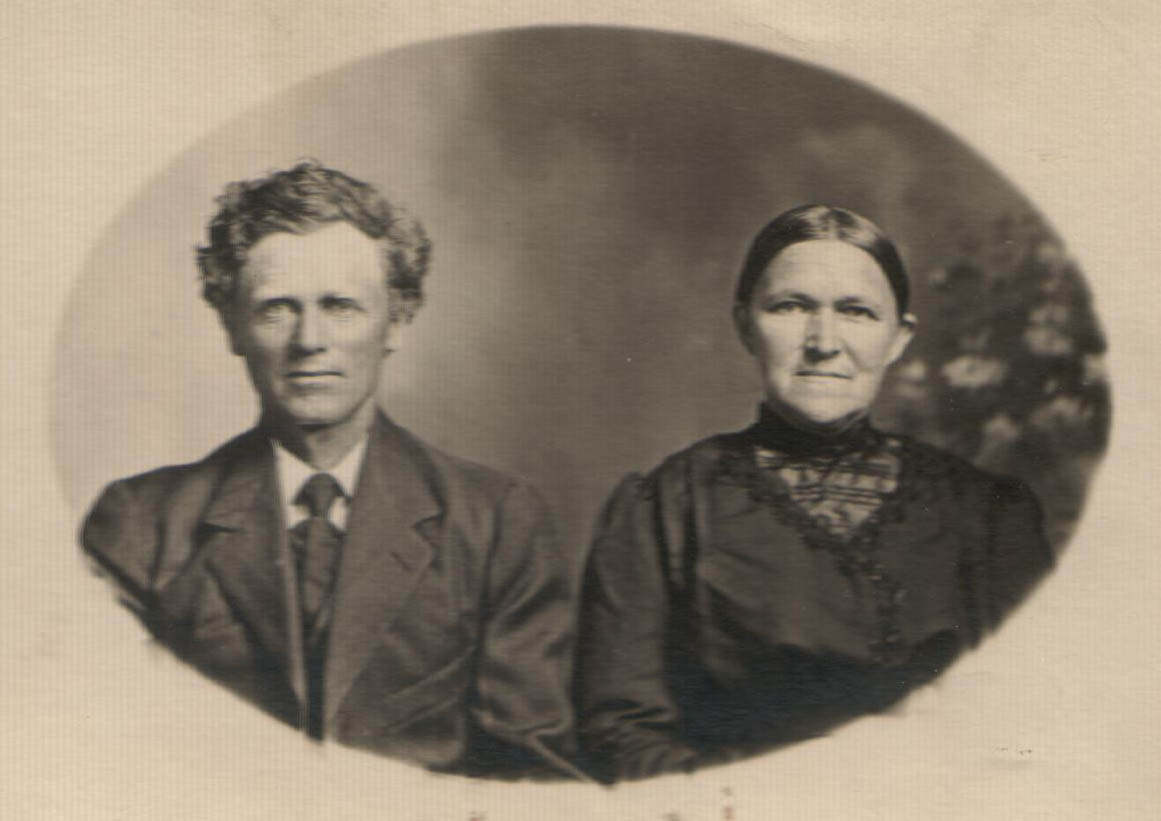
Daniel & Fanny Bloem

After the birth of Methuselah, Enoch lived in close fellowship with God for another 300 years, and he had other sons and daughters. Genesis 5:22 (NLT)

As a lover of history, I’ve always been interested in genealogy. I think my love of acting has something to do with it, as well. When I learned how to do character studies of those I portrayed on stage, I naturally migrated to doing an on-going character study of myself. “Who am I, and how did I get here?” are natural questions. There are a lot of clues to be found in family history.

I’ve traced the branches of my family tree back a relatively long way. As I pour over the names and dates there is so much that I don’t know. There’s just a name and maybe a birth date or death date. As I get nearer to the present generations, there are names that conjure up scraps of knowledge handed down through the family. I have pictures of my great-grandfather, Daniel Bloem. The one thing the jumps to mind when I see his picture is that he had a drinking problem. There’s a great uncle, James Hendrickson. I know he was a Methodist circuit preacher in Illinois. Family legend holds that he was a good man and had a huge influence on my grandfather. That’s about all I’ve got.

Scraps. Tidbits. Legacy. The vital questions aren’t just “Who am I?” and “How did I get here?” but also “How will I be remembered?” and “What impact will I have on those around me?” What is the bullet point that future generations will remember and repeat about me when they see my name or my picture…

  • He had a temper. Everyone was afraid of him.
  • She was really mean. Nobody in the family liked her.
  • He was known to be the laziest of that generation. He went bankrupt a couple of times.
  • She was married six times.
  • He built a successful business, but his children all hated him.
  • She got married, but her first child was born six months later. Do the math.

As we read through the long list of Adam’s descendants, we are given little information. We have names, life spans and the name of the first born son. Then we get to Enoch and this tidbit of information is passed down to us: “he lived in close fellowship with God.” That’s not a bad legacy considering we’re still talking about it many millennia later.

Each day our words, actions, and relationships are etching the legacy we will leave. What’s the one thing you think people will remember about you? What’s the one thing you want people to remember about you? What will make the difference?