Tag Archives: Death Bed Confession

A Simple Step

Then he said, “Jesus, remember me when you come into your kingdom.”
Luke 23:42 (NIV)

The call came from the hospital — which was odd.

A nurse who worked in the Intensive Care Unit had a patient asking to see me — immediately.

I didn’t know the older gentleman particularly well. I’d had no more than two conversations with him and his wife. Pleasantries. Casual stories. Nothing serious. I hadn’t spoken with them for a couple of years. I hadn’t even been aware that they’d moved out of their life-long residence into a small apartment across from the hospital.

I barely knew them.

As soon as I walked into the ICU and took one look — I knew.

The man was lying on his death bed.

I greeted him warmly — giving him a smile. Fear was in his eyes.

I wasted no time.

“You’re going to die. You know that, don’t you?”

He nodded.

“Are you afraid about what’s going to happen when you die?”

Another nod.

I briefly shared Jesus’ promises of eternal life for anyone who believes — and asked if he’d like me to lead him in a prayer of belief.

A third nod.

By the time we were done with the short prayer, tears were streaming down his face.

“You have to tell my wife,” he said. “Tell her I prayed to receive Jesus in my heart. Tell her she needs to pray, too.”

I agreed that I would.

“Now!” He insisted. “Go right now! Our apartment is across the street. Go there. Don’t wait.”

I walked across the street to the apartment number he gave me.

I shared exactly what had happened. I asked her if she wanted to pray like her husband had. She said she did. I led her in a similar short prayer of faith, and then I left.

The man died that evening.

His wife was discovered dead in their apartment the following morning.

I didn’t really didn’t know their story. I presume, given their ages, that they knew about Jesus. As death drew near they realized something unsettling — They knew about Jesus, but they didn’t know Him.

In today’s chapter, Jesus is crucified.

It was the most brutal, humiliating form of execution.

Some victims of crucifixion suffered for days before dying.

Hanging there between heaven and earth affords time for conversation.

Luke describes the conversation between Jesus and the two thieves crucified on either side of Him. As I read the episode this morning, it felt like one of Jesus’ parables come to life.

“Once, there were two thieves crucified for their crimes…”

One had gone all-in to the angry bitterness in his heart.

The other asked Jesus, “Remember me when you come into your Kingdom.”

I spent some time meditating this morning on this simple request.

Somewhere — somehow — he knew enough to ask.

He’d watched Jesus being railroaded by the system.

He saw the simple truth of what was happening.

“I deserve this — but not Him.”

His simple request was an example of Jesus’ proverbial mustard seed of faith.

Small.
Barely there.
But alive.

“I’m guilty for what I’ve done.”
“I deserve to die.”
“But Him? He’s going to His eternal Kingdom.”
“Jesus? Think of me.”

And, in the quiet this morning, it made me think of that call from the hospital. A man and woman who knew about Jesus their entire lives.

Until death came knocking.

Faith is a simple step.

But it’s a step every person has to make for themselves — or not.

Once, there were two thieves
Nailed to the cross for their crimes.
One died as he’d lived.
The other… took a single step.

If you know anyone who might be encouraged by today’s post, please share.

Promotional graphic for Tom Vander Well's Wayfarer blog and podcast, featuring icons of various podcast platforms with a photo of Tom Vander Well.
These chapter-a-day blog posts are also available via podcast on all major podcast platforms including Apple, Google, and Spotify! Simply go to your podcast platform and search for “Wayfarer Tom Vander Well.” If it’s not on your platform, please let me know!
An orange square icon featuring a white open book graphic.

Execution Lessons

Then he said, “Jesus, remember me when you come into your kingdom.”
Luke 23:42 (NIV)

Just last week I read a news blurb of a convict who was executed. It was your typical news flash on such stories in which just the basic facts were starkly recounted with little embellishment. Years ago, he was convicted of murdering his own wife. Before he died he expressed regret for what he’d done. He apologized to his loved ones, acknowledging the he understood why they couldn’t forgive him, but expressing the hope that they might someday be able to do so. He then said that he couldn’t wait to meet Jesus. He was given a lethal injection and died a few minutes later.

Fascinating. For some reason, I’ve found those few lines of news unusually coming to mind in the days since I read it. There’s more to that story.

Today’s chapter is Dr. Luke’s account of Jesus’ execution. Much like the news blurb, it recounts many facts with little embellishment. What embellishments Luke adds create more questions in me than answers.

With the eye of a playwright and storyteller, I find myself making a mental list of the characters in the story and how they contribute to the narrative.

Jesus, the lamb led to slaughter, refusing to speak or offer a defense.

Pilate, Herod, and the Jewish religious leaders are the power brokers playing their own chess matches of personal power, public opinion, and political intrigue.

Jesus twelve appointed male disciples and heirs to His earthly ministry are the key characters not present (John was there, according to his own account, but Luke does not record this).

The oft forgotten women who have traveled with Jesus, supported Jesus, and provided for Jesus and his disciples are there at a distance, witnessing the execution. This includes Jesus’ mother. One of the women is, ironically, the wife of the head of Herod’s household.

The Roman soldiers are carrying out their duty and having their sport with the victims. As an added perk they get their choice of the victims’ spoils.

The presiding military officer, a Centurion, is observing.

Then there are the three executed convicts.

What struck me was the convict who was crucified next to Jesus and came to Jesus’ defense. The only character in the entire saga of the passion who comes to Jesus’ defense is a convicted, guilty (by his own confession) death-row inmate. “Remember me when you come into your kingdom,” he said.

How did he know about Jesus’ kingdom?

There’s more to this story.

Had he been among the crowds in Galilee, or in the temple courts, who heard Jesus teach? Had he and Jesus spent time talking in a holding cell as they waited to hear the Roman soldier announce “Dead man walking.”

I find so much intriguing about this man. Jesus didn’t explain the Four Spiritual Laws and lead the man in the sinner’s prayer. Jesus only defense was to one of the weakest and least powerful characters in the story, an executed criminal by another executed criminal. The only act in this man’s “death-bed conversion” was simply to acknowledge Jesus before another convict, and humbly ask to be remembered.

In the quiet this morning I find myself thinking about the spoken faith of two guilty, convicted, executed criminals. I find myself thinking about my own guilt. I find myself thinking about Jesus’ repeated teachings about simple, small faith being all that is required. It is indicated from the story that this is true no matter the moral standing of the one expressing such simple faith.

Sometimes I think that we religious humans complicate things that Jesus presented as very simple.

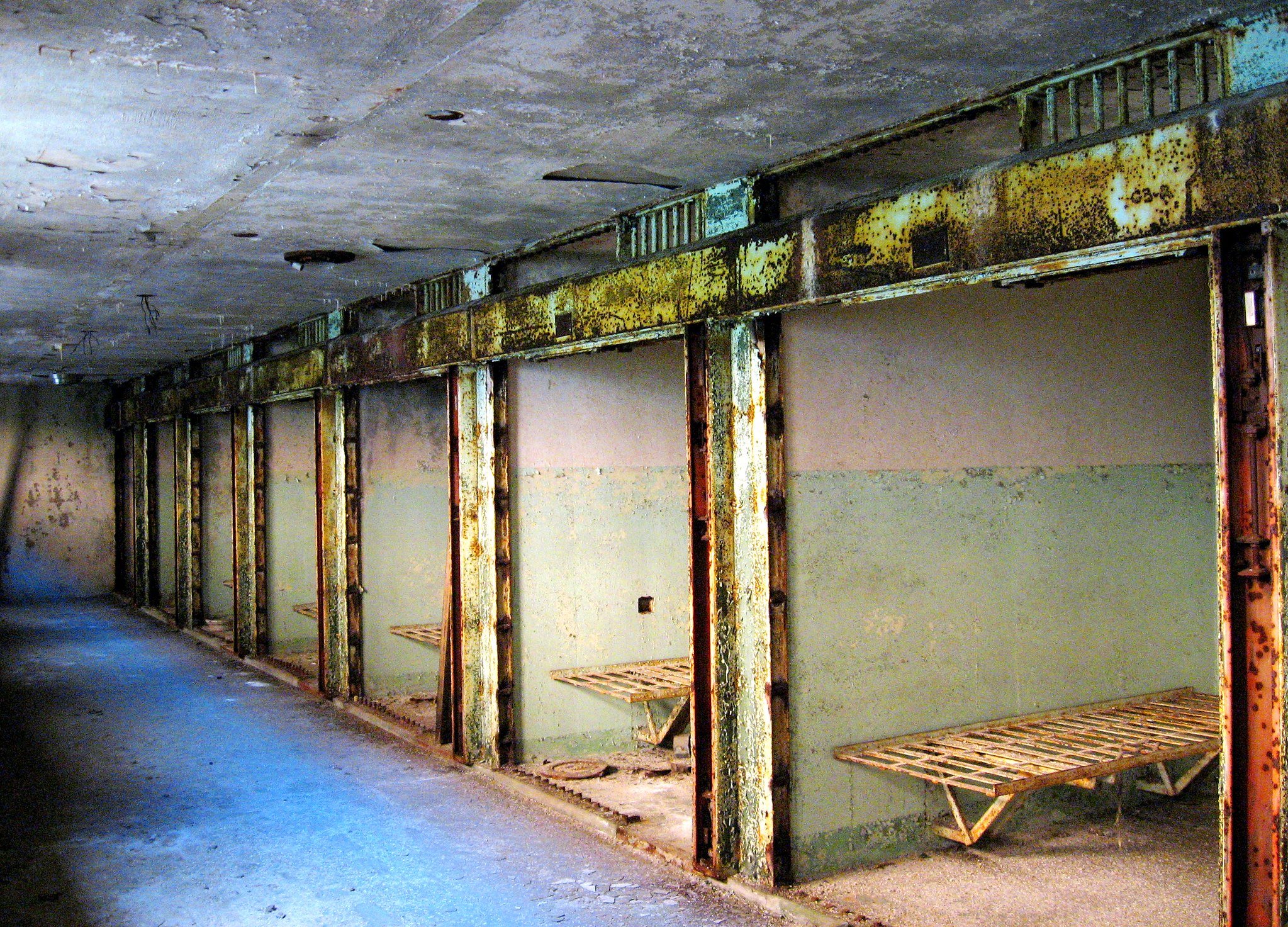
Featured photo on today’s post courtesy of PWBaker via Flickr.