Tag Archives: Blind Spots

Solomon: Most Wise Fool

Solomon: Most Wise Fool (CaD 1 Ki 4) Wayfarer

The people of Judah and Israel were as numerous as the sand on the seashore; they ate, they drank and they were happy. And Solomon ruled over all the kingdoms from the Euphrates River to the land of the Philistines, as far as the border of Egypt. These countries brought tribute and were Solomon’s subjects all his life.
1 Kings 4:20-21 (NIV)

In the list of Solomon’s officials are two secretaries and a recorder. I’m not sure if one of them functioned like the press secretaries that Presidents have today, but today’s chapter drips with the positive spin we’ve come to cynically expect from modern press briefings of national leaders. In today’s chapter, everything is rosy. Everyone is happy. Solomon is the perfect ruler whose wisdom is second only to the future Messiah.

Over a lifetime of observing positive spin from both sides of the political aisle, I have, perhaps, grown a little cynical. Many readers may take the information shared in today’s chapter on merit, but between the facts written through rose-colored glasses, I couldn’t help but notice a few things.

Solomon inherited everything from his father. The lands and peoples over which Solomon reigned were conquered by David. Solomon simply took over control. I can’t help but think that history is full of stories of children squandering what their parent(s) had earned. Governing and maintaining control over many tribal groups over a large area for any length of time was tricky business in that period of history. It took an amazing balance of diplomacy and military threat. The facts we are given simply point to a Solomon who lived rich, courted foreign diplomats who showered him with praise, and enjoyed every minute of being the richest and wisest man in his known world. Knowing from history that the entire kingdom implodes immediately after Solomon died, I’m left to wonder if Solomon gave any thought to preserving the kingdom that God had established and blessed for subsequent generations, or if he simply enjoyed the wild and luxurious ride he’d inherited.

Solomon’s administration was full of insiders. Solomon’s officials and advisors were largely sons of his father’s advisors and sons-in-law. David had built the Kingdom on a diverse group of supporters from different backgrounds that he developed from his decades as a mercenary. Solomon does not appear to be building bridges and political alliances with the conquered peoples over whom he’s ruling. He’s keeping his kingly power concentrated with what many in his kingdom might call “the same old cronies.”

Solomon’s great kingdom was built by forced labor. There are only seven or eight jobs listed in Solomon’s cabinet. One of them is the secretary of “forced labor.” Solomon’s lavish building projects are being accomplished on the backs of slaves and “forced labor” from his own people. This was not new. It was the way of the world back in those days. However, Solomon’s never-ending construction projects from palaces to the Temple would indicate that he likely required a level of forced labor that would have bred all sorts of anger and discontent among the masses.

Solomon’s twelve “districts” were a form of ancient gerrymandering that crossed tribal boundaries and redrew the map. There may have been a good reason for this. Perhaps Solomon was trying to ensure that every district had enough agricultural production to provide their annual monthly supply for his lavish lifestyle at court. Redrawing the map, however, meant that districts crossed ancient tribal boundaries, which in turn likely stirred up ancient tribal rivalries and resentments. The key to preserving a kingdom in those days was maintaining peace and stability, not stirring up trouble.

In the quiet this morning, I’m pondering two realities. The first reality is that Solomon was most certainly the intelligent, charismatic, and wise man described in today’s chapter. There is no doubt that he was wealthy and successful during his reign and in his lifetime. The second reality is the sobering fact that Solomon was also a flawed human being just like every other sinful human being. Solomon’s press secretary does a masterful job of diverting our attention away from Solomon’s flaws and focusing on Solomon’s greatness. History, however, reveals that it is Solomon’s flaws and blind spots that lead to his great kingdom dying with him. Those blind spots will plague subsequent generations with political strife, civil war, violence, and bloodshed for hundreds of years.

I’m reminded this morning of the word picture Jesus gives His followers at the end of His famous Sermon on the Mount. I’m reminded because I just gave a message a few Sundays ago about that very word picture. It is a contrasting word picture of two people who each build their own house. One of the houses blows down when the storms of life hit. The other house remains standing through those storms. For all of his wisdom, Solomon’s kingdom will fall with the first political wind that blows after his death.

As I mentioned in my message, Jesus’ word picture begs a number of questions of me:

What am I building with this life I’m given?
What am I building it on?
What am I building it with?
What will blow away with my death? What will last for eternity?

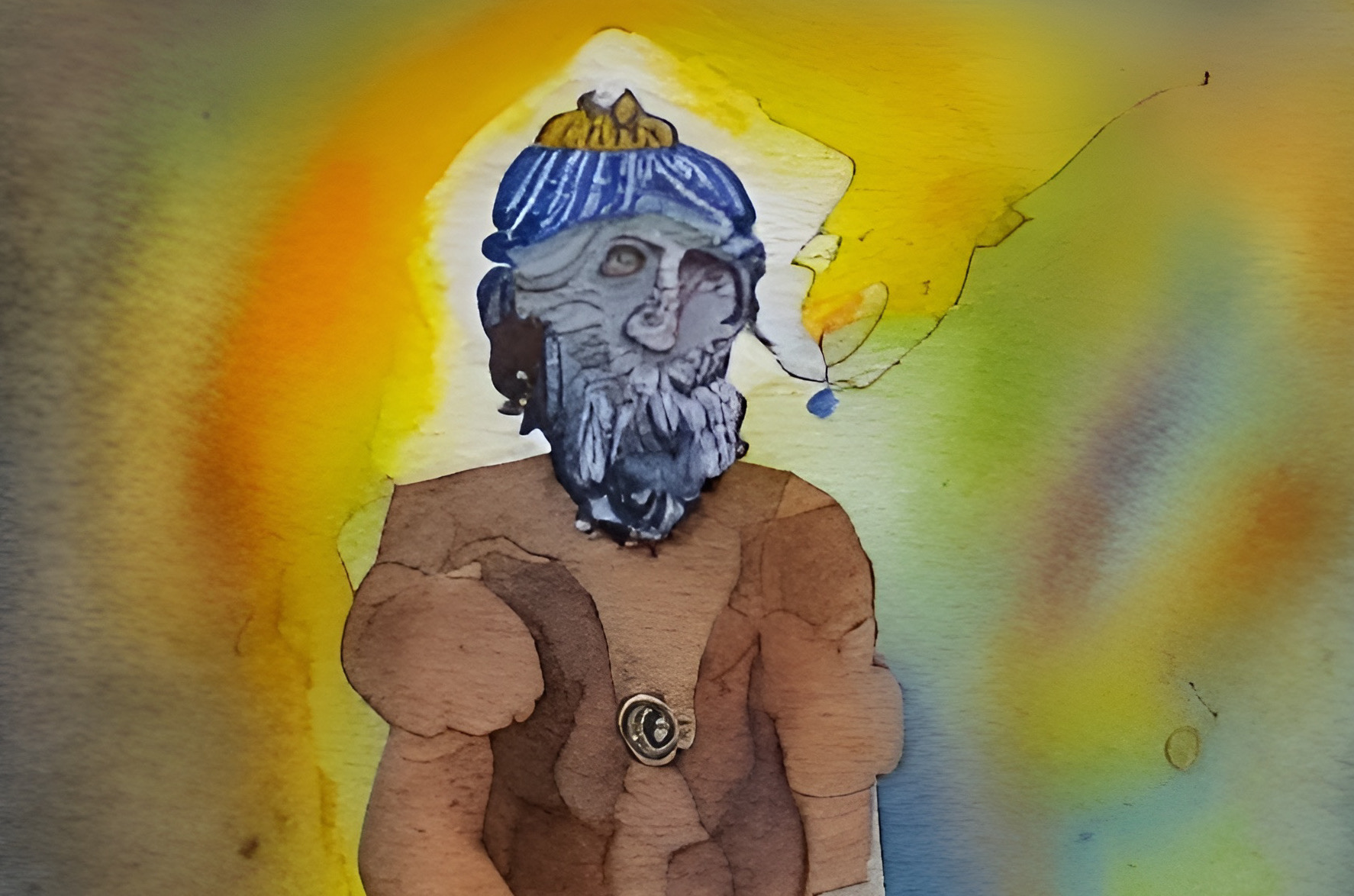
Today’s featured image, Most Wise Fool, was created with Wonder A.I.

If you know anyone who might be encouraged by today’s post, please share.

Disloyalty and Criticism

The king then asked, “Where is your master’s grandson?”

Ziba said to him, “He is staying in Jerusalem, because he thinks, ‘Today the Israelites will restore to me my grandfather’s kingdom.’”

Then the king said to Ziba, “All that belonged to Mephibosheth is now yours.”
2 Samuel 16:3-4 (NIV)

I recently mentioned in a chapter-a-day post a gentleman whom I met who had served under five different U.S. presidents while working for the Department of Commerce. His favorite, he told me, was Harry Truman who always made a requested decision in a timely way and was always on top of the many details necessary to carry out the office well. His least favorite, he added, was Dwight Eisenhower whom he observed was on the golf course more than he was in the oval office and who seemed to avoid the politics and details the job required. His observations came to mind again this morning as I read the chapter.

As a history buff I’ve heard it said that military generals, with the exception of George Washington, make poor presidents. Politics is messier than the military. People don’t have to obey your every command. You can’t just give orders, you have to persuade and cajole those who disagree with you. U.S. Grant, who had the dogged determination to order his armies forward no matter the defeat, was the right man for the job in bringing the American Civil War to an end. He has been, however, generally regarded as one of the worst U.S. presidents in history.

As I read the story of David, I find it fascinating that this theme of difficulty moving from military command to political power appears to be apt, even in antiquity. David was a great military leader, but his leadership as a monarch reveals tragic flaws that echo the reflections of Eisenhower by my acquaintance. Absalom stole people’s hearts because he would take the time to listen to their cases and grievances while David avoided the responsibility and kept people waiting. Despite his genuine desire for God’s blessing on his people, David appears to have been more interested in personal pursuits than in national problems.

In today’s chapter, David is on the run for the second time in his life. This time, he’s fleeing his own son. David’s scandals have decimated his approval rating. He has few loyal followers left. As his monarchy collapses around him, people’s true feelings come to light and we see two examples of it in today’s text. I found the contrast between David’s response in the two confrontations found in today’s chapter interesting.

Mephibosheth, the handicapped son of Saul, had personally been shown favor by David. Now that David appears to have let the throne slip through his fingers, Mephibosheth repays David’s grace with disloyalty rather than gratitude. There is a power vacuum and Mephibosheth is going to try and make a play to grab power for himself. David responds by rescinding his former kindness and giving Saul’s holdings back to Saul’s servant, Ziba.

Shimei the Benjaminite lets out his frustrations with David in an annoying one-man protest in which he screams his disdain for David and hurls stones at the king. Unlike Mephibosheth’s disloyalty, which was a personal dishonoring of David’s kindness, Shimei’s verbal and stone assault comes from pent-up frustration with David’s leadership, scandals, and the resulting fallout. Perhaps David recognized the truth in Shimei’s criticism. David turns the other cheek and won’t even let his loyal guard force Shimei to be quiet.

Today I’m thinking and pondering the criticism and confrontations we all face. There is a difference between Mephibosheth’s selfish power grab and Shimei’s frontal assault. There’s a difference in David’s response. Nevertheless, Jesus never made such distinctions in his command to forgive others. His parables and Sermon on the Mount instruct me to forgive both hurtful verbal criticism and a very personal slap across the face. For the record, He experienced both.

In the quiet this morning, I’m taking a little inventory this morning of those who’ve been critical of me, and those who’ve caused me injury. I’m thinking about my own life, leadership and the blind spots that have given others good reason to be critical. I’m considering my own responses and searching my own heart to ask if I’ve truly forgiven them.

 A Note to Readers
I’m taking a blogging sabbatical and will be re-publishing my chapter-a-day thoughts on David’s continued story in 2 Samuel while I’m taking a little time off in order to focus on a few other priorities. Thanks for reading.
Today’s post was originally published in May 2014
.

Today’s featured image created with Wonder A.I.

If you know anyone who might be encouraged by today’s post, please share.

#3: Blind Spots

Note: I’m on a holiday hiatus through January 9, 2022. While I’m away, I thought it would be fun to reblog the top 15 chapter-a-day posts (according to number of views) from the past 15 years. Cheers!

Originally published May 15, 2014

When King David heard of all these things, he became very angry, but he would not punish his son Amnon, because he loved him, for he was his firstborn.
2 Samuel 13:21 (NSRV)

David was a great warrior, a great general, and a great leader of men. Evidence leads me to believe that he was not, however, a great husband or father. As we’ve read David’s story he has slowly been amassing wives like the spoils of war and the result was many children. But, an army of children do not an army make. A family system and the complex relationships between birth order and gender can be difficult enough for a monogamous, nuclear family. I can’t imagine the exponential complexities that emerge when you have eight wives, ten concubines and children with most all of them.

As I read through these chapters I’ve noticed that we never see David telling his children “no” nor do we see him discipline them for their behavior. David appears to have even had a reputation among his offspring of not refusing their requests. David’s daughter, Tamar, tells her half brother Amnon that if he simply asks Dad she’s sure he’ll let them get married. When Amnon rapes Tamar instead and then turns her away we hear of David’s anger, but he doesn’t do anything about disciplining his beloved first born son. When Tamar’s full brother Absalom plots to kill their half brother Amnon in revenge, Absalom goes to David and presses good ol’ dad until David relents and sends all the brothers on Absalom’s little fratricidal sheep-shearing retreat.

David has a blind spot. He can lead an army to endless victories but his record as leader of a family is a tragic string of failures and defeats.

I cannot point at David without three fingers pointing back at me. We all have our blind spots. Our greatest strengths have their corollary weaknesses. We cannot escape this reality, but we can escape being enslaved to it. What we can do is be honest about our blind spots. We can choose to shine a light of our time and attention to addressing them. We can surround ourselves with others who will graciously help us see them, work through them, and who will patiently love us as we do.

Today’s chapter seems perfectly timed as I’ve been made painfully aware of a blind spot in my life. If you’re reading this, and are a person who prays, please say a prayer for me as I address it.

If you know anyone who might be encouraged by today’s post, please share.

Responding to Disloyalty and Criticism

L to R, President Harry S. Truman, Press Secre...
L to R, President Harry S. Truman, Press Secretary Charles Ross, and Gen. Dwight D. Eisenhower chat after President… – NARA – 198756 (Photo credit: Wikipedia)

The king then asked, “Where is your master’s grandson?”

Ziba said to him, “He is staying in Jerusalem, because he thinks, ‘Today the Israelites will restore to me my grandfather’s kingdom.’”

Then the king said to Ziba, “All that belonged to Mephibosheth is now yours.”

I once met a man who had served under five different U.S. presidents while working for the Department of Commerce. His favorite, he told me, was Harry Truman who always made a requested decision in a timely way and was always on top of the many details necessary to carry out the office well. His least favorite, he added, was Dwight Eisenhower whom he observed was on the golf course more than he was in the oval office and who seemed to avoid the politics and details the job required.

As a history buff I’ve heard it said that military generals make poor presidents. Politics is messier than the military. People don’t have to obey your every command. You can’t just give orders, you have to persuade and cajole those who disagree with you. U.S. Grant, another general who ascended to the White House, is generally regarded as the worst U.S. president in history.

As we read the story of David, I find it fascinating that this theme of difficulty moving from military command to political power appears to be very apt, even in antiquity. David was a great military leader, but his leadership as monarch had some fatal flaws that echo the reflections of Eisenhower by my acquaintance. Absalom stole people’s hearts because he would take the time listen to their cases and grievances while David avoided the responsibility and kept people waiting. David appears to have been more interested in personal pursuits than in national problems.

Because of his leadership blind spots, David is on the run for the second time in his life. This time, he’s fleeing his own son. David’s scandals have decimated his approval rating. He has few loyal followers left. As his monarchy collapses around him, people’s true feelings come to light and we see two examples of it in today’s chapter. I find it interesting the contrast between David’s response in the the two confrontations found in today’s chapter.

Mephibosheth, the handicapped son of Saul, had personally been shown favor by David. Now that David appears to have let the throne slip through his fingers, Mephibosheth repays David’s grace with disloyalty rather than gratitude. There is a power vacuum and Mephibosheth is going to try an make a play to grab power for himself. David responds by rescinding his former kindness and give Saul’s holdings back to Saul’s servant, Ziba.

Shimei the Benjaminite lets out his frustrations with David in an annoying one man protest in which he screams his disdain for David and hurls stones at the king. Unlike Mephibosheth’s disloyalty, which was a personal dishonoring of David’s kindness, Shimei’s verbal and stone assault comes from pent up frustration with David’s leadership, scandals, and the resulting fall out. Perhaps David recognized the truth in Shimei’s criticism. David turns the other cheek and won’t even let his loyal guard force Shimei to be quiet.

Today I’m thinking and pondering the criticism and confrontations we all face. There is a difference between Mephibosheth’s selfish power grab and Shimei’s frontal assault and a difference in David’s response. Nevertheless, Jesus never made such distinctions in his command to forgive others. His parables and consistent message instructs me to forgive both hurtful verbal criticism and a very personal slap across the face.

I’m taking a little inventory this morning of those who’ve been critical and who’ve caused me injury. I’m thinking about my own life, leadership and blind spots which have given others good reason to be critical. I’m considering my responses and asking myself if I’ve truly forgiven them.

Between you and me, I’ve got some work to do.

Enhanced by Zemanta