Tag Archives: President

Politics and Religion

Then Paul, knowing that some of them were Sadducees and the others Pharisees, called out in the Sanhedrin, “My brothers, I am a Pharisee, descended from Pharisees. I stand on trial because of the hope of the resurrection of the dead.”
Acts 23:6 (NIV)

It is a major election year here in the United States, which means that politics is already at a fever pitch and it’s only going to get worse. Both the trials of a former President and a number of important appeals before the Supreme Court with regard to hot political issues and elections have put politics and the legal system on a collision course.

Another hot topic of late is a new book by Salman Rushdie regarding his miraculous survival of being attacked and stabbed 15 times. Rushdie has famously been living under the threat of a fundamentalist Islamic fatwa calling for his death for decades.

Politics and religion are both kingdoms of this world and I have long observed that they often intertwine. They came to mind this morning as I read the chapter. Paul is on trial before the religious ruling council in Jerusalem, the same body that tried Jesus and had Him executed some 20 years earlier. Now it is Paul who has threatened their power and fundamentalist religious politics.

You’ve got to hand it to Paul. He was a lawyer trained by the very system that is now trying him. He knows that system and its internal politics as well as anyone, and he makes a brilliant political move. Paul knew that the ruling council was politically divided into two major factions who hated one another. He also knew that the major divisive issue between the two factions was whether there was a resurrection and life after death. So, he loudly proclaims “I stand on trial because of the hope of the resurrection of the dead.”

It was a shrewd political play. Suddenly, he shifts the focus from himself and Jesus and stirs the festering theological rancor that divides the ruling council itself. In making a stand for “resurrection,” he makes allies of every Pharisee on the ruling council while tearing off the scab of a festering conflict within the ruling body itself. The entire ruling council erupts, turns on each other, and Paul is whisked away by the Romans amidst the tumult. Paul was a Roman citizen, and he knew that the Romans would politically refuse to let the Jewish ruling council harm one of their citizens.

Paul is safely placed under the political protection of Rome, while 40 of his fundamentalist religious enemies take an oath to neither eat nor drink until they’ve murdered him. I can’t help but think that Paul and Salman Rushdie could have a fascinating conversation about living under the threat of death from fundamentalist religion.

Politics and religion. Two kingdoms of this world combine to make a combustible cocktail. It was true in the events of today’s chapter. This is true in current events. All I have to do is read the headlines.

In the quiet this morning, I am once again reminded of the contrast between the kingdoms of this world, and the Kingdom of God that Jesus brought to this world. The Kingdom of God on earth is focused on each individual disciple who is empowered and called upon to live and relate in a manner consistent with Jesus’ teaching and opposite the kingdoms of this world. If my personal faith in Jesus and my focus on daily living as His disciple transforms into being just another member of an earthly, collective religious system then my faith withers on the Vine and I become just another religious minion subject to a kingdom of this world.

If you know anyone who might be encouraged by today’s post, please share.

Pillaging and Politics

Pillaging and Politics (CaD Mi 2) Wayfarer

Lately my people have risen up like an enemy. You strip off the rich robe from those who pass by without a care, like men returning from battle.
Micah 2:8 (NIV)

There is a great scene towards the end of the HBO miniseries Band of Brothers in which the men of Easy Company become the first Allies to occupy Hitler’s private Austrian retreat known as “The Eagle’s Nest.” The soldiers promptly helped themselves to some souvenirs. Major Dick Winters confesses that he and his family had been eating with Hitler’s silverware since he returned from the war.

Pillaging has been a part of warfare throughout history. “To the victor go the spoils” is a popular proverbial phrase. The fascinating thing about it is that its origin was not about war, but politics. The first documented use of the phrase was by a New York Senator in 1828 in reference to the spoils of political power.

And, to wax cynical, there is truth to the phrase. It always amazes me how political power gets wielded to protect, empower, and pad the pockets of a few at the expense of the many. I don’t have to read history to know this. I only have to read today’s headlines.

In today’s chapter, the ancient prophet Micah is calling out this same reality in his own time. The political elites of his day used their power to take whatever they wanted from their own people in an ancient version of Eminent Domain. In some cases, leaving everyday families without inheritance and without recourse. These elites would gather around themselves false prophets, who were the social media of their day, to cover up and justify their actions. Micah offers a contrasting opinion. “What goes around comes around,” is a different proverbial phrase, and Micah warns the elites that a day is coming when God will bring disaster upon them in the form of the pillaging Assyrian army. Then these same political elites will experience what it’s like to lose everything and be left without recourse.

I sit in the quiet this morning on MLK Day here in America, which happens to also be Caucus Day here in Iowa in this election year. I find myself thinking about all that Martin Luther King Jr. said and stood for, a modern-day prophet crying out like ancient Micah against our political system that was stacked in favor of one set of citizens while oppressing another set of citizens within the same country. Tonight, in that same political system, the citizens of Iowa will choose who we trust to take up what is arguably the most powerful and elite political position in the world and kick off a months-long process to put a person in that position.

I’m no prophet, but I know my history. Even the best human political systems ever devised are riddled with corruption as political elites empower themselves, pad their pockets, and protect their own. As the Sage of Ecclesiastes observed, “There is nothing new under the sun.” It seems to me that Micah’s predicament and prophesy are as relevant today as ever.

For the record, as I do not belong to any political party, I will not be Caucusing tonight. I will, however, be praying. Come to think of it, prayer is a form of caucus. You’re welcome to join me.

If you know anyone who might be encouraged by today’s post, please share.

The Last Word

The Last Word (CaD Job 38) Wayfarer

Then the Lord spoke to Job out of the storm. He said:
“Who is this that obscures my plans
    with words without knowledge?
Brace yourself like a man;
    I will question you,
    and you shall answer me.

Job 38:1-3 (NIV)

For some reason, I’ve always gotten the role of Master of Ceremonies (M.C.). It started in high school when I was asked to do the P.A. announcements over the school intercom each morning, then went on to be Master of Ceremonies M.C. at the Homecoming and other all-school assemblies, which led to being the P.A. announcer at athletic events. It never really stopped. Through college and to this day I regularly get asked to M.C. different events. The reality is that officiating a wedding or funeral is, in essence, being an M.C.. I enjoy doing it. As a result, I’ve learned a lot about doing this over the decades.

There is a protocol for traditional, formal events (even though traditions have waned a lot in my lifetime). One such protocol is that the most “important” person on the program always speaks last. It is a position of honor. The most important person gets the last word. Of course, that is dependent on the event planner’s definition of who is the most “important.”

I once had the opportunity to attend the President’s annual Prayer Breakfast in Washington D.C. back in the early 1990s. The guest speaker was Mother Theresa, but the place of honor as the final speaker of the event went to President Clinton. It was a rare, awkward moment in which I got to observe the Kingdom of God and an empire of this world collide. I’d never seen President Clinton like I observed him that morning. To this day, I believe that if you asked the former President he would agree that all honor that morning should have gone to the diminutive, soft-spoken nun from Calcutta. Every one in the room knew it. It was a living parable of Jesus’ teaching about where treasure and things of eternal “importance” reside.

In today’s chapter, we finally reach the place of honor in the Job Story. Job has spoken. His three friends Eli the elder, Bill, and Z have spoken. Eli the younger then did his know-it-all bit. A scattered thunderstorm now suddenly blows in and God speaks to Job from amidst the storm.

In the quiet this morning, I find myself contemplating this simple truth which is repeated throughout the Great Story. God always holds the place of honor. God always has the last Word. It happens in the Job story. Jesus taught it incessantly. John’s Revelation loudly proclaims it. As a disciple of Jesus, I believe it with my whole heart. God will have the final Word.

How then should I live, think, speak, and act this day?

If you know anyone who might be encouraged by today’s post, please share.

Disloyalty and Criticism

The king then asked, “Where is your master’s grandson?”

Ziba said to him, “He is staying in Jerusalem, because he thinks, ‘Today the Israelites will restore to me my grandfather’s kingdom.’”

Then the king said to Ziba, “All that belonged to Mephibosheth is now yours.”
2 Samuel 16:3-4 (NIV)

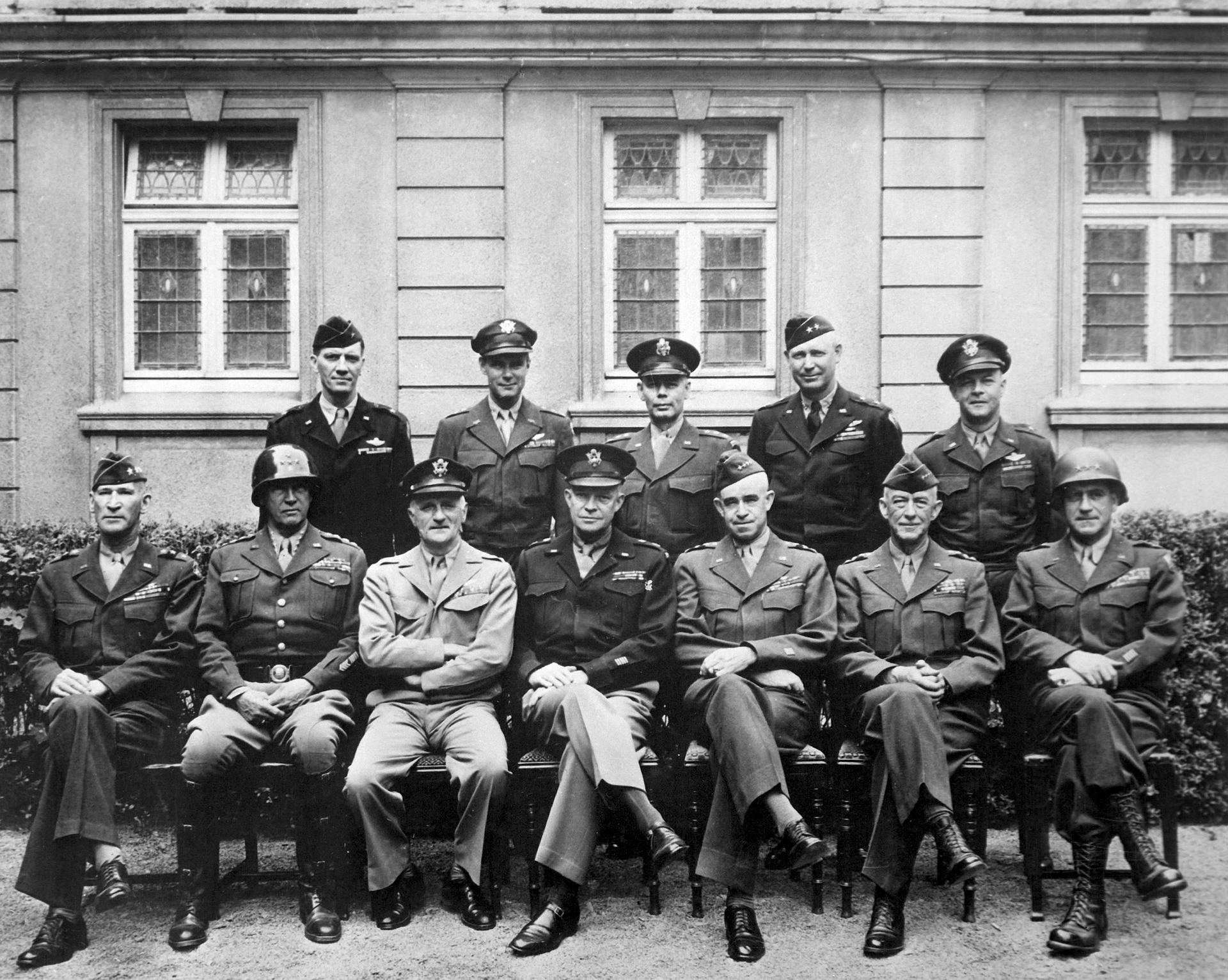
I recently mentioned in a chapter-a-day post a gentleman whom I met who had served under five different U.S. presidents while working for the Department of Commerce. His favorite, he told me, was Harry Truman who always made a requested decision in a timely way and was always on top of the many details necessary to carry out the office well. His least favorite, he added, was Dwight Eisenhower whom he observed was on the golf course more than he was in the oval office and who seemed to avoid the politics and details the job required. His observations came to mind again this morning as I read the chapter.

As a history buff I’ve heard it said that military generals, with the exception of George Washington, make poor presidents. Politics is messier than the military. People don’t have to obey your every command. You can’t just give orders, you have to persuade and cajole those who disagree with you. U.S. Grant, who had the dogged determination to order his armies forward no matter the defeat, was the right man for the job in bringing the American Civil War to an end. He has been, however, generally regarded as one of the worst U.S. presidents in history.

As I read the story of David, I find it fascinating that this theme of difficulty moving from military command to political power appears to be apt, even in antiquity. David was a great military leader, but his leadership as a monarch reveals tragic flaws that echo the reflections of Eisenhower by my acquaintance. Absalom stole people’s hearts because he would take the time to listen to their cases and grievances while David avoided the responsibility and kept people waiting. Despite his genuine desire for God’s blessing on his people, David appears to have been more interested in personal pursuits than in national problems.

In today’s chapter, David is on the run for the second time in his life. This time, he’s fleeing his own son. David’s scandals have decimated his approval rating. He has few loyal followers left. As his monarchy collapses around him, people’s true feelings come to light and we see two examples of it in today’s text. I found the contrast between David’s response in the two confrontations found in today’s chapter interesting.

Mephibosheth, the handicapped son of Saul, had personally been shown favor by David. Now that David appears to have let the throne slip through his fingers, Mephibosheth repays David’s grace with disloyalty rather than gratitude. There is a power vacuum and Mephibosheth is going to try and make a play to grab power for himself. David responds by rescinding his former kindness and giving Saul’s holdings back to Saul’s servant, Ziba.

Shimei the Benjaminite lets out his frustrations with David in an annoying one-man protest in which he screams his disdain for David and hurls stones at the king. Unlike Mephibosheth’s disloyalty, which was a personal dishonoring of David’s kindness, Shimei’s verbal and stone assault comes from pent-up frustration with David’s leadership, scandals, and the resulting fallout. Perhaps David recognized the truth in Shimei’s criticism. David turns the other cheek and won’t even let his loyal guard force Shimei to be quiet.

Today I’m thinking and pondering the criticism and confrontations we all face. There is a difference between Mephibosheth’s selfish power grab and Shimei’s frontal assault. There’s a difference in David’s response. Nevertheless, Jesus never made such distinctions in his command to forgive others. His parables and Sermon on the Mount instruct me to forgive both hurtful verbal criticism and a very personal slap across the face. For the record, He experienced both.

In the quiet this morning, I’m taking a little inventory this morning of those who’ve been critical of me, and those who’ve caused me injury. I’m thinking about my own life, leadership and the blind spots that have given others good reason to be critical. I’m considering my own responses and searching my own heart to ask if I’ve truly forgiven them.

 A Note to Readers
I’m taking a blogging sabbatical and will be re-publishing my chapter-a-day thoughts on David’s continued story in 2 Samuel while I’m taking a little time off in order to focus on a few other priorities. Thanks for reading.
Today’s post was originally published in May 2014
.

Today’s featured image created with Wonder A.I.

If you know anyone who might be encouraged by today’s post, please share.

Leaders are Not One-Size-Fits-All

Leaders are Not One-Size-Fits-All (CaD Jud 10) Wayfarer

The leaders of the people of Gilead said to each other, “Whoever will take the lead in attacking the Ammonites will be head over all who live in Gilead.”
Judges 10:18. (NIV)

Many years ago, I met a man who had lived a fascinating life. Having grown up in Iowa, he worked for a man who was politically connected and ended up being appointed to a position in the federal government. He was asked to accompany his boss to Washington D.C. as his assistant. He quickly rose to a top position within the Commerce Department and served six different presidents directly from FDR through Nixon.

Being a lover of history, I thoroughly enjoyed my conversations with this gentleman. He had so many great stories. I asked him who his favorite and least favorite president to work for was. He didn’t hesitate to name both. He shared that Harry Truman was his favorite to work for because Truman was a decision-maker. “If we told Truman we needed a decision on this-or-that by Thursday morning we would always have his decision,” he said. Dwight Eisenhower, on the other hand, was his least favorite President to work under. “He may have been a good military general,” the man said, “but he didn’t do anything while President except bear the title. He was never around. We got no direction. He made no decisions. He was always playing golf.”

I thought of that conversation this morning as I read today’s chapter. Under oppression from their enemies, the Hebrews living in Gilead proclaim that whoever rises up to lead a military defeat of their enemies will become their undisputed leader. It was quite common in the ancient Near East for “kings” to simply be warlords, and the people of Gilead provide a great example of why it was so common. Survival was dependent on a strong military defense that could withstand the regular attacks of neighboring peoples and tribes. Strong military leaders quickly came to control everything.

That doesn’t mean, however, that good military leaders make good civic leaders. I have heard it consistently argued by historians that military generals who succeed at civic leadership tend to be the exceptions, not the rule. For every George Washington, who was successful at both, there is a handful of those who were less than successful being President, including Eisenhower, U.S. Grant, and Andrew Jackson. In fact, there are eight other Presidents I haven’t named who were military generals and I’ll bet you can’t name more than one or two.

Along my life journey, I’ve learned that there are different kinds of leadership, and that leadership is not one-size-fits-all. In the same way, there are different kinds of spiritual gifts, different kinds of talent, and different temperaments. Every human organization from families to businesses to churches and athletic teams requires having the right kind of leadership and having people in the right positions to utilize their gifts and talents in order for the system to function well.

At the same time, I’ve learned that it’s important for me to be in positions that fit my temperament, gifts, and abilities. Whenever I’ve found myself in a job, a position, or a role that is incongruent with the strengths of who I am and how I am wired, my entire life will eventually feel wonky. It’s critical for me to know myself and discern opportunities that are right for me, and those that are not; Not only for my well-being but also for the well-being of whatever human system in which I’m engaged.

If you know anyone who might be encouraged by today’s post, please share.

Highest Authority

Highest Authority (CaD Ps 57) Wayfarer

Be exalted, O God, above the heavens;
    let your glory be over all the earth.
Psalm 57:5 (NIV)

There are few stories within the Great Story that is as fascinating to me as that of David’s relationship with King Saul. Saul was the first King of Israel and he was the populist choice of the Hebrew people. Saul had all the looks of a great leader, but his heart was dark and troubled.

God told the prophet, Samuel, that he wanted Samuel to anoint His man for the job. It turns out that God’s man for the job was a shepherd boy, the runt of a large litter of sons of a man named Jesse. David made a name for himself as the walk-on rookie who killed the giant Goliath. Saul signs David as part of his team. David becomes best friends with Saul’s son, and he marries Saul’s daughter. Saul is David’s King, his General, his benefactor, and his father-in-law.

David is also anointed by God to ascend to Saul’s throne. Saul knows this, and his dark and troubled soul stir up a dangerous cocktail of emotions. Envy, jealousy, fear, insecurity, shame, and paranoia lead Saul spiraling down into a dark spirit of homicidal rage. David flees for his life. Saul places a bounty on David’s head and follows his destructive urges in seeking continually to kill his son-in-law and rival.

This goes on for years. 1 Samuel 24 tells the story of David and his men hiding deep in a huge cave in the desert of En Gedi. There thousands upon thousands of caves in the desert of En Gedi. Saul and his men are in pursuit of David and his merry band of outcasts. Saul needs to relieve himself, so he enters the cave where David is hidden in shadows.

This is David’s chance to kill the man who wants to kill him.

But, David refuses to do it.

God said that David was a man after His own heart, and in his heart, David respected that Saul was the anointed king of the time. David respected the spiritual weight of that. Samuel may have anointed David to succeed Saul, but David cared more about God’s will, God’s purposes, and God’s timing than he cared about being king. David knew that making the prophecy happen and forcing his ascension to the throne would spiritually corrupt the entire situation (By the way, this is just the opposite of the story of Shakespeare’s Macbeth, in which Macbeth and his wife try to force Macbeth’s prophesied ascension to the throne to very tragic ends). If God wanted David to be king, David believed, then God would make that happen in God’s timing according to God’s designs. David chooses not to kill Saul, but David does humbly confront Saul with the fact that he had his chance and he didn’t take it.

When Saul realizes that David says:

“May the Lord reward you well for the way you treated me today. I know that you will surely be king and that the kingdom of Israel will be established in your hands.”

Saul retreats, but the darkness of his soul will soon be stirred up again. Nothing changes in this stalemate for several more years.

Today’s chapter, Psalm 57, is a song David wrote inspired by this very incident. David sings of being hunted and God’s deliverance. In the original Hebrew it is a balanced song of two sets of seven lines and a refrain. The refrain is the theme of the song. It’s the “one thing” that the song is really saying:

Be exalted, O God, above the heavens;
    let your glory be over all the earth.

David saw that God was the ultimate authority higher than the heavens. David respected that everything that happened was God telling His Great Story and to mess with that would be faith-less, not faith-full to God.

In the quiet this morning I can’t help but think about it being election day here in the United States. If you read some of the rhetoric on either side of the spectrum there’s not a person in America who doesn’t have the opportunity to feel hated and reviled by the “other” side. No matter the outcome, there will be heady cocktails of emotions being stirred. I find in the story of Saul and David a contrast of attitudes that speaks to the divergent paths of thought and emotion I can take today. In David’s song, I find an example for me to contemplate and to emulate.

I will do my civic duty. I will prayerfully vote my conscience and add it to the hundreds of millions of other votes being cast. I will bless and pray for those who are elected. I will bless and pray for those who are not. I will continue to live out my life, my work, and the humble little role God has for me in this Great Story. My loyalty and my appeal ultimately fall to a higher authority than the President of the United States, and that authority tells me to honor whoever is in that office. Paul wrote to the followers of Jesus in Rome:

Be a good citizen. All governments are under God. Insofar as there is peace and order, it’s God’s order. So live responsibly as a citizen. If you’re irresponsible to the state, then you’re irresponsible with God, and God will hold you responsible. Duly constituted authorities are only a threat if you’re trying to get by with something. Decent citizens should have nothing to fear.

Do you want to be on good terms with the government? Be a responsible citizen and you’ll get on just fine, the government working to your advantage. But if you’re breaking the rules right and left, watch out. The police aren’t there just to be admired in their uniforms. God also has an interest in keeping order, and he uses them to do it. That’s why you must live responsibly—not just to avoid punishment but also because it’s the right way to live.

That’s also why you pay taxes—so that an orderly way of life can be maintained. Fulfill your obligations as a citizen. Pay your taxes, pay your bills, respect your leaders.

Romans 13:1-7

Solace in the Storyboard

“Woe to the Assyrian, the rod of my anger,
    in whose hand is the club of my wrath!
I send him against a godless nation,
    I dispatch him against a people who anger me,
to seize loot and snatch plunder,
    and to trample them down like mud in the streets.
But this is not what he intends,
    this is not what he has in mind;
his purpose is to destroy,
    to put an end to many nations.”
Isaiah 10:5-7 (NIV)

As I write this post, citizens of the U.S. are enduring a strange and depressing Presidential election. The two most unpopular candidates for President in history are running against one another. It’s enough to make even the most optimistic citizen groan in despair for the fate of our country.

I’m taking a smidgen of solace this morning in a theme that occurs across the writings of the ancient Hebrew prophets, and appears in this morning’s chapter. God used even the worst nations and leaders for His good purposes. The Assyrians were not good people at the time Isaiah was writing. They were deplorable. Yet, even though they remain completely ignorant of the fact, God says that He will use them purposefully in the writing of the Great Story.

I received my absentee ballot and filled out every section except the vote for President. It sat on our kitchen counter for days as I agonized over my choice. I know that I am not alone in my agony. This morning, I am comforted by the reminder of the Assyrians. My hope and faith is not in a man or woman, nor even a nation – but in the Author of Life. I believe that no matter who wins this election, the action of the Great Story will continue to unfold according to God’s story board.

chapter a day banner 2015

Liars and Lunatics

“If it is the anointed priest who sins…”
“If the whole congregation of Israel errs…”
“When a ruler sins…”
“If anyone of the ordinary people among you sins…”
Leviticus 4:3a, 13a, 22a, 27a

The other day a friend bemoaned that the Presidential race in the United States leaves us to choose between a “liar” and a “lunatic.” It took me a moment to think through which label fit which candidate best. I decided that they were interchangeable.

As a young man I spent a few years as pastor of a small, rural congregation. One day after Vacation Bible School one of the teachers came to tell me about the lesson on sin she’d given to her class. One of her young charges raised her hand and asked, “Does Pastor Tom sin?”

Yes,” the teacher replied, “he does.”

The girl thought hard for a moment, then asked, “What does he do?”

Oh, dear child. You don’t want to know.

It is human nature to hold our leaders in high regard and to expect more out of them than humanly possible. People are people. Call it whatever you want: human frailty, human nature, fatal flaws,  or imperfection. God’s Message calls in sin. The bottom line is the same. We all do things we know we shouldn’t do. We all fail to do things we know we should do. We all fall short of perfection.

In today’s chapter we continue to learn about the ancient sacrificial system that was designed as a temporary spiritual Band-Aid for humanity’s moral shortcomings. What struck me was that it begins by addressing the priest, who is the highest human spiritual leader in the system. How fascinating that one whom we’d expect to be the most good and spiritual person on the list is given first mention and the longest spiritual prescription. God knows that, despite the faith of little girls in VBS, spiritual leaders are just as flawed as anyone else.

The chapter goes to mention the nation, the civil rulers, and ends with talking about ordinary every day humans. In other words, every level of society both in the civil and religious camps had a prescribed sacrifice for atoning for their own human failings. People are people. We all fall short.

Today I’m thinking about my own failings. I’m thinking of my own need for forgiveness, mercy and grace. I’m also thinking of “liars” and “lunatics” who run for President, and pastor churches, and run businesses, and parent children, and work on the line, and go to school, and teach at those schools, and police our streets, and serve in the armed forces, and play professional sports, and live in the spotlight of fame, and live in poverty.

This morning, an ancient mantra of Jesus’ followers is playing on “repeat” in my soul….

Lamb of God who takes away the sins of the world, have mercy on us
Lamb of God who takes away the sins of the world, grant us your peace

Life is Messy

Gideon made an ephod of it and put it in his town, in Ophrah; and all Israel prostituted themselves to it there, and it became a snare to Gideon and to his family.
Judges 8:27 (NRSV)

Life is messy. We generally like things to be black and white and believe that things would be so much easier if they were. We like our movies to provide us with simple delineations between the people who wear white hats and those who wear black hats. We like the ending of our movies to wrap up neatly. The bad guy is dead. The good guy rides off into the sunset.

But life is rarely that way. We would like a simple choice for President. We want the person who is fully qualified, looks the part, has no moral flaws, is void of skeletons in the closet, inspires us, communicates clearly, and unites a diverse citizenship. That person, however, does not exist.

Even the great heroes of the faith, whom God raised up as leaders in ancient days, were sons of Adam and daughters of Eve. They were flawed the same as me and you. God raised up Gideon to defeat the Midianites, but in today’s chapter we find that Gideon was far from perfect. He defeated an idolatrous oppressor only to create a golden ephod (generally, a garment woven with gold) that became an idol itself. Gideon, for all of his leadership qualities, had his flaws. With his power and prestige he amassed for himself many wives and concubines. With 70 sons on record, the total number of his children had to be well over a hundred. Talk about messy.

Today, I am reminded that on this life journey East of Eden we rarely get the storylines of our lives to work out how we like them in our movies. Despite our perceptions, people rarely fit into simple black hats or white hats. Most all of us wear shades of gray. We all make mistakes along the way; Some of them tragic. We have messy lives, messy relationships, and mortal flaws. Riding off into the sunset is often just the view we choose to see through our rose colored glasses.

I do not believe, however, that this is cause for pessimism or cynicism. Rather, it is an opportunity for grace, forgiveness, and understanding. Just as Jesus taught, if I can be honest about the log in my own eye, I can learn to have grace for the speck in the eye of my brother, my sister, my friend, and my neighbor.

chapter a day banner 2015

featured photo by senorhans via Flickr

Responding to Disloyalty and Criticism

L to R, President Harry S. Truman, Press Secre...
L to R, President Harry S. Truman, Press Secretary Charles Ross, and Gen. Dwight D. Eisenhower chat after President… – NARA – 198756 (Photo credit: Wikipedia)

The king then asked, “Where is your master’s grandson?”

Ziba said to him, “He is staying in Jerusalem, because he thinks, ‘Today the Israelites will restore to me my grandfather’s kingdom.’”

Then the king said to Ziba, “All that belonged to Mephibosheth is now yours.”

I once met a man who had served under five different U.S. presidents while working for the Department of Commerce. His favorite, he told me, was Harry Truman who always made a requested decision in a timely way and was always on top of the many details necessary to carry out the office well. His least favorite, he added, was Dwight Eisenhower whom he observed was on the golf course more than he was in the oval office and who seemed to avoid the politics and details the job required.

As a history buff I’ve heard it said that military generals make poor presidents. Politics is messier than the military. People don’t have to obey your every command. You can’t just give orders, you have to persuade and cajole those who disagree with you. U.S. Grant, another general who ascended to the White House, is generally regarded as the worst U.S. president in history.

As we read the story of David, I find it fascinating that this theme of difficulty moving from military command to political power appears to be very apt, even in antiquity. David was a great military leader, but his leadership as monarch had some fatal flaws that echo the reflections of Eisenhower by my acquaintance. Absalom stole people’s hearts because he would take the time listen to their cases and grievances while David avoided the responsibility and kept people waiting. David appears to have been more interested in personal pursuits than in national problems.

Because of his leadership blind spots, David is on the run for the second time in his life. This time, he’s fleeing his own son. David’s scandals have decimated his approval rating. He has few loyal followers left. As his monarchy collapses around him, people’s true feelings come to light and we see two examples of it in today’s chapter. I find it interesting the contrast between David’s response in the the two confrontations found in today’s chapter.

Mephibosheth, the handicapped son of Saul, had personally been shown favor by David. Now that David appears to have let the throne slip through his fingers, Mephibosheth repays David’s grace with disloyalty rather than gratitude. There is a power vacuum and Mephibosheth is going to try an make a play to grab power for himself. David responds by rescinding his former kindness and give Saul’s holdings back to Saul’s servant, Ziba.

Shimei the Benjaminite lets out his frustrations with David in an annoying one man protest in which he screams his disdain for David and hurls stones at the king. Unlike Mephibosheth’s disloyalty, which was a personal dishonoring of David’s kindness, Shimei’s verbal and stone assault comes from pent up frustration with David’s leadership, scandals, and the resulting fall out. Perhaps David recognized the truth in Shimei’s criticism. David turns the other cheek and won’t even let his loyal guard force Shimei to be quiet.

Today I’m thinking and pondering the criticism and confrontations we all face. There is a difference between Mephibosheth’s selfish power grab and Shimei’s frontal assault and a difference in David’s response. Nevertheless, Jesus never made such distinctions in his command to forgive others. His parables and consistent message instructs me to forgive both hurtful verbal criticism and a very personal slap across the face.

I’m taking a little inventory this morning of those who’ve been critical and who’ve caused me injury. I’m thinking about my own life, leadership and blind spots which have given others good reason to be critical. I’m considering my responses and asking myself if I’ve truly forgiven them.

Between you and me, I’ve got some work to do.

Enhanced by Zemanta