Tag Archives: Leviticus 3

God With Us

God With Us (CaD Lev 3) Wayfarer

The priest shall burn them on the altar as a food offering, a pleasing aroma. All the fat is the Lord’s.
Leviticus 3:16 (NIV)

I saw an adorable post on social media the other day. A young child had been given the assignment to draw what it means to be “safe.” The child made a rudimentary sketch of himself in bed between his dad and mom. Such a simple childlike understanding. “If I’m with dad and mom, all is right with the world. I’m loved, provided for, and protected.”

The Hebrews had a word for that sense of wholeness, peace, and well-being: Shalom. While the word is literally translated as “peace,” it has a much broader definition that envelopes experiencing that feeling of “God is good. Life is good. I’m good.

It is difficult for a modern reader to understand how radical the instructions God was giving to Moses and the Hebrew people was at the time it was given. The world in which the Hebrews lived was filled with thousands of gods. Egypt alone had well over a thousand gods in their religious pantheon. The gods were often attached to a place. Every town and city-state had its own god. So when you left that town, you left that god and would go visit the god of the next town. In ancient Mesopotamian religions, the gods inhabited their own spirit world and had little regard for human beings who were lesser than and relatively unimportant to them and their world.

The God of Moses is so very different.

God initiated the relationship with Moses and the Hebrews. He heard their cries from slavery, showed up, and delivered them. He’s led them into the wilderness and now God initiates the establishment of an ongoing daily life and relationship with them. They don’t have a place yet. Thus, God has Moses create a tent temple that they can carry with them. Wherever they camp, they set up God’s tent temple smack-dab in the center of camp. The people set-up camp around it. God isn’t associated with a place, He is associating Himself with a people. He is Immanuel: “God with us.”

This is important in understanding the third of the five different sacrifices God establishes for His people to make on the altar of His tent temple in today’s chapter. It is known as a “fellowship” offering, but also as a “peace” offering because the word used for this offering is rooted in the Hebrew word “shalom.”

What makes the Fellowship offering unique is that it is the only one of the five offerings in which the person or persons bringing it get to participate in consuming the food that is burnt on the altar. All of the other offerings are handed to the priests, the priests then handle the sacrifice and, at that point, everything is between the priest and God. With the “fellowship” offering, everyone is involved in sharing the offering together. It is, in a sense a communal meal together with the individual, the priest, and God. It foreshadows a day when God Himself will come to the table, make Himself the offering, and say to us, “Take this and eat. It’s my body broken for you. Take this and drink it. It’s my blood shed for you. Do this whenever you get together an remember.”

But humanity isn’t there yet. They are just infants and toddlers in their understanding of this One God, this Creator God, who is also a parent. God is providing simple ways to show the ancient children so that they might understand. He is with them. He loves them. He is protecting them. He will provide for them. “I’m right here in the center of your world, your community, and your family. Cuddle in next to me, my child. Be safe. Find shalom.”

If you know anyone who might be encouraged by today’s post, please share.

These chapter-a-day blog posts are also available via podcast on all major podcast platforms including Apple, Google, and Spotify! Simply go to your podcast platform and search for “Wayfarer Tom Vander Well.” If it’s not on your platform, please let me know!

The Fat

All fat is the Lord’s. It shall be a perpetual statute throughout your generations, in all your settlements: you must not eat any fat or any blood.
Leviticus 3:16b-17 (NRSV)

I am married to a fabulous cook. Anyone who has had one of Wendy’s amazing cheesecakes can attest to this. Just this past Saturday she made a Italian chicken and pasta dinner that I’m still thinking about it. When it comes to grilling, however, I am the grill master at our house. If we’re going to grill meat, then I’m in charge, from choosing the meat, to preparing it and grilling it.

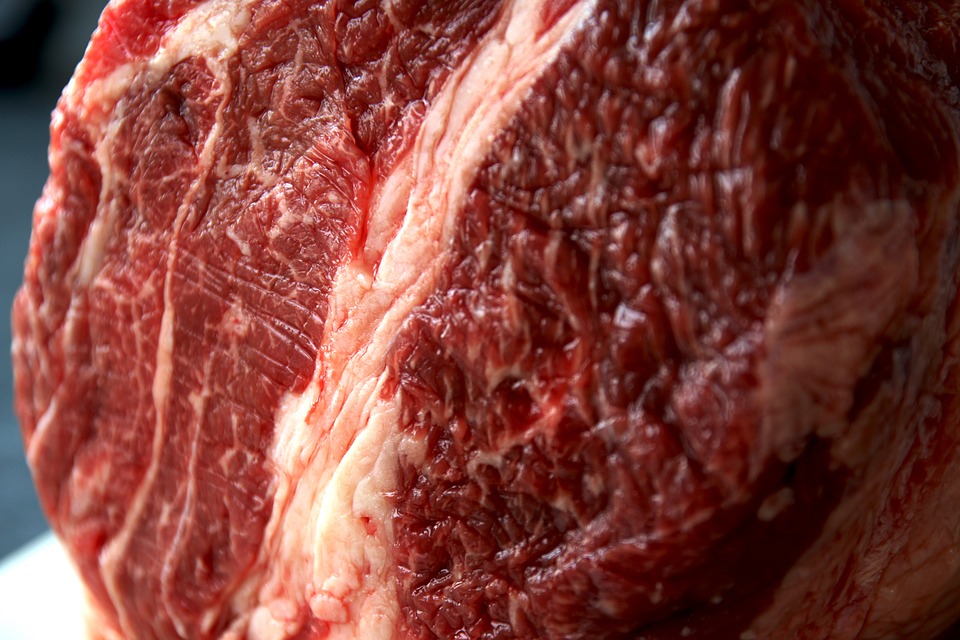
I don’t claim to be great with the grill, but I’ve learned a few things along the journey. For example, if you’re going to choose a nice steak then you have to look for a cut which has good “marbling.” In other words, the fat runs throughout the lean and creates an effect that looks a bit like marble. It’s the fat throughout the meat that melts and creates a juicy steak. Fat makes it a “choice” steak.

In order for those of us in 21t century western culture to being to wrap our heads around the ancient  semitic sacrificial system, we have to understand the metaphors involved. To the Israelites, blood was synonymous with life. So when a sacrifice bled and died on the altar it was viewed a substitutionary death for the death God had prescribed to all humanity back in the Garden of Eden. That’s why Jesus is referred to as the “Lamb of God,” as His death on the cross was the substitutionary, sacrificial death for humanity – once for all.

Likewise, the fat of the sacrifice represented how good it was. Just as  a good cut of steak, marbled with fat, is known to be the best – so an animal’s fat was was made it a choice sacrifice. It was the “best.”

Today, I’m reminded of two things:

  • A sacrifice isn’t a sacrifice if it really doesn’t cost me a thing.
  • A sacrifice is giving my best, not my leftovers.


Chapter-a-Day Leviticus 3

“All the fat belongs to God. This is the fixed rule down through the generations, wherever you happen to live: Don’t eat the fat; don’t eat the blood. None of it.”  Leviticus 3:16-17 (MSG)

Many years ago I had a traffic accident and suddenly found myself without a car for a short period of time. A compassionate neighbor offered to let me have one of his cars while mine was in the shop. It was a kind gesture, but I was rather surprised when he handed me the keys of his new luxury sedan. He had a couple of older vehicles he could have given me, but he gave me the best he had to give. I was humbled and grateful. I’ve never forgotten his extravagant generosity.

In acient days, when Leviticus was given as the law, the “fat” of an animal was considered the very best part. When setting up the sacrificial system, God clearly wanted to the people to cheerfully and freely give the best portion of a pure animal to God. While the sacrificial system is difficult for us to wrap our cultural minds around, the word pictures given within the system are just as relevant for us today.

When we give to God, when we give to others, are our hearts open to giving the best we have to give? Or, do we hoard the best for ourselves and parcel out what’s left if we’re forced to do so? It is really a litmus test which reaveals the condition of our hearts. Can we let go of the temporal, material things of this world, or are we clinging on to to things for dear life, and so revealing where we find our treasure?

Creative Commons photo courtesy of Flickr and andreiz