Tag Archives: Best

Of Fat and Blood

Of Fat and Blood (CaD Lev 7) Wayfarer

“Say to the Israelites: ‘Do not eat any of the fat of cattle, sheep or goats. And wherever you live, you must not eat the blood of any bird or animal.”
Leviticus 7:23-26 (NIV)

Living in Iowa, one is spoiled when it comes to a good steak. The other week while Wendy and I were on a cruise, we treated ourselves to a fancy, upscale dinner at the ship’s onboard steak house restaurant. It was a lovely evening and we enjoyed ourselves very much. The steak I ordered was, however, just okay. The truth is that for one-third the price I could have gotten a much better steak at my local grocery store.

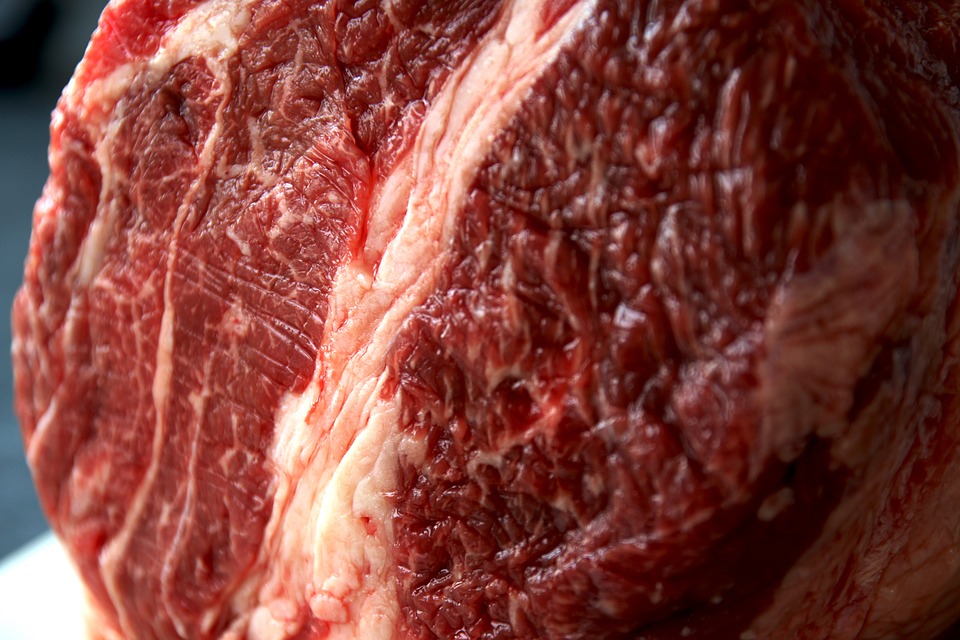
One of the things you learn about steak when you live in farm country is that fat is good. Fat is what helps make the lean meat even tastier. Steak experts talk about “marbling” of the steak and the fat to lean ratio. It’s a whole thing.

We are also spoiled by having fat cows. For the ancient Hebrews living in the desert wilderness, fat was a luxury and a sign of abundance.

One of the things modern readers struggle with in reading Leviticus is understanding some of the rules God put down. They seem so strange to our 21st century lives. This is true even for Biblical scholars and experts. There are certain things in this ancient Hebrew priest manual that are mysteries lost to us in the course of time. Others, however, can be understood when you translate God’s base language of metaphors.

In today’s chapter, God gives instruction that the fat of a sacrificed animal is God’s alone. Some portions of certain sacrifices could be eaten by the priests (it was how the priests and their families were provided for), some might be eaten by the person who brought it, but only God could have the fat. Fat, being a sign of health and abundance was the best. It is part of a recurring theme God is teaching the Hebrews through this entire sacrificial system. Bring God the best: the first fruits of the harvest, animals without defect, and the fat of the animal.

As for blood, it was deeply associated in the Hebrew mind with life itself. When a person was injured or slain and the blood spilled out of them, it was to them a person’s life spilling out. And God makes it abundantly clear throughout the entire Great Story that life is sacred. God even boils down the Great story on multiple occasions to a simple choice of life or death:

This day I call the heavens and the earth as witnesses against you that I have set before you life and death, blessings and curses. Now choose life, so that you and your children may live and that you may love the Lord your God, listen to his voice, and hold fast to him. For the Lord is your life, and he will give you many years in the land he swore to give to your fathers, Abraham, Isaac and Jacob.
Deuteronomy 30:19-20 (NIV)

“The thief comes only to steal and kill and destroy; I have come that they may have life, and have it to the full. – Jesus
John 10:10

To consume the blood of another living being was metaphorically consuming its sacred life.

As I meditated on this in the quiet this morning, there were two things that emerged for me.

First, I found my heart and mind returning to the idea of giving God our best. The truth is that for most of my life I feel like I gave God my leftovers. It was only as I matured in my understanding that everything I have is God’s and nothing is really mine that I truly understood generosity. Generosity is not me giving something up, but rather it’s me stewarding and channeling God’s goodness and provision to others.

Second, God is beginning to teach His people about the difference between the sacred and the ordinary. He’s introducing His people to the concept of holiness, and I believe that it was another thing that is easy for humans to twist into something it’s not. I believe it was another thing that Jesus came to reclaim and return to a heart understanding.

But there’s more of that to unpack in the chapters ahead. It is now time for me to engage in the sacred task of my vocation.

Have a great day, my friend!

uote

If you know anyone who might be encouraged by today’s post, please share.

These chapter-a-day blog posts are also available via podcast on all major podcast platforms including Apple, Google, and Spotify! Simply go to your podcast platform and search for “Wayfarer Tom Vander Well.” If it’s not on your platform, please let me know!

The Fat

All fat is the Lord’s. It shall be a perpetual statute throughout your generations, in all your settlements: you must not eat any fat or any blood.
Leviticus 3:16b-17 (NRSV)

I am married to a fabulous cook. Anyone who has had one of Wendy’s amazing cheesecakes can attest to this. Just this past Saturday she made a Italian chicken and pasta dinner that I’m still thinking about it. When it comes to grilling, however, I am the grill master at our house. If we’re going to grill meat, then I’m in charge, from choosing the meat, to preparing it and grilling it.

I don’t claim to be great with the grill, but I’ve learned a few things along the journey. For example, if you’re going to choose a nice steak then you have to look for a cut which has good “marbling.” In other words, the fat runs throughout the lean and creates an effect that looks a bit like marble. It’s the fat throughout the meat that melts and creates a juicy steak. Fat makes it a “choice” steak.

In order for those of us in 21t century western culture to being to wrap our heads around the ancient  semitic sacrificial system, we have to understand the metaphors involved. To the Israelites, blood was synonymous with life. So when a sacrifice bled and died on the altar it was viewed a substitutionary death for the death God had prescribed to all humanity back in the Garden of Eden. That’s why Jesus is referred to as the “Lamb of God,” as His death on the cross was the substitutionary, sacrificial death for humanity – once for all.

Likewise, the fat of the sacrifice represented how good it was. Just as  a good cut of steak, marbled with fat, is known to be the best – so an animal’s fat was was made it a choice sacrifice. It was the “best.”

Today, I’m reminded of two things:

  • A sacrifice isn’t a sacrifice if it really doesn’t cost me a thing.
  • A sacrifice is giving my best, not my leftovers.


Chapter-a-Day Numbers 18

jeans for men
Image via Wikipedia

Make sure that God’s portion is the best and holiest of everything you get. Numbers 18:29 (MSG)

When I was a child it was a weekly customer for my family to dress in our “Sunday best” for church. Dad would put on a suit, mom a dress, and the four chidren would be dressed in our “nice clothes” for our weekly trek to Sunday School and worship. I can remember that blue jeans were an absolute no-no.

Somewhere in my high school years there was a shift in thinking. As I read God’s message seriously for the first time I realized that God was much more interested in the condition of my heart than in my Sunday wardrobe. I felt it hypocritical to dress up on the outside for church in a show of impressing God and others. What did God care if I dressed up my body if my heart was in rags?

I remember attending a different church one Sunday. I wore jeans to the service. At that time it was considered disrespectful by many people to do so. An older woman sitting in the pew in front of me turned around to introduce herself during the “meet and greet” part of the service.

“I noticed you’re wearing jeans,” she said with a smile and a wink. “Don’t worry,” she added. “It’s doesn’t matter what you wear. We’re just glad you’re here.”

Years later I still don’t really care about what others wear to church. It has been a long time since I put on a suit to attend a regular Sunday service. In fact, I would stand out if I did so. I wonder, however, if the pendulum has swung too far the other way in our hearts. I wonder if we have lost sight of the truth that God wants the best we have to give. Instead of giving God the first and best, we give God our leftovers. Perhaps our relaxed attitudes on the outside have translated into relaxed attitudes about the inside.

Don’t get me wrong. I’m not advocating going back to a Sunday morning fasion show. It’s not about the clothes. It’s the attitude and condition of the heart that is still the critical question in my mind. I want God to get the best of all I have to offer, not a portion of the leftovers after I’ve squandered the rest of my time, energy and resources.

Enhanced by Zemanta

Chapter-a-Day Exodus 23

"Bring the choice first produce of the year to the house of your God." Exodus 23:19a (MSG)

It's good for me to regularly contemplate who, or what, is getting the "choice first produce" of my life.  I think about my time, my energy, my income, and my attention. How am I budgeting life? Where is it all going? It's easy for me to immediately think that God is getting my very best, but if you lay out the evidence – what does it say?

Today, I'm taking stock and asking God to help me discern those places in my life where I am not giving Him my best. Then comes the hard part – making the necessary changes.