Tag Archives: Vashti

Divine Bulletin Boards

But when the attendants delivered the king’s command, Queen Vashti refused to come. Then the king became furious and burned with anger.
Esther 1:12 (NIV)

It was the first day of my sophomore year of high school. I walked into the drama room for my Acting II class. A poster on the bulletin board caught my eye. It was an audition notice for a movie being filmed locally. The production company was just a mile from the school.

How cool was that?

I decided to audition. I got a starring role.

It changed my life.

The production company was run by a former Hollywood filmmaker who had become a follower of Jesus. He moved to Iowa and began making faith-centered films. While on set I met a man who would spend two years discipling me. Ten years later the same man would hire me to work for the company that he and his wife founded. That job became my career. Thirty years later I own the business.

A poster in the Drama Room caught my eye.

Drama is an apt segue. Today, our chapter-a-day trek begins the journey through the book of Esther which is one of the most dramatic stories in the entire Great Story. In fact, every year – all over the world – Jews gather to read the story aloud and dramatize as massive audience participation production.

The most astonishing thing about the story of Esther is that God is never mentioned…at all. Not once.

But God’s hands are present and evident through the entire story, providentially guiding the events.

Just like He does in mine.

Whoever authored Esther was as masterful a storyteller as Shakespeare. Today’s chapter is the opening act. It is the set-up that sets the story into motion. Persian emperor Xerxes enters, and what an entrance it is.

An empire from India to Ethiopia (half the known world)
A 180-day festival to show off his vast wealth and splendor.
Bright gold
Luscious silk
Glittering jewels
Opulent palaces
Verdant gardens
A seven-day feast in which wine flows ceaselessly into cups of gold for every guest.

At the end of the feast, Xerxes calls for his queen, Vashti, to come out from her private ladies feast. He doesn’t call her for her companionship. He isn’t interested in sharing the moment with her.

He wants to put her beauty on display like all his other treasure — just one more possession.

Vashti says, “No.”

The king’s desire for Vashti is not romantic — it is possessive.

He wants beauty displayed.

Admired.

Owned.

Her refusal is electric precisely because it breaks the spell of indulgence.

The party stops.

The music falters.

The room goes cold.

One woman saying no exposes the emptiness beneath all that glitter.

It is one of Scripture’s quietest — and most powerful — acts of dignity.

The ripple effect sends a threatening shockwave through the greatest empire on the face of the earth.

The King who commands armies can’t command respect.

Vashti is swiftly stripped of her title and she is escorted to the exit stage left. With Vashti’s exit, the stage is cleared for a young woman named Esther to make her entrance.

One act of self-respect threatens an empire built on display and domination. It is life-changing for Vashti. It is also life-changing for Esther.

She just doesn’t know it yet.

In the quiet this morning, my mind wanders back to a poster that caught my eye as a fifteen-year-old high school sophomore. A poster that would alter the course of my entire life.

God is the author of life. He gave us a Great Story from Genesis to Revelation. That Story isn’t yet complete. We’re still living in it. The author is still at work. I am part of the same Story. My life is woven into its tapestry.

Jesus told His followers to never stop asking, seeking, and knocking.

Along my life journey, I’ve come to believe that a part of what Jesus meant was for me to live each day with my eyes, my heart, and my life open. Open to God’s providential hand as He authors the story.

An unexpected introduction.
A sudden turn in the road.
A phone call out of the blue.
An opportunity I never saw coming.
A poster that catches my eye.

God is authoring the Great Story. He’s also authoring my story if, in my free will, I choose make room and live expectantly.

Ask.
Seek.
Knock.

“For everyone who asks receives; the one who seeks finds; and to the one who knocks, the door will be opened.”

And so I enter another day of the journey, eyes peeled, listening for the Author’s next cue.

If you know anyone who might be encouraged by today’s post, please share.

Promotional graphic for Tom Vander Well's Wayfarer blog and podcast, featuring icons of various podcast platforms with a photo of Tom Vander Well.
These chapter-a-day blog posts are also available via podcast on all major podcast platforms including Apple, Google, and Spotify! Simply go to your podcast platform and search for “Wayfarer Tom Vander Well.” If it’s not on your platform, please let me know!
An orange square icon featuring a white open book illustration.

Strong Women in Weak Circumstances

“According to law, what must be done to Queen Vashti?” he asked. “She has not obeyed the command of King Xerxes that the eunuchs have taken to her.”
Esther 1:15 (NIV)

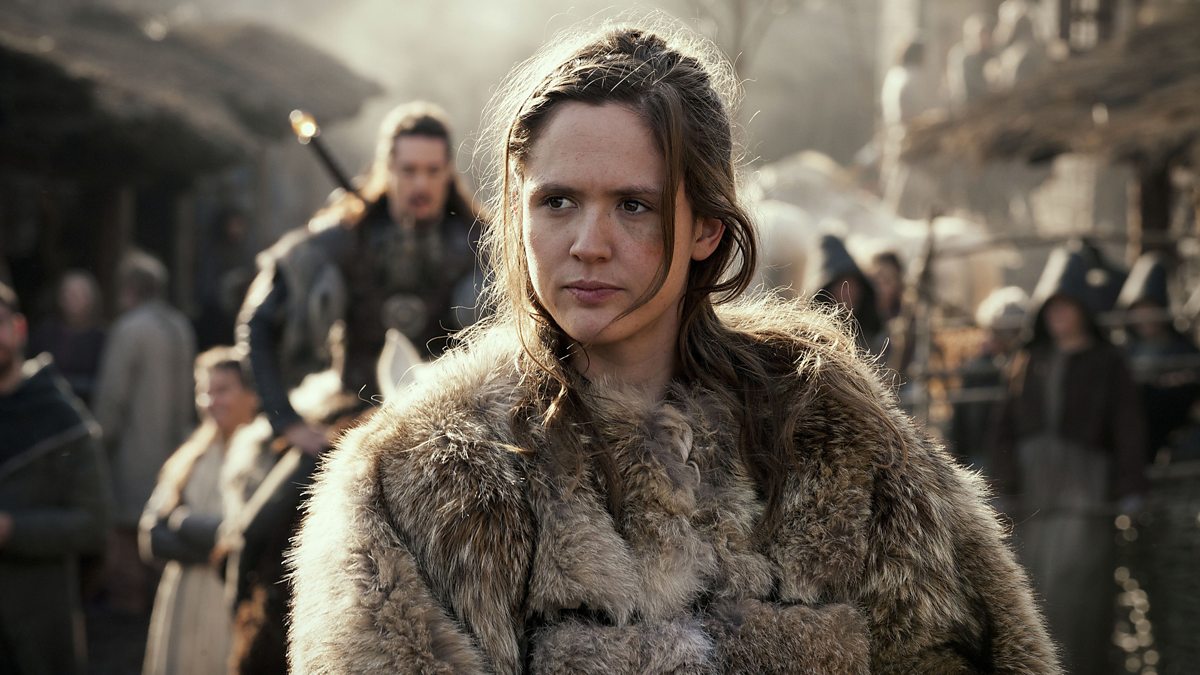
In the days after the end of Game of Thrones, I have suffered a bit of withdrawal. I know I am not alone in this. While nothing in the current entertainment market is going to really compare to the epic series, of late I have been catching up on the series, The Last Kingdom, (on Netflix) which has enjoyably filled the void. It follows the life of a young English noble who is captured and raised by Vikings while his uncle claims the title and land rightfully his by birth. The series is set in a period of actual history when Vikings threatened to conquer all the kingdoms of the British isle while Alfred the Great sought to join the disparate Kingdoms of the isle into one united England.

One of the interesting themes that I have noticed of late in multiple series and movies set in medieval times is how the role of women is handled. Certainly, the dark ages and middle ages were a time in which women had little or no social standing. Daughters of nobility were married off to create political alliances. Writers seem to enjoy creating female characters of strength and courage who challenge and undermine the status quo of that time. I laughed a lot as I watched the character of Brida (played expertly by Emily Cox) in The Last Kingdom (who, like the male protagonist was a young Brit captured and raised as a pagan Viking) who re-enters English society and all of the male priests and nobles have no idea how to handle this strong, fiery, female warrior. Earl the Bruce’s wife in the movie Outlaw King (also on Netflix) is another recent example.

Today we begin another chapter-a-day journey through the book of Esther. Along with the stories of Daniel and Jonah, which we just blogged through in the past few months, Esther is set in the period of exile when many of the Hebrew people were living in exiled captivity to a successive series of foreign empires (Babylonian, Mede, and Persian). Esther is one of the most enjoyable and unique reads in the entirety of God’s Message.

The first chapter sets the scene as the Persian Queen, Vashti, refuses her intoxicated husband’s demand that she present herself to him and the drunken, seven-day binge of a frat-boy party that he and his court were having. King Xerxes wanted to serve his wife up to be sexually ogled by his “noble” entourage. When Vashti has the self-respect and courage to refuse her husband’s demand, the boys decide that she must be punished so that all women would know their place and all men could cement their power over their wives and households.

Today’s chapter sets the scene for the story on which we are about to embark. It establishes the setting in an ancient culture in which men systemically dominated politics, society, and culture. Women had little or no power, and to challenge the system – even for the best of reasons – could lead to very negative consequences. The Hebrews, as a people living in exile, understood this position of powerlessness.

As I think about the historical setting of the story of Esther, of the courage of Vashti to stand up to her drunken husband, and the examples of strong women in weak social positions that I’ve been watching of late, I can’t help but think of my wife and my daughters. God has surrounded me with strong women whom I greatly respect. I am partnered with a fiery, Enneagram 8 of a wife, who compliments and challenges me in all sorts of healthy ways. I also know, however, that most of human history would not have treated her and her God-given temperament kindly, despite what Hollywood writers portray as they try to bring 9th-century realities to 21st-century audiences.

In the quiet this morning I find myself excited to once again wade through the amazing story of Esther. It reminds me of the spiritual paradoxes that lie at the heart of being a follower of Jesus: that strength is found in weakness, that spiritual power is often unleashed in temporal impotence, and that the power of Life is found on the other side of death.

Chapter-a-Day Esther 3

English: Vashti Refuses the King's Summons, pa...
English: Vashti Refuses the King’s Summons, painting by Edwin Long (Photo credit: Wikipedia)

All the king’s officials would bow down before Haman to show him respect whenever he passed by, for so the king had commanded. But Mordecai refused to bow down or show him respect. Esther 3:2 (NLT)

Two days ago, we read about Queen Vashti refusing to come to the King and how it led to her being deposed. I couldn’t help thinking about Vashti as I read this morning about Mordecai’s conscientious objection to bowing down before Haman. Thousands of years later, we continue to honor Mordecai for his refusal to bow before Haman, but we think very little of Vashti’s refusal to be summoned like a trained dog to be paraded like a stripper before her drunk husband and his cronies.

So it is when we choose to make a lonely stand against tyranny, dishonor or injustice. You can’t predict the results. People might shake their heads and roll their eyes in mockery. You might end up losing everything and suffering incredible personal loss (even your life). Or, you might end up changing the course of history and being honored through the centuries.

When we are called to, or choose to, conscientiously object we must do so out of obedience with a willingness to accept the consequences whatever they may be.