Tag Archives: Intercessor

My Forever High Priest

Therefore [Jesus] is able to save completely those who come to God through him, because he always lives to intercede for them.
Hebrews 7:25 (NIV)

I ran into an acquaintance the other day who I hadn’t seen in months. Immediately upon seeing them I felt shame pouring out of my soul and filling every nook and cranny of my mind and body.

The last time I’d run into this person, I greeted them and called them by the wrong name. They said nothing and didn’t react negatively in any way, but by the time I realized my mistake it was too late. It was out there and there was nothing I could do about it. The flood of shame poured through me like a tidal wave whispering its toxic messages…

“Tom, you’re such an idiot.”
“You’ve just embarrassed yourself.”
“They’re going to forever remember this mistake.”
“You’re terrible with names, you dolt. Seriously, major flaw.”

As soon as I saw this person the other day, my shame brought me right back to that moment from months ago and flooded me with the same reminders of my hopelessly flawed worthlessness.

Welcome to the inner world of a shame-based person.

Today’s chapter is thick with theology and history. At the heart of it the author of Hebrews is addressing a Jewish religious issue. The Messiah was supposed to be both King and Priest. But the royal line came from King David who was from the tribe of Judah. The priestly line in the Law of Moses came from Aaron who was from the tribe of Levi. So, how can the Messiah be both?

The author explains that the priesthood of Aaron was a human priesthood tied to the Law of Moses. The Law of Moses was a set of rules and regulations. Rules and regulations don’t perfect a person. Laws may dictate social behavior, but it doesn’t spiritually transform a person within. The Law may dictate that I not steal, and you certainly won’t catch me shoplifting. That same Law does nothing to address the greed that motivates me to cheat on my tax return or be miserly in tipping those who serve me at the restaurant.

And, as a shame-based person, I can tell you that shame will doggedly remind me what a worthless wretch I am. I shared with you how bad it was when I simply forgot an acquaintance’s name. Imagine what shame does with my life-long list of tragic mistakes from stealing the Christmas cash off the Christmas tree when I was a child to cheating on my first wife to the failure of my first marriage. And those are just the high points. Trust me, there’s a lot more.

The author of Hebrews explains that Jesus is the High-Priest from an older, mysterious, eternal priesthood that predates Moses and Aaron. The royal priesthood of Melchizedek (which means “King of Righteousness”) who was King of Salem (from “shalom” meaning “Peace.”).

The priesthood of Aaron made repeated temporal sacrifices.
Jesus made the ultimate eternal sacrifice once for all.

The priesthood of Aaron was tied to human genealogy.
Jesus was part of a priesthood tied to eternity.

The priesthood of Aaron was “weak and useless” at dealing with sin.
Jesus’ sacrifice graciously paid for sin.

The priests of Aaron all died, their priesthood ended.
Jesus lives eternally to intercede perpetually on my behalf.

For someone constantly plagued by the shame of never being enough, the truth of this means everything.

I have a forever-advocate.

Not a priest I wore out with my mistakes.
Not a spiritual leader who retires, moves away, burns out, and dies.
Not a friend who tries to carry my burdens and eventually buckles.

But Christ —
holy and tender,
pure and powerful,
alive and attentive —
always interceding for me.

Every breath:
“Father, this one is mine.”

Every stumble:
“I’ve already covered that.”

Every anxious heartbeat:
“I am here. Still. Always.”

In a world of revolving doors, shifting loyalties, and fragile leaders, Hebrews 7 invites me to rest the weight of my shame on the only One who never steps away from His post.

I am held.
I am represented.
I am beloved, eternally.

And this morning, I walk into my day knowing Christ is already interceding on my behalf.

A better covenant.
A better hope.
A forever priest who doesn’t quit.

If you know anyone who might be encouraged by today’s post, please share.

Promotional graphic for Tom Vander Well's Wayfarer blog and podcast, featuring icons of various podcast platforms with a photo of Tom Vander Well.
These chapter-a-day blog posts are also available via podcast on all major podcast platforms including Apple, Google, and Spotify! Simply go to your podcast platform and search for “Wayfarer Tom Vander Well.” If it’s not on your platform, please let me know!
A logo featuring an open book icon, symbolizing scripture or religious content.

God Friended Me

God Friended Me (CaD Ex 28) Wayfarer

Then bring near to you your brother Aaron, and his sons with him, from among the Israelites, to serve me as priests—Aaron and Aaron’s sons, Nadab and Abihu, Eleazar and Ithamar.
Exodus 28:1 (NRSVCE)

Wendy and I watched the first season of God Friended Me when it came out a year or two ago. The show is about a preacher’s kid named Miles who is an atheist and has a podcast to discuss is unbelief. God mysteriously “friends” him on Facebook and each episode the “God account” introduces him to a person who Miles is supposed to help, all the while trying to figure out who is behind the God account.

One of the things that I thought was interesting in the writings was that his father is always addressed as “Reverend.” Miles tells people that his dad is a “Reverend.” Everyone addresses his father as “Reverend.” He’s never, that I can remember, referred to as a pastor, priest, preacher, or minister. Just “Reverend.” Which, I kind of found to be unusual to the point of being annoying and one of several reasons I quit watching.

In my experience, clergy across the various denominations, and even religions, are all lumped together in the minds of most people. Either they aren’t sure what to call you, or they simply use whatever word they know from their own experience. And yet, there are major differences in both meaning and role.

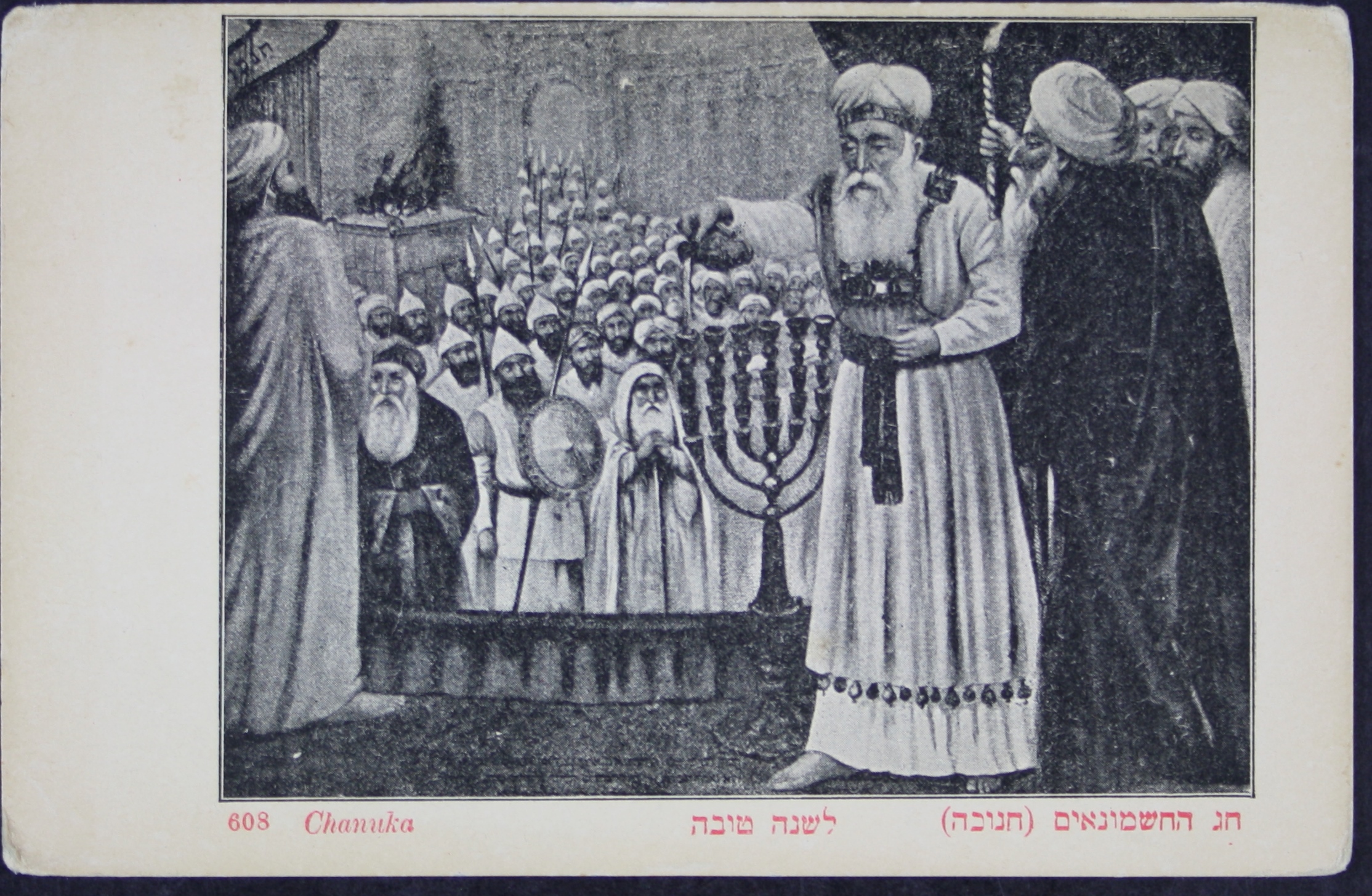
A “priest” is typically understood to be a go-between who represents humans before God. In today’s chapter of Exodus, God calls on Aaron and his sons to be priests in the newly established system of sacrifice and worship given through Moses. The chapter goes on to prescribe a very ornate wardrobe for them to wear. The high-priest will be the only one allowed in the “Most Holy Place,” essentially entering God’s presence and representing the Hebrew people before the Almighty. Everything described in the priest’s get-up says that this is a singular and important role. (You can see an artist’s rendition of it in the featured photo of the post, picturing the story of Hanukka.)

In contrast, the term “pastor” is derived from the idea of a shepherd who leads, guides, protects, and provides for the flock. Likewise, the word “minister” means to serve, address, and care for.

From a distance this may just seem like semantics, but it actually has pretty profound implications in one’s understanding of relationship with God. The fundamental question is: “Do I need another human being to be my representative with God?” Roman Catholic, Anglican, Orthodox, and Episcopal doctrine would answer “yes” to that question (though they might all have different takes on it). Most other Protestant categories of believers would answer “no.”

Here’s where it gets interesting. In the book of Hebrews, it is stated that with His death and resurrection, Jesus spiritually became the once-and-for-all High Priest who became the once-and-for-all go-between, intermediary, mediator for humanity. In the system of worship established through Moses in today’s chapter, it is establishing that only Aaron and his male descendants could be priests. According to the family trees given by Matthew and Luke, Jesus was not descended through Aaron but through the royal line of King David. Hebrews explains that Jesus was High Priest, not in the line of Aaron, but “in the order of Melchizedek.” Who’s that? A mysterious character who shows up in the early chapters of the Great Story in Genesis 14 as “priest of God Most High.”

King David would prophetically write about the coming Messiah (Psalm 110):

“The Lord has sworn and will not change His mind,
‘You are a priest forever
According to the order of Melchizedek.”’

The cool thing established here is that Jesus unites what had previously always been separated. The monarchy and priesthood were separated. The royal line was from David. The priesthood was from Aaron. Jesus, as David himself prophesied, spiritually became both King and Priest.

As Paul wrote to Timothy:

“For there is one God, and one mediator also between God and men, the man Christ Jesus, who gave Himself as a ransom for all, the testimony given at the proper time.”

With that distinction, there is no longer need for another human being to be the intermediary between me and God. I have direct access to God and all the love, grace, mercy, and forgiveness that flows to me through Jesus delivered by God’s Spirit.

As I read through today’s chapter in Exodus and the ancient, intricate system of worship prescribed, I find myself grateful to be living in this chapter of the Great Story. How cool that my relationship with God does not have to be complicated. John’s beautiful introduction to the Jesus story puts it this way:

Yet to all who did receive him, to those who believed in his name, he gave the right to become children of God.

Simple.

God friended me.

All I had to do was accept.

If you know anyone who might be encouraged by today’s post, please share.