Tag Archives: Ezra 6

Trials, Gold, and Dross

So the Israelites who had returned from the exile ate it, together with all who had separated themselves from the unclean practices of their Gentile neighbors in order to seek the Lord, the God of Israel.
Ezra 6:21 (NIV)

On Sunday, after I gave the message among our local gathering of Jesus’ followers, Wendy and I were having our normal lunch date together. Wendy had given the message the previous Sunday. She shared the story of her journey through infertility. This past Sunday I spoke about secrets and my own experience with secrets that kept me spiritually imprisoned.

There was a common theme in our messages. We both slogged our way through long stretches of trial and difficulty, and we both experienced previously unknown depths of joy and freedom at the other end of our respective valleys.

As we dined and debriefed, we discussed a few of the things that some religious people cling to as if of vital importance. Things such as church membership and adherence to a particular denominational institution. For the two of us, such trappings hold very little importance. To a certain extent, I realized that our journeys and struggles through hard spiritual terrain had refined our perspectives on what it means to be followers of Jesus. Membership certificates and institutional inclusion are of very little importance to us compared to the more tangible daily realities of our own personal, daily spiritual trek among our community of Jesus’ followers.

In today’s chapter, the returned exiles complete their construction of the rebuilding of the Temple in Jerusalem. There is a very small distinction in today’s chapter that is easily lost on a casual reader. The returned exiles are referred to as “Israelites.” When Jerusalem was besieged and the exile began, they were the nation of Judah. For hundreds of years prior to the exile, the tribes of Israel were separated in a bloody civil war. “Israel” was the northern kingdom. “Judah” was the southern kingdom. Now, upon return from their exile and the restoration of the Temple, they were simply “Israelites” along with Gentiles, like Ruth, who had chosen to follow their faith.

I couldn’t help but think that the experience of exile over 70 years changed some things for those who went through it. Old conflicts and prejudices fell by the wayside. Those who returned had a renewed understanding of what was truly important and what things simply didn’t matter all that much in the eternal perspective. That’s what exilic experiences and the spiritual struggle through valleys of pain, grief, and trouble will do for a person. It refines things. I’m reminded of Peter’s words to fellow believers scattered across the Roman Empire experiencing dreadful persecution:

May the thought of this cause you to jump for joy, even though lately you’ve had to put up with the grief of many trials. But these only reveal the sterling core of your faith, which is far more valuable than gold that perishes, for even gold is refined by fire. Your authentic faith will result in even more praise, glory, and honor when Jesus the Anointed One is revealed.
1 Peter 1:6-7 (TPT)

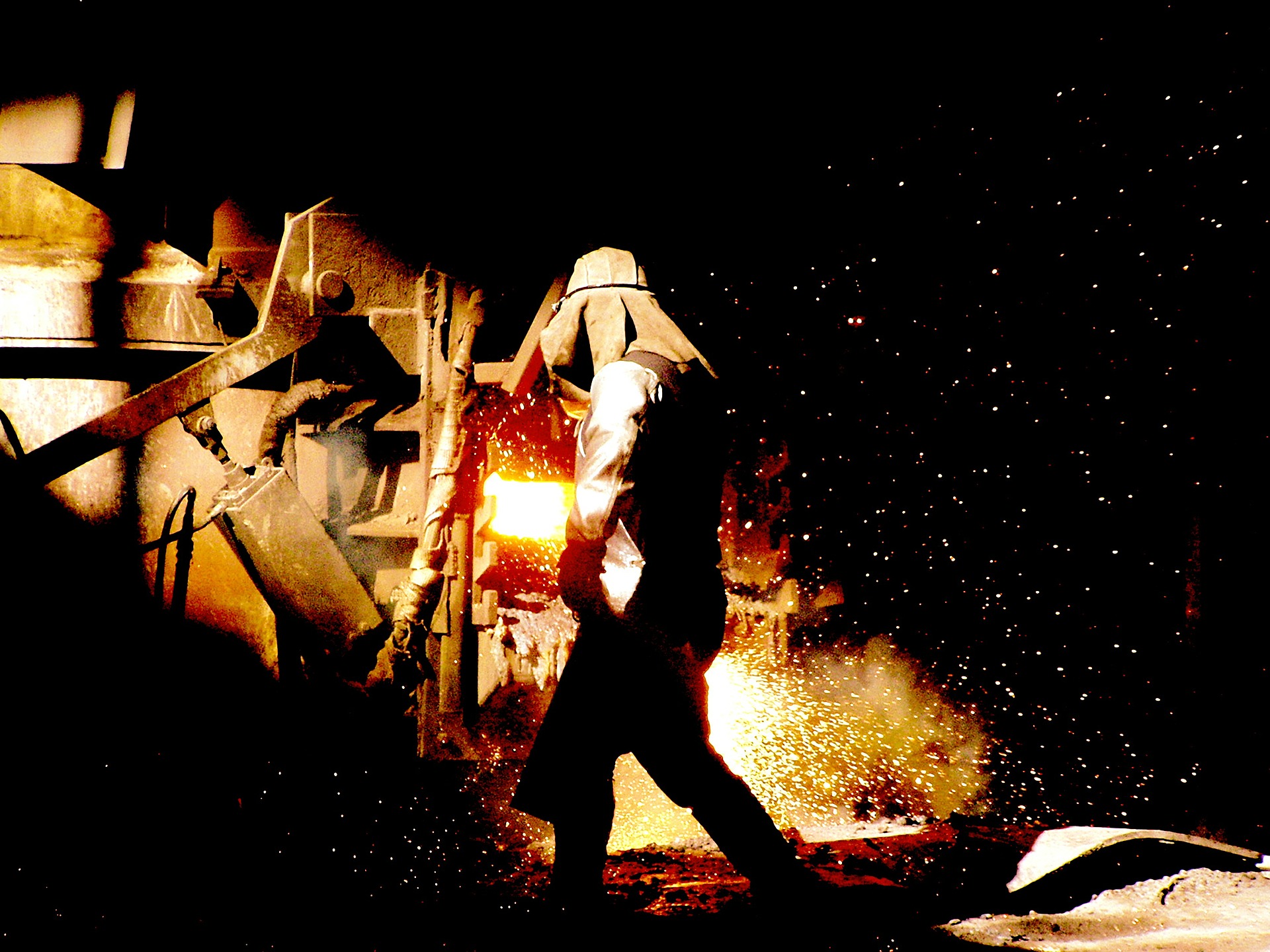
In the process of refining metal, which Peter uses as a metaphor, the gold remains while the “dross” (literally “scum on molten metal”) is removed as useless and worthless.

In the quiet this morning I find myself pondering those things that my trials have refined and revealed to be the gold of eternal importance and those things that my trials have revealed to be worthless scum in the grand scheme of things.

Laying Down the Law

Furthermore, I [King Darius] decree that if anyone defies this edict, a beam is to be pulled from their house and they are to be impaled on it. And for this crime their house is to be made a pile of rubble.
Ezra 6:11 (NIV)

One of the things that I loved about college was that you got to explore, study, ruminate and argue about all sorts of questions of life. I remember one semester a classmate of mine and I had an ongoing discussion and argument as we worked together in food service at Judson College. The argument was over the best system of government. I started by arguing that a representative republic was best, and he argued that a socialist system was best. By the end of our argument we came to agree that we were both wrong. We agreed that if you had a good, true, intelligent and just person to lead [which, we conceded, you’d never consistently find in this fallen world], then the ideal form of Government was a monarchy.

I won’t belabor or editorialize on our debate. I will say, however, that one of the reasons we came to our conclusion was that a monarch does have the ability to lay down the law. A strong central leader can cut through red tape just like Darius did. Which is why I thought of it while reading today’s chapter.

When we left off, the Hebrew exiles had been harassed by their local neighbors and officials regarding the rebuilding of the temple in Jerusalem. The Hebrews appealed to King Darius that their construction had been decreed by his predecessor. In today’s chapter, King Darius responds, firmly lays down the law, and settles the matter. Sure enough, the King’s scribes found the original decree and he allows the building of the temple to continue. Darius goes one step further and commands that the local officials who caused the ruckus, to their humiliation, assist in the rebuilding. If they don’t they’ll be impaled on a load bearing beam from their own home so that they die and their own house collapses. [Yikes!]

Today, I’m thinking about the fact that all human institutions are fundamentally flawed because humanity will always have to deal with this nagging seed of corruption that God’s message refers to as sin. In today’s example, the outcome was favorable for the Jewish people. History, however, is rife with examples of unfavorable outcomes for the Jewish people. This side of eternity we all must face joyful victories and disappointing defeats for our particular political and spiritual persuasions. Perhaps that’s why Jesus laid down the law in a very different way:

Do not store up for yourselves treasures on earth, where moths and vermin destroy, and where thieves break in and steal. But store up for yourselves treasures in heaven, where moths and vermin do not destroy, and where thieves do not break in and steal. For where your treasure is, there your heart will be also.

chapter a day banner 2015

Chapter-a-Day Ezra 6

Norelco 3 band transistor radio
Image by holdit via Flickr

With great joy they celebrated the Feast of Unraised Bread for seven days. God had plunged them into a sea of joy; he had changed the mind of the king of Assyria to back them in rebuilding The Temple of God, the God of IsraelEzra 6:22 (MSG)

When I was a kid, my dad always had the radio on. It was as a kid that I learned to appreciate an old radio news man and commentator named Paul Harvey. In the morning and at noon, Harvey would offer his own special take on the day’s news. In the afternoon, however, that distinctive voice pouring out of the radio would share a unique biographical story with a twist at the end that revealed the mysterious person he was talking about. Harvey called it The Rest of the Story, and I always listened intently to see if I could figure out the identity of the mysterious figure he was talking about.

I thought about The Rest of the Story as I read today’s chapter. At the beginning of 2011, we were journeying through the book of Jeremiah’s prophesies and the “weeping” prophet was warning the people of Jerusalem that they’d better straighten up or God was going to send the King of Babylon to take them into exile. In Jeremiah 18 I pulled out this verse for our chapter-a-day:

So I went to the potter’s house, and sure enough, the potter was there, working away at his wheel. Whenever the pot the potter was working on turned out badly, as sometimes happens when you are working with clay, the potter would simply start over and use the same clay to make another pot. Jeremiah 18:3-4 (MSG)

Almost a year has passed. And now, at the end of 2011, we read “the rest of the story.” The people refused to listen to Jeremiah so God, the Potter, crushed the marred pot he’d been working on. The Babylonians swept into Jerusalem and flattened the city, along with Solomon’s temple, like a lump of clay on the potter’s wheel. The people of Israel were taken into exile where they languished for many years.

Then, miraculously, a new king emerges who sends a remnent of Israelites back to Jerusalem to begin rebuilding the city and the temple. The Potter is back at work, redeeming the lump of clay which had been broken, and making it into something new for His purpose. The people are plunged into a sea of joy as they begin again their worship in the new temple in Jerusalem.

As I look back over the years, I see how God is writing “The Rest of the Story” in my own life. Broken and marred, I have (on multiple occasions, actually) felt life falling in like the walls of that clay pot on the Potter’s wheel. Though it felt like some kind of tragic end in the moment, God was no more finished with me than He was finished with the Israelites stuck in exile. God is a God of redemption. God is a God of hope.

He’s not finished with me yet.

Enhanced by Zemanta