Tag Archives: Exodus 10

God Revealing, Then and Now

God Revealing, Then and Now (CaD Ex 10) Wayfarer

Then the Lord said to Moses, “Go to Pharaoh; for I have hardened his heart and the heart of his officials, in order that I may show these signs of mine among them…”
Exodus 10:1 (NRSVCE)

Wendy and I have some connections to east Africa. We have, for years, supported a Compassion child in Kenya named Joyce. Taylor and Clayton spent time working in Uganda, and Clayton’s doctoral research has taken him repeatedly to Tanzania where we also support another Compassion child, Michael, who is slightly older than Milo and they share the same birthday.

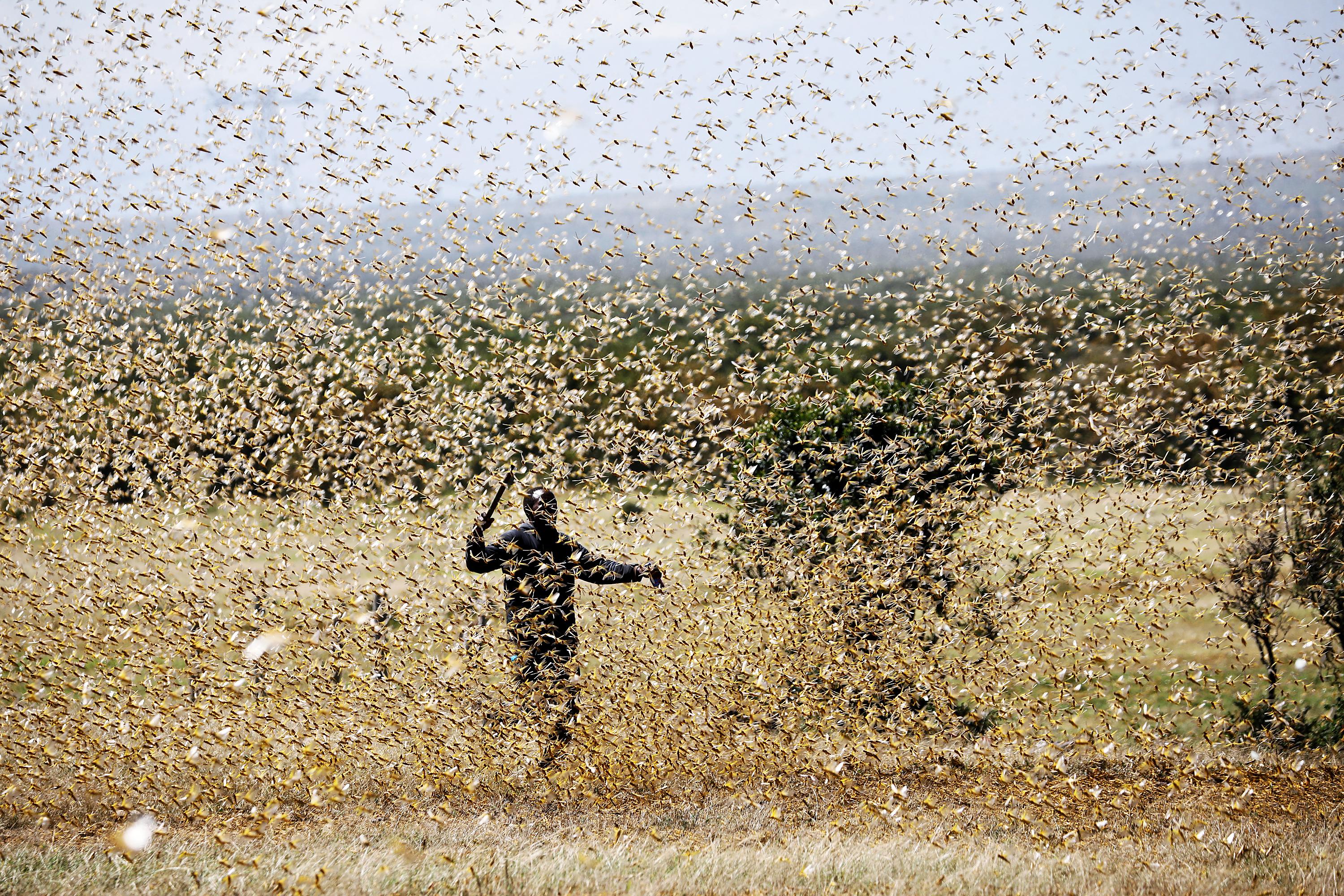
Because of these connections, we tend to pay a little more attention to the situation there. In case you didn’t know it, they have been battling locust swarms this year. Massive locust swarms that I would tag as being of “biblical proportions.” A second wave of swarms hit the region just as they began fighting COVID.

In my recent series of podcasts, A Beginner’s Guide to the Great Story, I talk a lot about context. An adult can’t reason with a two-year-old by getting him or her to sit and listen to you read a psychology textbook that explains his or her need to modify behavior. In the same way, understanding ancient stories require me, a 21st-century reader, to think outside the box of my 21st-century thought and sensitivities. They require me to think about how God is meeting with and interacting with humanity in the context of the way they lived, thought, believed, and interpreted their world. Today’s chapter is a great example.

Locust swarms have been part of the ecosystem forever. They happen on occasion just like floods, droughts, hurricanes, tornados, and viral outbreaks. Our post-enlightenment, educated minds turn to science to understand these things, deal with them appropriately, and lessen the negative effects.

In Moses’ day, no one thought in such a way. In Moses day, natural phenomena were always considered to be a manifestation of the gods. If something bad happens, the gods must be angry. If something good happens, the gods must be pleased.

In today’s chapter, God tells Moses that the plagues had a purpose. The purpose was to reveal Himself and His power to Pharaoh and his officials. What is lost on a 21st-century reader is the fact that the types of plagues being visited upon the Egyptians had connections to various deities they worshiped across the pantheon of more than 1500 gods they worshiped. Because many, if not most, of the plagues were natural occurring phenomena, the Egyptians may have historically associated them with other deities. Now, the God of Moses turns them on-and-off at will, which is a direct challenge to Egypt’s religious system. Each time a plague is turned on or off by “stretching out” their hand and staff, it is a direct challenge to Pharaoh’s claim of being a god who rules by “my mighty hand.”

In the quiet this morning, I find myself thinking about God revealing Himself. The story of Moses is an early chapter in the Great Story. There has been no described system of worship. There is no Bible or sacred text. There is no institution or organization. God has simply revealed Himself to Abraham and his descendants in mysterious ways. The plagues we’ve been reading about are the first recorded time in the Great Story that God attempts to reveal Himself to another people group in contrast to their own gods. This is a major shift in the narrative, and this theme will continue.

Interestingly, Jesus also made it clear that His mission was one of revelation:

At that time Jesus said, “I thank you, Father, Lord of heaven and earth, because you have hidden these things from the wise and the intelligent and have revealed them to infants;

“All things have been handed over to me by my Father; and no one knows who the Son is except the Father, or who the Father is except the Son and anyone to whom the Son chooses to reveal him.”

Jesus answered, “Neither this man nor his parents sinned; he was born blind so that God’s works might be revealed in him”.

God has always been in the process of revealing Himself, and does so in multiple ways, including the very act of creation:

Ever since the creation of the world his eternal power and divine nature, invisible though they are, have been understood and seen through the things he has made. So they are without excuse.

Along my earthly journey, I have been ever-grateful to live in our current period of human history. Despite the doom and gloom peddled in the media, we live in a period of human history that is unprecedented with regard to low levels of extreme poverty, disease, starvation, war, violence, and high levels of education and safety across the globe compared with any other period of history. Humanity is in a very different chapter of the Great Story, and I believe God is revealed very differently in our world than in Moses’ day.

The basic dance remains the same. God revealing, inviting, drawing in. Me asking, seeking, knocking, humbly accepting, and receiving.

I’m glad it no longer requires a plague of locusts. In my quiet time this morning I’m praying for those who are actively trying to help the people of Africa to minimize the damage and for those who are suffering because of it.

Chapter-a-Day Exodus 10

Water pitcher. He said, "I'd sooner send you off with God's blessings than let you go with your children. Look, you're up to no good—it's written all over your faces. Nothing doing. Just the men are going—go ahead and worship God. That's what you want so badly." And they were thrown out of Pharaoh's presence. Exodus 10:10-11 (MSG)

There are two refillable water pitchers in our refrigerator so that there is always cold water ready and available. The rule of the house is: if you empty one of the pitchers, you go to the filtered water spicket at the sink and fill it up, then place it behind the other full pitcher so that the pitcher with cold water is readily accessible for the next person who wants water.

There is nothing more frustrating than to get to the fridge, open it and reach for the water pitcher to find that there are about two molecules of water left in the bottom. "It's not technically empty!" I can hear a teenager reasoning in the back of my head. "There's still water in it! RIGHT THERE! TWO MOLECULES RIGHT THERE AT THE BOTTOM!" (For the record, my wife would be giving me "that look" right now; the "you're such a hypocrite" look. Okay, maybe I've been guilty of leaving the water jug empty a time or two.)

The truth is that we all like to approach the rules on our own terms. There are so many examples in my life that I, like Pharaoh, have tried to set the terms of obedience with God. In my heart I'll agree to do just so much. It's not quite what God is asking, but I reason that it's part way so that should be good enough. I know God wants total obedience, but I'm sure he'll take what I'm giving because it's more than most people give. I know I'm supposed to fill the water jug when it's empty so that the next person has a full jug of water to enjoy, but it's technically not completely empty.

Silly Pharaoh. Silly me. Obedience is not negotiable.

Creative Commons photo courtesy of Flickr and Mark Strozier