Tag Archives: Deuteronomy 20

Go Big! (or Maybe Not)

When you march up to attack a city, make its people an offer of peace.
Deuteronomy 20:10 (NIV)

A few years ago I found myself at a crossroads having to make a decision about my business. A tremendous opportunity presented itself for me to transform it into something much larger. Larger cashflow, larger staff, larger marketing plan, larger client base, larger revenues, and larger profits. I had been promised the financial support and guidance to go big.

I confess that it was tempting.

There is something innately human—and perhaps especially American—that equates big numbers with success, status, and safety. This thinking even creeps into perceptions of “church.” Mega-churches and celebrity pastors wield wealth, attention, and influence. “Go big or go home,” as the saying goes. Bigger is better. More is better. Big numbers mean triumph.

Today’s chapter stands in contrast to this mentality, even as God through Moses prepares his people for a military campaign of conquest. In fact, God’s tactical commands are downright foolhardy when you consider military strategy that has raised empires throughout history.

God begins with pre-battle instructions.

Deuteronomy 20 is the Hebrews’ theology of war, though it is far more pastoral than brutal.

  1. Do not be afraid when facing larger, better-armed enemies. God reminds them: You are not alone. I brought you out of Egypt; I’ll walk you into this too.
  2. The priest speaks before the battle, not the general. Courage is framed as a spiritual matter before it is a tactical one.
  3. Mercy precedes mobilization:
    • Offer peace before siege.
    • Protect fruit trees—even in war, tomorrow matters.
  4. Exemptions abound:
    • Just built a house? Go home.
    • Just planted a vineyard? Go enjoy its fruit.
    • Newly engaged? Go love her well.
    • Afraid? Go home—fear is contagious.
  5. Limits are set:
    • Distant cities are treated differently than those within the Promised Land.
    • War is not permission for chaos; it is bounded, restrained, and accountable.

This is not a call to bloodlust. It is a leash on it.

Underlying all of these instructions is a subtextual whisper from God—one I heard loud and clear in the quiet.

“Large numbers don’t impress me.”

God is not interested in crowds. He can raise an army from stones.
God is not hoarding wealth. Everything is already His.
God can assure victory. He proved it with Egypt.

God is molding a people with a purpose, and Deuteronomy 20 has me asking myself a few important questions:

What battles am I fighting that God never enlisted me for?

What battles am I facing and have been trying to fight alone?

God’s ancient words to His Hebrew children resonate with clarity for my life and circumstances today:

  • Name my fearbecause unnamed fear leads armies astray.
  • Offer peace firstin conversations, conflicts, and grudges.
  • Honor my limitsnot every season is for battle.
  • Protect the treesdon’t burn relationships, health, or hope just to feel victorious.
  • Trust the presence of God more than the size of the problem.

This chapter is not a call to aggression.
It’s an invitation to holy courage—the kind that knows when to stand, when to step back, and when to let God do the fighting while you simply refuse to panic.

As I stood at the crossroads weighing my opportunity to go big with my business, God’s Spirit whispered to my soul in the quiet. Hidden among all of those large numbers that my head desired were two large numbers: large debt and large headaches. What would shrink—and likely get lost in the forest of large numbers—were the very purposes and promises on which the business was founded.

It’s time for me to shift into my work day quietly doing what we do to faithfully serve our clients and follow the purposes to which God continues to lead, one small step at a time.

If you know anyone who might be encouraged by today’s post, please share.

Promotional graphic for Tom Vander Well's Wayfarer blog and podcast, featuring icons of various podcast platforms with a photo of Tom Vander Well.
These chapter-a-day blog posts are also available via podcast on all major podcast platforms including Apple, Google, and Spotify! Simply go to your podcast platform and search for “Wayfarer Tom Vander Well.” If it’s not on your platform, please let me know!
Logo featuring an open book icon within an orange square background.

Green God

If you besiege a town for a long time, making war against it in order to take it, you must not destroy its trees by wielding an ax against them. Although you may take food from them, you must not cut them down. Are trees in the field human beings that they should come under siege from you? You may destroy only the trees that you know do not produce food; you may cut them down for use in building siegeworks against the town that makes war with you, until it falls.
Deuteronomy 20:19-20 (NRSV)

One of the things that I have quietly gained as a life long fan and student of J.R.R. Tolkien is an appreciation for trees. Tolkien loved trees and his expression of love is woven throughout his works. In his creation story, there are two trees, gold and silver, which produced light. When evil destroys the trees their fruit become the sun and moon.

Throughout the Lord of the Rings you find Tolkien’s love of trees expressed through Old Man Willow, the ents, and through the elves who dwell in the forests and carry the blessings of all things that grow. Those who are evil, like the wizard Saruman and his minions, fell the trees and destroy the forests to fuel their war machine and generally tear down that which is good. As a result, it is the trees embodied by the Ents and the mysterious forest of Huorns who rise up against evil and help usher in an unexpected victory in The Two Towers.

So it is that I read with keen interest God’s command to the ancient Hebrew in today’s chapter. The army was not to fell any tree that was living and bearing fruit. When laying siege to an enemy city, they could eat the fruit of the surrounding trees but were forbidden from cutting them down to use in building siege engines and utensils of war. Only trees which were already dead could be used for such purposes.

I am reminded this morning that our Creator and artist God began His work on earth with a garden, and at the center of the garden He placed a very special tree. The vision of the end given to us in John’s revelation likewise makes special mention of a tree:

Then the angel showed me the river of the water of life, bright as crystal, flowing from the throne of God and of the Lamb through the middle of the street of the city. On either side of the river is the tree of life with its twelve kinds of fruit, producing its fruit each month; and the leaves of the tree are for the healing of the nations.
Revelation 22:1-2

I am not much of a gardener and I often joke of having a “brown thumb.” Yet, along life’s journey I have grown to appreciate that God, like Tolkien, is a gardner and a lover of trees. If I am to be like Him, then I must grow to love, appreciate, and protect gardens and trees and the living things that grow in His creation.

chapter a day banner 2015

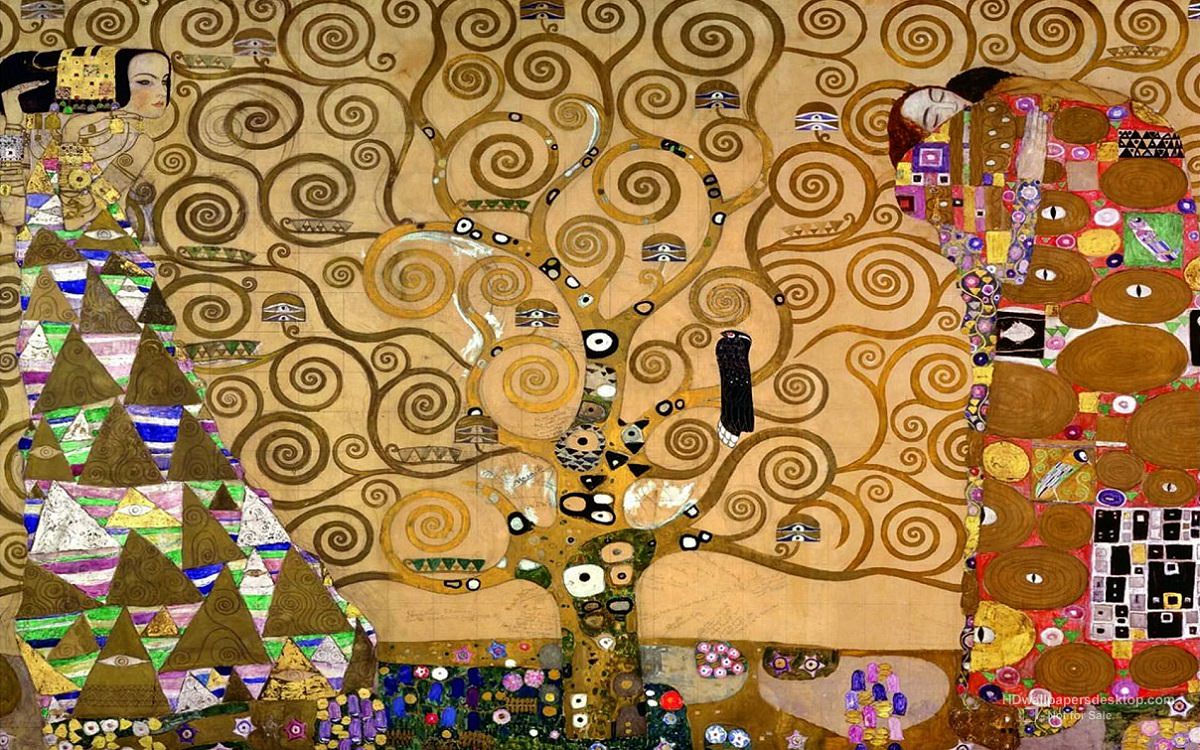
featured image: The Tree of Life , Gustav Klimt

Chapter-a-Day Deuteronomy 20

MAST Academy Water Polo Tournament
Image by miamism via Flickr

The officers will then continue, “And is there a man here who is wavering in resolve and afraid? Let him go home right now so that he doesn’t infect his fellows with his timidity and cowardly spirit.” Deuteronomy 20:8 (MSG)

When I was a kid, my family was into swimming. My siblings and I swam competitively. My sister was a diver. We played water polo. Our vacations were spent on a lake skiing and swimming. We were lifeguards and helped with water safety instruction. From the age of eight until my late teens, I lived in a pool year round.

But being a swimmer didn’t start well for me. When I was seven or so, I was deathly afraid of the pool. I still remember going to swim lessons and being encouraged to swim across the width of the pool, in the deep end where my feet couldn’t touch, for the first time. I was paralyzed by fear. I cried. I screamed. No matter how much my instructors assured me that they would help me if I struggled, I had convinced myself that I couldn’t do it. As I recall, I had to go home that day. It would be another few days before I worked up the courage to make my first deep water swim.

I thought of that moment when I read the instructions in today’s chapter regarding fear. I understand why those who were afraid were told to go home. Fear is both crippling and contagious. When any group faces a challenge or an obstacle, they have got to believe that they can accomplish the task before them. Often, there is a very thin line between faith and doubt. When one member of the team broadcasts their fear and lack of faith, it quickly becomes viral. When that happens, defeat is almost always assured.

Today, I’m reminded that God does not give us a spirit of fear, but of power, love and sound mind.

Enhanced by Zemanta

Chapter-a-Day Deuteronomy 19

Don’t move your neighbor’s boundary markers…. Deuteronomy 19:14a (MSG)

Last night my wife and I received a pleasant visit from our two little friends, Nathan and Aaron, from down the street. The young brothers, ages five and two, stopped by with their parents and first thing they wanted to do is play a little basketball with our adjustable Goalsetter basketball hoop that I lowered down to six feet in height.

I have two basketballs which I pulled out of the garage. I gave one to the older brother and then pulled out the second for the younger brother. Immediately upon seeing his younger brother receive the second basketball, the elder brother dropped the ball in his hand. “I don’t want this one,” he said as he lunged to grab the ball out of his younger brother’s hand. At the sound of the blood curdling scream which began warming up in his brother’s throat, the elder brother dropped the second basketball on the ground, picked up the first and ran out of the garage. Let the games begin.

For the next half hour I watched with fascination as the two brothers jockeyed for position in every way imaginable. This is my ball; that one’s yours! Get out of my way; it’s my turn! I was standing here first. No, Tom, you just lifted him to dunk the ball; I get to do it now.

Dear God, bless their parents. A lot.

The truth is that the nature of conflict really hasn’t changed in the thousands of years which have passed since Moses handed down the laws to his people. Our culture and technology may look very different, but people are people. Human nature hasn’t changed. We still find ourselves embroiled in interpersonal conflicts, neighborly disputers, familial conflicts and international conflicts because of boundary disputes.

Conflict always arises when boundaries are not clearly defined, when boundaries are encroached upon, and when boundaries are violated. It’s not just the well documented boundary lines between parcels of land which create dispute, but the invisible personal boundaries which are set between every person the world around them. These are the boundaries which define: What is mine? What is yours? What is ours? When boundaries are not clearly defined or clearly communicated then the seeds of conflict are planted. When boundaries are breached and the incident is not clearly addressed and negotiated, conflict bursts forth in anger and dispute. When boundaries are routinely violated, the continuous conflict bears the fruit of deep bitterness which will eventually choke the life out of a relationship.

Today, I’m thinking about my own personal boundaries and my responsibility to define and communicate them clearly for others. I’m considering the conflicts in my own life and how boundaries, ill-defined or poorly communicated, may be at the root of the dispute.