Tag Archives: March Madness

Miraculous Turnarounds

On the thirteenth day of the twelfth month, the month of Adar, the edict commanded by the king was to be carried out. On this day the enemies of the Jews had hoped to overpower them, but now the tables were turned and the Jews got the upper hand over those who hated them. 
Esther 9:1 (NIV)

It’s time for March Madness. Here in Iowa the state tournaments are in full swing. Just last week a girls team that was down by six points with just 46 seconds ended up winning by five. An 11-point swing in less than one minute.

You gotta love a miraculous last minute turnaround.

And that, in many ways, is the heartbeat of Esther.

What looked like certain doom becomes eucatastrophic deliverance.

#Original SituationThe ReversalWhere It Happens
1Queen Vashti refuses the king and is removedEsther, a Jewish orphan, becomes queenEsther 1–2
2Esther hides her Jewish identityHer identity becomes the very thing that saves her peopleEsther 2 → Esther 7
3Mordecai saves the king’s life but receives no recognitionHis forgotten act becomes the turning point of the storyEsther 2:21–23 → Esther 6
4Haman rises to power as the king’s chief officialMordecai is elevated to that same positionEsther 3 → Esther 10
5Haman demands Mordecai bow before himHaman must lead Mordecai through the city honoring himEsther 3 → Esther 6:11
6Haman plans genocide against the JewsThe Jews gain the legal right to defend themselvesEsther 3 → Esther 8
7A royal decree orders the destruction of the JewsA second decree authorizes their protection and victoryEsther 3:13 → Esther 8:11
8Haman builds gallows to execute MordecaiHaman is executed on the very gallows he builtEsther 5:14 → Esther 7:10
9Haman expects honor from the kingMordecai receives the honor insteadEsther 6
10The Jews prepare for slaughter on the chosen dayTheir enemies are defeated on that very dayEsther 9:1
11Fear of the empire hangs over the JewsFear of the Jews falls upon the empireEsther 9:2
12The day chosen by lot (Pur) for Jewish destructionThe day becomes a festival celebrating Jewish deliverance (Purim)Esther 9:26
13Haman’s house rises in powerHis sons and lineage are destroyedEsther 9:7–10
14Mordecai sits outside the gate in sackclothMordecai leaves the palace in royal robes and authorityEsther 4:1 → Esther 8:15

Esther isn’t just a story of survival. It’s a story of reversal.

As I meditated on this in the quiet this morning I was reminded that this story does not exist isolated among the ancient stories in the Great Story. They are connected as they progressively lead toward the larger climax of the Great Story.

God has promised in Eden that One would come to deliver humanity from the consequences of sin and death. Later, God reveals that this Anointed One, Deliverer, and Messiah would be born through the Hebrew people. While God is never mentioned in the story of Esther, His fingerprints are everywhere. Without this miraculous turnaround—if the Hebrew people had been wiped out—God’s promise could not be fulfilled.

Doom looked certain for Moses and the Hebrews when the Egyptian army was closing in on them. In a miraculous turnaround, God parts the waters for the Hebrews then closes the waters in on the Egyptian army.

Doom looked certain for David as King Saul, the man with all of the power, put a price on his head. David refused to take matters into his own hands, trusting that if God wanted him on the throne as promised, God would see it done. It didn’t happen immediately. But the events that followed were no less than a miraculous turnaround of fortunes. The house of Saul fell (a bit like Haman), and the house of David was established.

Throughout the Great Story…

Schemes unfold.
Enemies seem powerful.
God appears silent.

But Scripture insists something else is happening.

Behind the curtain of history…God is writing reversals.

The cross itself was the ultimate reversal in history.

  • The day meant to destroy Jesus became the day that destroyed death.
  • The Prince of this World and his kingdoms thought they had won.
  • But it was only Friday…Sunday was coming.

The Kingdom of God loves a last-minute plot twist.

So here’s the invitation today’s chapter whispers to me:

The day marked for my defeat may already be scheduled for my deliverance.

The lot has been cast.

But heaven still controls the calendar.

And if I listen closely … I can almost hear the music swelling as the curtain prepares to fall.

If you know anyone who might be encouraged by today’s post, please share.

Promotional graphic for Tom Vander Well's Wayfarer blog and podcast, featuring icons of various podcast platforms with a photo of Tom Vander Well.
These chapter-a-day blog posts are also available via podcast on all major podcast platforms including Apple, Google, and Spotify! Simply go to your podcast platform and search for “Wayfarer Tom Vander Well.” If it’s not on your platform, please let me know!
An orange square icon featuring a simplistic white open book illustration.

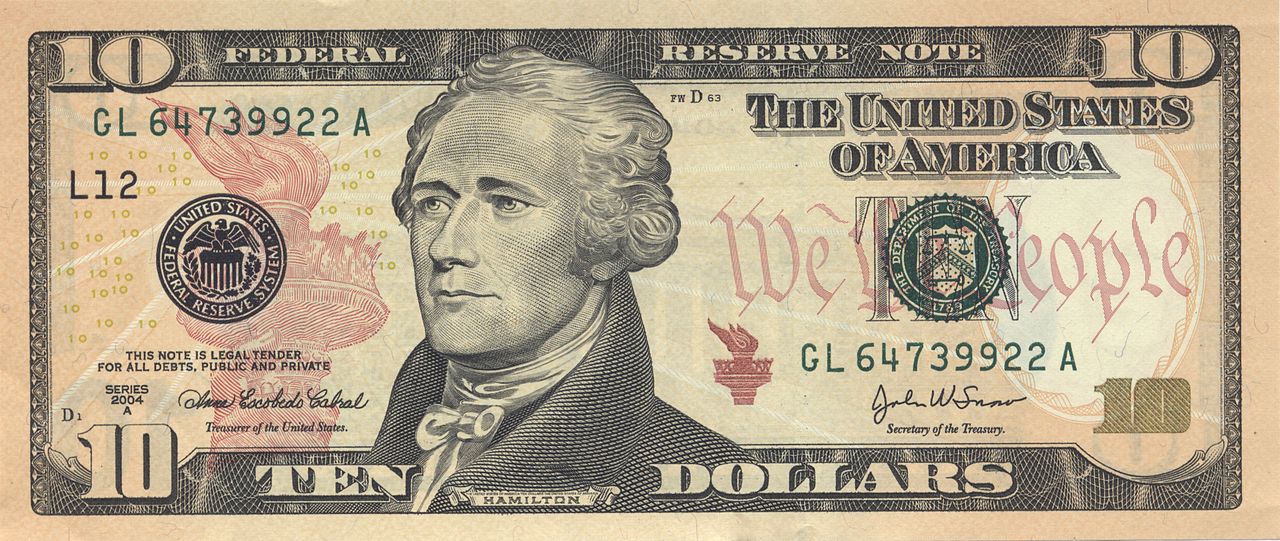
“Ten Bucks”

“I have the right to do anything,” you say—but not everything is beneficial.“I have the right to do anything”—but not everything is constructive.
1 Corinthians 10:23 (NIV)

About 20 years ago there was a television show called Ed. It was a rom-com series about a young man who moves back to the small town where he was raised after his life falls apart. He reconnects with old friends and tries to get his life back together. It was an endearing show and ran for four seasons.

There’s a running gag in the show in which Ed and his best friend Mike have an on-going series of dares that they compete to win “ten bucks.” These guys do the craziest things to win “ten bucks” from each other. I still can’t hear the term “ten bucks” without thinking of Ed and Mike (kind of like I can’t hear “two dollars” without thinking of the paperboy in Better Off Dead).

I never enter pools. It doesn’t matter if it’s March Madness or when the ice will melt off the local pond and dump the old clunker to a watery grave. I don’t have anything against pools and lottery type games. I think I’m just a pessimist at heart and assume I’m going to lose my money. I just never do it. It is, therefore, somewhat strange that before the holidays began I entered a simple pool at my local CrossFit box.  You put in $10 and weigh in. After New Year’s there is another weigh in and those who maintained or lost weight during the holidays get their $10 back and split the money of all those who gained weight.

It’s been interesting as we’ve journeyed through the holidays that I can’t get that “ten bucks” out of my head. At every meal, at every Christmas gathering, and when I’m reaching for that second piece of Wendy’s peanut butter chocolate chunk cheesecake I keep thinking about my “ten bucks” hanging out there in the balance.

Along my journey I’ve come to realize that a lot of individual life problems I see in myself and those all around me boil down to some type of appetite indulgence. We indulge our appetites for all sorts of things like power, control, greed, rest, food, sex, adrenaline, vanity, accomplishment, applause, “Likes,” and pleasure. We indulge these normal appetites for all sorts of insidious reasons and the results of our out-of-control indulgence are generally not healthy.

The holidays are a great excuse for most everyone to indulge our appetites. Enjoying good food, good drink, rest, and relaxation with family and friends is a good thing. At the same time, too much of a good thing easily becomes an unhealthy thing. There’s a reason why New Year’s resolutions come annually after five weeks of holiday indulgence.

In Paul’s letter to the followers of Jesus in Corinth, Paul continues to address a simmering conflict between two factions. Some on the legalistic killjoy end of the spectrum were against eating any meat that had been sacrificed at a pagan temple. Those on the open-minded, permissive end of the spectrum saw no issue with the practice. The latter were quick to say “I am free to eat whatever I want!

Paul’s response is a great example of choosing the “both, and” rather than the “either, or.” He makes the point that while everything may “permissible”  (i.e. a little holiday indulgence), not all things are “beneficial” (i.e. I gained so much weight I need to make a New Year’s resolution). In the case of the bickering factions in Corinth, Paul reminds them that the beneficial thing for the good of the community is to consider your friend’s conscience a higher priority than either my personal freedom or my personal convictions.

In the quiet this morning I’m thinking about my own appetites. I’m thinking about the holidays (still at least four gatherings to go), and I’m thinking about how a silly “ten bucks” has changed my thinking and behavior this holiday season. The question I’m asking myself this morning is: Is a friend’s conscience worth more to me than ten bucks?