Tag Archives: Jeremiah 7

The Smorgasbord of Words I Want to Hear

Smorgasbord of Words I Want to Hear (CaD Jer 7) Wayfarer

“But look, you are trusting in deceptive words that are worthless.”
“Truth has perished; it has vanished from their lips.”

Jeremiah 7:8, 28 (NIV)

I walk this earthly journey in fascinating times.

With the dawn of the internet age, I have access to more words, information, and voices than any human being has ever experienced in history. It’s instantly accessible through the phone in my hand every minute of every day. With this phone I can constantly read and listen. Often when I can’t sleep I will stick an AirPod in my ear and listen to a voice reading a favorite story. Last week I woke up and remembered that, in my dream, there were two boys who amazed me because they were quoting long passages of one of my favorite stories from memory! The words from my phone, through my ear, were being regurgitated through my brain into my dreams.

As I stop to consider this amazing reality, I also observe that few people seem to be considering how this is changing our lives. Parents are concerned about screens, of course. Sociologists and experts are studying it, writing papers and books, and publishing articles. But any words or information posted, published, tweeted, or spoken now competes with all the information and entertainment available to every individual on the phone in their hand. Every person can listen and endlessly read whatever they desire. I think about this every morning when I hit the “Publish” button on these posts like a sower sowing his seed. How do you compete against the unlimited number of options every human being has at their fingertips?

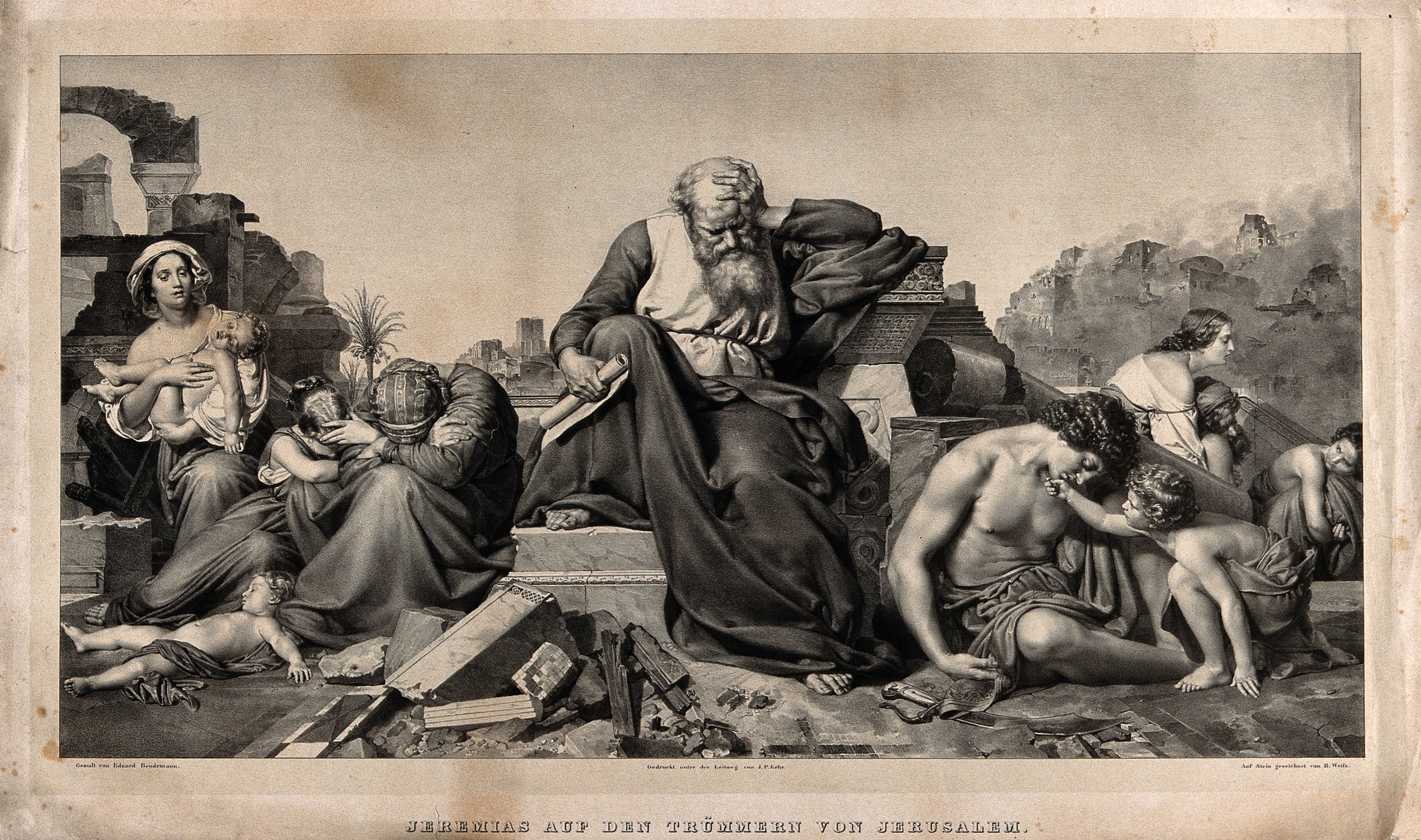
As I read today’s chapter, the words of the ancient prophet Jeremiah felt eerily prescient to these fascinating times. He stood at the entrance to God’s Temple in Jerusalem and proclaimed the words God had given him. He did this even as God told him, “When you tell them all this, they will not listen to you.”

I find it fascinating that in a time when we have more information at our fingertips than could have been been imagined just a generation ago, I observe the actual denial of facts and truths that have not been questioned in the history of humanity. With this unprecedented access to more words and knowledge I would think that profitable conversation and productive discourse would flourish. Instead, I observe in our culture the demand to abolish discourse, debate, and the free exchange of ideas under the misguided notion that words are hurtful and disagreement is violence.

Just this morning I read these words from a professor at one of the nation’s large universities. The academic described his observations of colleagues who:

“…work desperately to remain in a state of denial, not to think about the obvious. The exhausting labor of self-deception pushes them into more extreme behavior. Just as lies beget lies, self-deceptions metastasize into new self-deceptions.”

Please don’t read what I’m not writing. It’s the spiritual issues of my observations that are stirring my mind and soul in the quiet this morning. It is a spiritual matter that Jeremiah pokes at and that Jesus would address hundreds of years later. Those who have eyes don’t actually see. Those who have ears don’t actually hear. Simple truths are hidden from the “wise and learned” while perfectly understood by a mere child. Knowledge doesn’t lead to truth, but deception. As God said in today’s chapter through Jeremiah: “Instead, they followed the stubborn inclinations of their evil hearts. They went backward and not forward.”

Immediate access to a smorgasbord of information, words, and voices does not necessarily lead to my increased knowledge or wisdom. It can also lead me to an intoxicating indulgence in only those voices, words, and ideas that affirm my darkest and most unhealthy inclinations. They can facilitate in me the same thing that tripped up Adam and Eve; I can be like God so as to create my own reality. I can easily follow my appetite for self-deception and self-justification by gluttonously feeding on an endless stream of affirming words and voices to the point that any words or voices of dissent become unbearable and send me repeatedly back to the buffet of voices who will tell me exactly what I want to hear and call it truth. As they do, they proclaim that doing so is loving, caring, kind, and good.

No matter how much the internet age has changed my access to information, words, and voices, what has never changed since the days of the ancient prophet Jeremiah is the human condition.

If you know anyone who might be encouraged by today’s post, please share.

Prophets, Poets and a Touch of Madness

“Cut off your hair and throw it away; take up a lament on the barren heights, for the Lord has rejected and abandoned this generation that is under his wrath.”
Jeremiah 7:29 (NIV)

There was a fascinating story on CBS Sunday Morning yesterday talking about the connection between creativity and mental illness. There is no doubt that there is a disproportionate number of genius artists, writers, and musicians who struggled with some form of mental condition. Observations of the connection between genius and madness date back to Aristotle, though it’s only been in recent years that the connection has been seriously studied.

As we watched the story Wendy wondered aloud if there isn’t also a disproportionate number of creatives who would be considered Type Four on the enneagram. I would bet that she is right. Creativity often springs from the inherent individuality and expression  natural to Fours.

These thoughts were swimming in my head as I read this morning’s chapter. It begins the transcription of a message God gave to Jeremiah in order that he stand at the gate of the Temple in Jerusalem and proclaim the message. The ancient prophets were often standing in the crowds shouting messages from God.

Amidst the message Jeremiah reports God telling him to shave off his hair and take up the wailing songs and prayers of lament on the “barren heights.” This was another mark of the ancient prophets: acts that today we would call “performance art” (some simple and others quite complex) that God regularly prescribed the prophets to act out in public.

I find that most modern believers approach the prophets with a certain amount of reverence that translates into a white-washed perception of them. Just as Van Gogh sold just one painting in his lifetime, so the prophets were not particularly well received in their day. Only in 20/20 hindsight have their words and reputations been scrubbed clean by institutional religion. As I said before, they were an odd lot. They were often despised and marginalized. They were the sketchy characters from whom parents likely shielded their children:

Mommy? Who’s that strange man over there walking naked and tied to an ox yoke?

Pay no attention, sweetie. Stay away from him. He’s just a crazy old man.”

The prophets were hated, especially by the political-religious class who were commonly the targets of their public, prophetic tirades. The prophets were targeted for assassination and killed by the power brokers of their day. Even Jesus testified to this truth when He confronted the political-religious leaders of His day:

“Woe to you, teachers of the law and Pharisees, you hypocrites! You build tombs for the prophets and decorate the graves of the righteous. And you say, ‘If we had lived in the days of our ancestors, we would not have taken part with them in shedding the blood of the prophets.’ So you testify against yourselves that you are the descendants of those who murdered the prophets. Go ahead, then, and complete what your ancestors started!

“You snakes! You brood of vipers! How will you escape being condemned to hell? Therefore I am sending you prophets and sages and teachers. Some of them you will kill and crucify; others you will flog in your synagogues and pursue from town to town. And so upon you will come all the righteous blood that has been shed on earth, from the blood of righteous Abel to the blood of Zechariah son of Berekiah, whom you murdered between the temple and the altar. Truly I tell you, all this will come on this generation.

“Jerusalem, Jerusalem, you who kill the prophets and stone those sent to you….”

This morning I’m thinking about creativity and its connection to oddity. I’m thinking about God’s use of those odd, strange, mad individuals among us who see what the mainstream doesn’t and express what the mainstream can’t, won’t, and/or doesn’t desire to hear. Prophets, artists, and poets stand as reminders what God said through the prophet Isaiah: “My thoughts are not your thoughts, neither are my ways your ways.”

Chapter-a-Day Jeremiah 7

Loop 101 and Interstate 17 Interchange (3)
Image by squeaks2569 via Flickr

“Tell them all this, but don’t expect them to listen. Call out to them, but don’t expect an answer.” Jeremiah 7:27 (MSG)

Jesus said that the path that leads to life is a narrow footpath, the way is difficult, and few find their way onto its trecherous terrain. Other other hand, Jesus said the path to death is a superhighway with plenty of spacious on-ramps. Most people find their way to it because it’s always easy to go with the flow of traffic and most people prefer to hit the interstate, hit the cruise control, and go where everyone else is going.

The Road Not Taken

Two roads diverged in a yellow wood,
And sorry I could not travel both
And be one traveler, long I stood
And looked down one as far as I could
To where it bent in the undergrowth;

Then took the other, as just as fair,
And having perhaps the better claim
Because it was grassy and wanted wear,
Though as for that the passing there
Had worn them really about the same,

And both that morning equally lay
In leaves no step had trodden black.
Oh, I marked the first for another day!
Yet knowing how way leads on to way
I doubted if I should ever come back.

I shall be telling this with a sigh
Somewhere ages and ages hence:
Two roads diverged in a wood, and I,
I took the one less traveled by,
And that has made all the difference.

Robert Frost

Enhanced by Zemanta