Tag Archives: Strike

Dirge for the “Indispensable”

Dirge for the “Indispensable” (CaD Ezk 27) Wayfarer

“‘The merchants among the nations scoff at you;
    you have come to a horrible end
    and will be no more.’”

Ezekiel 27:36 (NIV)

Just a week or so ago, the United States was threatened with a strike by the longshoremen’s union which controls all of the ports around our nation’s coasts. The strike was quickly postponed while sides negotiate a settlement, but it did give a hint of how badly a strike could cripple supply lines and the availability of products across the nation. Union leaders bragged at their power to cripple the nation and bring us to our knees:

“I will cripple you and you have no idea what that means...First week, it will be all over the news — boom, boom, boom. Second week, guys who sell cars can’t sell cars because the cars ain’t coming in off the ships. They get laid off. Third week, malls start closing down. They can’t get the goods from China. They can’t sell clothes. They can’t do this. Everything in the United States comes on on a ship. They go out of business. Construction workers get laid off because the materials aren’t coming . The steel i s not coming in. The lumber is not coming in. They lose their jobs.
Harold Daggett as quoted by Quartz

The ancient nation of Tyre had a similar hubris. Because of their location on the Mediterranean, they were an essential trade port at the gateway to Mesopotamia. They did business with everyone and their trade ships went everywhere. Scholars argue that the King of Tyre was actually limited in power because Tyre had a cabal of powerful, wealthy oligarchs who wielded power in incense-filled rooms behind the throne. Tyre bragged of its beauty, its power, and its wealth. They believed themselves and their trade indispensable to the nations and therefore believed themselves untouchable.

Enter the prophet Ezekiel.

Today’s chapter is actually the lyrics to another funeral dirge. He used this same metaphorical device back in chapter 19 to lament the princes of Israel. This time, Ezekiel pens a City Lament. City Laments were a popular literary genre in ancient Mesopotamia. When a city was destroyed along with the temple of its patron deity, a City Lament would be written describing the siege, the destruction, along with an appeal for repentance and protection from the “council of gods” that will allow the city to be rebuilt.

Ezekiel writes a funeral dirge and City Lament for the nation of Tyre while she sat very much alive, fat, and sassy on the coast. Ezekiel’s contemporaries would probably have considered the dirge a bit of insane hubris on Ezekiel’s part to pen the song. No one believed that they would be touched. Their trade was too essential to too many national economies.

But as the Proverb says, “Pride goes before destruction, a haughty spirit before a fall.”

Tyre would fall just as Ezekiel pronounced.

In the quiet this morning, I find myself reflecting on a funeral that Wendy and I attended yesterday for a friend and colleague. It was one of those sudden and unexpected deaths. He just retired and had all of his golden years ahead of him. He seemed to be in great health. Then came a shocking diagnosis followed by a tragically rapid descent.

I have observed along my life journey that individuals’ hearts and minds tend to be more open to matters of the Spirit when there’s a dead body in the room.

Ezekiel’s lament was a warning to Tyre, but it’s really a warning to me, too. I don’t know what will happen today or tomorrow, of if I even have a tomorrow on this earth. It is hubris and human pride to assume differently.

I enter this day with the lyrics of another ancient song, penned by Moses, rattling around in my soul:

“Teach us to number our days, that we might gain a heart of wisdom.”

If you know anyone who might be encouraged by today’s post, please share.

Micro Aggressions; Macro Issues

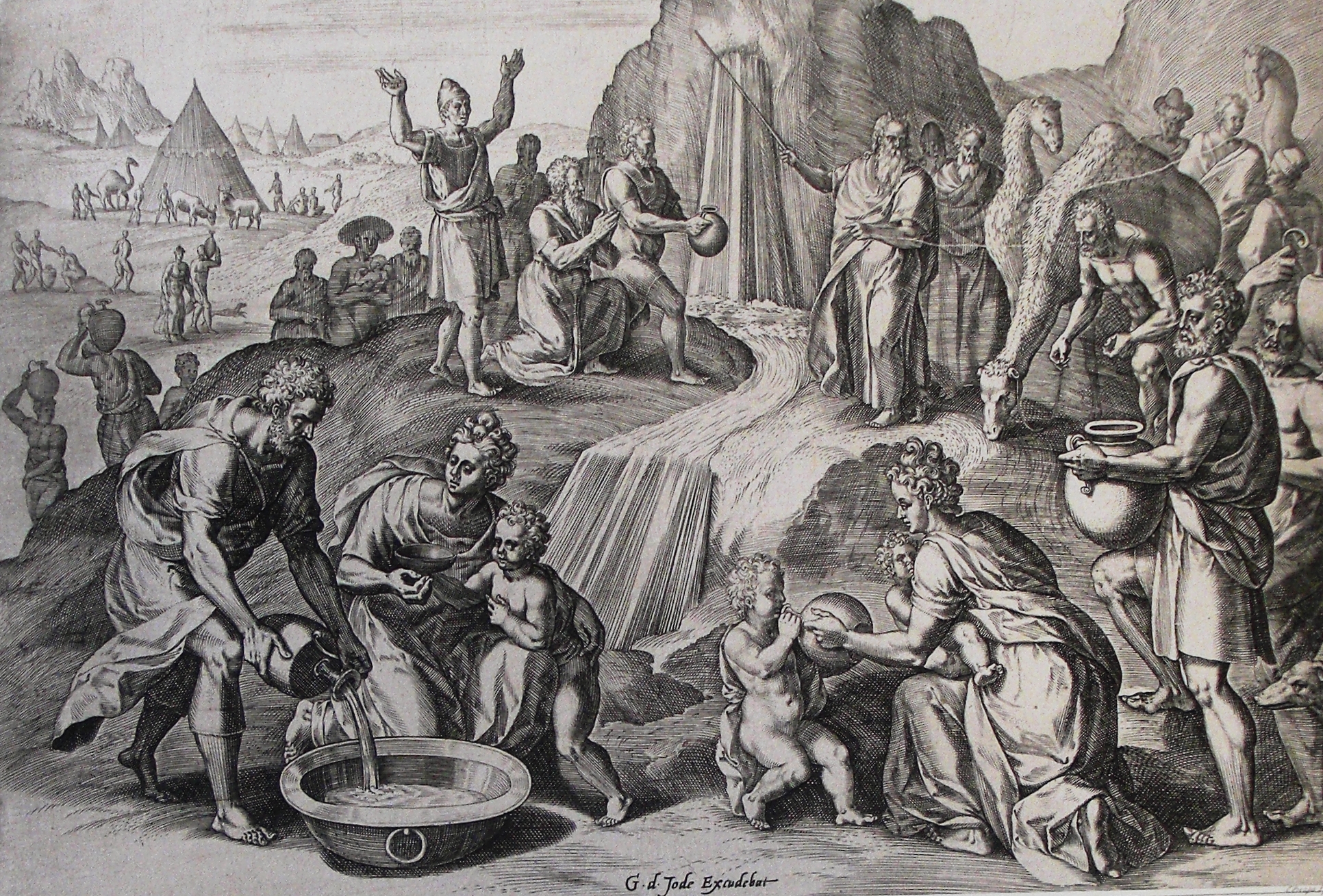
The Lord said to Moses, “Take the staff, and you and your brother Aaron gather the assembly together. Speak to that rock before their eyes and it will pour out its water. You will bring water out of the rock for the community so they and their livestock can drink.”

 Then Moses raised his arm and struck the rock twice with his staff.
Numbers 20:7-8, 11a (NIV)

I’m currently doing character study for a play my friend and I are producing next year entitled Freud’s Last Session. The script is a “What if?” play that imagines an ailing Sigmund Freud inviting a young C.S. Lewis for a visit in his study in London. Freud escaped Nazi Germany to England where he worked and lived out the end of his life. The play is set on the day Britain entered war with Germany. The two intellectuals match wits for an hour on matters of life, death, faith, and the impending war.

In the play Freud makes an argument against Hitler’s use of Christianity and religion to support his fascist regime. Lewis concedes that the institutional church is an easy target. History is filled with evil done in the name of God.

The truth is, however, that what is true on a macro level (e.g. the institutional church in Germany supporting Hitler’s evil regime) can also exist on the micro level (e.g. me doing the wrong thing and cloaking it in spiritual motives). I have no control over the macro level concerns of the institutional church, but I do control my own thoughts, words, and actions.

In today’s chapter, the Hebrew tribes are once again in grumbling mode. The wayfaring nation is camped in the desert and there is no good water source. A couple million people wandering in the desert require a lot of water to survive. Let the rebellion commence.

Per the systemic pattern that’s been well established at this point, the people’s grumbling complaints prompt Moses and Aaron to go before God and throw themselves on the ground in exasperation. Also well established by this point is the fact that God has proven to come through with provision when the survival of the people is at stake. God tells Moses to “speak” to a rock there in the camp and it will miraculously produce flowing water.

Moses, however, goes on a bit of a rant against his grumbling people and “raises his hand” to strike the rock. In his rage Moses strikes the rock not once, but twice.

Moses actions are a micro level spiritual problem with macro implications. God was very specific about speaking to the rock. Moses lost his temper and went postal on the thing. My first impression is that it seems a small matter for God to get upset about, but as every psychologist knows micro aggressions hide macro issues. As Freud explains to Lewis in Freud’s Last Session, what his patients tell him is not as important as what they don’t.

This morning I’m doing a little spiritual inventory. Are there places in my life where I’m striking when God has directed me to speak? Are there places in life in which I’m speaking or acting for my own self-centered motives and cloaking under a guise of “doing it for the Lord”?