Tag Archives: Cubs

Not Without Struggle

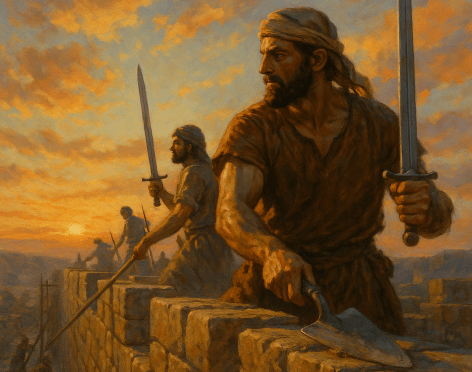
Meanwhile, the people in Judah said, “The strength of the laborers is giving out, and there is so much rubble that we cannot rebuild the wall.”
Nehemiah 4:10 (NIV)

It’s October, which means post season baseball. Alas, our beloved Cubs made it to October this year but they didn’t have what they needed to get past the Division Series. C’est la vie.

Of course, the World Series will now and forever bring back memories of 2016, the year the Cubs broke their 108 year World Series drought and all of the legendary curses. For the most part, I remember that final out and the joy of that moment. A few weeks ago I watched the documentary of the World Series that year and spent some time remembering the Cubs’ journey through the entire post season.

It brought back a memory of lying in bed after the Cubs lost one of the play off games. I had descended into one of my brooding puddles of pessimism. Wendy, ever my life guard when I’m at risk for drowning in that puddle, quietly reminded me that great stories always have moments when things look darkest. It’s in overcoming the struggles that great stories are made. As I recounted all of the struggles of that post season and the World Series saga, I was reminded of just how many there were.

That came to mind this morning as I read today’s chapter. Nehemiah’s project of rebuilding Jerusalem’s walls is in full swing. Today’s chapter is all about the struggle from without and within. They are surrounded by enemies who don’t want Jerusalem rebuilt. Those enemies join forces and plot to attack and stop the project. They are insulted, jeered, and mocked. There is a constant threat of attack both night and day. At the same time, the people are getting worn out from the constant labor required. The excitement has worn off and the long slog is taking its toll on everyone. As I read the chapter I could feel the fear, the weariness, the discouragement.

If I were standing in Nehemiah’s sandals, I would be descending into. a brooding puddle of pessimism. But Nehemiah was the right man for the job. The first thing he always did was pray. He then forged a plan for continuing the work while defending the project both night and day. He created a system of alarm and a plan of action should the city be attacked. He continued to prayed constantly and he repeatedly encouraged everyone to trust God to both defend them and provide what was needed to see the project through.

I mentioned in yesterday’s post/podcast that every human endeavor of which I’ve been a part has encountered some kind of challenge, obstacle, and/or opposition. I sometimes wonder why I’m ever surprised by this. We are part of the Great Story, and Wendy’s observation holds true. There is no great story without conflict and struggle. It’s what makes the climactic final chapter so powerful.

I find myself thinking through the challenges and struggles I’m currently facing at work and in life. Nehemiah’s example feels a simple and apt reminder. Pray, plan, work the plan, and keep reminding myself of God’s eternal promises.

Time to get back to it. Have a great day, friend.

If you know anyone who might be encouraged by today’s post, please share.

Promotional graphic for Tom Vander Well's Wayfarer blog and podcast, featuring icons of various podcast platforms with a photo of Tom Vander Well.
These chapter-a-day blog posts are also available via podcast on all major podcast platforms including Apple, Google, and Spotify! Simply go to your podcast platform and search for “Wayfarer Tom Vander Well.” If it’s not on your platform, please let me know!
An orange icon featuring an open book symbol, representing a Bible or scripture resource.

Of Appointees & Crowds

Very early in the morning, the chief priests, with the elders, the teachers of the law, and the whole Sanhedrin, made their plans. So they bound Jesus, led him away and handed him over to Pilate.
Mark 15:1 (NIV)

For sports fans, December is a busy month. Of course, there are all of the college bowl games and the NFL season comes to climactic end as teams scramble for a playoff spot. Yet, even in baseball there are a flurry of off-season trades sparked by the MLB’s winter meetings. Wendy and I have been keeping tabs on several trades our beloved Cubs have made this past week.

As much as fans hate it, trades are part of the business in sports. Every team has legendary trades that fans talk about decades after the fact. Some are positive, but the ones that tend to live on in legend are the trades that produced the deepest scars. For Cubs fans it’s the trading of Hall of Famer Lou Brock to our rival Cardinals. For Vikings fans, its the trade we made with the Dallas Cowboys for Hershel Walker. That trade helped set up the Cowboys for a Super Bowl and relegated the Vikings to continued, perpetual mediocrity.

Hershel Walker made news in recent days. He’s been appointed the U.S. Ambassador to the Bahamas. It’s not surprising. Ambassadors are appointed by Presidents and it’s how Presidents reward followers and loyalists. Lots of banquets, meetings with visiting dignitaries, and for Hershel, I imagine colorful drinks with little umbrellas on the beach.

This came to mind this morning as I pondered one of history’s villains, Roman Governor Pontius Pilate. The truth is that being a Roman Governor was also a political appointment, and Caesar doled them out like a President doling out Ambassadors. It wasn’t what you knew, it was who you knew that got you appointed a Roman Governor. Governors had two basic jobs: Keep the tax money flowing freely and generously to Rome, and maintain order. For Pilate, the latter was his greatest concern. Judea was a powder keg of Hebrew rebels and insurrectionists bent on driving the Romans out. Pilate’s life, financial well-being, and political reputation back in Rome hinged on maintaining order.

The Chief Priests were not stupid. Their ascent to and hold on the power and wealth of the Temple racket required political savvy. They needed Pilate to give the execution order of Jesus, because under Roman occupation he was the only one with the authority to do so. With their trumped up charges they made Jesus out to be a threat to Rome. Their hastily produced protest with a crowd calling for Jesus’ crucifixion, they applied maximum political pressure right where it would have maximum impact with the Roman Governor. Pilate, the tenuous political appointee, knew he was being played, but the cost of making the right decision and releasing an innocent man was outweighed by the personal political cost of making an unpopular decision with the crowd of constituents that were screaming at him.

One of the things that I’ve noticed in this chapter-a-day trek through Mark is his repeated reference to “crowds.” Thirty-four times in 16 chapters, Mark mentions the “crowd.” He is clear to mention that the Chief Priests were afraid of the crowd. He mentions in today’s chapter that Pilate was motivated to satisfy the crowd.

And that has me meditating in the quiet this morning. As human beings, the crowd continues to have a tremendous impact on lives, culture, and personal decisions. Individuals refuse to speak truth, or their objections to prevailing ideologies, to avoid getting cancelled. People follow the crowd trending online like a herd of sheep as fads emerge from influencers. Doing the right thing is sacrificed time and time again on the altar of doing the politically correct thing. I don’t think Pilate was so much a villain as he was like any normal human being who chases after power, authority, status, and influence. You’re always going to do what is best for you in any given situation.

Which is an interesting contrast to Jesus as He stands before this mid-level Roman, political appointee. According to Roman law, if a defendant refuses to make a defense, Pilate had to find him guilty. With His silence, Jesus is actively choosing His fate. Why? Because He is choosing to do the right thing for all of humanity. He is choosing to be obedient to His Father’s will. He is sacrificing Himself pay sins penalty for all, for me. He is choosing to exemplify the attitude and actions He wants me to exemplify in my own daily thoughts, words, actions, and choices.

And so, I endeavor today to once again follow Jesus teaching and example, even if it means going against the current of the crowd.

I hope Hershel Walker avoids having to make critical Pilate-like political decisions as U.S. Ambassador to the Bahamas. Enjoy the beach, Hershel!

If you know anyone who might be encouraged by today’s post, please share.

These chapter-a-day blog posts are also available via podcast on all major podcast platforms including Apple, Google, and Spotify! Simply go to your podcast platform and search for “Wayfarer Tom Vander Well.” If it’s not on your platform, please let me know!

Shooting the Messenger

Shooting the Messenger (CaD Jer 4) Wayfarer

Circumcise yourselves to the Lord,
    circumcise your hearts…

Jeremiah 4:4a (NIV)

“Yet the first bringer of unwelcome news
Hath but a losing office…”

Shakespeare, Henry IV (Part 2)

As Wendy and I drove down to the lake yesterday, I listened to the Cubs’ Spring Training game against the A’s. The regular season starts next week and this is the time of year when baseball prophets and prognosticators predict which teams will contend for the postseason and World Series this year. Like most fans, I like to hear “experts” giving me hope for a winning season and the potential of watching my team play in October. I equally despise hearing “experts” giving doomsday predictions of another season of being the doormat of our division rivals no matter how accurate they might be. I shut them off. I tune them out. I refuse to listen. And, if I’m honest, I don’t like them very much.

No one likes the bearer of bad news. “Shooting the messenger” is a commonly used metaphor. It is rooted in sentiments by Plutarch and Sophocles. Shakespeare used it in two of his plays.

The ancient Hebrew prophets were not particularly popular in their day. You’ll find that Jeremiah will face a fair amount of persecution as we trek through his writings and story. His prophetic prognostications are almost always bad news. Even Jesus lamented, “Jerusalem, Jerusalem, you who kill the prophets and stone those sent to you…” (Luke 13:34). The Hebrews gained a reputation for “shooting the messenger” when it came to the doomsday prophets God sent their way.

Get ready. Jeremiah has a lot of doom and gloom to proclaim, starting with today’s chapter.

Among the things I find most fascinating about the ancient Hebrew prophets is the way they connect to one another, and the way they foreshadow what’s to come in the Great Story in ways they could never have known.

In our recent chapter-a-day trek through Daniel, we read one of Daniel’s visions in which the coming succession of empires was represented by different beasts. The Neo-Babylonian empire that had taken Daniel into captivity was represented metaphorically as a lion (Daniel 7:1-4). In today’s doomsday message for the people of Judah, Jerry writes:

A lion has come out of his lair;
    a destroyer of nations has set out.
He has left his place
    to lay waste your land.

The lion in Jeremiah’s prophetic poem is the same lion in Daniel’s vision. Jeremiah is recording the message in today’s chapter sometime around 620 BC. The events he’s accurately described will tragically take place 40-50 years later. Of course, no one wants to hear this.

When Jerry tells the people of Judah and Jerusalem to “circumcise your hearts,” he is foreshadowing a tectonic shift that Jesus would usher in some 600 years later. The Hebrews of Jerry’s day thought they were in good standing with God simply because they were “God’s people” as evidenced by their heritage, DNA, and traditional physical signs such as circumcising males. But this was exactly the point God is making through prophet Jerry. Just being a member of the tribe was never the point. It is from the heart that our motives give birth to action. Having a circumcised penis is simply a physical sign. God is looking for a spiritual sign, a circumcised heart. Jesus said as much:

“For where your treasure is, there your heart will be also.”
Matthew 6:21 (NIV)

“Don’t you see that whatever enters the mouth goes into the stomach and then out of the body? But the things that come out of a person’s mouth come from the heart, and these defile them. For out of the heart come evil thoughts—murder, adultery, sexual immorality, theft, false testimony, slander.” Matthew 15:17-19 (NIV)

Just as Jeremiah was persecuted for his words, Jesus would be persecuted and executed for His.

The apostle Paul would make this same argument in his letter to Jesus’ followers in Rome:

“A person is not a Jew who is one only outwardly, nor is circumcision merely outward and physical. No, a person is a Jew who is one inwardly; and circumcision is circumcision of the heart, by the Spirit, not by the written code. Such a person’s praise is not from other people, but from God.
Romans 2:28-29 (NIV)

Just as Jeremiah and Jesus were persecuted for their words, Paul would be persecuted and executed for his.

I promise to have mercy on those prophets who are predicting another losing season for the Cubs. They could well be right. In the same vein, I ask mercy, dear reader, for anything I write that you don’t like. “Blessed are the merciful, for they will be shown mercy.”

Please don’t shoot the messenger! 😜

If you know anyone who might be encouraged by today’s post, please share.

Smack-Talk

Where now is the lions’ den,
    the place where they fed their young,
where the lion and lioness went,
    and the cubs, with nothing to fear?
Nahum 2:11 (NIV)

When I was a younger man, I enjoyed being part of groups of friends who would compete in on-line pools in which we tried to pick which teams would win each week. I listened to a lot of sports radio while I was on the road. But, I grew weary of the constant braggadocio, belittling of others, and never-ending “smack-talk” in which people played this kind of verbal “king of the mountain.” They would gloat over the fans of the teams they hate, until the tables turned and the gloating went the other way. It was stupid. So, I still enjoy being a fan of my favorite teams, and I find it fun to casually follow them. Otherwise, I try to avoid the world in which sports is taken seriously.

That sub-culture of smack-talk in sports came to mind this morning as I read today’s chapter because Nahum’s entire prophetic poem is an ancient version of talking smack against his people’s greatest enemy, Assyria. Choose your favorite sport, Assyria was the big-market dynasty that never loses and has been dominant forever. Nahum is part of a small market team that had a few good seasons back in the day but has been nothing but a doormat ever since.

If a fan was going to talk smack against the New York Yankees, let’s say. You’d want to take well-known things about the Yankees and then turn them into negatives:

“The house that Ruth built will be reduced to rubble.”
“Black pinstripes will turn blood red when they are slaughtered.”
“Aaron will be ‘Judged’ and found wanting.”

That’s exactly what Nahum is doing with Assyria, thought it’s easily lost on modern readers.

When Nahum writes:

The Lord will restore the splendor of Jacob
    like the splendor of Israel,
though destroyers have laid them waste
    and have ruined their vines.

He’s alluding to Assyria’s earlier domination over the northern tribe of Israel and Assyria’s insult-to-injury tactic of destroying all of an enemy’s vines so that they will have no wine to drown their sorrows. Nahum is proclaiming that the little underdog will rise again, while the mighty dynasty of Assyria is coming down.

When Nahum writes:

The shields of the soldiers are red;
    the warriors are clad in scarlet.

He’s referencing a common Assyrian boast of their shields and robes dripping with their enemies’ blood. Nahum is turning the tables, saying it will be Assyria’s blood coating the shields and robes of their enemy.

When Nahum writes:

The river gates are thrown open
    and the palace collapses.

He’s referencing the network of reservoirs and irrigation canals in and around Nineveh. When the dams are opened the river floods, making the Nineveh palace weak and compromised.

When Nahum writes:

Plunder the silver!
    Plunder the gold!
The supply is endless,
    the wealth from all its treasures!

He’s referencing the incredible wealth of Nineveh which they hoarded by plundering other peoples. This time, it will be a conquering army that plunders all of their treasures. By the way, in the late 20th century the tombs of Assyrian queens were discovered. Click here to view an online book that catalogs the hoard of gold and treasures they found (scroll past page 220 or so to see the images). It gives you an idea of the treasure that awaited those who conquered Nineveh.

When Nahum writes:

Where now is the lions’ den,
    the place where they fed their young,
where the lion and lioness went,
    and the cubs, with nothing to fear?

Ashurbanipal defeating a lion.

He’s alluding to the fact that Assyrian kings were closely associated with lions. Ashurbanipal, who was likely on the throne as Nahum is writing, was often depicted with lions or hunting lions. Statues of him always show him holding a lion. Nahum is saying that “the lion’s den” of Nineveh will be desolate after their defeat.

In the quiet this morning, I can’t help but think about how hollow Nahum’s smack-talk must have sounded when he wrote it. No one could have imagined Assyria’s defeat, and Nahum would have been laughed at and mercilessly derided for suggesting such a thing.

But, he was right. He might not have been right in the moment, but he saw the handwriting on the wall. He would be proved right in time.

That’s the way it is as a follower of Jesus. Having faith in justice and believing that the Great Story will unfold as prophetically predicted rings hollow for most people. You can find plenty of people who laugh and shake their heads. And, it neither surprises me nor do I ever think that will change. Still, I believe that justice will prevail one day and that Love wins, just as Jesus claimed it would.

But hey, I’m a Cubs fan. I’ve learned that “someday” does actually arrive.

If you know anyone who might be encouraged by today’s post, please share.

Of Traditions

Of Traditions (CaD Ps 124) Wayfarer

Our help is in the name of the Lord,
    the Maker of heaven and earth.

Psalm 124:8 (NIV)

Here’s a little trivia for you: The now almost requisite playing of the Star-Spangled Banner at sporting events dates to 1918 at the first game of the World Series between the Cubs and the Red Sox. The series almost didn’t happen that year because so many Americans were across the Atlantic fighting in World War I. Fred Thomas, the Red Sox’ Third Baseman, and furloughed U.S. sailor got up during the seventh inning stretch and sang a moving rendition of the Star-Spangled Banner. At that point, it wasn’t even the national anthem (that happened in 1931). It was so moving that it became a seventh-inning-stretch staple. During WWII, technology allowed for the anthem to be played by recording and it was moved from the seventh inning stretch to before the ball game. Other sports followed.

Obviously, the anthem has been a point of tension in recent years. It’s just interesting to me to realize that there were many decades of professional baseball when that the tradition didn’t exist. I find it fascinating how traditions can become so important to us as human beings, whether those traditions are religious, civic, social or familial. Messing with traditions can create major disruption in any human system.

I thought about the national anthem as I read today’s chapter, Psalm 124. The lyrics of this Hebrew pilgrim’s song read like a community anthem reminding the traveler of God’s blessing on their nation and deliverance from many enemies. The lyrics basically read like a national anthem for the Hebrew nation, and thinking of it being a tradition for Hebrew pilgrims to sing it while on pilgrimage to Jerusalem makes me think that it’s not that much different than the Star-Spangled Banner before every ballgame, or singing God Bless America at the ball game on Sunday.

When the songwriter of Psalm 124 penned “the flood would have engulfed us” the imagery was that of a dry river bed that fills up suddenly during seasonal rains and creates devastating flash floods. It’s a metaphor for the warfare and pillaging attacks that happened seasonally, just like the rains.

The song is structured for the first stanza to be sung by an individual leader, describing what would have happened had God not been with them. The second stanza is sung by all the people, praising God for deliverance from their nation’s enemies.

I find myself meditating on traditions in the quiet this morning. Wendy and I even talked about the season of Lent which our local gathering of Jesus’ followers is in the midst of celebrating. Lent is a tradition of followers of Jesus that goes back as early as 325 AD. There is nothing written in the Great Story in regard to it and there’s no requirement to celebrate it in any way. It’s simply a tradition that annually connects followers to Jesus’ story. That’s the way I’ve personally always approached Lent and every human tradition for that matter.

I’ve observed along my life journey that traditions can be a great way to remind a group of human beings about any number of things we find important from gratitude, to sacrifice, to history, and to matters of Spirit. I’ve also observed that when traditions themselves become sacred to the human beings within the system, then the meaning of the tradition can often be lost. The reason behind the tradition sometimes loses focus or potency as the tradition itself becomes the focus of the human system that holds it. I have experienced that the breaking of certain traditions has been a spiritually healthy thing for me personally. I have also found that rediscovering lost traditions, that may have needed to go away for a time, can be equally as healthy to my spiritual journey.

Play Ball

Have no fear of sudden disaster
    or of the ruin that overtakes the wicked….

Proverbs 3:25 (NIV)

FYI: Major League Baseball players have reported for Spring Training. It is something that never goes unnoticed on my calendar. As an Iowan who annually guts out a long, cold winter (it was sub-zero when I left for cross-fit this morning) the start of Spring Training is the first reminder that winter’s days are numbered. As a Cubs fan, the opening of Spring Training has traditionally marked the resetting of hope, in which “this year” could be the “next year” that we finally win the World Series.

Of course, it finally happened back in 2016. I enjoyed reliving that moment this past New Year’s as it was regularly listed as one of the past decade’s top stories in sports.

When you spend most of your life cheering for teams who never win the big game and fall short on a perennial basis, it’s easy to fall prey to pessimism. I have written on multiple occasions regarding the fact that I, as an Enneagram Type 4, can easily transform pessimism into an art form. So, when the Indians took the lead in the bottom of the 8th it seemed so natural and appropriate for the dark clouds to hover and the rain to break forth. Here we go again.

But the rain ended. The Cubs came back. It finally happened.

In today’s chapter, Solomon continues to share with his children the benefits of God’s wisdom. One of the benefits that he lists is not having to fear “sudden disaster” or “the ruin that overtakes the wicked.” This is essential encouragement for the artistic pessimist within. But I have also learned along my life journey that this does not mean that bad things won’t happen. In part, what Solomon is saying is that there are natural (and predictable) consequences of foolishness and wickedness that I don’t have to worry about if I act wisely and do/say what’s right. In addition, the Great Story provides example after example of God strengthening and sustaining those who seek Him even in the midst of incredible suffering.

It is absolutely miserable outside the window of my office. It’s frigidly cold. The wind is blustering, and the ground is covered with snow. But, I don’t have to let that feed my natural pessimistic nature. This will not last forever.

They are playing baseball in Arizona.

Play ball.

The Improbable Actually Happens

[The Assyrians] shouted it with a loud voice in the language of Judah to the people of Jerusalem who were on the wall, to frighten and terrify them, in order that they might take the city.
2 Chronicles 32:18 (NRSVCE)

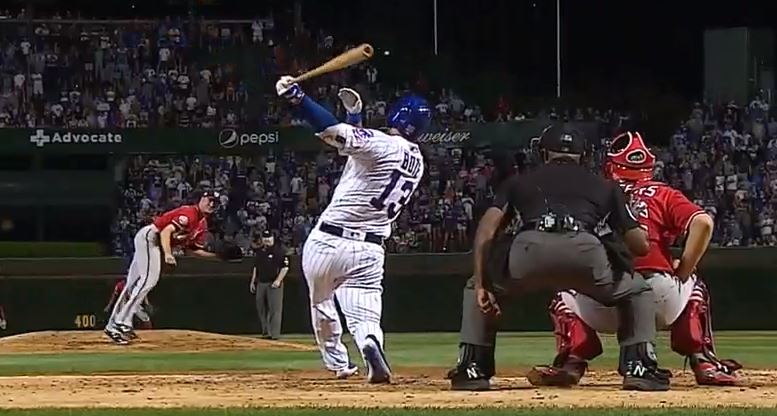
It’s such an improbable moment. Bottom of the ninth, two outs, bases loaded, and your team trailing by three runs. The grand slam to win the game. It actually happened on Sunday night when a Chicago Cub rookie named David Bote actually pulled off the improbable home run that every kid dreams about on the sandlot.

Sometimes the improbable happens. Jesus, who pulled off all sorts of improbable feats, reminded His followers that with God nothing is impossible, no matter how improbable.

Today’s chapter records one of the most improbable events in history. The Chronicler provides a condensed description of the events, which were more thoroughly told by the scribes who wrote the book of 2 Kings and by the prophet Isaiah.

The Assyrians of the ancient world were really bad dudes. They had taken warfare to a whole new level and made themselves fabulously powerful and wealthy by raiding, plundering, and decimating other nations. They were the first to use siege engines and had a corp of engineers who found all sorts of ingenious ways of breaching the walls of the cities they attacked.

The weapon the Assyrians used most effectively, however, was fear. They were heinously brutal in their treatment of conquered. They impaled people on spikes, skinned people alive, dismembered people, and burned others alive. The Assyrians discovered that the more brutal they were, the more fear they spread into the next cities on their campaign and the more fearful people were, the easier it was to defeat them.

In today’s chapter the Chronicler records another tactic the Assyrians used. They had a master manipulator who would stand outside the city walls and talk smack to the people inside in their own language, psychologically wearing them down with fear and intimidation. The Assyrian envoy loudly mocks King Hezekiah, mocks the Judeans, and mocks God.

Hezekiah stands firm. He reminds his people, “Be strong and of good courage. Do not be afraid or dismayed before the king of Assyria and all the horde that is with him; for there is one greater with us than with him. With him is an arm of flesh; but with us is the Lord our God, to help us and to fight our battles.”

The defeat of the Assyrians is an improbability bordering on impossibility. Jerusalem didn’t have the defenses to withstand a siege. The Assyrians were on a roll. They were better equipped, more experienced at war, and had everything in their favor. It’s the bottom of the ninth, two outs, and King Hezekiah is down to his last strike.

And then the improbable happened. The entire Assyrian army encamped around Jerusalem dies overnight. Historians to this day argue about what happened to the Assyrian army, but the improbable actually happened. Jerusalem was spared by the most improbable of events.

This morning I’m thinking about discouragement and fear. It’s so easy to get down and discouraged. I find myself bombarded in news media and social media with messages telling me to be afraid of everything. Everything is so bleak. There is so much to worry about. Things are so terrible, so awful,  and so hopeless. Ugh.

Today I’m encouraged by a grand slam and a historical event.

The improbable happens.

On a Brighter Note…

In the thirty-seventh year of the exile of Jehoiachin king of Judah, in the year Awel-Marduk became king of Babylon, on the twenty-fifth day of the twelfth month, he released Jehoiachin king of Judah and freed him from prison. He spoke kindly to him and gave him a seat of honor higher than those of the other kings who were with him in Babylon.
Jeremiah 52:31-32 (NIV)

Have you ever had one of those stretches of life’s journey in which seemingly everything that can go wrong does go wrong? Yeah, it’s been one of those.

I won’t bore you with all the details but the past two weeks have included a trip to the emergency room, stitches, illnesses, hospitalization of loved ones, multiple broken implements, breakdowns, and a cracked engine block. Ugh. Bob Dylan’s bluesy psalm Everything is Broken has been flitting through my head as I try to keep my bent towards pessimism in check:

Broken cutters broken saws
Broken buckles broken laws
Broken bodies broken bones
Broken voices on broken phones
Take a deep breath feel like you’re chokin’
Everything is broken

Anyone who has followed my posts for any length of time knows that I’m a baseball fan. And, every baseball fan knows that winning streaks and losing streaks are all part of “the long season.” When a team or player is in a funk, you’re waiting for that one clutch hit or amazing play that signals a turnaround. So it was last night that Wendy and I watched our beloved Cubs win on a two-outs-bottom-of-the-ninth walk-off grand slam by Jason Heyward.

<Watch the Grand Slam!>

I thought to myself, “Maybe this is a sign that this funk we’ve been in is over.” Hey, cut me a break. Baseball fans are superstitious. Rally caps work! (Sometimes.)

Today’s chapter is the last chapter in a long journey through the anthology of the ancient prophet Jeremiah’s messages. The unknown editor who put the anthology together concludes the book with a historical epilogue. Interesting enough, it’s almost a verbatim copy of a section from 2 Kings 24-25. It gives a Cliff Notes summary of the Babylonian exile and ends with a bright spot: King Nebuchadnezzar’s successor releases Judah’s King Jehoiachin from prison, raises him to a place of honor, and he remains there for the rest of his life.

In other words, a book full of pessimistic, apocalyptic doom and gloom ends with a base hit in the bottom of the ninth. “This game’s not over, folks,” the editor is telling us. Put on your rally caps!

This morning I’m mulling over life’s ups-and-downs. We all have them. They come and they go. Some weeks it feels like everything is flowing and you’re on a roll. Some weeks, well, everything breaks. C’est la vie. It is what it is. The further I get in my journey the more wisdom I have to know the winning streaks will eventually end, as will the losing streaks.

I just have to keep looking for that bright spot, that base knock, that reminds me this game’s not over.

Featured photo courtesy of the_matt via Flickr

“Harsh Realities”

“Do not suppose that I have come to bring peace to the earth. I did not come to bring peace, but a sword.”
Matthew 10:34

Follow me for any length of time and you’ll discover that I enjoy the game of baseball. One of the many reasons I enjoy baseball is the way the game metaphorically reflects life in so many ways.

In the narration of his great documentary about the game, Ken Burns speaks about the game beginning each season with the hope of spring, and ending each year with the “harsh realities of autumn.” How often life is like that. The optimistic young soldier ships out with his head filled of dreams of glory and returns with his spirit tempered by the realities of battle. A couple begins their marriage in the fog of romance, but soon find themselves living day-by-day facing the sacrificial requirements of love. Just months ago we celebrated Jesus’ birth with greeting cards chalk full of words about hope for humanity, joy to the world, and peace on earth. In a few weeks we will remember Jesus’ kangaroo court trial, torture, and gruesome execution. Death must come before resurrection can even be a possibility. That’s a harsh reality.

In today’s chapter, Jesus is preparing his followers for what life is going to be like on their mission of taking His message to the world. It’s not a pep talk. It’s a sobering reality check. Jesus didn’t fill His messengers with visions of fame, fortune, and prosperity. He called them to austerity, humility, and sincerity. He did not send them out with hopeful promises that the Message they would carry would create inspirational social movements of unity, peace and brotherhood. He told them to be wary and shrewd, expecting opposition, persecution, and conflict. The sweet manger baby we all celebrated as the “Prince of Peace” has grown to deliver a more difficult message: “Do not suppose that I have come to bring peace to the earth. I did not come to bring peace, but a sword.”

Along my journey I’ve come to accept that we as humans like to dwell on the things that are easy, optimistic, inspirational, and accessible. There’s nothing wrong with looking at the glass half-full and being grateful for it. We need hope and optimism to carry us in dark times. Nevertheless, I’ve learned that there is wisdom in being sober minded. We are quick to remember Jesus feeding a hungry crowd of people by miraculously multiplying a few loaves and fish. Few of us recall that just a day later Jesus drove that very crowd away when He asked them to “eat my flesh, and drink my blood.” The crowds wanted the former without the latter. We still do.

Baseball season starts in a week and a half. Right now fans like Wendy and me are experiencing the annual feelings of giddy excitement. Come the evening of April 2nd it will be hot dogs and cold beer at the Vander Well Pub. Every team’s record starts at 0-0, and everyone is hopeful. This year Wendy and I even get to feel the joy of our team starting the season as World Series Champions, and that’s a lot of fun. It does not wipe away, however, the knowledge that we’ve never felt it before.

Harsh realities of autumn 108. World Series Champions 1.

Play ball!

“You Seem Incredibly Zen”

You will keep in perfect peace
    those whose minds are steadfast,
    because they trust in you.
Trust in the Lord forever,
    for the Lord, the Lord himself, is the Rock eternal.
Isaiah 26:3-4 (NIV)

In the late evening of November 2nd, when the Cleveland Indians had inexplicably rallied with two outs in the bottom of the 8th to tie game seven of the World Series, there was a high degree of angst in the family room here at Vander Well Manor. It seemed like it was all going to fall apart like it had done so many times before. Then came the rain delay that has already gained legendary status. Wendy and I had a chance to catch our collective breath along with the rest of the nation.

You seem incredibly zen about this,” Wendy said to me, observing the lack of emotional angst in my affect. I have written ad nauseam about our devotion to the Chicago Cubs over the years, so no need to expound on how momentous of a moment this was, nor how nervous I should have been.

The truth is, I was feeling an inexplicable sense of peace in that moment that I’m not sure I would have been feeling a year ago. I certainly would not have been feeling a sense of peace in this moment  five, ten, or 20 years ago. That night, I was.

When I was a young man, I memorized the words the ancient prophet Isaiah penned, pasted at the top of this post. At this waypoint in my life’s journey I’ve come to realize that peace is a relatively rare human experience on life’s road. This is especially true in the extra innings of World Series game 7, an unforeseen tragedy, an unexpected election result, or a painfully blank ultrasound reading.

On the night that Jesus was arrested, submitted to kangaroo court, beaten, scourged, nailed to a cross and mocked by the on looking crowd He looked at his followers and said, “Peace I leave with you; my peace I give you. I do not give to you as the world gives. Do not let your hearts be troubled and do not be afraid.” 

The testimony and stories of Jesus followers in the following hours and days were not stories of peace. They scattered and fled to avoid arrest and gathered clandestinely behind locked doors. The betrayer committed suicide. Their leader, Peter, followed Jesus at a distance, but three times fearfully denied any knowledge of the Man he’d earlier hailed as Christ. While the female followers of Jesus risked going to the tomb to anoint the body after the sabbath, the men remained fearfully hidden. Not exactly a picture of peace.

Tradition and history tell us, however, that something happened in the days and years that followed the tragic events of that fateful night. Something had been transformed in these same fearful, peace-less followers. They encountered a resurrected Christ. Forty days later they fearlessly proclaimed the risen Jesus to public crowds. They peacefully accepted arrest, imprisonment and trial. They scattered once more, not in fear but with a mission to share the Message with the known world. With the exception of John, who died of old age, the rest peacefully accepted the brutal death of martyrs.

This morning I am reminded that the peace that Jesus promised His followers did not come instantly. It budded, it took root, and it grew to fruition. God’s creation is a growing, expanding, organic cosmos. Miracles happen, but most of the time things take time to grow before you experience the fruit.

So it was on the evening of November 2nd Wendy noticed my zen-like peace during the rain delay. I think I’m finally hitting a stage of the journey in which I’m enjoying the fruit of peace after many years of steadfast seeking. Peace in the knowledge of a Divine Dance that is so much bigger, deeper, and greater than I’ve ever fathomed. Peace that comes with faith in the Great Story being told by the Author of Life. Peace with my place and role in that Story. Peace in the knowledge that our journeys are all full of bitter defeats and disappointments, but also include rare moments of satisfying victory. I’m increasingly at peace with the knowledge that I will certainly endure the former as I always have before, and might even gain a little wisdom in the experience. I will also enjoy the latter when it comes, even more fully in proportion to the measure of defeat that preceded it.

chapter a day banner 2015

Featured photo: kudumomo via Flickr