Anyone who does not provide for their relatives, and especially for their own household, has denied the faith and is worse than an unbeliever.
1 Timothy 5:8 (NIV)
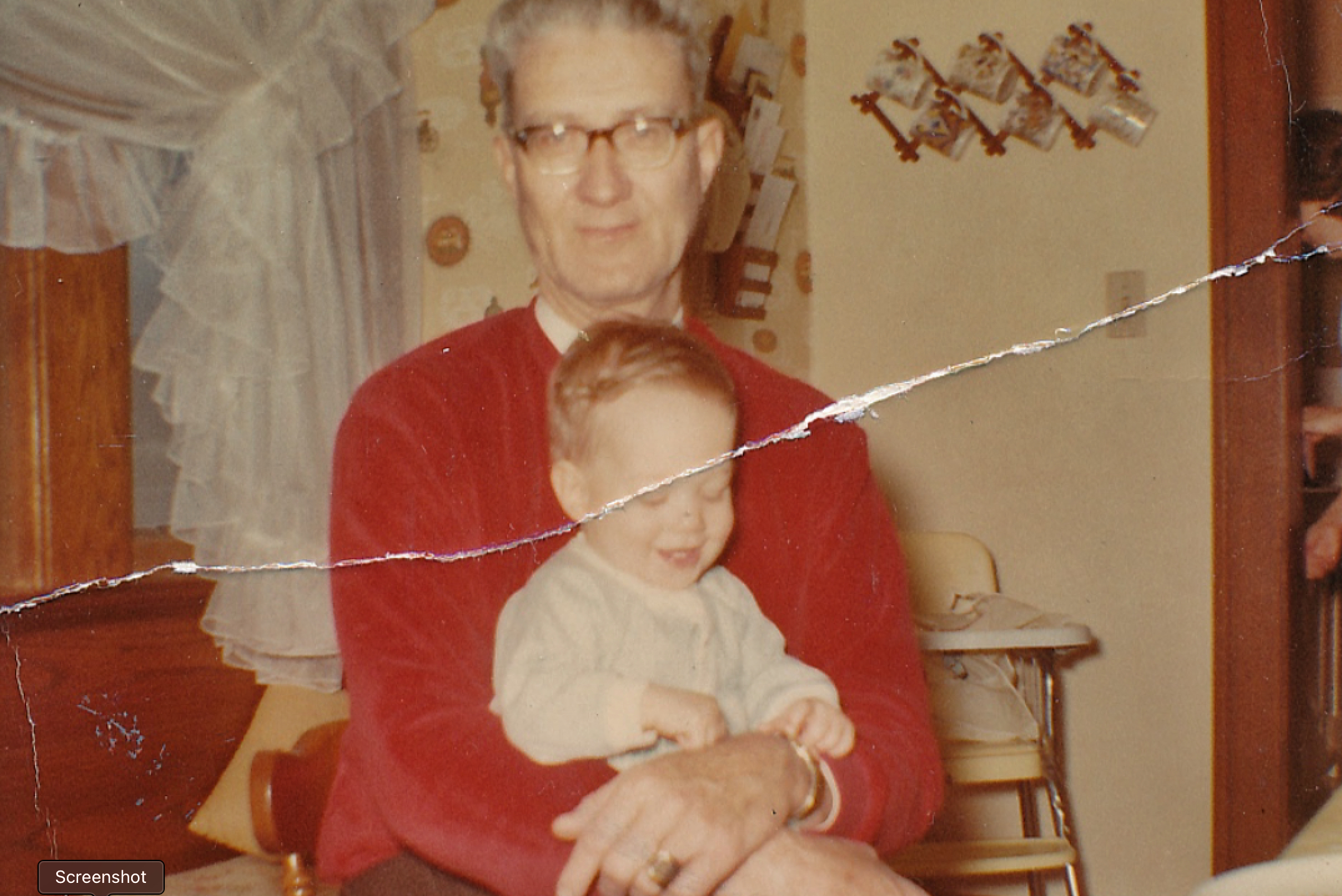
My Grandpa Spec had a tragic childhood. His real name was Claude but everyone called him Spec. The day of his father’s 34th birthday, Spec was ten. His father was diagnosed with Tuberculosis on that day. It was a death sentence at the time. It also meant months of financial and emotional hardship for the family. So, Spec’s father went home and committed suicide.
Spec was farmed out to his maternal grandparents in Illinois. They were hard people, but they were also people of faith. Spec’s life wasn’t enjoyable, but he was kept on a very straight and narrow path.
After the suicide Spec’s mom kept his little brother and sister with her. My grandma described her as a “gold digger.” She decided her best bet in life was to find a rich man and marry him. She jobs on the Mississippi riverboats and drug the kids with her. She had a series of marriages. Spec’s little brother became an alcoholic. It was a dysfunctional family system to say the least.
Later in life, Spec found himself with a good job in management. His brother came looking for a job. Spec gave it to him, but told him that the day he showed up to work drunk he would be fired immediately. The inevitable happened. Spec fired his brother. His brother went back to the family and bad mouthed Spec up-and-down, driving the wedge of separation between Spec and his family even deeper.
My grandma told me that when Spec’s brother died, they decided to travel to the funeral despite the tragedy and conflict that had divided them. After the funeral, the Funeral Director handed Spec the bill for his brother’s funeral and informed him that the family said he would pay it. My grandmother shared that he quietly chose to pay it, but spoke about the pain that my grandfather carried as a result of his family.
I never knew this until I was an adult. I watched Grandpa Spec care for his elderly mother with love, kindness, grace, and generosity. I had no idea the story behind their lives or their relationship until both he and his mother were dead.
Just a few months ago I was going through a tub of things my mother left behind when she transitioned to her heavenly home. Among the belongings was an old tin box with documents that had belonged to Grandpa Spec. Among them was the bill for his brother’s funeral.
In today’s chapter, Paul provides young Timothy with a host of instruction regarding how to handle the administration of benevolence within the local gathering of Jesus’ followers. The Jesus Movement was big on tangibly loving the most needy individuals in society at that time. The Roman Empire had no system of welfare. It was a brutal world for the poor and needy. Widows, orphans, the handicapped and lepers were among those with little means or hope for any kind of decent life. Jesus’ followers took them in, provided for them, and helped them survive.
Paul’s instructions are interesting to read from Timothy’s perspective. If you’re responsible for the messy decisions regarding who gets financial assistance and who does not, how do you decide? Reading between the lines of Paul’s letter you can see that a system had been emerging. Paul is sharing the things he’s learned and implemented in an effort to help Timothy with those messy and difficult decisions.
One of the things I observed amidst Paul’s instructions is that he placed on believers the responsibility for providing for one’s own family. He considered it “putting your religion into practice.” Paul goes on to state that any believer who fails to provide for their relatives and the members of their own household has “denied the faith.”
In the quiet this morning, this brought me back to Granda Spec, his brother’s funeral bill, and the gracious kindness with which he cared and provided for his mother in her old age. The gold digger mother who sent him off to live with her mean religious mother while she kept the other children. I’m sure in retrospect Spec realized that the decision probably saved his life, but no child is left unscarred when a parent’s actions communicate to a child “I don’t want you.”
No one who knew my Grandpa Spec would call him a particularly spiritual man. His faith, however, was genuine. It was proved genuine in the way he put his religion into practice; When he continually did the right thing by his family even when it cost him his money and his pride.
I’m reminded this morning that it’s not what I say I believe, but what my actions prove that I believe.

If you know anyone who might be encouraged by today’s post, please share.