Tag Archives: Fear

Wallflower

Wallflower (CaD Matt 7) Wayfarer

“For everyone who asks receives; the one who seeks finds; and to the one who knocks, the door will be opened.
Matthew 7:8 (NIV)

The further I get on this life journey, the more things I discover about myself. When I was a young man, I thought I knew myself well, but the reality is that I didn’t know my true self at all. What I realized along the way is that self-discovery required the hero’s journey. It is only through wilderness wanderings, crisis, and trial that I discovered the means by which I uncovered things buried deep within.

It is only later in life that I have learned to recognize one of my patterns of behavior. The truth is that I am, at the heart of things, a wallflower. I don’t like to initiate things, rather I like to be invited in to things. I tend not to insert myself or take the first step. I don’t want to go chasing after things, I like to wait for things to naturally flow to me.

I have learned and experienced that this particular trait, like most quirks of personality and temperament, comes with both positive and negative consequences.

Today’s chapter is the final of three chapters that make up Jesus’ Sermon on the Mount. As He approaches the end of His message, Jesus famously tells His audience to take the initiative to spiritually ask, seek, and knock. As I read this in the quiet this morning, my soul felt familiar pangs of internal discomfort. Asking, seeking, and knocking on opportunity’s door all require initiative. They all come with the risk of failure, disappointment, and rejection. That’s where my struggle is rooted.

I have learned from my study of the Enneagram that across the nine types there is a triad of core struggles: fear, anger, and shame. As an Enneagram Type Four, shame is my core struggle. It is the deep sense that there is something flawed in me, that I am not enough, and I am worthless.

If I step out and take the initiative to ask, there’s a chance that the answer will be “no, not for you” and it will only reinforce my shame. Nope. I think I’ll just stand here and wait for someone to come along, notice me, and offer me what I desire.

If I seek and take the initiative to find, I could easily find myself back in the wilderness again, feeling lost and void of the things I need to find my way. Nope. I think I’ll just stand here at the edge of opportunity until someone offers to safely guide me.

If I knock, I don’t know who will open the door. I don’t know how they will respond to my interruption. Maybe they’re having dinner, or indisposed, or hate being interrupted. There’s a chance they’ll slam the door in my face. Nope. That would only reinforce my shame. It’s easier just not taking the risk. I’ll just stand here outside the door and wait for the door to open on its own.

Ugh. Even writing this honest assessment of my inner thoughts stirs my sense of shame.

In the quiet this morning, I find myself reminded of the older brother in Jesus’ story of the Prodigal Son. He was angry that His father threw a big homecoming party for his wayward, disobedient little brother. He complains that not once had his father thrown a dinner party for him and his friends. The father replies, “But, son, you never asked.”

I’m still learning. Overcoming my core struggle with shame requires me to exercise faith despite my fear. This wallflower has to have the faith to step out onto the dance floor, approach that girl with the wild head of curly, mahogany hair and mischievous look in her blue eyes and ask her to dance. Yes, she might say no. On the other hand, I might find out her name is Wendy and taking the initiative to ask her for a dance might launch the greatest and most profitable adventure of my life journey.

I’m still learning.

Lord, in the quiet this morning, I ask that you continue to teach me, I seek your grace for being a slow learner. Heavenly Father, I’m knocking on your door this morning and wondering if I might possibly have your blessing this day. Thanks.

If you know anyone who might be encouraged by today’s post, please share.

These chapter-a-day blog posts are also available via podcast on all major podcast platforms including Apple, Google, and Spotify! Simply go to your podcast platform and search for “Wayfarer Tom Vander Well.” If it’s not on your platform, please let me know!

Best of ’24: #4 Three Forces Rule the World

Three Forces Rule the World (CaD Acts 19) Wayfarer

The assembly was in confusion: Some were shouting one thing, some another. Most of the people did not even know why they were there.
Acts 19:32 (NIV)

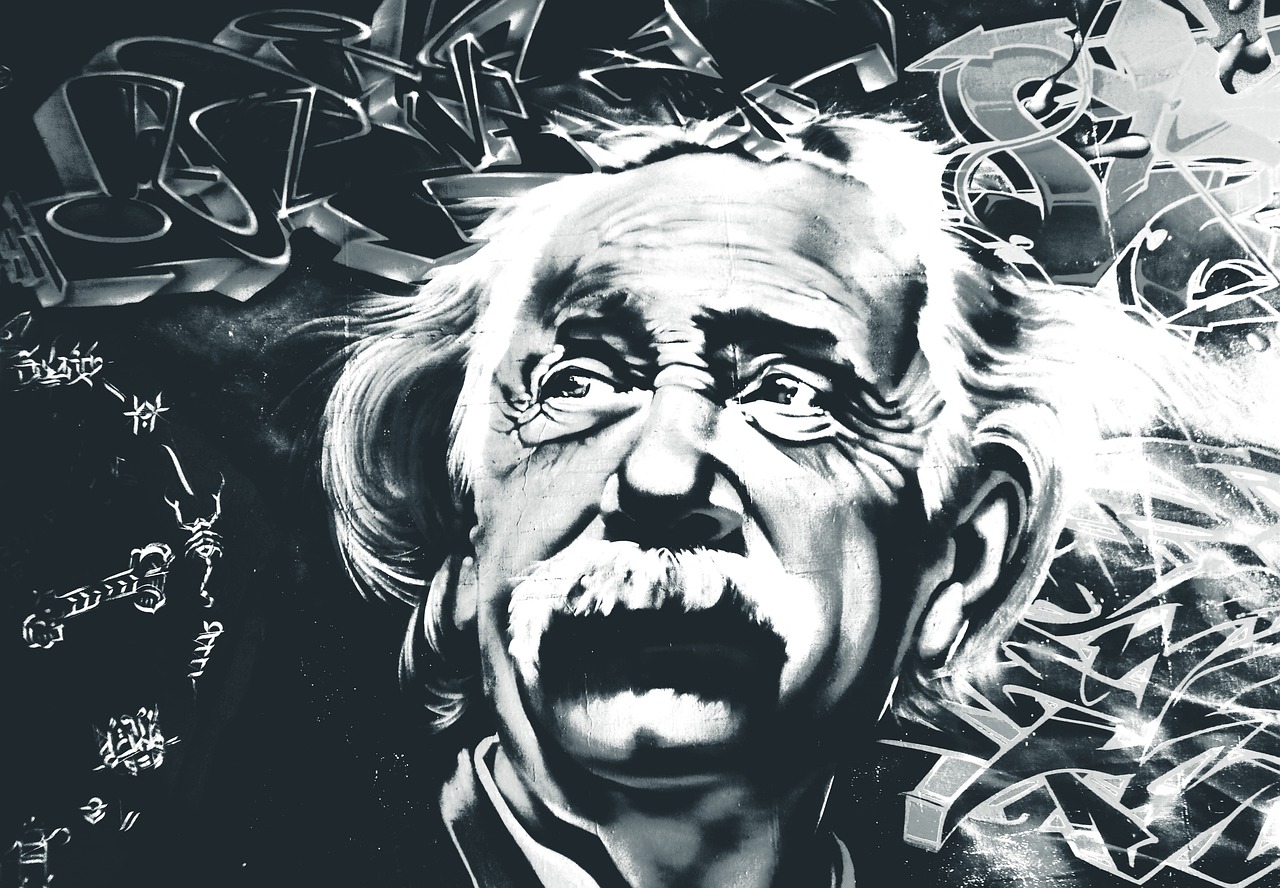
I saw a meme on social media over the weekend that caught my eye. It was a quote from Albert Einstein who said, “Three great forces rule the world: stupidity, fear, and greed.” The more I meditated on this notion, the more I realized the truth of it.

The quote came to mind this morning as I read today’s chapter because all three forces are at work during Paul’s stay in Ephesus. Paul’s presence and Jesus’ Message had a powerful effect in Ephesus. So many people were choosing to believe in Jesus that the local union of idol makers began to fear (there’s the fear) that they would lose significant income (there’s the greed). So, they grabbed two of Paul’s companions and started a protest in the city’s amphitheater. The protest grew into a confusing, riotous mob, and many of the people who joined in had no idea what they were rioting about (there’s the stupidity). Eventually, a local official got control of the crowd and convinced them to disperse and take up their grievances through proper legal channels.

The local Jews had been so obstinate in refusing to believe Jesus’ Message through Paul, that Paul gave up going to the local synagogue. I found it fascinating that the local Jews participated in the idol makers’ protest. How fascinating that for hundreds of years, God spoke through the prophets and sent His people into exile in part because they wouldn’t give up their idolatry. Here, the Jews of Ephesus reject God’s Son and support the local idolatry union. The more things change, the more they stay the same.

In the quiet this morning, I found myself meditating on how the forces of fear, greed, and stupidity are at play in our own time and in our world. Paul and the disciples in Ephesus displayed the opposite of fear, greed, and stupidity. Paul was unafraid of the angry mob but wisely chose not to go to the theater and make a bad situation worse. When an entire group of sorcerers became believers, they chose to burn all of their sorcery and witchcraft scrolls which were worth fifty thousand drachmas. A greedy person would have sold them instead.

On the night of His arrest, Jesus told His disciples that He wanted them in the world proclaiming and living out His Message. In a world driven by fear, greed, and stupidity, Jesus wanted His disciples to live lives of peace, generosity, and wisdom so that others in the world could see the contrast, and be drawn to the Message. It’s a good reminder as I start another work week. Lord, help my daily life to be marked by your peace, generosity, and wisdom.

If you know anyone who might be encouraged by today’s post, please share.

These chapter-a-day blog posts are also available via podcast on all major podcast platforms including Apple, Google, and Spotify! Simply go to your podcast platform and search for “Wayfarer Tom Vander Well.” If it’s not on your platform, please let me know!

Best of ’24: #9 Antidotes to Fear

Antidotes to Fear (CaD Lk 21) Wayfarer

“But make up your mind not to worry beforehand how you will defend yourselves.”
Luke 21:9 (NIV)

Every January, as a new year launches, the media is filled with thoughts, predictions, meditations, and prognostications regarding what the new year will bring. I would summarize the thoughts, feelings, and outlook for 2024 that I’ve been reading and hearing to be gloomy at best and at worst, doomsday. We have war in Ukraine, war in Israel, tension in Taiwan, terrorism, political division, protests, rampant crime, struggling economy, immigration crisis, and in America an election year that everyone is dreading.

Along my life journey, I’ve observed that we human beings are emotional creatures. Fear is a useful emotion, for politicians in particular, but also for media and business, especially drug companies. Fear short-circuits reason.

Over the past few years, I’ve tried to counter-balance my fear with both facts and faith.

Factually, we live in the best of times for human existence. The folks over at Gapminder.org have been diligently documenting these facts for years. They continue to shout like a voice in the wilderness, and I find it so fascinating that no one wants to listen. I’ve found their information and resources a welcome and useful antidote to the doom and gloom pedalers everywhere. I encourage you click on the graphic below and take a quick perusal of all the facts they present on the linked page on their site. In fact, I encourage you to go through it and the other resources they provide on their site on a regular basis.

When I absorb the facts and then survey the wholesale fear and anxiety in the world around me, I’m struck by two things. First, I’m struck at humanity’s ability, no matter how good things get, to perpetually muck things up. Second, I’m struck at humans’ almost addictive need for fear. It’s ironic and downright Shakespearean.

The other counter-measure I personally employ against fear is faith. As a disciple of Jesus, this isn’t optional. It’s a direct and repeated command from Jesus. If I really believe what I say I believe, then no matter what happens in the world around me I know that all things are moving toward a conclusion that is already determined by Jesus who ultimately has both me and everything else ultimately in His eternal control.

In today’s chapter, Jesus provides His own prophetic doom and gloom outlook for how things are going to eventually go down. As I’ve repeatedly written in my posts over the years, prophecy is layered with meaning. Some of the events Jesus prophesied in today’s chapter happened just 40 years after His death and resurrection. Others have yet to happen. But three times amidst His prophetic outlook of wars, persecution, upheaval, and cataclysmic events Jesus tells His followers not to be frightened or anxious. I particularly loved the words He used in the verse I quoted at the top of the post: “Make up your mind not to worry beforehand….”

Fear is an unconscious emotional reaction. Faith is a conscious Spirit response.

In the quiet this morning, I’m getting ready to sit down with Wendy and read the weekly TGIF column at the Free Press by Nellie Bowles. It’s her witty and sarcastic recap of the news this week which we’ve come to look forward to every Friday morning. We need it because when laughter is combined with faith and facts, it makes a powerful anti-fear cocktail.

If you know anyone who might be encouraged by today’s post, please share.

These chapter-a-day blog posts are also available via podcast on all major podcast platforms including Apple, Google, and Spotify! Simply go to your podcast platform and search for “Wayfarer Tom Vander Well.” If it’s not on your platform, please let me know!

Of Appointees & Crowds

Very early in the morning, the chief priests, with the elders, the teachers of the law, and the whole Sanhedrin, made their plans. So they bound Jesus, led him away and handed him over to Pilate.
Mark 15:1 (NIV)

For sports fans, December is a busy month. Of course, there are all of the college bowl games and the NFL season comes to climactic end as teams scramble for a playoff spot. Yet, even in baseball there are a flurry of off-season trades sparked by the MLB’s winter meetings. Wendy and I have been keeping tabs on several trades our beloved Cubs have made this past week.

As much as fans hate it, trades are part of the business in sports. Every team has legendary trades that fans talk about decades after the fact. Some are positive, but the ones that tend to live on in legend are the trades that produced the deepest scars. For Cubs fans it’s the trading of Hall of Famer Lou Brock to our rival Cardinals. For Vikings fans, its the trade we made with the Dallas Cowboys for Hershel Walker. That trade helped set up the Cowboys for a Super Bowl and relegated the Vikings to continued, perpetual mediocrity.

Hershel Walker made news in recent days. He’s been appointed the U.S. Ambassador to the Bahamas. It’s not surprising. Ambassadors are appointed by Presidents and it’s how Presidents reward followers and loyalists. Lots of banquets, meetings with visiting dignitaries, and for Hershel, I imagine colorful drinks with little umbrellas on the beach.

This came to mind this morning as I pondered one of history’s villains, Roman Governor Pontius Pilate. The truth is that being a Roman Governor was also a political appointment, and Caesar doled them out like a President doling out Ambassadors. It wasn’t what you knew, it was who you knew that got you appointed a Roman Governor. Governors had two basic jobs: Keep the tax money flowing freely and generously to Rome, and maintain order. For Pilate, the latter was his greatest concern. Judea was a powder keg of Hebrew rebels and insurrectionists bent on driving the Romans out. Pilate’s life, financial well-being, and political reputation back in Rome hinged on maintaining order.

The Chief Priests were not stupid. Their ascent to and hold on the power and wealth of the Temple racket required political savvy. They needed Pilate to give the execution order of Jesus, because under Roman occupation he was the only one with the authority to do so. With their trumped up charges they made Jesus out to be a threat to Rome. Their hastily produced protest with a crowd calling for Jesus’ crucifixion, they applied maximum political pressure right where it would have maximum impact with the Roman Governor. Pilate, the tenuous political appointee, knew he was being played, but the cost of making the right decision and releasing an innocent man was outweighed by the personal political cost of making an unpopular decision with the crowd of constituents that were screaming at him.

One of the things that I’ve noticed in this chapter-a-day trek through Mark is his repeated reference to “crowds.” Thirty-four times in 16 chapters, Mark mentions the “crowd.” He is clear to mention that the Chief Priests were afraid of the crowd. He mentions in today’s chapter that Pilate was motivated to satisfy the crowd.

And that has me meditating in the quiet this morning. As human beings, the crowd continues to have a tremendous impact on lives, culture, and personal decisions. Individuals refuse to speak truth, or their objections to prevailing ideologies, to avoid getting cancelled. People follow the crowd trending online like a herd of sheep as fads emerge from influencers. Doing the right thing is sacrificed time and time again on the altar of doing the politically correct thing. I don’t think Pilate was so much a villain as he was like any normal human being who chases after power, authority, status, and influence. You’re always going to do what is best for you in any given situation.

Which is an interesting contrast to Jesus as He stands before this mid-level Roman, political appointee. According to Roman law, if a defendant refuses to make a defense, Pilate had to find him guilty. With His silence, Jesus is actively choosing His fate. Why? Because He is choosing to do the right thing for all of humanity. He is choosing to be obedient to His Father’s will. He is sacrificing Himself pay sins penalty for all, for me. He is choosing to exemplify the attitude and actions He wants me to exemplify in my own daily thoughts, words, actions, and choices.

And so, I endeavor today to once again follow Jesus teaching and example, even if it means going against the current of the crowd.

I hope Hershel Walker avoids having to make critical Pilate-like political decisions as U.S. Ambassador to the Bahamas. Enjoy the beach, Hershel!

If you know anyone who might be encouraged by today’s post, please share.

These chapter-a-day blog posts are also available via podcast on all major podcast platforms including Apple, Google, and Spotify! Simply go to your podcast platform and search for “Wayfarer Tom Vander Well.” If it’s not on your platform, please let me know!

“Just Believe”

Overhearing what they said, Jesus told him, “Don’t be afraid; just believe.”
Mark 5:36 (NIV)

In our daily prayer together, Wendy and I try to regularly be grateful and recount all of the ways God has blessed us. I don’t do it because “giving thanks” is a command. I do it because when I stop for a moment to consider how blessed we really are, I am both grateful and humbled. And, I need a daily dose of gratitude and humility as much, if not more, than the small bowl of vitamins and supplements Wendy puts in front of me each morning.

As I get close the back-end of my sixth decade on this earthly journey, I have a lot of life and life experiences upon which to reflect. There are numerous waypoints on life’s road where my family and/or I have faced failures, tragedies, challenges, loss, struggles, and needs. In fact, I’m quite sure I have quite enough stories to take up a good part of your day and bore you to tears. After all, Jesus Himself told His followers, “In this world you will have troubles.” We all have them, don’t we?

In today’s chapter, Jesus confronts a trio of individuals in their very different but very real troubles. The first is a demon-possessed man, the second is a woman with a medical condition in which she had been bleeding for twelve-years which made her ritually unclean perpetually and a social outcast. Then there is a leader of the local synagogue who had a young daughter near death. Struggle and suffering come in many forms in this life, don’t they?

As Jesus is walking with the anxious father, word arrives from his household that his daughter had passed away. It was too late. Jesus happened to still be speaking with the woman healed from her bleeding. He was telling her that her faith had been the agent of her healing as He overhears the bad news the father just received. Jesus turns to the grieving father and immediately says, “Don’t be afraid; just believe.”

What a learning moment. The woman’s faith had precipitated her miraculous healing. The father had seen it. He was standing right there. Now Jesus calls on him to have the same kind of faith that the woman had. Not just the faith for healing from a medical condition, but faith to bring his daughter back from death.

One of the things that I’ve discovered along my life journey is that faith grows with every waypoint on life’s road in which one is required to trust and God is faithful in providing, healing, and delivering. By regularly recounting those waypoints and expressing gratitude for God’s faithfulness I am strengthening my faith for the unknown troubles, tragedies, and challenges that may be awaiting me just ahead. With them continually fresh in my memory it’s much more likely that I will react to the next challenge by hearing Jesus words, “Don’t be afraid; just believe” in my heart with faith and reacting with faith rather than fear.

By the way, Angel Studios’ production The Chosen did a masterful job of portraying the events in today’s chapter of the woman’s healing and the little girl’s rising. If you have a few minutes, it’s worth a watch. (There’s a link to it in the description of today’s podcast episode).

If you know anyone who might be encouraged by today’s post, please share.

This is the Way

This is the Way (CaD Ezk 37) Wayfarer

Therefore prophesy and say to them: ‘This is what the Sovereign Lord says: My people, I am going to open your graves and bring you up from them; I will bring you back to the land of Israel.
Ezekiel 37:12 (NIV)

I have mentioned in recent weeks that our local gathering of Jesus’ followers has been journeying through the book of Exodus and the story of God revealing Himself to Moses and leading the Hebrew people out of slavery in Egypt. It is the very beginning of God’s relationship with the Hebrew people as an entire people, a nation. I gave a message about it this past Sunday. FWIW: You can watch/listen here.

It was not a conscious decision to have our chapter-a-day journey trekking through Ezekiel at the same time, but I’ve been amazed at the parallels. Ezekiel is roughly 1,000 years after Exodus. They are two different stages of history, two different chapters of the Story. Yet the same theme weaves through them both and foreshadows what is yet to come.

Today’s chapter is one of the most iconic prophetic messages in the entire Great Story. If you didn’t actually read the chapter today, I encourage you to take two minutes (that’s all it will take) and read the first 14 verses of Ezekiel 37. It’s an apt passage to read the week of Halloween, by the way. Ezekiel is taken in the Spirit to a valley full of dry bones all across the valley floor. God has Zeke prophesy to the bones and the bones begin connecting themselves, tendons grow to hold them together then flesh grows on top and finally skin completes the bodily resurrection of the bones. God has Zeke prophesy once more and Life is breathed into them.

We have to remember that just a couple of chapters ago, Zeke and the Hebrews living in exile in Babylon got word that their nation was destroyed. Jerusalem was turned to rubble and burned. Solomon’s Temple was razed to the ground. What was left of their people were slaughtered or else they fled. Their hopes are dashed. Their souls are crushed. Their nation is dead. I can hear the wails of Zeke and his compatriots crying out to the Lord… just like a thousand years before:

The Israelites groaned in their slavery and cried out, and their cry for help because of their slavery went up to God. God heard their groaning and he remembered his covenant with Abraham, with Isaac and with Jacob. So God looked on the Israelites and was concerned about them.
Exodus 2:23b-25 (NIV)

The Hebrews were hopeless, crushed, and dead in their slavery. God brought ten plagues on Egypt that metaphorically deconstructed the seven days of creation in Genesis. Then, God leads them out of the death of slavery and begins to infuse new life and new ways of living.

Now the same people find themselves crying out a thousand years later. Once again, they are surrounded by death, hopelessness, and despair. The vision God gives Zeke is a repeat of the theme. “Amidst your death, despair, and hopelessness I am going to raise new life.”

Life –> Death –> New Life

God tells Zeke, “Then you, my people, will know that I am the Lord, when I open your graves and bring you up from them. I will put my Spirit in you and you will live…”

As a follower of Jesus, it is impossible not to see God pointing 500 years into the future and foreshadowing the exact thing Paul wrote to Jesus’ followers in Ephesus. Picture Zeke’s valley of dry bones as you read this:

“As for you, you were dead in your transgressions and sins, in which you used to live when you followed the ways of this world and of the ruler of the kingdom of the air, the spirit who is now at work in those who are disobedient. All of us also lived among them at one time, gratifying the cravings of our flesh and following its desires and thoughts. Like the rest, we were by nature deserving of wrath. But because of his great love for us, God, who is rich in mercy, made us alive with Christ even when we were dead in transgressions—it is by grace you have been saved.”
Ephesians 2:1-5 (NIV) emphases added

Life –> Death –> New Life

In the quiet this morning, my heart is encouraged, lightened, and hopeful. In one week, our nation will have a Presidential election. On both sides of the aisle, people and pundits are prophesying the death of our nation, the demise of democracy, and the end of all things should the other side win. I have talked to people who are on the brink of despair because of their fear of the outcome. I personally think it’s all overblown fear-mongering that politics has always used to motivate people to action. Please refer to all of human history. But I am also reminded this morning that no matter what happens next Tuesday there is a theme that God has been revealing to humanity over and over and over again for thousands of years that dispels any of my fears. It is amidst death and despair and hopelessness that new life emerges.

Jesus said to [Martha], “I am the resurrection and the life. The one who believes in me will live, even though they die; and whoever lives by believing in me will never die. Do you believe this?”

Yes. Yes, I do.

Life –> Death –> New Life

This is the way.

If you know anyone who might be encouraged by today’s post, please share.

(Never) Abandoned

(Never) Abandoned (CaD Ezk 10) Wayfarer

Then the glory of the Lord departed from over the threshold of the temple and stopped above the cherubim. While I watched, the cherubim spread their wings and rose from the ground, and as they went, the wheels went with them. They stopped at the entrance of the east gate of the Lord’s house, and the glory of the God of Israel was above them.
Ezekiel 10:18-19 (NIV)

When I was a young child, I went through an intense period of time when I never wanted to be separated from my mother. I have very specific memories of freaking out, especially in situations that were strange to me. In one instance, my mom was attending some kind of meeting at place I’d never been before. She dropped me off in the room for child care. Once again, the room was unfamiliar, the people were unfamiliar, and my mother was no where to be seen. I felt abandoned. I had such an intense emotional meltdown that they found my mother to take me home. I’m glad to say that this period eventually ended. I grew into an independent and self-assured child.

Feelings of loneliness, isolation, and abandonment are very real sources of human fear and anxiety.

In today’s chapter, Ezekiel’s vision in Solomon’s Temple continues. First he saw all of the idolatry that was taking place inside the Temple. Next he saw a man placing a mark on the forehead of those faithful to God, while six others destroyed anyone who didn’t have the mark. Now, Zeke watches as the “glory” (e.g. radiance, presence) of God rises and leaves the temple.

It’s important to note that in the ancient Near East, there this was a common theme across pagan religions, as well. There is a genre of lamentation literature around gods who abandon their temples, which then explains why enemies were able to conquer, plunder, and destroy the structures. Ezekiel’s audience would have heard/read today’s vision of God’s glory leaving the temple and they knew exactly what it meant. Without God’s presence, the temple will be plundered and destroyed.

As I meditated on this in the quiet this morning, I couldn’t help but think of a message I gave earlier this summer. One of the things that I’ve observed along my spiritual journey is how often I hear people praying for God to be present and asking for God to come and show up. I have come to believe that these prayers channel the same human fear of abandonment and I felt as a child and that Ezekiel’s vision is tapping into. When bad things happen, we feel that God must have abandoned us. When we feel anxiety or loneliness was assume it’s because God isn’t present.

If I really believe what I say I believe, then this is the most illogical and unreasonable assumption to make and prayer to pray. In my message I talked about three types of God’s presence.

In Colossians 1:17 Jesus is described as both the agent of creation but also that “He is before all things, and in him all things hold together.” If Jesus is the force holding all things together (i.e. I’m thinking of what Physics refers to as Dark Matter), then David is correct in the lyrics of Psalm 139 when he declares there isn’t a place in the universe where you can flee from His presence.

Second, Jesus told His followers on the night of His arrest that He would be leaving, but would never abandon His followers. His Holy Spirit would indwell us and make us part of the circle dance of oneness between Father, Son, and Spirit. As a disciple of Jesus, the Spirit of God lives in me. My body is a temple. He said He’ll never leave me or forsake me. Praying for God to be present makes no sense in this context.

I have come to believe that what many people mean when they ask God to come and be present is that they want to experience and outpouring or a filling of God’s Spirit. There are many examples of this in both the Great Story and even in current events. It happened just a year ago on a college campus in Kentucky. I have personally found it an important distinction to remember that an outpouring of God’s Spirit doesn’t mean He wasn’t there before and suddenly arrived. I refer back to the previous two points. There are, however, times when His omnipresence is infused with momentary power and intensity.

In a time when anxiety and fear are wreaking havoc on the mental health of people in our culture, I find Jesus’ assurances of living in me, never leaving me, and being present wherever I find myself in the universe to be a source of comfort, confidence, and peace. I simply have to have the faith to believe it and the discipline to acknowledge it in each and every moment.

For anyone interested in the extended version, here it is:

If you know anyone who might be encouraged by today’s post, please share.

The Whole Crowd

The Whole Crowd (CaD Ezk 7) Wayfarer

“‘They have blown the trumpet,
    they have made all things ready,
but no one will go into battle,
    for my wrath is on the whole crowd.”

Ezekiel 7:14 (NIV)

It was about 25 years ago that I first heard of the “2G” principle of investing. I was speaking with one of the executives of a client of ours. This individual was not only in a high-paying position but also came from a very wealthy family and had an apocalyptic view of where current events were taking us. It was around the time of Y2K when many believed that all of the world’s computers would stop working when the date changed from 1999 to 2000. There was a lot of fear being stirred up, and my client told me they had switched their investing to the “2G” principle: Gold and Guns. Gold because when you don’t have an electronic record of the money in your accounts, then the only tangible currency is precious metals. Guns because when society breaks down like Lord of the Flies those with guns will be more likely able to protect themselves and their loved ones and survive.

Over the years, I’ve known others who have adopted the 2G investment strategy. As a natural pessimist, I certainly get the logic and the appeal of preparing for a doomsday scenario. If I had a lot of money to invest I might be more tempted to join them, but I don’t so I’m hoping that doomsday’s imminent threat will fizzle out like Y2K.

For the people of Ezekiel’s day, the prophecies of imminent doom were more tangible. The region was at a crossroads, smack dab in the middle of multiple empires, both established and emerging. The Assyrians and already decimated the area and the Babylonians were currently holding sway. Ezekiel was preaching to his people living in exile, so they’d already experienced their own version of doomsday. Ezekiel’s messages proclaimed that there was more, and worse, to come for his people.

Throughout history, those who are rich have a greater chance of riding out doomsday scenarios like war and famine. The 2G investment principle is predicated on it. What’s fascinating about God’s message through Ezekiel in today’s chapter is both his audience and his message. When the Babylonians took Zeke and others into exile, they took the best and the brightest, the rich and the powerful. It was a shrewd strategy. King Nebuchadnezzar knew that rebellion in vassal states required intelligence, power, and money. By bringing the educated, powerful, and wealthy back to Babylon, he reduced the chance that those left in Jerusalem would rebel while giving him and his people access to some of the greatest minds among his enemies from which he and his people would benefit.

One of the overarching themes in Zeke’s message was that God’s judgment was going to fall on “the whole crowd.” Rich and poor, educated and uneducated, white collar and blue collar, urbanites and farmers, there wasn’t a demographic who was going to escape the doomsday that was coming. For the 2G-type investors of their day, Ezekiel writes:

“‘They will throw their silver into the streets,
    and their gold will be treated as a thing unclean.
Their silver and gold
    will not be able to deliver them
    in the day of the Lord’s wrath.
It will not satisfy their hunger
    or fill their stomachs,
    for it has caused them to stumble into sin.”

In a few minutes, I will sit down with Wendy to have our coffee and peruse the headlines over breakfast. There’s a lot of talk about World War III and various doomsday scenarios. Both sides of the political aisle like to whip up a frenzy of fear about doomsday scenarios should their opponents win in November. It’s the same every four years.

As I meditate on these things this morning, I am also mindful of the reality that history is marked by dark periods. We are certainly not immune from bad things happening and having to live through periods of intense difficulty. As a disciple of Jesus, however, I find that His teaching was consistently about faith, contentment, and trust. He repeatedly tells me not to worry, not to be anxious, and not to be afraid. The doomsday that Ezekiel proclaimed happened just as predicted. Jerusalem was besieged and people starved before the entire city was destroyed and burned along with Solomon’s temple. But I also know the end of the story. God’s promises to the exiles were also fulfilled. They returned to Jerusalem and rebuilt the temple.

In the same way, I know the end of the Great Story. After a period of intense doom, there is a new beginning of Light, and Love, and Life. The further I get in my spiritual journey, the more I’ve come to realize that being a disciple of Jesus is about letting go of my fear, anxiety, and worry about the former while embracing my whole-hearted faith in the latter.

If you know anyone who might be encouraged by today’s post, please share.

An Ambitiously Quiet Life

An Ambitiously Quiet Life (CaD 1 Thess 4) Wayfarer

make it your ambition to lead a quiet life: You should mind your own business and work with your hands, just as we told you, so that your daily life may win the respect of outsiders and so that you will not be dependent on anybody.
1 Thessalonians 4:11-12 (NIV)

This past winter and spring our kids and grandkids lived with us for over four months here in Pella, Iowa (see featured photo). They were transitioning back to the States after five years of living in Edinburgh, Scotland.

One day our grandson Milo asked his mother, “Is Papa famous?”

Taylor laughed and asked what prompted the question.

“Everybody knows him,” he replied.

Welcome to a small town, young man.

I have been doing a lot of online networking for business in recent weeks, having Zoom calls with people from all over North America. As we introduce one another, I find that the vast majority of them live in cities, with most of them located on either one of the coasts. When I tell them I live in a little town in Iowa, they often react with surprise. Some will even ask me about it, typically stating that they couldn’t do it and it would be too boring for them. This is often followed by a statement about needing a lot of things to do and places to go for activity and entertainment.

Fascinating.

In today’s chapter, Paul shifts the theme of his letter from personal matters (e.g. discussion of Timothy’s visit and his longing to make a personal visit of his own) to instructions in life for the spiritually young Jesus followers in Thessalonica.

Paul’s first instruction was to avoid sexual immorality. Keep in mind that generally loose sexual mores and attitudes were a hallmark of ancient Greece. As one historian described sex in the city of Athens (where Paul is writing this letter):

“Relationships between men of the same age were not at all common: rather, the standard same-sex relationship would involve an adolescent boy and an older man. Men also used female prostitutes regularly: sex could be bought cheaply in a city that was home to countless brothels, streetwalkers and female ‘entertainers’.”

Paul urges the Thessalonian believers to produce the fruit of self-control in sexual matters for their own spiritual, and physical, well-being.

He then goes on to repeat his encouragement that I wrote about in yesterday’s post, which is to increase in love “more and more.” But he then adds a general instruction for daily life, encouraging them to make it their “ambition” to lead a “quiet life.”

make it your ambition to lead a quiet life: You should mind your own business and work with your hands, just as we told you, so that your daily life may win the respect of outsiders and so that you will not be dependent on anybody.

It was about thirty years ago that these verses first leaped off the page and into my soul. This passage has become somewhat of a guide and a mission. I didn’t think about it when I moved to a small town from the city where I’d spent most of my life, but in retrospect, I find that it was definitely synergistic.

Yes, my life is quieter. I can get anywhere I need in ten minutes or less. I like seeing people I know everywhere. I love that people know my name when I walk into the store, a restaurant, or the pub. I love that the guys at George’s Pizza begin making our pizza as soon as they see our car pull up on Sunday. I love not dealing with the traffic, crime, and cost of a city. And, despite not having all the available activity and entertainment options of a city, Wendy and I never lack things to do nor do we ever feel that our entertainment tank is on empty.

Paul’s words to the Thessalonians have been instrumental in my life journey. I have made it my ambition to lead a quieter life, and it has greatly increased the quality of my life. Please don’t hear what I’m not saying. I don’t think one has to live in a small town to have a quieter life. I’m just saying that I have found it to personally be part of my own journey in being ambitious for more quiet.

And, in the quiet this morning, I find myself thinking of the ambitions I observe in our adventure-seeking, adrenaline-addicted, YOLO culture. I observe individuals who are so ambitious for non-stop activity and entertainment that they never have time to figure out why their relationships aren’t working, their soul feels so empty, or their minds are so constantly afraid and anxious. The answers to those things require contemplation, introspection, and conversation (and I would add prayer), and those things require quiet.

If you know anyone who might be encouraged by today’s post, please share.

Three Forces Rule the World

Three Forces Rule the World (CaD Acts 19) Wayfarer

The assembly was in confusion: Some were shouting one thing, some another. Most of the people did not even know why they were there.
Acts 19:32 (NIV)

I saw a meme on social media over the weekend that caught my eye. It was a quote from Albert Einstein who said, “Three great forces rule the world: stupidity, fear, and greed.” The more I meditated on this notion, the more I realized the truth of it.

The quote came to mind this morning as I read today’s chapter because all three forces are at work during Paul’s stay in Ephesus. Paul’s presence and Jesus’ Message had a powerful effect in Ephesus. So many people were choosing to believe in Jesus that the local union of idol makers began to fear (there’s the fear) that they would lose significant income (there’s the greed). So, they grabbed two of Paul’s companions and started a protest in the city’s amphitheater. The protest grew into a confusing, riotous mob, and many of the people who joined in had no idea what they were rioting about (there’s the stupidity). Eventually, a local official got control of the crowd and convinced them to disperse and take up their grievances through proper legal channels.

The local Jews had been so obstinate in refusing to believe Jesus’ Message through Paul, that Paul gave up going to the local synagogue. I found it fascinating that the local Jews participated in the idol makers’ protest. How fascinating that for hundreds of years, God spoke through the prophets and sent His people into exile in part because they wouldn’t give up their idolatry. Here, the Jews of Ephesus reject God’s Son and support the local idolatry union. The more things change, the more they stay the same.

In the quiet this morning, I found myself meditating on how the forces of fear, greed, and stupidity are at play in our own time and in our world. Paul and the disciples in Ephesus displayed the opposite of fear, greed, and stupidity. Paul was unafraid of the angry mob but wisely chose not to go to the theater and make a bad situation worse. When an entire group of sorcerers became believers, they chose to burn all of their sorcery and witchcraft scrolls which were worth fifty thousand drachmas. A greedy person would have sold them instead.

On the night of His arrest, Jesus told His disciples that He wanted them in the world proclaiming and living out His Message. In a world driven by fear, greed, and stupidity, Jesus wanted His disciples to live lives of peace, generosity, and wisdom so that others in the world could see the contrast, and be drawn to the Message. It’s a good reminder as I start another work week. Lord, help my daily life to be marked by your peace, generosity, and wisdom.

If you know anyone who might be encouraged by today’s post, please share.