Tag Archives: Family

Farms and Feuds

Farms and Feuds (CaD Ezk 48) Wayfarer

“This is the land you are to allot as an inheritance to the tribes of Israel, and these will be their portions,” declares the Sovereign Lord.
Ezekiel 48:29 (NIV)

In recent posts I’ve mentioned that throughout human history land has meant life. Owning land means you have a place to put up permanent shelter, grow crops, and raise livestock. Land has tangible value. Land meant prosperity.

Living my entire life in Iowa, I perhaps understand this better than some. Iowa farmland is among the richest, most productive in the entire world which means that it is of great financial worth. Because of this, living in Iowa gives you a front row seat to what land can do to the human heart.

Land becomes the golden calf for many individuals and families. Many years ago I pastored a small rural church. In the back pew in one corner sat one man every Sunday. Every Sunday, in the opposite corner as far away as possible, sat his neighbor. They had a boundary dispute between their land decades before and so they never spoke and avoided one another like the plague. I did funerals for patriarchs of family farms in which one child and their family refused to be in the same room with another child and their family all because of dispute over how the land was distributed. I have watched bitterness and resentment over the inheritance of land shrivel men’s souls. And yes, it’s even driven individuals to take out their anger the way Cain did with Abel.

The ancient nation of Israel knew this same paradigm. Remember that the nation was originally 12 tribes from the same family. Moses originally allotted the land among the tribes.

Some tribes had more land. Others had far less. As history wore on, disputes arose. Civil War broke out. The nation fractured in two.

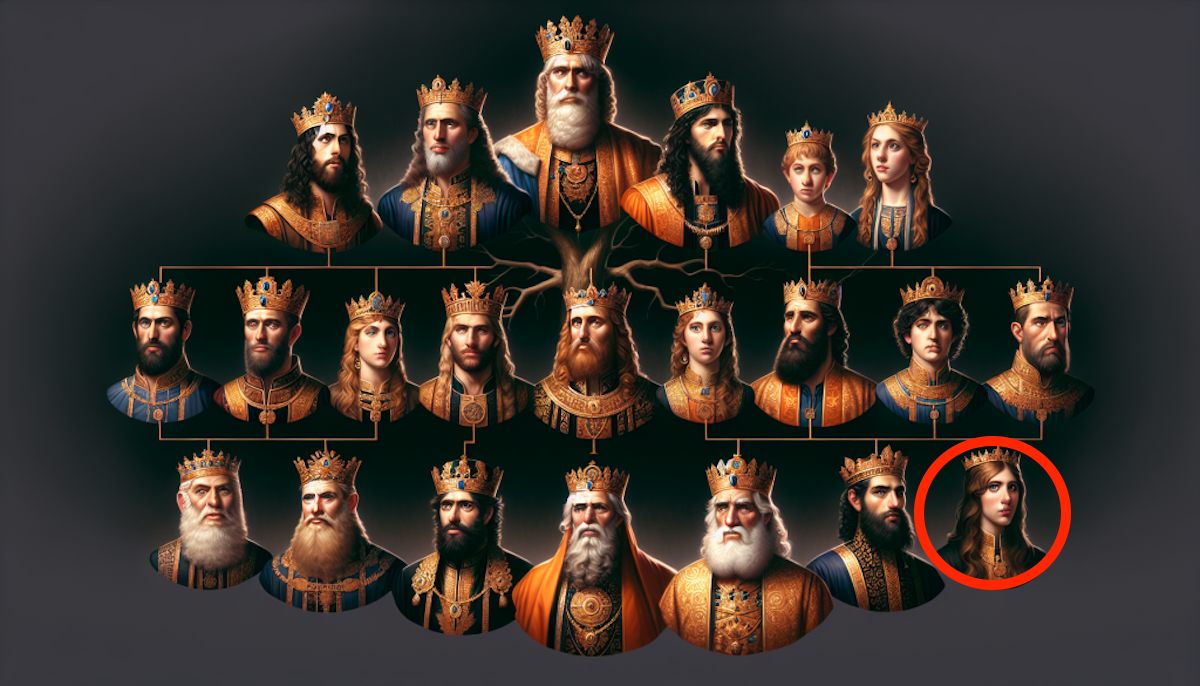
As Ezekiel pens his final chapters, there is no longer a nation of Israel. It was conquered. Its capital city and temple were destroyed. Zeke’s vision is of a restored Israel and a new allotment of a restored nation. No more division between north and south. He envisions one united nation in which each tribe gets an allotment of land that looks like a twelve-layered cake from top to bottom, north to south. Each tribe gets it’s own layer that’s roughly the same size as every other tribe. It is a vision of twelve family tribes living in peace and harmony. No disputes of bigger or smaller, there is equal inheritance. There is shalom.

And that brings me back to the fact that the entire Great Story from Genesis to Revelation is about God restoring shalom between Himself and humanity. It’s the way it was before a snake slithered into the Garden. It’s the way the Great Story ends with God and humanity living in perfect shalom in a new heaven, a new earth, and a new holy city. It is what God wants me to experience each day amidst the trials of living in a fallen world with other fallen individuals. It’s what God wants me to strive for and share with others.

In the quiet this morning, my spirit is reminding me of two men I know who grew up on family farms. Each of them got the shaft when it came time for the family farm to be passed to the next generation. Both men know the journey of grief, anger, and resentment that comes with that particular reality. Each of these men have shared with me their story, and they are both incredibly blessed, filled with joy in their lives and families. Both of them, disciples of Jesus, shared with me how they consciously and deliberately surrendered their will and desire to God. They let go of resentment, put their trust in God, and sought their inheritance from Him. Each of these men have ultimately prospered. Each has found and is experiencing shalom.

What Ezekiel is describing on a macro level as he finishes his prophetic book is what God wants me to experience on the micro level, right here, today.

Shalom, my friend. Have a good weekend.

If you know anyone who might be encouraged by today’s post, please share.

There’s No Plan B

There's No Plan B (CaD Ezk 35) Wayfarer

“‘Because you harbored an ancient hostility and delivered the Israelites over to the sword at the time of their calamity, the time their punishment reached its climax, therefore as surely as I live, declares the Sovereign Lord, I will give you over to bloodshed and it will pursue you.
Ezekiel 35:5-6 (NIV)

I am often amazed at how relevant the ancient prophets can be, even today. For over a year now, since October 7, 2023, the world has witnessed an ancient conflict coming to violent escalation in Israel. This is an ancient conflict, and it didn’t begin with the Zionist movement of the late 19th century. It goes back thousands of years. The current iteration is simply the latest example of it rearing its ugly, ancient head.

The setting for today’s chapter is that Jerusalem has fallen. It has been destroyed just as Ezekiel and Jeremiah had both prophesied would happen. Those who could escape the bloody siege scattered. Many of them scattered directly to the east across the Jordan and entered the land of Edom. But rather than having compassion on the refugees, the Edomites reveled in Jerusalem’s destruction and slaughtered the refugees. Even though the Israelites were family.

The Edomites were descendants of Esau, Jacob’s (aka Israel’s) twin brother. Yes, Esau who surrendered his birthright in exchange for a cup of soup. Israel, the second-born who deceived his blind father into thinking he was Esau in order to receive his father’s blessing of the first-born.

Family feud. Bad blood. Bitterness. Resentment. Ancient wounds and deep scars so fraught with endless reciprocities that over a thousand years later, neither side could see past the history of mutual offenses.

That’s what bitterness does to the human soul. I have observed along my spiritual journey that the institutional church has historically focused on the sins of morality (sex, drugs, alcohol, rock-and-roll, etc.) while ignoring the sins of the spirit that Jesus talked about in His Sermon on the Mount: anger, resentment, lust, lies, violence, bitterness, lack of forgiveness, lack of generosity, pride, greed, judgement, and condemnation. Even as I write these words my mind has filled with the faces of people I’ve known along my own journey who have harbored bitterness for so long and fed angry grudges to the point that their faces and countenance begin to shrivel into a perpetual scowl long after their souls had done the same.

In today’s chapter, God tells Zeke to prophesy against the children of Esau, who refused to have compassion on the Israelite refugees and instead saw it as an opportunity to settle old scores with violent slaughter.

Violence begets violence. Bloodshed begets bloodshed. Or, as Jesus put it, “Those who live by the sword will die by the sword.”

In the quiet this morning, I find myself mulling over political and international relationships between nations and people groups. It’s hard to wrap my mind around conflicts that are thousands of years old. It feels futile to even do so.

I’m reminded this morning that Jesus did not come to save nations. He came to save individuals. When Jesus changes my heart of bitterness and resentment into a soul full of forgiveness and grace, that impacts people in my family, my network of friends, and my circles of influence. Other individuals are changed in the wake. Suddenly our circles are influencing our community, our community influences other communities, and eventually our communities influence nations and empires. That is what happened in the first century. But it begins with the individual.

Just as the conflict between Israel and Edom began with individuals, twin brothers, the answer begins with an individual: me. Just as the conflict between Jews and Muslims began with individuals, half-brothers named Isaac and Ishmael, the answer beings with an individual: me.

What grudges am I harboring?
What bitterness am I clinging to?
Who have I refused to forgive?
Who do I hate?
Where is anger ruling my heart?

Peace begins with Jesus in me, and His grace through me.

I’ve read the entire Great Story multiple times.

There’s no Plan B.

If you know anyone who might be encouraged by today’s post, please share.

Big Family

Big Family (CaD 1 Thess 2) Wayfarer

Just as a nursing mother cares for her children, so we cared for you. Because we loved you so much, we were delighted to share with you not only the gospel of God but our lives as well.
1 Thessalonians 2:7b-8 (NIV)

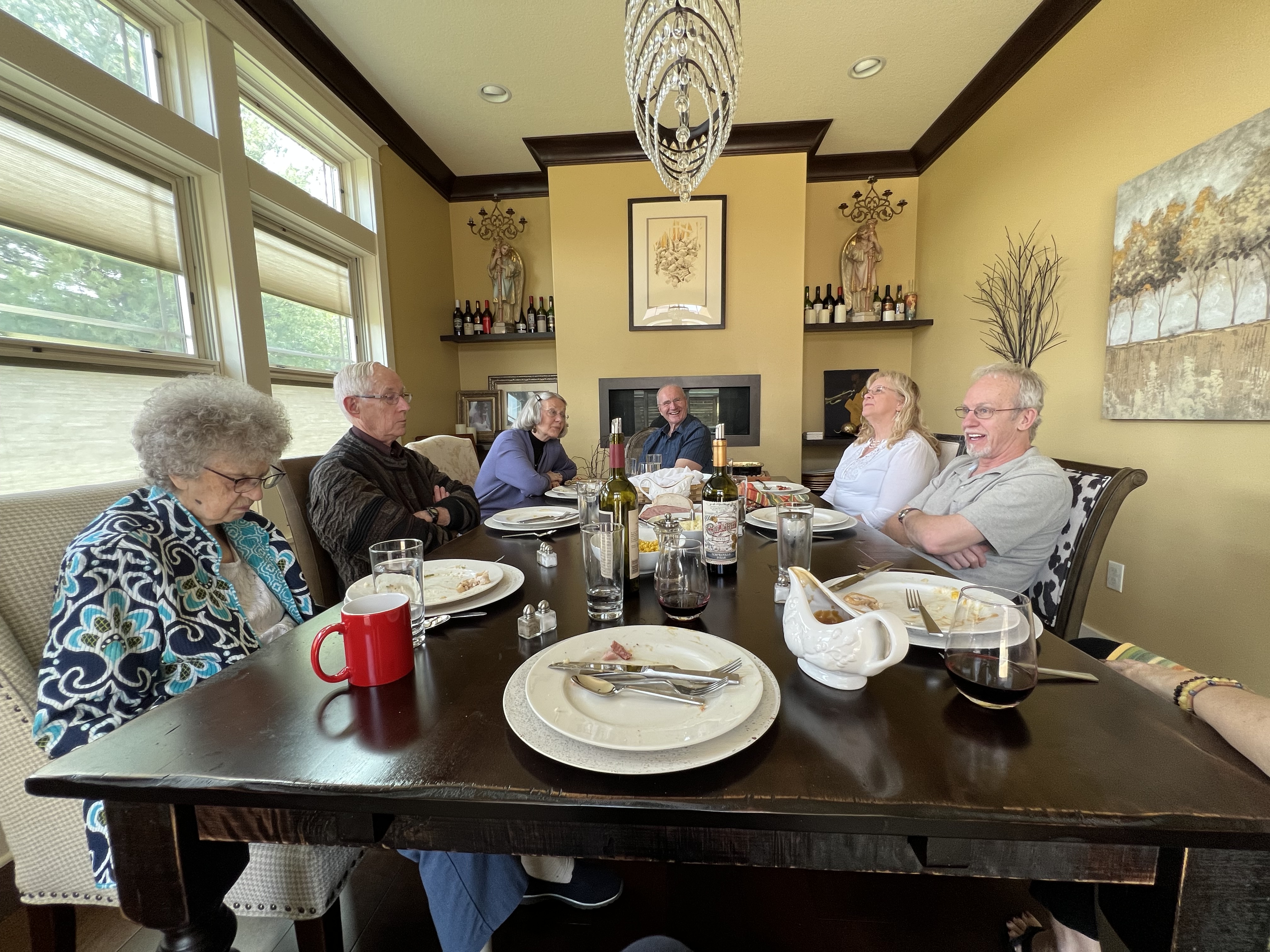
I mentioned in yesterday’s post that Wendy had her friends over this past Saturday night. This group of ladies became friends when they were all single in their twenties. They have shared life together ever since. They have been part of one another’s weddings and have celebrated and supported one another through babies, toddlers, children, and teens. They regularly communicate, make a point of seeing one another, and have enjoyed girls’ weekends together. They are “the Golden Girls.”

As a husband, it has been a quiet joy for me to watch these ladies do life together so well. And, I really mean that they do life with one another. I’ve watched them share with one another in their pain, struggles, and tragedies. They go deep, dig in, and encourage one another in every part of life. Wendy is blessed to have them. I’m blessed that she has them.

In today’s chapter, I thought it fascinating that Paul describes his and his compatriots (Timothy and Silas) brief time among the new Thessalonian believers by metaphorically naming all the key members of a nuclear family within a few verses of one another:

…”we were like young children among you.” (vs. 7a)
“Like a nursing mother cares for her children.” (vs. 7b)
“Surely you remember, brothers and sisters…” (vs. 9)
“…we dealt with each of you as a father deals with his own children.” (vs.11)

As I meditated on this in the quiet this morning, I was reminded of the time when Jesus was speaking to a house that was absolutely packed with people listening. When His mother and siblings showed up to see him, they couldn’t get in and sent a message to Him.

Standing outside, they sent someone in to call him. A crowd was sitting around him, and they told him, “Your mother and brothers are outside looking for you.”

“Who are my mother and my brothers?” he asked.

Then he looked at those seated in a circle around him and said, “Here are my mother and my brothers! Whoever does God’s will is my brother and sister and mother.”


Mark 3:31-34 (NIV)

Along my life journey, I have experienced and observed exactly what Jesus was getting at. Individuals who spiritually share life together for a period of time become a type of family. What Paul was telling his spiritual Thessalonian “children” was that he purposefully embraced all facets of family in his relationship with them. He was innocent and honest as a child. He nurtured and spiritually fed them the “milk” of God’s word. He was, at the same time, like a father as he spiritually instructed, encouraged, and equipped them. He considered them his brothers and sisters in God’s family.

I am blessed with a great nuclear family. The further I get on life’s road and hear the stories of others, the more grateful I’ve become for this. At the same time, both Wendy and I recognize that we are doubly blessed to have an extended family of individuals and couples we do life with. Along the way, I have found that Spirit goes deeper than blood in binding lives together. Jesus alluded to this multiple times.

In the quiet this morning, I find my heart whispering prayers of gratitude for my family members, both blood and Spirit. I’m thankful for a big, big family of individuals on this life journey who have nurtured me like mothers, encouraged and equipped me like fathers, and walked alongside me as siblings. I pray that I have and continue to do the same nurturing, loving, encouraging, and equipping in others’ lives.

I love that genetic science has proven that we all descended from the same woman. I have come to believe that God’s Kingdom is about embracing the reality that all of us are one big family and loving one another accordingly.

If you know anyone who might be encouraged by today’s post, please share.

Untold Stories

Untold Stories (CaD 1 Chr 27) Wayfarer

Ahithophel was the king’s counselor. Hushai the Arkite was the king’s confidant. Ahithophel was succeeded by Jehoiada son of Benaiah and by Abiathar.
1 Chronicles 27:33-34 (NIV)

I’ll never forget the weekend my father and I made a trip to northwest Iowa to visit my grandfather who was well into his nineties. As we sat around the table with Grandpa V that afternoon, he began to share family stories that my dad and his brother had never heard. They were stories of the issues that had created division in the family and had partially shaped his life. But they had never been talked about.

I find it fascinating the things that people choose to talk about and those they keep secret. What is perhaps even more fascinating are the motivations that drive the silence.

In today’s chapter, the Chronicler continues his lists outlining the reign of ancient Israel’s greatest King, King David. Today’s lists are the Army divisions and their commanders, the tribal leaders, and the overseers of the King’s lands, flocks, vineyards, and storehouses. David definitely had an impressive spread.

At the very end of the chapter, the Chronicler mentions David’s counselor, Ahithophel, and then quickly mentions that Ahithophel was succeeded by Jehoiada. Once again, I find that when reading through these ancient lists the stories are in the exceptions. I always look for things that don’t fit the pattern. In this case, nowhere else in his lists does the Chronicler name someone’s successor. So, what’s up with that?

The story is found in 2 Samuel 15-17. David’s very own son, Absalom, killed his brothers and very nearly succeeded in a coup d’etat to steal his father’s kingdom away. Why? Absalom’s sister had been raped and discarded by their half-brother, the eldest of David’s sons. David, their father, did nothing. When it came to unleashing his coup, Absalom was aided by his father’s own counselor, Ahithophel. When the coup failed and Absalom was dead, Ahithophel committed suicide.

The Chronicler is silent when it comes to this story or any story that might tarnish the memory of the great King David. Some historians argue that the Chronicler’s audience knew these stories well and they didn’t need to be repeated. While that may be true, his readers also knew the stories of David’s mighty men, but he lists them anyway. I think the motivation in the Chronicler’s silence is simply that he wants the history he’s writing to inspire the work of rebuilding and restoring the Temple that was happening in his generation. He was selective in sharing the glorious bits while leaving out the things that might tarnish those memories.

“Every family has bad memories.”
Michael Corleone, Godfather Part III

This morning in the quiet I found myself pondering anew my grandfather’s decades of silence and then his confession late in life. I’m grateful to have been there to hear it, and I’m glad that he shared it. It helped me understand a lot of things about our family and about my grandfather’s life. I don’t, however, know exactly what his motivation was in never talking about it. Perhaps it’s as simple as “letting bygones be bygones.”

I get that there are a million and one “what ifs” depending on the specific skeletons in the family closet. At the same time, I have observed along my life journey that there is a common human desire to understand ourselves, our families, and the things that shaped our life experiences. Knowing the truth, even a difficult-to-hear truth, may very well be a key ingredient in that journey of understanding. I don’t want to rob my descendants of knowing a difficult truth simply to avoid personal shame.

If you know anyone who might be encouraged by today’s post, please share.

A Life in One Phrase

A Life in One Phrase (CaD 1 Chr 26) Wayfarer

The lot for the East Gate fell to Shelemiah. Then lots were cast for his son Zechariah, a wise counselor, and the lot for the North Gate fell to him.
1 Chronicles 26:14 (NIV)

Over the years, I have dug into my family’s history. Working on a family tree, you deal with a lot of names that have little or no meaning. They are just names without context, kind of like reading through the list of Hebrew names compiled by the Chronicler in today’s chapter.

I have found it interesting, however, that certain individuals in my family have a reputation that has always been passed down with the name. Typically, I’ve noticed that what gets remembered is not the good things.

“He was a drunk.”
“No one had a good word to say about him.”
She was always mean.”

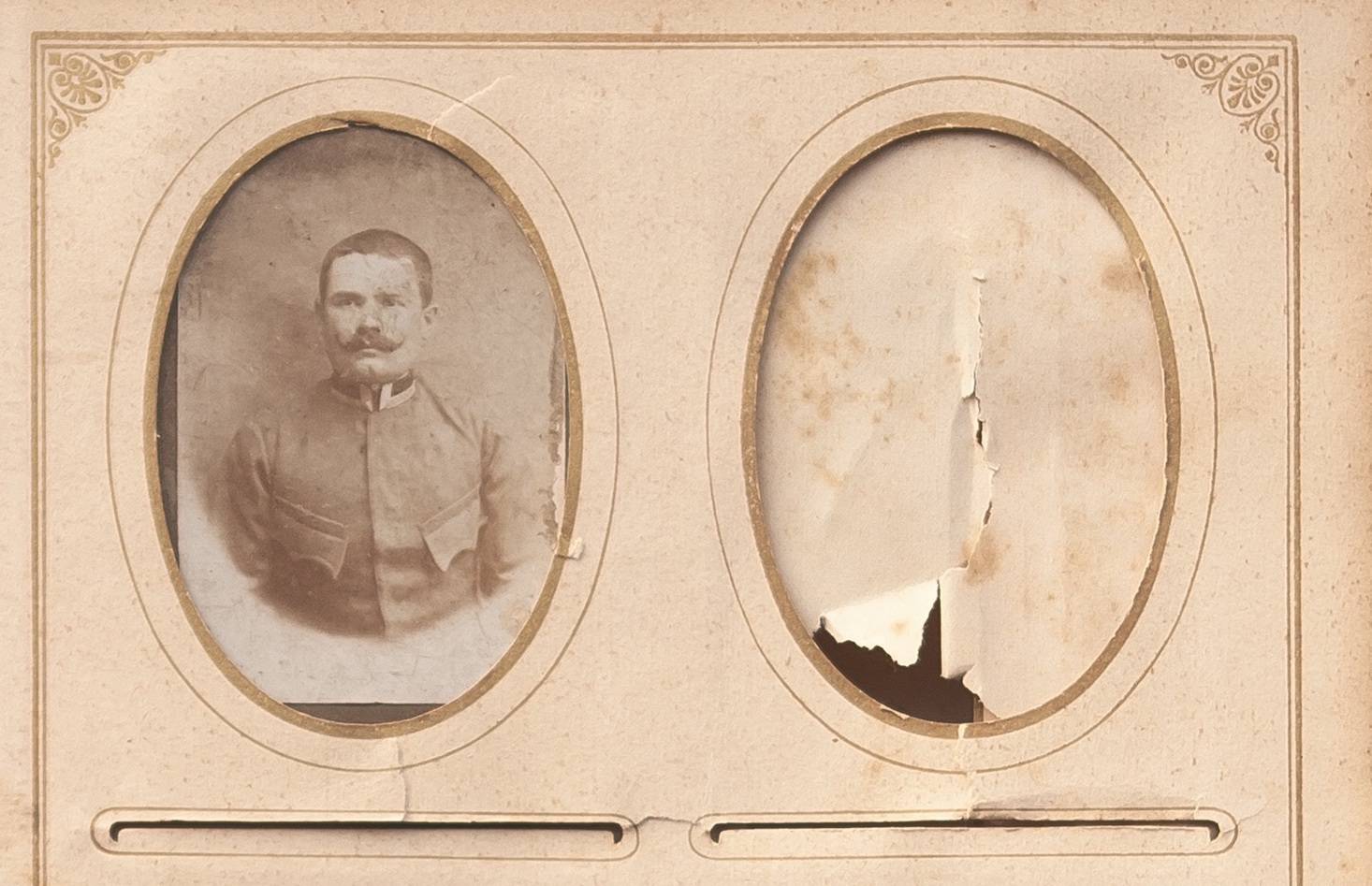
One of my great-grandfathers, William, was one of multiple ancestors whose name was rarely mentioned without being followed by the fact that he was a drunk. When I inherited my mother’s collection of family photos and ephemera, I found a book that my great-aunt had written about his life. It would seem that she personally took it upon herself to learn her father’s story to try and understand the man with whom she never had much of a relationship.

The story was heartbreaking. His mother had been hired out to a family on a farm miles away from her home when she was just a young girl. She was treated like a slave. One of the sons seduced her and promised her the moon to have his way with her, but broke every promise. When she wound up pregnant she was dismissed and destitute. Her sister, married off to a well-to-do businessman, finally took her in with the condition she was to stay out of sight and no one would ever know they were sisters. An unwanted pregnancy of an illicit affair to a man who wanted nothing to do with the destitute young mother and her offspring. Welcome to the world, little man.

William’s life was tragic from the beginning. Despite his best efforts, tragedy seemed to follow him like a stray dog. He certainly made a number of mistakes in life that compounded his troubles, but I certainly began to understand why he learned to drown his sorrows. Perhaps the crowning tragedy of his life was that a rather complex and compelling life story was reduced to a simple “He was a drunk” to all of his descendants.

In today’s chapter, the Chronicler lists all of the families in the ancient Hebrew tribe of Levi who were assigned to be gatekeepers and treasurers in Solomon’s Temple. As I read through the long string of rather meaningless names, I was struck when the Chronicler mentioned a gatekeeper named Zechariah and then followed the name with “a wise counselor.” He didn’t mention any positive or negative character qualities about any of the other names. What made Zechariah such a “wise counselor” that the Chronicler was compelled to mention it? How cool to think that Zac, an otherwise forgettable ancient gatekeeper, had a reputation for giving wise advice that would be remembered for over 3000 years.

In the quiet this morning, I find myself asking a simple question: When my great-grandchildren see a photo of me and ask, “Who’s that dad?” What words will follow “Oh, that’s your great-grandfather Tom. He….” What will my descendants remember about me? Into what short phrase will my life be reduced by those who knew me?

Every day I contribute to the reputation by which I will be remembered.

If you know anyone who might be encouraged by today’s post, please share.

Black Sheep Family

Black Sheep Family (CaD 1 Chr 5) Wayfarer

…and though Judah was the strongest of his brothers and a ruler came from him, the rights of the firstborn belonged to Joseph.
1 Chronicles 5:2 (NIV)

Along my life journey, I had a friend enter my story unexpectedly. This person may take the prize for being the most tragic individual I’ve personally met on my earthly journey. What are you supposed to do as a teenager when you borrow your dad’s car for a date but have to clean up the blood your father left in the back seat and the trunk before picking up your date? Talk about being haunted by your past. This was a heartbreaking story of a child who dealt with more than any child should have to deal with in life. It was a life that ended just as tragically.

In today’s chapter, the Chronicler shares the genealogy of the three tribes who settled east of the Jordan River. These tribes would be part of the northern kingdom of Israel that broke away from Judah and refused to recognize the lineage of King David as monarch. They were all swept away into exile by the Assyrian Empire where they remained at the time of the Chronicler’s writing.

Two prevailing thoughts come to me as I meditate on today’s chapter. First, the Chronicler once again makes it clear that he is primarily interested in the tribe of Judah, from which the Dynastic line of David hails. He makes this evident. Having established this, I find it interesting that he doesn’t shy away from presenting the genealogy of the tribes he would likely consider “black sheep.”

The tribes the Chronicler lists in today’s chapter were the rebels who shunned the tribe of Judah and David’s line. Reuben, in particular, was the dishonored firstborn who lost his paternal blessing. Unlike the Chronicler and his ancestors from Judah, who returned from exile, these tribes remained scattered across the old Assyrian empire.

But they are still family. They are still part of the story.

As I’ve explored my family’s stories on both paternal and maternal sides, I’ve discovered rifts and feuds. Mind you, I discovered nothing outside of the normal conflicts and scandals that are part of the mess that comes with being part of any family. One of the hardest things about family is that it’s not something we get to choose. My mind wanders to my friend cleaning up the blood their father left in the backseat. I can’t imagine.

As a disciple of Jesus, I cannot help but consider Jesus’ thoughts on family which are somewhat conflicting. His own flesh-and-blood mother and siblings once attempted to take control believing Jesus to have lost His mind (Mark 3:21), and Jesus responds by providing an expanded view of family. “Who are my mother and brothers?” Jesus asked before gesturing to all of His followers and declaring them family. Jesus would go on to acknowledge that many who choose to follow Him would be required to leave flesh-and-blood family behind, though he promised they would find far more family ahead than they left behind.

In the quiet this morning, I find my head and my heart holding the tension between honoring, loving, and serving my flesh-and-blood family while acknowledging that I have friends whom I consider family. It’s easy to fall into an either-or, binary mentality on either side of the issue. I find Jesus’ example to be “both-and.” Yes, He seemed to diminish His family when they thought He was out of His mind, but He also used his dying breath to ensure that a spiritual “brother” (John) would care for His physical mother, Mary. This, despite the fact that Jesus had multiple flesh-and-blood younger brothers who were socially responsible for caring for her.

Then, of course, there is the larger reality of genetics which proves that we all came from the same woman. In many ways, Jesus’ teaching is simply pointing to a much larger truth that may only be seen with perfect clarity in eternity. We humans are all one family, whether we are willing to acknowledge it or not. I’m glad that the Chronicler acknowledged his black sheep family members. I find a spiritual lesson in his honesty.

If you know anyone who might be encouraged by today’s post, please share.

“Everyone Has Their Shit”

"Everyone Has Their Shit" (CaD 1 Chr 3) Wayfarer

All these were the sons of David, besides his sons by his concubines. And Tamar was their sister.
1 Chronicles 3:9 (NIV)

Wendy and I created the lower level of our home with a British theme including a small bar that’s our homage to a British Pub. Add in all of the memorabilia from our years in theatre, and I’d like to imagine it would be at home in London’s West End. Next to the bar is a portrait of Scotland’s Robert the Bruce. In the adjoining guest room, you’ll find portraits of some of the more famous kings and queens of Britain. It’s something we’ve had a lot of fun with.

Royalty is a funny thing. Most of the European nations still acknowledge their royal families and lines of succession though they have no real political power. It’s amazing how the Royal family of Great Britain continues to attract such worldwide fascination. The travails of Harry and Megan over the past few years are a glaring case in point.

For our ancient Chronicler and all of the Hebrew people who returned from exile, it is no different. For over half a millennium their history and heritage were intertwined with the royal family and line of succession, the line of King David.

We’re in our third chapter of the Chronicler’s laying out of the historical genealogies of the Hebrew people. Get ready. There are six more chapters of it coming before we switch to the narrative. In today’s chapter, the focus is on the ever-important line of David. David was God’s appointed King and it was through David’s line that the prophets proclaimed a Messiah would be born. For the Chronicler and his people, the lineage of David was at the core of their history and identity.

Of course, anyone who’s watched Netflix’s wonderful series The Crown (which I highly recommend), knows that the story of Queen Elizabeth isn’t complete without the story of her wild sister, Margaret. Then there’s the tragedy of Diana, the whispers-turned-marriage to Camilla, and the bratty “spare” Prince Harry.

I mentioned in yesterday’s post that one of the things I look for when reading through genealogies in the Great Story is something that is out of place. One of the things I mentioned is the mention of a woman amid all of the men. We find that in today’s chapter. The Chronicler lists all of the sons of David from his various wives and concubines. At the very end of the list, he adds “And Tamar was their sister.”

David certainly had plenty of daughters to go with the sons, but only one is mentioned. Without saying another word, the Chronicler has acknowledged to all of his contemporary readers what he knows they all talk about. He’s telling us “There is a story here.” Tamar was that daughter.

For those who may not know, or may have forgotten, Tamar fell in love with her half-brother Amnon who was also the first-born and heir to David’s throne. The heir to the throne ends up raping his younger half-sister and then completely shuns her and tosses her aside. David shoves the entire event under the proverbial rug, which only serves to plant a seed of rage within the heart of Absalom, his third-born son, and Tamar’s full-blood older brother. Absalom would eventually take out his other brothers like Michael Corleone taking out the heads of the five families at the end of The Godfather, and launch a coup to steal the throne from his father. All of this gets reduced to:

“And Tamar was their sister.”

In the quiet this morning, my mind wandered to a couple of conversations I’ve had in the past few weeks. In each case, I was speaking with individuals I have known for over 30 years. I first met each of these people when they were in high school, though there’s no relationship between the two. They are of different ages and from completely different places in life. The connection is that each of them is in the midst of unbelievably difficult circumstances concerning one of their children. The circumstances are completely different but each case is beyond anything I have personally encountered. I can hardly even imagine what these people are going through.

But you’d never know.

In one of these conversations, as I dug into the difficulties they were living with daily, my friend said, “You know, everyone has their shit. It just looks different. Yet, with each person, it’s their shit in their life and they are having to work through it and deal with it and learn from it.” And, this observation stuck with me. I’ve been chewing on it and meditating on the truth of it.

What my friend was getting at is that each person has their own messy, struggling, difficult, tragic, and even shameful story. We are fallen people living in a fallen world. Yet we project to strangers, acquaintances, friends, and even family that things are “normal” and “good.” Nothing to see here. “And Tamar was their sister.”

Over the past few weeks, I’ve found myself considering those with whom I interact. What is this person’s story? What are they dealing with in life about which I have no clue? The lady behind the counter has a company name tag that says, “Karen. I’m here to help.” It could just as easily say, “Tamar. I’m just the sister.”

I’m reminded of Jesus’ scandalous conversation with the Samaritan woman, a stranger who happened to come to draw water while He was sitting there. He ends up telling the woman, “You’ve been married five times, and you’ve not bothered to get married to the man you’re living with.” It’s easy to read that as subtle condemnation, but there’s no hint or evidence of Jesus condemning her in any way. I think it was really about Jesus saying “I see you. I see the story behind the ‘Hello, my name is Mara’ way in which you’re going about the daily chore of drawing water for you and your husband.”

I confess to you that God’s Spirit has long been working on me to be more considerate. Today’s chapter compels me to consider that every individual I interact with has more going on in life than I can possibly know, and respond accordingly.

If you know anyone who might be encouraged by today’s post, please share.

Genealogical Lessons

Genealogical Lessons (CaD 1 Chr 2) Wayfarer

These were the sons of Israel:
Reuben, Simeon, Levi, Judah, Issachar, Zebulun, Dan, Joseph, Benjamin, Naphtali, Gad and Asher.

The sons of Judah:

1 Chronicles 2:1-3a (NIV)

I have been the closest thing my family has to a genealogist. I’m not great at it because I don’t have the time and energy it takes to do it well, but I’ve learned a lot digging into my family history on both my mother’s and father’s sides of the family.

Our daughter Taylor works for a software company that does really cool things recording family stories for subsequent generations so she recently found herself repping their service at a giant conference on genealogy. Upon her return, we had a lot of fun digging into the tools she discovered and swapping tidbits we gleaned on family history. It had always been rumored that we were related to George Washington in some way, and I was excited to be able to firmly establish that I am George Washinton’s first cousin, ten generations removed. Taylor said she was more stoked by learning she was an 11th cousin of Grace Kelly. I guess we get excited about different things. I acknowledged to her that Cousin Grace is much easier on the eyes than Cousin George.

Genealogy has also provided me with some interesting situations. A while back I received a random message from a stranger online. The person was looking for information on an individual and based on their online search they thought I might possibly be related. It turns out they were correct. This individual was a child of the family member. It was one of those family secrets that no one knew about. Now, decades later, this individual was in the precarious position of wanting to know more about this biological parent they never knew, but not being sure if they wanted the truth to be known and open the proverbial can of worms. The situation led to me learning a lot more about some of my family than I ever knew before.

Family is messy. It always has been. It always will be. Genealogy taught me to embrace this truth along with graciously embracing my messy family and its members with love.

Today’s chapter continues the Chronicler’s genealogy. I realize most people skip over these lists, but there are little tidbits in any genealogy that have lessons for me if I’m willing to observe. When reading these genealogies I always look for things that interrupt the order and flow. Why did the author choose to suddenly provide details about this one person when every other person in the family was simply named? Why is a woman named when this is clearly a patriarchal genealogy with 99.9% male family members listed? Why did things switch to a person I can’t connect to anyone just previously mentioned?

There’s actually a handful of these anomalies in the Chronicler’s genealogy in today’s chapter. He had hundreds of years more history to draw from and far more sources at his disposal. He had to make choices about what to include, what to leave out, and how to present it.

What struck me immediately in today’s chapter was the listing of the 12 sons of Jacob (aka Israel). As a patriarchal society that always favored the firstborn son, the natural thing to do would be to start with the firstborn (Reuben) and his descendants and then proceed in order.

The Chronicler cuts directly to the fourth-born, Judah. Judah was the forefather of David. The Chronicler is writing as a Jewish subject of the Persian empire. His generation has returned from exile. They have rebuilt their city and their temple from rubble. He is looking back at his people, his history, and his faith. He is trying to make sense of it all. And who is the most pivotal and celebrated historical figure in the minds of the Chronicler and his contemporaries?

King David. The giant-slayer. The man after God’s own heart. The general. The conqueror who established a great, united kingdom. The psalmist. The priestly king who envisioned the Temple. The man through whom the prophets declared a Messiah would someday come.

The Chronicler is establishing his priorities. The history he is going to revisit to try and make sense of where he and his people now fit into God’s Great Story is going to center on David, the key historical figure in that Story.

In the quiet this morning, this has me thinking about key figures in my family and my family’s story. I can quickly name key figures for good, and key figures for ill. What lasting consequences did these figures have on the family? How do those consequences connect to my story? I also can’t help but think about my life and my story as I consider Milo, Sylvie, and MJ. I sit in the quiet and envision their children and their children’s children. How can I channel God’s love in such a way that it positively impacts their stories?

If you know anyone who might be encouraged by today’s post, please share.

Choosing Humility

Choosing Humility (CaD Lk 14) Wayfarer

“But when you are invited, take the lowest place, so that when your host comes, he will say to you, ‘Friend, move up to a better place.’ Then you will be honored in the presence of all the other guests. For all those who exalt themselves will be humbled, and those who humble themselves will be exalted.”
Luke 14:10-11 (NIV)

Before getting into today’s chapter, a quick update from the Vander Well homefront. As faithful readers know, I love my morning quiet time, and it’s out of that morning quiet that these chapter-a-day posts spring. Just a few nights ago, our daughter and her family moved back to the States from the U.K.. As in, they moved moved…into our house…for the indeterminate future. Ya-Ya and I are so very excited about this. After our grandkids lived an ocean away for five years, we are over the moon to have them just an arm-length away from a cuddle or a hug. However, the empty nest will be a three-generation household for a while with grandchildren whose bodies are still on UK time, where midnight to us is 6:00 a.m. to their wee brains. So, my morning quiet the past few days has turned into playtime and doing the Macarena.

So, please know that my chapter-a-day posts may be published sporadically for at least a few weeks until the holidays are over and life settles into a routine for the household. And, they may be a little more sporadic after that. It’s semi-controlled chaos for the near future. Thank you for your patience and understanding.

Speaking of hospitality. In today’s chapter, Jesus is a dinner guest at the home of a “prominent” local Pharisee. Jesus is still drawing crowds that number in the thousands and so the Pharisee’s dinner attracts a lot of locally prominent people. I find it fascinating that one host found Jesus to be a rude and impudent guest, but the invitations kept coming with different results.

At this particular dinner, Jesus watches as guests clamored and connived for the “seats of honor” at their host’s table. Jesus used the moment to teach a lesson. Basically, if you take a place of honor for yourself and your host tells you to move to the foot of the table because someone more important deserves the seat of honor, your desire to be seen as the most prominent person in the room will turn into the exact opposite. You’ll be embarrassed in front of everyone as you slink to the only open seat as far from the seat of honor as possible. If, however, you are content to take that seat at the foot of the table and your host says, “No, my friend, come sit at my right hand at the head of the table,” then everyone at the dinner will notice as you are escorted to a place of honor.

What fascinated me this morning, is that later in the chapter Jesus seems to extend this same lesson about humility when He turns to the crowds and says, “Whoever does not carry their cross and follow me cannot be my disciple.” This very well-known statement of Jesus loses the power of its meaning when Jesus said it to the crowds.

The Romans who were in control of the country were able to rule their empire for centuries, in part, because they found the most cruel and heinous ways of suppressing dissent, crime, and rebellion. Romans would tie a person to the back of two different chariots and then drive them in opposite directions until the person was quite literally pulled apart. Other victims of Rome would have molten metal poured into their mouths. One of Rome’s more creative means of torture and executions was to tie a person into a huge sack with a snake, a monkey, a dog, and a rooster and then throw the whole sack into the river. The animals would tear the person apart in their terror as they all drowned. According to the ancient philosopher, Seneca, however, it was crucifixion that was the worst torture of all.

“Is there really such a thing as a person who would prefer wasting away in pain on a cross – rather than dying quickly? Would anyone be willing to choose to be fastened to that cursed tree, especially after the beating that left him deathly weak, deformed, swelling with vicious welts on shoulders and chest, and struggling to draw every last breath?”
Seneca, Moral Letters, 101

In separate writings, Seneca described how each crucifixion could vary depending on the executioner, with different ways to sadistically amp up the pain and suffering of the victim.

“I see right in front of me different kinds of crosses made by different people. Some hang their victims upside down. Some impale them through the private parts. Others stretch out their arms onto forked poles.I see ropes, whips, and tools of torture crafted for specific limbs and joints.
Seneca, Dialogue, To Marcia on Consolation, 6.20

In Jesus’ day, crucifixion was a very common and public spectacle. Romans typically had people crucified on the road just outside a town or city. As Jesus and His followers made their way to Jerusalem, town-by-town, they would pass crucified individuals tortured and hanging on crosses that they were humiliated and forced to carry themselves to the place of their execution. I think it very reasonable that Jesus may have been making his way walking out of town with His disciples, entourage, and crowds when they came upon the sight of a criminal carrying his cross under Roman guard. I can imagine this sight caused Jesus to turn to the crowds and say: “And whoever does not carry their cross and follow me cannot be my disciple.”

There is a connection between this moment and His teaching at the Pharisee’s dinner party. Jesus said that humbly accepting the lowest position, even at the risk of social humility was what His followers should do. He then doubles down on this teaching by pointing to a bloody victim of torture, in complete agony, dragging the cross on which he will be killed, and says, “this is what you must do to be my disciple.”

In the few seconds of quiet I had this morning between the unrelenting barrage of a six-year-old’s questions and dancing the Macarena, I found myself thinking about my own willingness to choose humility. In a world that is all about popularity, likes, followers, status, and influence, how do I willingly choose into the lowest rung, the foot of the table, or carrying a cross today? On this day and the upcoming weekend of semi-controlled chaos, holiday festivities, family gatherings, friend gatherings, and hoop-la, how can I tangibly choose the attitude and consequential behaviors Jesus desires of me?

Have a very Merry Christmas, my friend. Thank you for reading, and following, and listening. I am grateful for you. If you don’t see a daily post in the weeks ahead, just know I’m probably doing the Macarena with my grandkids.

If you know anyone who might be encouraged by today’s post, please share.

A Selective Backward Glance

A Selective Backward Glance (CaD Job 8) Wayfarer

“Surely God does not reject one who is blameless
    or strengthen the hands of evildoers.”

Job 8:20 (NIV)

I mentioned a previous post some of the different ways people communicate, and I hinted at time orientation. I hadn’t given a ton of thought to this until earlier this year when Wendy and I began to really explore how it affects our relationship and communication.

I have a very strong past orientation. I love history. When I was young adult and really began digging into understand myself, I began to dig into my family history. I am a product of the family system into which I was born and raised. My parents were products of the family systems into which they were born and raised. Human systems have certain ways they function and operate which can be generational in nature. In digging into the past I discovered a lot about my family and myself. Often look back in time to gain clarity on my present circumstances.

Wendy has a very strong future orientation. She appreciates my love of history, but also she rolls her eyes when I geek out on it. Unlike me, she is always thinking ten steps ahead with her internal radar because she knows that future circumstances will go much smoother for everyone involved if things are planned well, prepped for, and executed properly.

We have come to realize that some of our marital strife comes from the different time orientations with which we navigate life, but that’s another blog post.

In today’s chapter, we find Job continuing to sit on the refuse ash heap in his off-the-charts agony joined by three friends. Eli insinuated that Job’s suffering must point to some secret sin that caused the Almighty to punish Job. Job’s response was that he was innocent and did nothing to warrant his suffering, and challenged his friends to prove him wrong. So, his friend Bill steps into the batter’s box to take his swing.

Bill is a straight-shooter. He is direct and gets right to the point. He takes issue with Job’s claim of innocence and anguished cries to the Almighty. To Bill and his theological world-view, this is a black-and-white issue: “Your children sinned. God took them out. Period. End of sentence.”

What follows is fascinating because Bill clearly has a past time orientation. He tells Job to look to the past, the wisdom of the ancients and ancestors. in order to gain clarity on his present circumstances. Bill then shares a Hebrew wisdom poem (vss 11-19) about how the godless suffer the consequences of their godlessness. He then concludes in his black-and-white worldview that suffering is a spiritually natural consequence of godlessness and if Job was really blameless then God would restore Job’s fortunes and blessings.

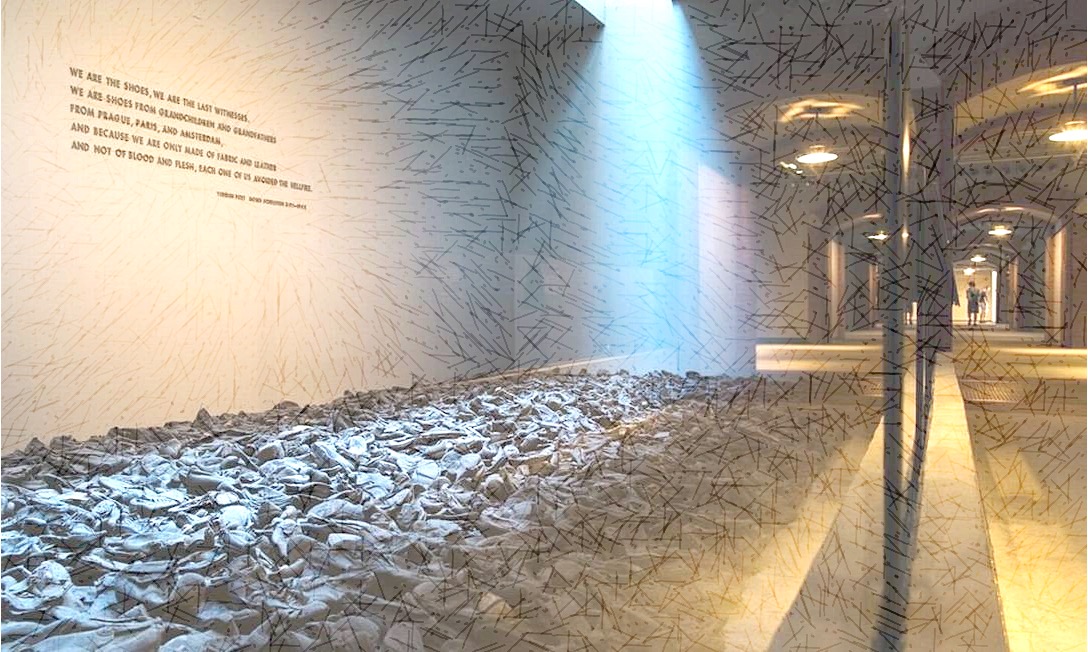
I pondered Bill’s words in the quiet this morning. As someone with a strong past orientation, I quickly found Bill’s argument ludicrous. Human history is a long string of stories about human suffering, punctuated by certain events in which suffering happened on a massive scale. Within those events are nameless, faceless human beings who did not deserve their fate. My mind immediately reminded me of my trip to the U.S. Holocaust museum and the sight of all those shoes piled up just as they were piled up when their nameless, faceless owners were stripped and sent to the gas chambers.

My brain then provided me with a name, and a face from the past: Corrie Ten Boom and her family. Every other member of her family took of their shoes and placed them in that pile. Their only crime was that their love of Jesus and their desire to do the right thing led them to hide Jews in their home in an effort to save their lives. Her story of suffering in the concentration camp echoes Job’s anguished cries, and rightly so.

So, all due respect Bill, but in telling Job to take a backward glance to the past, to the ancients and their wisdom, you have chosen to be carefully selective in your stated evidence, so as to justify your simplistic conclusion. History is filled with nameless, faceless individuals who echo Job’s anguished cries in the suffering and death they blamelessly endured. Bill, you told Job that his words were “a blustering wind,” but it is your simplistic, theological world-view that I find as hollow as that pile of old, footless shoes.

If you know anyone who might be encouraged by today’s post, please share.