Tag Archives: Enneagram Type Four

Amidst the Conflict

Amidst the Conflict (CaD Matt 12) Wayfarer

Anyone who speaks a word against the Son of Man will be forgiven, but anyone who speaks against the Holy Spirit will not be forgiven, either in this age or in the age to come.”
Matthew 12:32 (NIV)

My heart is heavy and sad this morning. I have recently found myself in the midst of many conflicts. I don’t like conflict. I confess that I don’t do it particularly well. I happen to be married to an Enneagram Type 8 for whom conflict is a form of intimacy. I, as an Enneagram Type 4, find that conflict triggers my deep sense of shame. It means we’ve had to learn some creative dance moves when it comes to conflict.

The conflict I’ve been experiencing lately is not with Wendy, however. It’s not really even with me. It’s within a human system of which I’m a part. Members of that system are drowning in negativity toward others. When I have to be around it I’m left feeling like my soul is soiled. It’s like I crave a spiritual and emotional shower. Even if I take one, I’m left with an acute sense of sadness as I’m drying off.

Perhaps it’s a bit of synchronicity that today’s chapter is focused on the conflict between Jesus and his most caustic critics. Ironically, it was the institutional religious establishment who led the opposition to Jesus. The Pharisees, in particular, were a powerful political constituency in the leadership of the Hebrew religious system of that day. Matthew offers a trinity (there’s that number three again from Matthew the Quirk) of episodes highlighting the conflict. Matthew focuses on the religious leaders motives:

“But the Pharisees went out and plotted how they might kill Jesus.”

“But when the Pharisees heard [that Jesus healed a demon possessed man], they said, “It is only by Beelzebul, the prince of demons, that this fellow drives out demons.”

“Then some of the Pharisees and teachers of the law said to him, ‘Teacher, we want to see a sign from you.'”

What Matthew makes obvious is that there was zero openness to Jesus’ teaching. They viewed Jesus as a threat. He was a wrench in the human religious system they controlled; A system that was the source of their personal power. Everything they did was motivated by a self-centered desire to maintain personal control of the system that fed their ego, social status, and religious self-righteousness. Theirs was a system of exclusivity and strict adherence to social, cultural, and traditional norms. Jesus was an outsider. He didn’t fit any of the norms, and He possessed both power and authority that threatened them. Whenever a fundamentalist system built on exclusivity encounters such as threat, it will always circle the wagons and declare the threat evil.

What struck me this morning as I read these three episodes is the contrast between Jesus’ actions and teachings and the reactions of his enemies. His disciples, hungry, simply and casually slid their hands over heads of grain as they walked through the field in order to have a snack. A man with a hand shriveled and disfigured is miraculously healed. A demon-possessed man is freed from the evil that had captured and kidnapped his body and soul.

These are all good things.

Jesus’ enemies declares them all evil.

In the midst of Jesus’ response, He famously mentions that there is one sin that is unforgivable, and that is to “speak against” the Holy Spirit. What does that mean? It means exactly what His opponents are doing. To look at something good and call it evil. To oppose what God is doing with selfish motives. To exclude those whom God loves and in whom God is working for personal gain and self-satisfaction.

Which brings me back to my sadness. The personal attacks. The whispered, salacious accusations. The threats used as systemic leverage. I’m reminded this morning that Jesus’ death and resurrection did not change evil. For now, evil remains and perpetuates the same systemic paradigms that Jesus faced in today’s chapter. What Jesus’ death and resurrection did change is me. As a disciple of Jesus, I am called to navigate, be present, and participate in broken human systems and the evil I find within them in order to bring the power and presence of God’s love and shalom as I best as I am able.

I confess that most of the time I don’t want to do so.

Did I mention that I hate conflict?

In the quiet this morning, God’s Spirit whispers to my spirit: “Whoever wants to be my disciple must deny themselves and take up their cross and follow me.” I guess that means following Him into unhealthy human systems in which evil wreaks havoc and perpetuates conflict.

The words of an old hymn rise from the memory banks in reply as I contemplate Holy Week next week, and as I think about Good Friday in seven days:

King of my life, I crown thee now.
Thine shall the glory be.
Lest I forget thy thorn-crowned brow
Lead me to Calvary.
Lest I forget Gethsemane.
Lest I forget Thine agony.
Lest I forget thy love for me,
Lead me to Calvary.

If you know anyone who might be encouraged by today’s post, please share.

These chapter-a-day blog posts are also available via podcast on all major podcast platforms including Apple, Google, and Spotify! Simply go to your podcast platform and search for “Wayfarer Tom Vander Well.” If it’s not on your platform, please let me know!

Wallflower

Wallflower (CaD Matt 7) Wayfarer

“For everyone who asks receives; the one who seeks finds; and to the one who knocks, the door will be opened.
Matthew 7:8 (NIV)

The further I get on this life journey, the more things I discover about myself. When I was a young man, I thought I knew myself well, but the reality is that I didn’t know my true self at all. What I realized along the way is that self-discovery required the hero’s journey. It is only through wilderness wanderings, crisis, and trial that I discovered the means by which I uncovered things buried deep within.

It is only later in life that I have learned to recognize one of my patterns of behavior. The truth is that I am, at the heart of things, a wallflower. I don’t like to initiate things, rather I like to be invited in to things. I tend not to insert myself or take the first step. I don’t want to go chasing after things, I like to wait for things to naturally flow to me.

I have learned and experienced that this particular trait, like most quirks of personality and temperament, comes with both positive and negative consequences.

Today’s chapter is the final of three chapters that make up Jesus’ Sermon on the Mount. As He approaches the end of His message, Jesus famously tells His audience to take the initiative to spiritually ask, seek, and knock. As I read this in the quiet this morning, my soul felt familiar pangs of internal discomfort. Asking, seeking, and knocking on opportunity’s door all require initiative. They all come with the risk of failure, disappointment, and rejection. That’s where my struggle is rooted.

I have learned from my study of the Enneagram that across the nine types there is a triad of core struggles: fear, anger, and shame. As an Enneagram Type Four, shame is my core struggle. It is the deep sense that there is something flawed in me, that I am not enough, and I am worthless.

If I step out and take the initiative to ask, there’s a chance that the answer will be “no, not for you” and it will only reinforce my shame. Nope. I think I’ll just stand here and wait for someone to come along, notice me, and offer me what I desire.

If I seek and take the initiative to find, I could easily find myself back in the wilderness again, feeling lost and void of the things I need to find my way. Nope. I think I’ll just stand here at the edge of opportunity until someone offers to safely guide me.

If I knock, I don’t know who will open the door. I don’t know how they will respond to my interruption. Maybe they’re having dinner, or indisposed, or hate being interrupted. There’s a chance they’ll slam the door in my face. Nope. That would only reinforce my shame. It’s easier just not taking the risk. I’ll just stand here outside the door and wait for the door to open on its own.

Ugh. Even writing this honest assessment of my inner thoughts stirs my sense of shame.

In the quiet this morning, I find myself reminded of the older brother in Jesus’ story of the Prodigal Son. He was angry that His father threw a big homecoming party for his wayward, disobedient little brother. He complains that not once had his father thrown a dinner party for him and his friends. The father replies, “But, son, you never asked.”

I’m still learning. Overcoming my core struggle with shame requires me to exercise faith despite my fear. This wallflower has to have the faith to step out onto the dance floor, approach that girl with the wild head of curly, mahogany hair and mischievous look in her blue eyes and ask her to dance. Yes, she might say no. On the other hand, I might find out her name is Wendy and taking the initiative to ask her for a dance might launch the greatest and most profitable adventure of my life journey.

I’m still learning.

Lord, in the quiet this morning, I ask that you continue to teach me, I seek your grace for being a slow learner. Heavenly Father, I’m knocking on your door this morning and wondering if I might possibly have your blessing this day. Thanks.

If you know anyone who might be encouraged by today’s post, please share.

These chapter-a-day blog posts are also available via podcast on all major podcast platforms including Apple, Google, and Spotify! Simply go to your podcast platform and search for “Wayfarer Tom Vander Well.” If it’s not on your platform, please let me know!

The Tragedy of Saul

The Tragedy of Saul (CaD 1 Sam 18) Wayfarer

When Saul realized that the Lord was with David and that his daughter Michal loved David, Saul became still more afraid of him, and he remained his enemy the rest of his days.
1 Samuel 18:28-29 (NIV)

The history of theatre traces its roots back to ancient Greece. The stories that the Greeks adapted for the stage were typically comedies or tragedies. Even Shakespeare’s plays are categorized as comedy, tragedy, or history. The iconic comedy and tragedy masks continue to symbolize the theatre to this day.

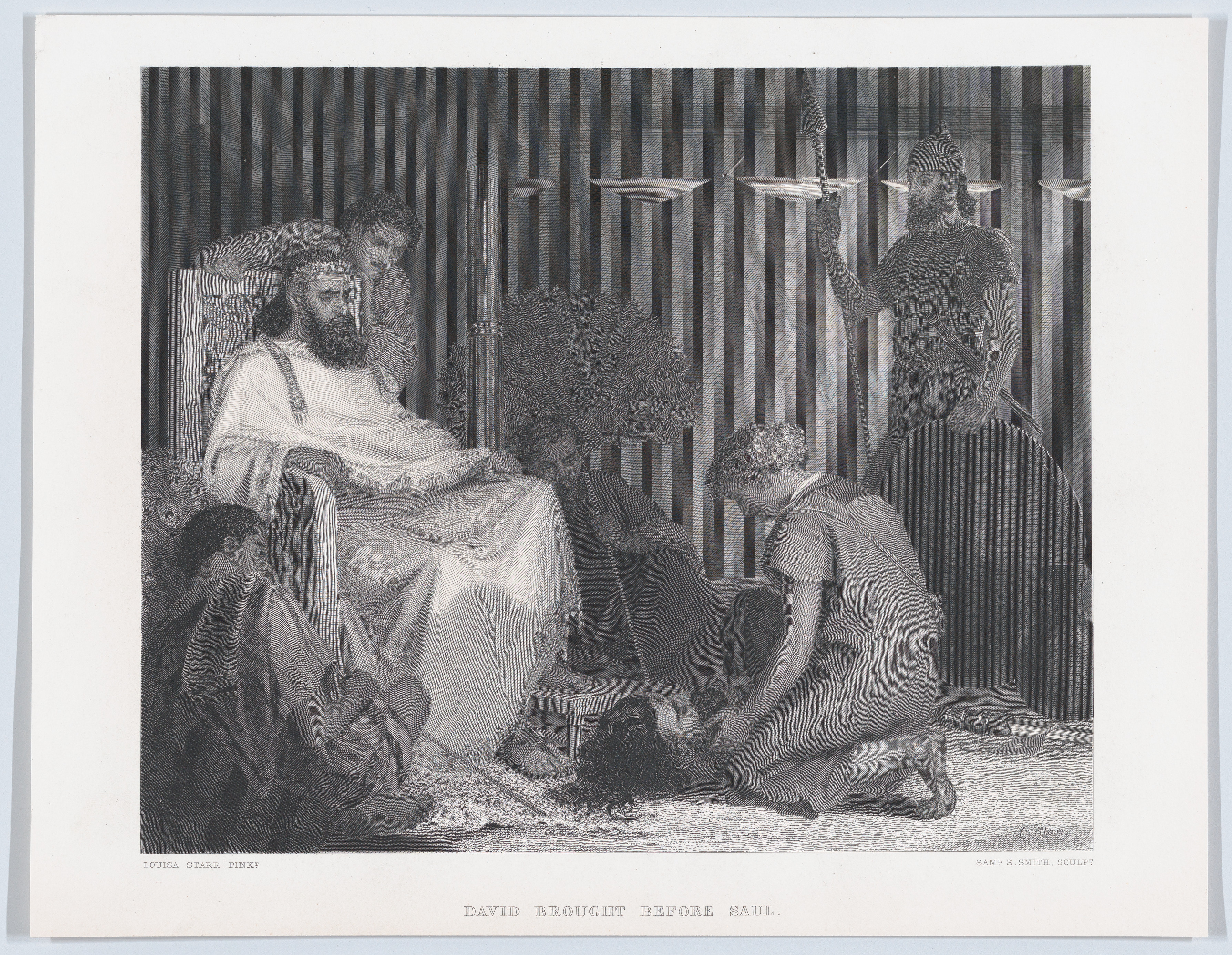
In all of the Great Story, Saul may arguably be the most tragic figure. Given the opportunity of a lifetime, his ego, pride, and envy lead him on an ongoing, downward spiral as he becomes obsessed with his anointed rival, David.

In today’s chapter, the author of 1 Samuel documents the stark contrast between David and Saul. David is humble and successful in everything he does. He’s a successful warrior, musician, leader, and lover. Five times in today’s chapter the author reminds us of David’s success and God’s favor towards him. Six times in today’s chapter, the author documents Saul’s anger, jealousy, envy, and rage.

To make matters worse, Saul appears to heed The Godfather’s advice: “Keep your friends close, and your enemies closer.” He intertwines his life with David to the extent that he can’t escape. David is always there. David is his minstrel. David is one of his best military officers. David is his son’s best friend. Jonathan treats David like a brother. David is the husband of his daughter. Michal is in love with the guy. Every decision Saul makes assures his self-destruction, while every decision David makes solidifies his success to Saul’s envious chagrin.

Along my life journey, I’ve observed individuals whose lives appear to be an echo of Saul’s. Their lives are one ongoing series of tragedies, the fruit of their own foolishness and cyclical poor choices. I’ve also observed those whose lives appear to be charmed like David. They succeed at everything they do and appear blessed in every way. In contrast, they appear to make routinely wise choices and enjoy a general sense of favor.

In the quiet this morning, there were two things that struck me as I meditated on the contrasting characters of Saul and David. First, I’ve learned along my spiritual journey that I have a nasty envious streak. Not surprisingly, it is the core weakness of an Enneagram Type Four (that’s me). It took me years to see the fulness of it in myself. I’m still in process of learning how to address it in a healthy way. So, I have to confess that I identify with Saul more than I care to admit.

The second thing that struck me is simply the cyclical and systemic pattern of Saul’s decline and David’s rise. The text states that God’s favor was with David and not with Saul, so there’s a spiritual component to it, but there is also the fact that Saul continuously made poor choices that ensured his failure, while David continuously acted with humility and made wise decisions. This leads me to consider my own choices – the choices I made yesterday, and the choices I will make today. Where am I making poor choices? Where am I making wise choices? How can I make fewer of the former and more of the latter?

David wasn’t perfect, by any means, but I’d prefer that my story look more like his than Saul’s.

If you know anyone who might be encouraged by today’s post, please share.