Tag Archives: Zechariah 9

A Different Kind of Kingdom

Rejoice greatly, Daughter Zion!
    Shout, Daughter Jerusalem!
See, your king comes to you,
    righteous and victorious,
lowly and riding on a donkey,
    on a colt, the foal of a donkey.

Zechariah 9:9 (NIV)

Over the past few years, my local gathering of Jesus’ followers has been focused on the phrase Jesus taught his disciples to pray: “Your kingdom come. Your will be done on earth, as it is in heaven.” Over a three year cycle, we have contemplated the meaning of God’s kingdom within each of us, God’s kingdom in our community with others, and God’s Kingdom as we are sent to interact with the world around us.

In my own personal contemplation, I’ve found myself meditating on the fact that God’s kingdom operates opposite of the world I live in.

The world I live in encourages me to acquire more and more, while Jesus said that if I really want to be rich in God’s economy I should practice radical generosity.

The world I live in encourages me to hate my enemies, be suspicious of those who are not like me, and fight against those who have a different worldview than mine. Jesus said that in God’s kingdom I am not to repay evil for evil, but bless those who curse me.

The world I live in encourages equitable pay for equitable work. Jesus said that if I want to be part of God’s Kingdom, I have to be willing to walk further than what’s expected, to give more than has been asked, and to be content if and when I see others who seemingly have it better off than me.

The world I live in worships and rewards audacity, wealth, celebrity, and ego.

The prophet Zechariah lived and proclaimed his prophecies during the period known as the Babylonian exile. Babylon had destroyed Jerusalem and torn Solomon’s Temple into ruins. Seventy years later, Zech’s messages and prophecies concerned the rebuilding of Jerusalem and God’s promises of restoration.

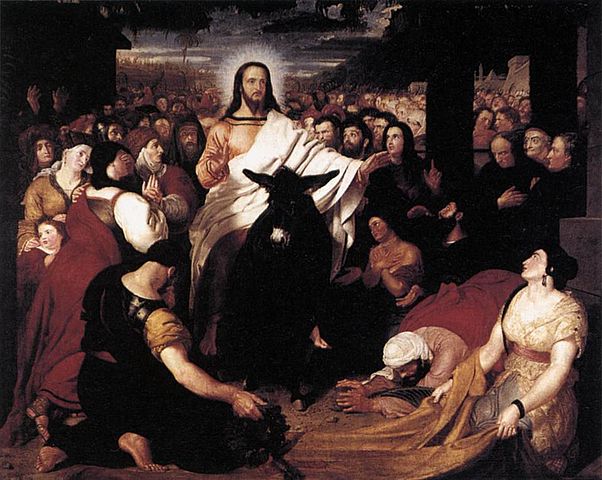
In today’s chapter, Zechariah prophetically envisions the “coming king” arriving in a rebuilt Jerusalem, not with the pomp of a royal parade, but humbly riding on a donkey. And, that’s just what Jesus did. Jesus’ followers thought that Jesus was going to wipe out the Romans, give the corrupt religious leaders their just desserts, and set up an earthly kingdom in which they would have positions of worldly prominence. Instead, Jesus suffered cruelly and died violently at the hands of His enemies. After rising from the dead, Jesus reminded His followers of what He’d been telling them all along: They would experience the same fate.

In the quiet this morning I find myself meditating on the economics of God’s Kingdom, which is so opposite the way my world operates. It’s so different than the way I’ve been taught to operate in this world. The media has already trended a million different ways since two weeks ago, but I can’t help but think about Brandt Jean forgiving his brother’s killer in public, then going the extra mile to ask the judge if he can give her a hug.

At that moment Brandt Jean brought God’s kingdom to earth as it is in heaven. He gets it.

God, as I enter this new day, help me to do the same.

Trelawney, Talking Trash, and the Prophetic Twist

Rejoice greatly, O daughter Zion!
    Shout aloud, O daughter Jerusalem!
Lo, your king comes to you;
    triumphant and victorious is he,
humble and riding on a donkey,
    on a colt, the foal of a donkey.
Zechariah 9:9 (NRSVCE)

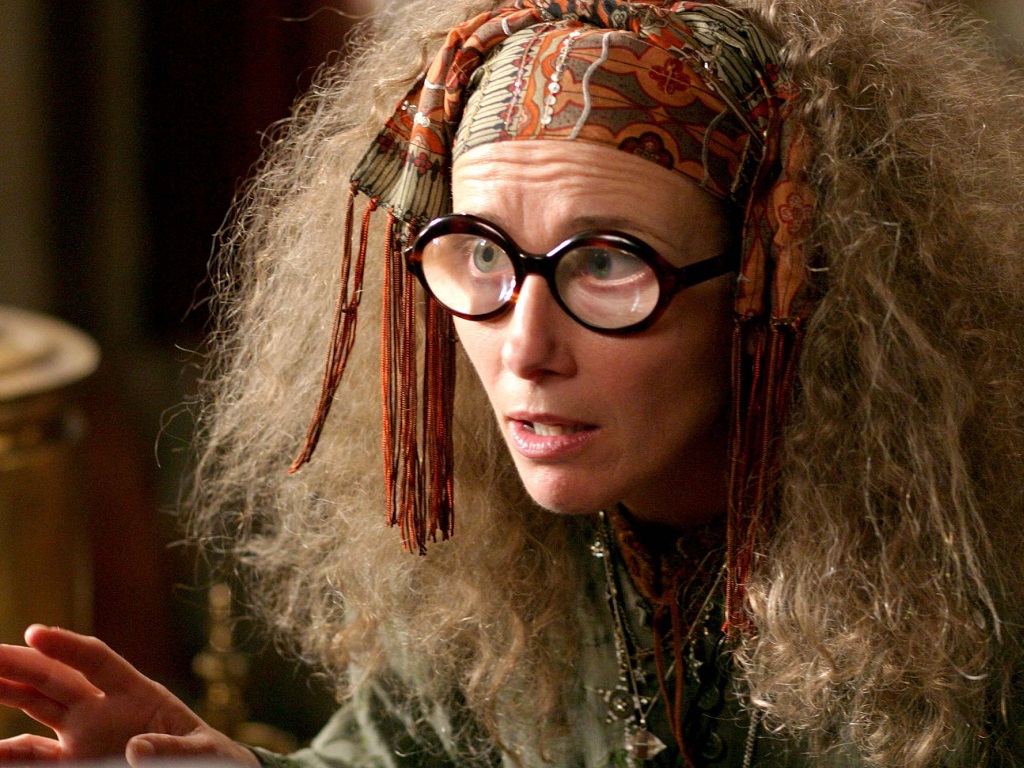
In the Harry Potter series is a character named Sybil Trelawney who teaches the students of Hogwarts the art of divining the future. What makes Professor Trelawney funny and endearing is the absolute certainty with which she consistently predicts the most dramatic and horrifying demises of her students while proving incapable of accurately predicting the future 99.9% of the time. Nevertheless, on at least two occasions (of which she is blissfully unaware) Professor Trelawney actually utters prophesies that are crucial to Harry and his conflict with the evil Lord Voldemort.

Reading the oracles and poetic writings of the ancient Hebrew prophets is not something most people enjoy. The language is strange, the kings and nations mentioned are foreign to us,  as are the circumstances the prophets are writing about. It’s easy to dismiss and ignore the prophets just as Harry and his fellow students roll their eyes and dismiss poor Professor Trelawney.

Be careful, however, because you just might miss something really important.

Back in Zechariah’s day, every nation had their version of prophets and oracles who would seek to divine God’s will and predict the future. Often, this was about whether their king, army and nation would be successful in battle, or in seeking vengeance and justice. Prophets perfected what we call on today’s athletic fields “talking smack.”  Do you ever see athletes on television jawing, taunting and trash talking their opponents in an effort to get inside their opponents head and psyche them out? Much of the prophets’ poems and oracles are simply a version of ancient political smack.

In today’s chapter, Zac’s oracle concerns neighboring nations and city-states who sought to thwart the rebuilding of Jerusalem and the  Temple of Solomon.  Zac’s prophetic message predicts that these neighborhood bullies are going down to God’s righteous defeat and that God is going to save, protect, and prosper His people.

But right in the middle of this trash talking talk of bloodshed, destruction, and doomsday Zac plugs in a strange poetic stanza. It stands out because it is so different from the rest of Zac’s oracle:

Lo, your king comes to you;
    triumphant and victorious is he,
humble and riding on a donkey,
    on a colt, the foal of a donkey.

In the midst of a prophecy about overwhelming victory and annihilation over their many local enemies, Zac does not describe the triumphant victorious king of the Jews as riding in splendor on a chariot of gold. This isn’t a warlord king surrounded by armies with heralds riding in front shouting praise and glory. Zac reveals a king that stands in complete and stark contrast to the rest of the oracle. This king is humble and riding on a lowly donkey.

Of course, it was this prophetic verse that foreshadowed an important event that would happen 400 years later:

When they neared Jerusalem, having arrived at Bethphage on Mount Olives, Jesus sent two disciples with these instructions: “Go over to the village across from you. You’ll find a donkey tethered there, her colt with her. Untie her and bring them to me. If anyone asks what you’re doing, say, ‘The Master needs them!’ He will send them with you.”

This is the full story of what was sketched earlier by the prophet:

Tell Zion’s daughter,
“Look, your king’s on his way,
    poised and ready, mounted
On a donkey, on a colt,
    foal of a pack animal.”

The disciples went and did exactly what Jesus told them to do. They led the donkey and colt out, laid some of their clothes on them, and Jesus mounted. Nearly all the people in the crowd threw their garments down on the road, giving him a royal welcome. Others cut branches from the trees and threw them down as a welcome mat. Crowds went ahead and crowds followed, all of them calling out, “Hosanna to David’s son!” “Blessed is he who comes in God’s name!” “Hosanna in highest heaven!”
Matthew 21:1-9 (MSG)

In an otherwise forgettable oracle intended to trash talk the neighboring teams who threatened their building project, the prophet Zechariah waxes Professor Trelawney-like and prophesies about the coming Messiah; a Messiah who doesn’t look anything like anyone expects.

This morning I’m thinking about the mysterious nature of the prophetic. The prophetic has always been a part of the human experience. The prophetic is part of our oldest myths and our greatest stories from Shakespeare to Harry Potter. Prophecy is listed by the Apostle Paul as one of the most important of spiritual gifts, despite the fact that it’s one of the least understood or defined.

The prophetic is slippery and strange. There is so much about it that isn’t logical and seemingly makes no sense. So much of it misses the mark altogether, and sometimes it is just plain silly. That is, until that moment when it is suddenly and unexpectedly prescient and poignant and mind-bending; Until it is absolutely crucial to the story like a Messiah who doesn’t look anything like anyone expects.

Chapter-a-Day Zechariah 9

Ticker tape parade for presidential candidate ...
Image via Wikipedia

“Shout and cheer, Daughter Zion!
   Raise the roof, Daughter Jerusalem!
Your king is coming!
   a good king who makes all things right,
   a humble king riding a donkey,
   a mere colt of a donkey.” Zechariah 9:9 (MSG)

I think about the mental images in my mind of Kings and Generals marching victorious into their cities. I see in mind the rows upon rows of German troops with Hitler riding in his car up Paris’ Champs-Elysees’ with the Arc de Triomph in the background. I see American heroes riding through Manhattan, the sky so thick with ticker-tape that you’d think it was a blizzard. I envision massive crowds, starched dress uniforms, and and polished dress shoes reflecting the noonday sun like millions of tiny mirrors on the streets. I imagine the impressive site of row upon row of Roman legion with their bright red capes flowing in the wind as they march through the streets of Rome.

I contrast that with the fulfillment of Zechariah’s prophecy. I can picture King Jesus on a small donkey with his hapless parade of simpleton followers; Fishermen and yokels from out in the sticks north of Galilee marching into Jerusalem’s gate for the Passover. No wonder the mighty Roman Governor, Pontius Pilate,  looked with incredulity when the beaten, bloody Jesus was brought to him by the religious power brokers less than a week later.

“This guy? A king?!” I can hear him say. “Seriously? You’ve got to be kidding me.”

Jesus said, “My kingdom is not of this world. If it were, my servants would fight to prevent my arrest by the Jewish leaders. But now my kingdom is from another place.” John 8:36 (NIV)

One of the things I love about Jesus, one of the things that leads me to believe that he is exactly who He claimed to be, is that He is not like any of the others my history books describe. He is a King, though not of this world.

Jesus is nothing that I have come to expect, and everything that I’ve discovered I need.

Enhanced by Zemanta