Tag Archives: Unclean

“Unclean!”

“Unclean!” (CaD Lev 13) Wayfarer

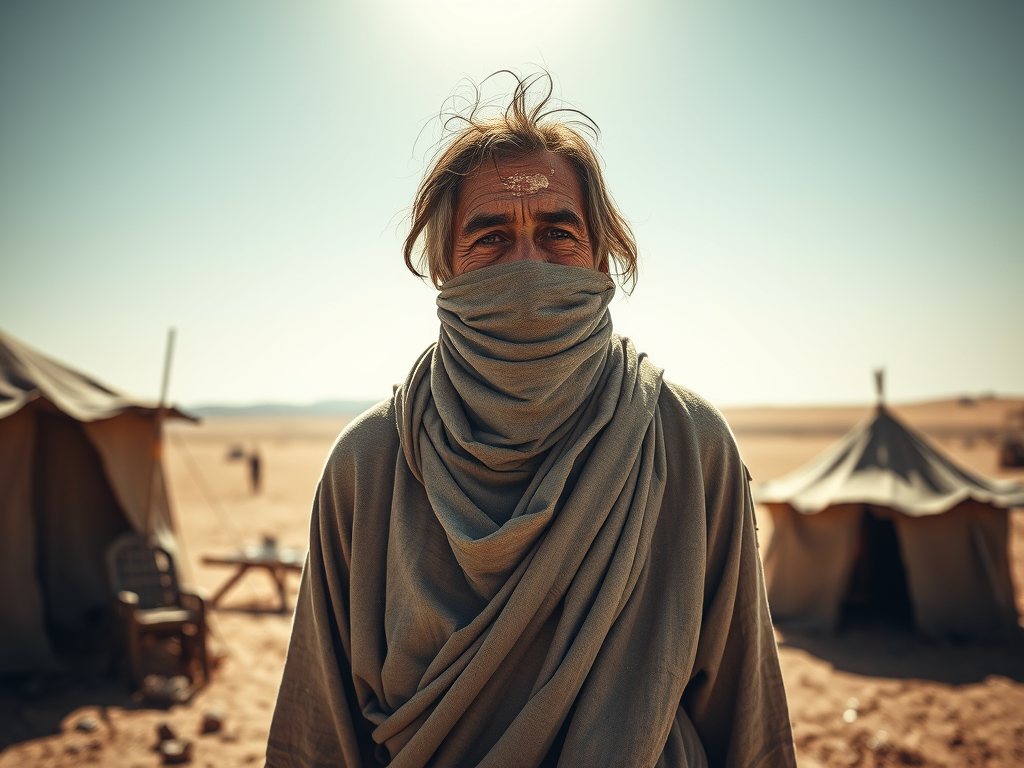
“Anyone with such a defiling disease must wear torn clothes, let their hair be unkempt, cover the lower part of their face and cry out, ‘Unclean! Unclean!’ As long as they have the disease they remain unclean. They must live alone; they must live outside the camp.
Leviticus 13:45-46 (NIV)

We live in the most ridiculously healthy era of human history. Never has have so many human beings on the face of the earth had access to medical care. Never has humanity, on the whole, been as healthy and wealthy. I encourage you to take four minutes and watch Dr. Hans Rosling show you the animated data from the past 200 years. When I saw how poor and unhealthy the people of the world were in 1800, it gave me some perspective to imagine how much worse it must have been around 1500 B.C. when the Hebrew tribes were wandering in the desert becoming a nation.

Today’s chapter is strange, repetitive, and more than a bit boring for modern readers. It is all about skin diseases and mold. To get at the heart of what’s going on in today’s chapter I have to put my feet in the sandals of the Hebrews. There is no healthcare. There are no doctors. There’s no pharmacy. And yet, there is an understanding that disease can quickly wipe out an entire population. God through Moses is setting up a triage system as it relates to skin diseases, infection, and substances that can create health problems for their community as a whole. There’s even a system of quarantine for those who might have something that could be contagious. This is a giant leap forward for these people who will be protected from untold health and medical issues going forward through the priests examining, diagnosing, and prescribing quarantine when needed.

But there’s a spiritual element to this as well. According to the Creation story in Genesis the consequence of sin was that our bodies became subject to death and illness. Despite the fact that I will live 50-60 years longer than the average American in 1800 and have access to the greatest healthcare in human history, I can’t escape the eventual physical decline that aging will bring. I am doing to die. “All have sinned and fallen short of the glory of God,” Paul writes to the believers in Rome. He goes on to remind them, “The wages of sin is death.”

I am spiritually “unclean.”

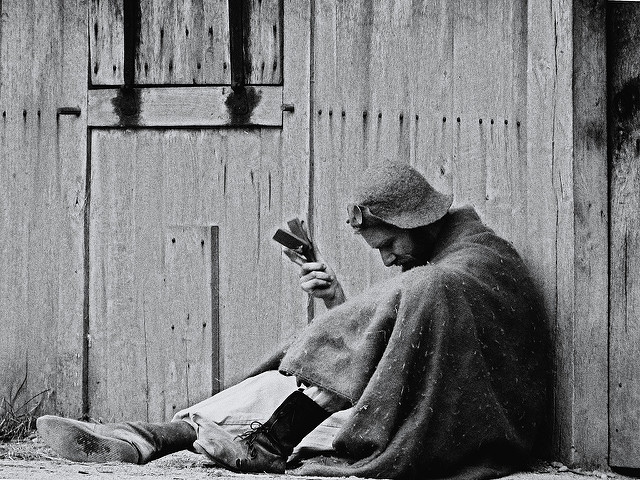
How tragic for the person with incurable leprosy. Forever banished to live outside the camp, to wear torn clothes, look like a beggar, and cry out “Unclean!” whenever a “healthy” person was near to warn them off. It was necessary for the health and safety of the community, but what must it have done to the soul of the person? Never to be hugged or touched by your loved ones ever again. To have people shun you, children fear you, and still be condemned to proclaiming “Unclean!” knowing that it will forever perpetuate the bitter isolation and public scorn.

Which reminds me of an often overlooked episode of Jesus’ story. I picture what I have just described, a man condemned to this life as a leper. His clothes are torn. His hair is unkempt. He has a mask covering his face. His is a life of bitter isolation and public scorn. People literally “avoid him like the plague.” Day and night he shouts “Unclean!” if anyone draws near. Lord only knows how long it had been since he’d experienced a human touch, a kind word, or an ounce of kindness. He approaches Jesus on his knees and asks, “If you want to, you can make me clean.”

Mark is careful to describe that Jesus reached out and touched the man.

“I want to,” Jesus replied.

The man’s leprosy was healed.

Suddenly, this episode takes on a whole new beauty and meaning for me. I may not have leprosy, but I am a sinner stuck in this body subject to sin, sickness, and death. I am unclean. Who will save me from this state?

“Jesus? If you want to…”

If you know anyone who might be encouraged by today’s post, please share.

These chapter-a-day blog posts are also available via podcast on all major podcast platforms including Apple, Google, and Spotify! Simply go to your podcast platform and search for “Wayfarer Tom Vander Well.” If it’s not on your platform, please let me know!

Touch and Cleansing

“Anything that an unclean person touches becomes unclean, and anyone who touches it becomes unclean till evening.”
Numbers 19:22 (NIV)

There is an old saying that “cleanliness is next to godliness” and the saying may well be rooted in the religious rituals God gave to the ancient Hebrews in the book of Numbers. The theme of today’s chapter are the things that made one “unclean” and the rituals for making them “clean” again. While there is certainly spiritual metaphor at work here, there is also practical application for keeping a nation of nomads alive approximately 3500 years ago.

Throughout today’s chapter I got the sense of reading an ancient hygiene manual. Being around things like dead bodies (which may carry all manner of contagion) make a person “unclean.” You had to remain outside the camp for seven days (we call that quarantine), ritually wash, and then wash your clothes before you could be enter the camp once more. Through the ritual, God protects the community from that which could harm it.

By the time Jesus arrived on the scene in history 1500 years later, the “clean” and “unclean” designations of Moses’ law had morphed into systemic religious and social prejudice. Rules had been made to define the rules. Religious Hebrews weren’t using the “unclean” designation to protect the community, but to separate themselves from lower class individuals and those with whom they didn’t want to mix socially.

Read Jesus’ story and you’ll find that time and time again He was breaking the rules. He broke the rules for working on the Sabbath. He touched that which the Hebrew religious leaders said was “unclean” (e.g. a leper, a woman bleeding, a woman caught in adultery).

One of the most powerful stories is when a leper falls before Jesus and says, “If you want to, you can make me clean.”

He didn’t say “you can heal me” or “you can take my leprosy away” or “you can make me whole.” He said you can make me “clean.”

The leper was an outcast, and he was required to shout “Unclean!” wherever he went so that everyone else could avoid him. No one was to touch him. Every day the social system ensured that he repeatedly confirm his unworthiness, dishonor, and shame. All day, every day he would repeat “Unclean! Unclean! Unclean!” and watch people’s faces contort with disgust. He would watch mothers hurrying their children away from him. He watch people cross the street to walk on the other side of the road. This is why you still hear the phrase “social leper” in context of a person who has become an outcast of society.

Matthew is careful to record (Matthew 8:3) that Jesus reached out and touched the leper. This was not a casual touch. This was breaking the rules. This was supposed to mean that Jesus would be unclean, too. But Jesus’ touch healed the man’s leprosy. The touch made him clean.

This morning I’m reminded of the many times and circumstances along my life journey when I’ve felt unclean. Despite the common misperception of those who’ve never really read the story, Jesus didn’t come to perpetuate systemic uncleanliness. He didn’t come to double down on societal rules, stigmas, and shame. He didn’t come to tell me how terrible, unworthy, and unclean I am. I’m well aware of my uncleanliness without having to be reminded.

Jesus came to reach out with grace and love and compassion and power. Jesus came to touch the unclean person and make them clean. Present company included.

“I’m ‘unclean’, if you know what I mean.” [wink, wink]

“If a man lies with a woman and has an emission of semen, both of them shall bathe in water, and be unclean until the evening.”
Leviticus 15:18 (NRSV)

I am fascinated by words and the ways in which our words and language embody our cultural understanding of things. Today’s chapter is the one which causes little boys to snicker, giggle, and poke each other in the ribs if they happen upon it during Sunday School or Vacation Bible School. It’s the ancient Levitical prescriptions for dealing with bodily fluids. In particular, it focuses on bodily fluids of a sexual and reproductive nature.

From a societal perspective, I’m sure these laws of hygiene served an important purpose for the ancient Hebrews. The prescriptive avoidance of what could be infectious fluids along with ritual cleansing, including bathing and washing with running water, served an obvious purpose from perspective of preventative medicine.

What fascinates me this morning is the spiritual and cultural connotation of the natural consequences of human sexuality and reproduction being called “unclean.” If I have sex with my wife (prescribed by God in the Garden of Eden) then we are both “unclean” until evening. You just know there had to be guys, even in ancient Israel, who utilized this to brag about their sexual prowess with their friends: “Hey Eli. Don’t touch me. My wife and I are ‘unclean’ ’til evening, if you know what I mean.” [wink, wink, nudge, nudge, say no more]. Boys will be boys.

When I was a boy, it was common for adults to refer to body parts and sexual references as “dirty.” Almost anything of a sexual nature was references as “dirty.” “Dirty” words. “Dirty” magazines. “Dirty” thoughts. “Dirty” stories. “Dirty” jokes. You get the picture. What a fascinating connection of dots. God’s ancient laws deem sexual emissions “unclean” and my parents seemed to deem all things sexual as “dirty.”

This morning I am thinking about how God’s “good” creation of sexual beings and his command to reproduce (e.g. have sex) transitioned into something “unclean.” I’m thinking about how our fallen nature leads society into all sorts of simplistic “black and white” thoughts and judgements just because it’s easier. I’m pondering how God’s prescriptive rules for the ancient Hebrews have led to all sorts of contemporary cultural and societal connotations from both a moral and spiritual perspective. I’m thinking about how hard it is for a boy to be told by authority figures for the first two decades of his life that sex is “dirty” and then those same authority figures expect that same boy to magically enter into a healthy sexual relationship in marriage when he becomes a young man.


chapter a day banner 2015

If you want to…

The person who has the leprous disease shall wear torn clothes and let the hair of his head be disheveled; and he shall cover his upper lip and cry out, “Unclean, unclean.” He shall remain unclean as long as he has the disease; he is unclean. He shall live alone; his dwelling shall be outside the camp.
Leviticus 13:45-46 (NRSV)

I have a nasty cold. You don’t want to shake my hand.”

It’s not uncommon to hear that phrase when greeting someone during cold and flu season. With all we know about germs, bacteria, and viruses, it’s considered courteous and a socially appropriate way to show concern for, and protect the health of, another person. We don’t even think that much about it.

Today’s lengthy chapter is fascinating when I consider what scant medical knowledge must have existed when these laws about visible infections were given thousands of years ago. The prescribed actions in today’s chapter describe a systematic diagnosis of symptoms, the quarantine of infected individuals, the destruction of infected clothing, and the public communication of such infections so as to protect the larger community from transmittal.

What was considered necessary for the health and welfare of the society could also be incredibly shaming for the infected person. You were expected to make yourself look sick and disheveled so others could spot you and would want to avoid you. You were to proclaim loudly and repeatedly “Unclean!” so that others could stay away. How awful for those who lived their entire lives in such a way. I can’t imagine what it would do to my soul to live life always on the periphery of “normal” society, continually repelling people with my appearance and forever announcing to people who I was “unclean.” Talk about tragic.

It brings to mind this morning one of my favorite stories about Jesus. It happens so quickly that it is often forgotten among the wondrous things Jesus did on his miraculous mystery tour:

Then a leper appeared and went to his knees before Jesus, praying, “Master, if you want to, you can heal my body.”

Jesus reached out and touched him, saying, “I want to. Be clean.”

I think about this leper in terms of today’s chapter with its rigid legal and religious societal prescription. This is a person who has been alienated from family and society, perhaps their whole lives. This is a person who has had people perpetually avoid them, look at them in disgust, and treat them with contempt. This is a person who may very well have not felt the touch of another human being for as long as they could remember. No warm hugs, no human intimacy, no loving caress of a mother or spouse. This is a person who, in word and action, has been repeatedly fed a message by society: “I don’t want to see you. I don’t want to touch you. I don’t want you near me or my loved ones.”

Imagine this wounded soul coming to Jesus at the height of Jesus’ popularity. The crowds were enormous.

“Unclean!” the person shouts hoarsely as the crowds part. Mothers protect their children and hurry them away. People look away in disgust. Shouts and insults erupt as the “normal” people urge this person to leave and get away from them. Perhaps a few even picked up stones to throw in order to physically drive the leper away from them.

But Jesus watches quietly as the leper kneels and proclaims a simple statement of faith. “If you want to, you can make me clean.”

Then Jesus reaches out and touches the leper. “I want to,” Jesus says.

This morning I am thinking about my leprous soul that no one sees. I am thinking about the many ways I am “unclean” and infected with envy, hatred, prejudice, and pride. I am thinking of the ways I secretly identify with the leper, and all the ways I don’t have a flipping’ clue.

Jesus, If you want to, you can make me clean.

chapter a day banner 2015

featured image by Hans Splinter via Flickr

Chapter-a-Day Leviticus 13

“Any person with a serious skin disease must wear torn clothes, leave his hair loose and unbrushed, cover his upper lip, and cry out, ‘Unclean! Unclean!’ As long as anyone has the sores, that one continues to be ritually unclean. That person must live alone; he or she must live outside the camp.” Leviticus 13:45-46 (MSG)

The reason for all of the designations of sores, rashes, boils and fungus in today’s chapter is pretty clear. The people of Israel, millions of them, were wandering through the desert, pitching their tents as they went. They had no formal system of government or organization. Anyone who has watched the aftermath of disasters on television knows that large groups of people in precarious situations are in need of provision and health considerations. By setting out some basic health regulations around infectious disease, the law of Leviticus was protecting the people from getting killed off in a preventable epidemic.

But, consider the poor individuals with an infection. No penicillin. No anti-biotics. They were cast from the society to live on their own. Not only scarred by their physical ailments, they now had the scarring of their souls which came from being cursed and separated from family and friends. No more warm embraces from loved ones. No more intimacy with a spouse. Wherever they went they had to scream “UNCLEAN!” Imagine the psychological effect of having to scream that word all day, declaring to the world your own curse and shame.

I can’t read Leviticus 13 without thinking about the time a man with leprosy came to Jesus. Imagine the outcast described in today’s chapter: torn clothes, face covered, body covered with the ugly white scars of leprosy. Imagine the man who has cried “unlean” for years and watched people, including his own loved ones, flee from him in horror. Imagine the man who can’t remember feeling the touch of another human being.

A leper came to [Jesus], begging on his knees, “If you want to, you can cleanse me.”

Deeply moved, Jesus put out his hand, touched him, and said, “I want to. Be clean.” Then and there the leprosy was gone, his skin smooth and healthy.

And that’s the whole of God’s message in a nutshell. We are all unclean, separated from God and made outcast by this infectious spiritual condition of sin. But Jesus comes to us, and we fall on our knees before him uttering “If you want to, you can make me clean.”

And he touches us. In that touch is healing. In that touch is life.

“I want to,” he says. “Be clean.”

Creative Commons photo courtesy of Flickr and archeon