Tag Archives: Televangelist

The Fruit of Generosity

Now he who supplies seed to the sower and bread for food will also supply and increase your store of seed and will enlarge the harvest of your righteousness. You will be enriched in every way so that you can be generous on every occasion, and through us your generosity will result in thanksgiving to God.
2 Corinthians 9:1o-11 (NIV)

I confessed in yesterday’s post/podcast that I wasn’t very generous when I was young. I explained my generosity has increased with my spiritual growth and maturity. If you actually read the chapter today, you’ll notice that there is no textual separation between the end of yesterday’s chapter and the beginning of today’s. It’s like those who determined where the chapters and verses should be (btw, that happened in the early 1200s) put the chapter break smack dab in the middle of Paul’s discussion about generosity and the Corinthian believers making a financial offering to the believers in Jerusalem. So, as today’s chapter continues his discussion of generosity, I’d like to continue and dig a little deeper into my own experience of generosity growing with spiritual maturity.

I have a tat on my right bicep referencing Psalm 112. Many years ago as a young adult, husband, father, and businessman I happened upon Psalm 112 in my reading. I was at point in my life journey in which I wanted God’s blessing. I wanted to do things right, and be who God created and called me to be. Psalm 112 begins: “Blessed is the man who fears the LORD, who finds great delight in his commands. It goes on to describe a blessed man of God and it penetrated my soul as I read. This described the man I wanted to be – the man I was striving to be.

I memorized Psalm 112. I quietly began using it as a personal guidebook. Twice in the lyrics of the ancient Hebrew song it references generosity:

Good will come to him who is generous and lends freely,
    who conducts his affairs with justice.

…and few lines later…

He scatters abroad his gifts to the poor,
    his righteousness endures forever;
    his horn will be lifted high in honor.

(Note: I read and memorized Psalm 112 in an older version of the NIV translation that used masculine rather than gender neutral language. For the sake illustrating its impact on me personally at that time, I’ve quoted the older, masculine version.)

As I recited, meditated upon, and sought to live out the description of Psalm 112, I continued to run headlong into the theme of generosity not just once but twice. It was at that point in my life that I began to seriously think about and address my family heritage of Dutch frugality (and well-hidden greed), my own deep seated patterns of financial irresponsibility, and my complete lack of generosity.

Wouldn’t you know it, as Paul addresses the subject of generosity as a spiritual matter with the believers in Corinth in today’s chapter, he references Psalm 112. I love the way God connects everything.

Two observations about generosity from my meditations on the chapter this morning:

First, Paul references what I had to learn along my life journey. Generosity is a spiritual matter of the heart first and foremost. God’s Word and Spirit had to sprout and take root inside me and force me into some much needed personal cultivation and pruning. Only then, through time and process did the fruit of generosity begin to emerge consistently and with increasing abundance. Paul is referencing this same spiritual process within both the Corinthian and Macedonian believers.

Second, generosity follows a clear spiritual pattern that is rooted all the way back with the freed Hebrew slaves in Exodus when He provided for them “daily bread” in the form of a miracle food called Manna.

Here’s the pattern:

God provides me with what I need daily —>

I spiritually learn to be content with what I need (not want) —>

What I have beyond my needs, I “scatter abroad” to others —>

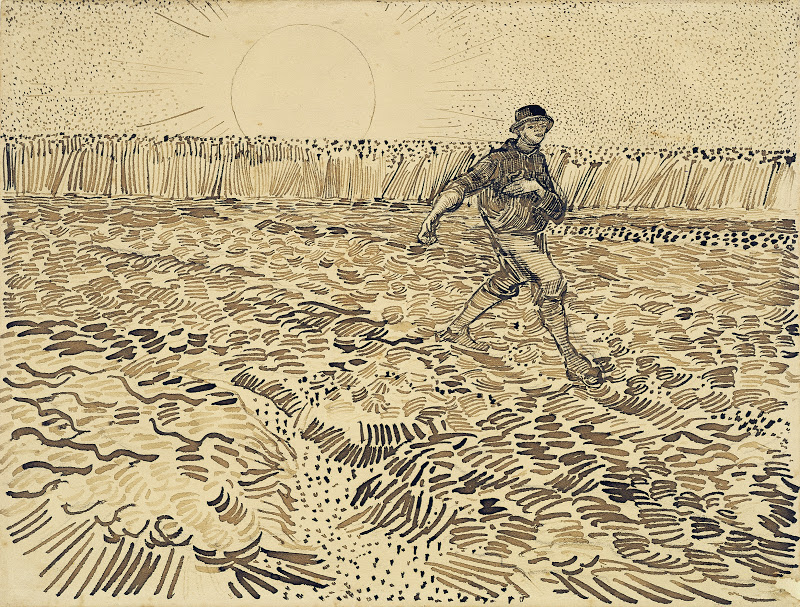
Note that the metaphor here of “scattering abroad” is that of a sower sowing seed. This connects to Jesus’ parable of the sower sowing the seed of the Word of God. Now, hold that thought.

My generosity produces a crop of gratitude, thanks, and praise in others that both returns to me as a gift of righteousness and spreads through the others as they grow spiritually and are inspired to become generous themselves. Their gratitude, praise, and growth is righteous spiritual fertilizer that comes back to me and boosts the yield of generosity in my own life.


Paul repeats that the result of generosity is spiritual abundance in both the giver and the receiver that then spreads to others.

I can’t help but once again contrast this with what I’ve always heard spewed by televangelists and prosperity gospel preachers. They preach that if you give (them and their ministry) money then God will bless the giver financially as if generosity is an affluent financial investment strategy. Give ME your money, and God will give YOU MORE MONEY. The focus is on the money, especially the money going into their pockets.

In the quiet this morning, I come back to Psalm 112 that I had placed as a tattoo on my right bicep because the right arm is a metaphor of blessing, and the bicep is a metaphor of strength. It reminds me daily that my strength is in being a man blessed by God; The blessed man God created and called me to be is increasingly and perpetually content, generous, grateful, and fruitful.

That is what Paul is trying to teach his friends in Corinth.

If you know anyone who might be encouraged by today’s post, please share.

These chapter-a-day blog posts are also available via podcast on all major podcast platforms including Apple, Google, and Spotify! Simply go to your podcast platform and search for “Wayfarer Tom Vander Well.” If it’s not on your platform, please let me know!

The Prayer of Jabez

Jabez was more honorable than his brothers. His mother had named him Jabez, saying, “I gave birth to him in pain.” Jabez cried out to the God of Israel, “Oh, that you would bless me and enlarge my territory! Let your hand be with me, and keep me from harm so that I will be free from pain.” And God granted his request.
1 Chronicles 4:9-10 (NIV)

Wendy and I are at the lake this week in preparation for our annual Memorial Day weekend with friends and the kick-off to summer. I just started one of the books on my summer reading list. The Way of a Pilgrim is a mystic work written anonymously in the nineteenth century. It comes out of the Eastern Orthodox tradition. It is the story of an unnamed pilgrim who embarks on a journey to discover how one prays constantly.

Along my own spiritual journey, I’ve found the spiritual discipline of prayer takes many forms. I’ve touched on this many times over the years. In fact, a post I wrote about Popcorn Prayers back in 2019 continues to get a lot of regular reads, which I find kind of fascinating.

Most of the time, my prayers take the form of conversations with God. At the same time, I have found that there are a number of traditional prayers that have been handed down through history which I offer repeatedly; Prayers like the Lord’s Prayer, the Jesus Prayer, the Prayer of St. Francis, and the Prayer of St. Patrick.

Around the turn of the 21st century, the prayer of Jabez from today’s chapter became the subject of a popular book. Like most people, I’d never really notice it before because it’s buried in the fourth of the Chronicler’s nine chapters of genealogy. I probably had skipped or skimmed my way right over it for years. The book, however, became a best seller and the prayer has also made it into regular rotation of my repeated prayers over the years.

What’s fascinating about the prayer of Jabez, and the book about the prayer which has sold over 10 million copies, is that it can easily become a spiritualized version of a good luck charm. Even the book and its publishers push the idea that it’s a “breakthrough to blessing.” Indeed, Jabez’s prayer fits hand-in-glove with the message of name-it-and-claim-it televangelists and those hawking a prosperity gospel. I know those who say they pray it daily and pray it often so God will shower them with blessing.

As I’ve repeated and internalized the prayer of Jabez over the years, I’ve found it not to be about receiving material blessings, but about being a blessing. I’m already blessed. I’m blessed indeed. I’m blessed abundantly. If anything, I don’t spend enough time in contented gratitude for all of the blessings I take for granted every day. Jabez asks for “expanded borders” for God’s blessings. For me, this is a prayer for increased and proliferated opportunities to channel the blessings God has graciously given me.

In the quiet this morning, I am grateful for my return to the prayer of Jabez amidst the genealogical slog on this chapter-a-day journey. It’s a good reminder as I gaze out over the lake of the ways God has blessed me beyond what I could have even imagined when I was a young man. I’m equally reminded that the blessings I have been given are not to be hoarded but to be shared, and so my heart echoes the request of Jabez for expanded borders to extend the blessings I have never deserved but have been generously given to share.

If you know anyone who might be encouraged by today’s post, please share.

What I Want to Hear

What I Want to Hear (CaD Jer 14) Wayfarer

Then the Lord said to me, “The prophets are prophesying lies in my name. I have not sent them or appointed them or spoken to them. They are prophesying to you false visions, divinations, idolatries and the delusions of their own minds. Therefore this is what the Lord says about the prophets who are prophesying in my name: I did not send them, yet they are saying, ‘No sword or famine will touch this land.’ Those same prophets will perish by sword and famine.
Jeremiah 14:14-15 (NIV)

In today’s chapter, Jeremiah describes a drought that struck sometime in his prophetic ministry. No one knows when this was, but drought is a periodic reality in that area of the world, just as it is here in Iowa.

What intrigued me about Jerry’s conversation with God was his description of all the other prophets who, claiming to speak in God’s name, continued to tell everyone that every little thing was going to be alright, that the drought would not lead to famine nor would the Babylonians attack as Jeremiah has repeatedly warned.

It made me meditate on three things this morning:

First, there have always been false prophets like Jeremiah describes. In today’s terms, I’m reminded the name-it-and-claim it preachers of prosperity gospel. Health, wealth, and bullet-proof optimism flow from their lips, telling their donors (they are always asking for money) and followers that God wants to bless them with health and wealth, too. I was in college during the televangelist scandals back in the late 80s. They are still around.

The second thing on which I meditated is the current state of our culture and media. This is my observation, not a political statement. The fact is that news organizations on both sides of the political spectrum have abandoned objective reporting to feed their viewers whatever those viewers political bent happens to be. One of the fascinating things I’ve witnessed coming out of the Covid years are small, independent news and journalism outlets on platforms like Substack. One that Wendy and I have begun reading regularly states openly that they began their site in order to return to journalism that’s about objective reporting of facts. The founders of the site came from one of the most prestigious news outlets in the world and complained of editors demanding that reporters write within the preferred political narrative the editors were pushing. It’s happening everywhere, and it’s happening on both sides of our cultural divide.

Which leads me to the third thing on which I meditated this morning. False prophets of religion, news, and politics are not going away just as Israel and Iowa will continue to experience periodic droughts as has always been the case. As I chewed on these things in the quiet this morning, I was reminded of Paul’s mentoring words to his young protégé Timothy:

You’re going to find that there will be times when people will have no stomach for solid teaching, but will fill up on spiritual junk food—catchy opinions that tickle their fancy. They’ll turn their backs on truth and chase mirages. But you—keep your eye on what you’re doing; accept the hard times along with the good; keep the Message alive; do a thorough job as God’s servant.
1 Timothy 4:3-5 (MSG)

Along my life journey, I’ve observed that life is filled with tragedy and difficulties. It’s also filled will facts and realities that inconveniently refuse to fit into what I want to believe about the world as I desire it to be in the comfortable little box of my personal worldview. Jerry had the difficult job of being the lone voice pointing out the proverbial handwriting on the wall; A message no one wanted to hear. They preferred to have their fancies tickled with false assurances. It was still that way when Paul was mentoring Timothy. It’s still that way today.

I concluded in the quiet this morning that I am on a faith journey as I follow in the steps of Jesus. It is Maundy Thursday as I write these words (the commemoration of Jesus’ final night before His execution) and I’m reminded that the end of Jesus’ earthly journey was not a pleasant one. It’s funny how easy it is for me to believe that it should be different for me than for the One in whose steps I follow. If the world operated perfectly within the comfortable little box of my personal worldview then Jesus would never have had to cry out, “Father, let this cup pass from me” and I would never need faith.

If you know anyone who might be encouraged by today’s post, please share.

A Hobby Kind of Thing

A Hobby Kind of Thing (CaD Matt 10) Wayfarer

“I am sending you out like sheep among wolves. Therefore be as shrewd as snakes and as innocent as doves.”
Matthew 10:16 (NIV)

I was in the local pub last week. I had to wait on some paperwork and figured I’d whet my whistle and work on responding to some emails while I waited. The pub tender told me that he’d been told I was a blogger. I explained that I’d been blogging for many years and had started podcasting in the past two years. I then got to explain my chapter-a-day model. I wasn’t sure, but I sensed that he might have had the impression that it has something to do with my career. I explained that it wasn’t a commercial thing and that I didn’t make money doing it.

“So, it’s just a hobby kind of thing?” he asked.

Another patron required the pub tender’s attention, and he slipped away. The question, however, continued to resonate within me. As with so many things of the Spirit, the pub tender’s question was loaded. The answer is layered. It is at once simple and mysteriously complex.

“Why do you do it?”

Matthew structured his biography of Jesus around five major discourses, or teachings, of Jesus. The first was the message on the hill in chapters 5-7. Today’s chapter is the second major discourse, in which Jesus’ calling of His twelve disciples and His instructions to them as He send them out to proclaim Jesus’ message.

As I read through the instructions, I was struck, once again, by the humility and austerity that He expected of them…

He told them not to pack any extras. Just the clothes on their back.
He told them not to take any money, but to trust God’s provision and the generosity of others.
He told them to give away Jesus’ teaching since it had been freely given to them.

Jesus then goes on to prophetically tell The Twelve not to expect the job to be easy.

They’ll be rejected and unwelcomed.
They’ll be arrested and taken into custody.
They’ll be flogged by God’s own people.
They’ll be put on trial by civic authorities.
They’ll be betrayed, perhaps by their own family members.
Their lives will be threatened.

In the quiet this morning, I couldn’t help but contrast this with all the televangelists and their personal kingdoms I’ve observed along my life journey. I contrasted it with all of the pastors, authors, teachers, and speakers I know and have met who make a living doing Jesus’ continued work on this earth. I don’t think it’s appropriate to expect that Jesus’ literal and specific instructions to The Twelve should be projected onto every single follower that came after. At the same time, there’s an underlying attitude that I think is always applicable. Things of the Spirit are layered with meaning.

I’m not responsible for others. I am responsible for myself. So, I find myself questioning my own attitude and motivations as the pub tender’s casual question continues to resonate in my soul.

“So, it’s just a hobby kind of thing?” he asked.

Yes, and…there’s so much more to it than that. As Jesus instructed The Twelve in today’s chapter: “You received the Message for free. Give it away for free.”

And so, one weekday and one chapter at a time, I freely scatter seeds of thought and Spirit to the four winds of the worldwide interweb. Perhaps, someday, I’ll find out how some of those seeds germinated, took root, flowered, and bore fruit. In the meantime, I keep doing what I’ve been called and compelled to do.

Here you go, wind…

[cue: clicks “Publish” button]

If you know anyone who might be encouraged by today’s post, please share.

Religion, Commerce, and the Soul

cover-Time-19870406-66703A number of those who practiced magic collected their books and burned them publicly; when the value of these books was calculated, it was found to come to fifty thousand silver coins.

A man named Demetrius, a silversmith who made silver shrines of Artemis, brought no little business to the artisans. These he gathered together, with the workers of the same trade, and said, “Men, you know that we get our wealth from this business.”
Acts 19:19, 24-25 (NRSV)

Back when I was in high school and college there was a crazy period of time when there was no shortage of scandals centering around a group of prominent American televangelists. Jim and Tammy Faye Bakker were the couple that the media couldn’t seem to get enough of, but there was also Jimmy Swaggart and others who leveraged their television ministries into personal profit machines and media empires. A closer inspection of these ministry moguls produced plenty of odd and salacious fodder for the tabloids. Many televangelists fell in a strange train wreck of disgrace that was too compelling to look away.

I was reminded of the uncomfortable tension between faith and commerce this morning as I read today’s chapter. There were two groups of people described who stood in stark contrast to one another. I had never really noticed this in my previous journeys through the Book of Acts.

First, there are those who had vocationally practiced different types of exorcism, magic, and spiritism who became followers of Jesus (v. 18-20). Upon their choice to place their faith in and follow Jesus they abandoned their spiritually dark professions and burned down their old lives. This, of course, meant that would have to begin new lives and careers. This is a picture of Jesus’ consistent admonishment for people to repent (literally, to about face and go the opposite direction) and follow. Old things pass away, new things come. There is a spiritual rebirth evidenced by their willingness to experience a huge financial loss and, in faith, walk away from that which was spiritually dark to begin a new path following the Light.

Next, there is Demetrius and the guild of silversmiths tied to the temple of Artemis. The Temple of Artemis in Ephesus was one of the seven wonders of the ancient world and Artemis of Ephesus was a popular fertility idol, her long body covered in breasts (or perhaps their bull testicles, scholars aren’t quite sure). Not unlike the media empires of the televangelists, the Temple of Artemis was a tourist attraction and a lucrative, religious cash cow. With the trending of Jesus, His message, and His followers the business of Artemis idols, trinkets, and souvenirs  was taking a huge financial hit. The local metal workers union was not happy. The response of Demetrius and his fellow merchants was to create a public riot and threaten bodily harm to the followers of Jesus along with their forcible expulsion from Ephesus.

I consider one group has a spiritual transformation that results in a willingness to suffer financial and vocational loss. Then I think of the other group who are hardened to preserve their finances and vocation at all costs. Finally, I think about the disgraced televangelists from my youth. I’m not sitting in judgment of them, rather I ponder if spiritually I’m not more like them than I’d care to admit. I wonder if they didn’t start out with sincere hearts that were hardened over time by their lucrative, religious cash cows and personal empires.

Today, I am doing some soul searching. Which example in today’s chapter am I more like, and what is the condition of my heart? Am I willing to suffer temporal loss for eternal gain, or will I cling tightly to that which is temporal at the sacrifice of my soul?