Tag Archives: Socio-economic

My Choice

My Choice (CaD Lev 1) Wayfarer

“Speak to the Israelites and say to them: ‘When anyone among you brings an offering to the Lord, bring as your offering an animal from either the herd or the flock.”
Leviticus 1:2 (NIV)

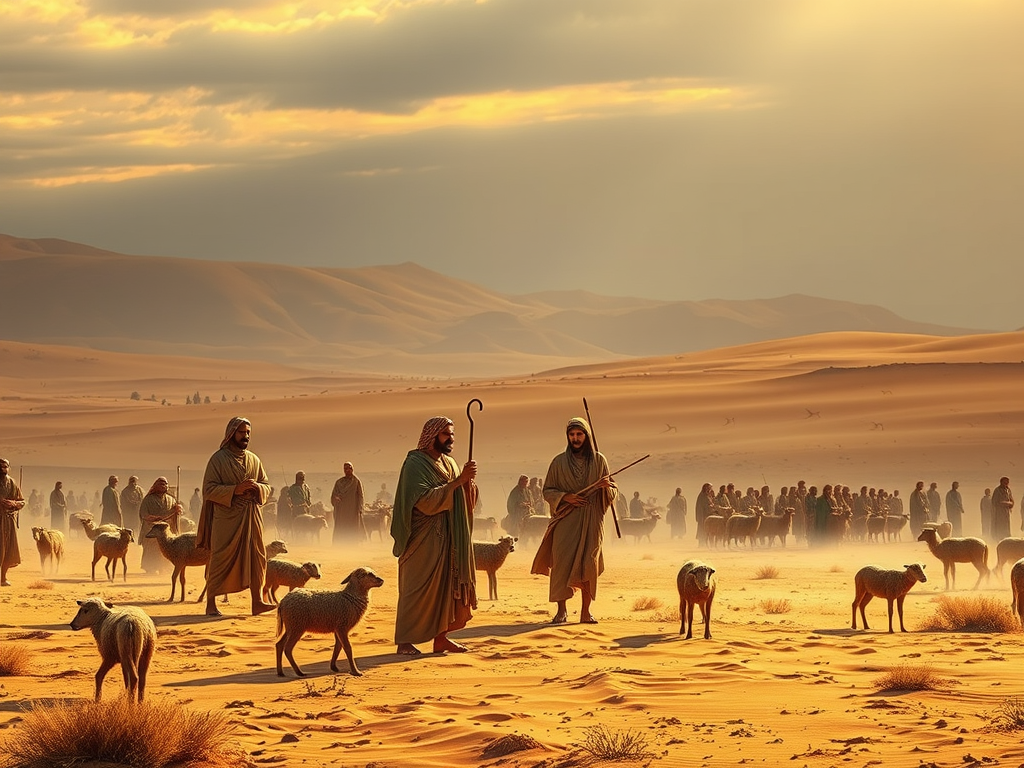
Imagine an entire nation of people wandering in the desert. Hundreds of thousands of men, women, and children; Perhaps millions with their flocks and herds. For four hundred years these people had been slaves in Egypt. They were told where to live, what to do each day, and they were given little or no choices in life. Their ancestor, Abraham, had made a covenant with God hundreds of years before, but they knew little about the God of Abraham. It had only been stories passed down through the generations.

Then, the God of Abraham showed up. He revealed Himself to Moses and miraculously delivered them out of their slavery in Egypt. Now they find themselves living in the wilderness. Everything has changed. This nation of people have an opportunity to begin a whole new way of living life together in community with their God, and with one another. It is, perhaps, the greatest social experiment in human history. It still resonates in our daily lives if we will but recognize it.

Today our chapter-a-day journey wades into perhaps the most ignored and misunderstood book in the entire Great Story. The book of Leviticus was a set of instructions for the newly appointed priests among this fledgling nation of newly freed slaves, the descendants of Abraham, Isaac, and Jacob. There were twelve tribes of them, and God through Moses appointed one tribe, the tribe of Levi, to handle priestly duties. Within the tribe of Levi, the descendants of Aaron (Moses right-hand man) would be the official priests who handled sacrifices. Keep in mind, just a month or so ago these Levite dudes were just slaves like everyone else doing what they were told to do in Pharaoh’s construction projects. Now they are priests of the God of Moses with no earthly idea what that means or what they are supposed to be doing. Leviticus is their guidebook.

The book opens by describing the five major types of offerings (burnt, grain, fellowship, sin, and guilt) that the people will bring to God, and how the priests are to handle them. Today’s opening chapter deals with burnt offerings. There were two things I noticed immediately as I read today’s chapter.

First, it says “when” people bring a burnt “offering” followed by “if” that offering is one of three potential types (a bull, a sheep, or a bird). This is not compulsory. The burnt offering is first and foremost a choice that is made by the person or family bringing it. The Hebrew word for “offering” means literally to “bring.” It is a choice. The entire act is one of willful devotion to God.

Next, there are three potential burnt offerings representing different economic realities. A bull could only be offered by a family with herds, which were objects of great wealth in their socio-economic system. A sheep or a goat were more common and represent a more “middle class” reality among the people. Birds were relatively cheap and plentiful for those who were on the poorer end of the economic spectrum of that day. In other words, God is allowing for people across the entire socio-economic spectrum to show their devotion at whatever level they can afford. Everyone is welcome.

As I meditated on these things in the quiet this morning, I was struck by the fact that God is amazingly consistent in His message and method. He initiated everything by appearing to Moses and freeing the Hebrew tribes from slavery. Now He is asking for them to make a free and willful choice to express their devotion and gratitude by coming to God with an offering, whatever they can personally afford.

“I chose you. I loved you. I saved you. Now, I want you to choose me and here is how you can do that.”

It is the same paradigm that God would display through Jesus a few thousand years later.

“For God so loved the world that he gave his one and only Son, that whoever believes in him shall not perish but have eternal life. For God did not send his Son into the world to condemn the world, but to save the world through him.
John 3:16-17 (NIV)

Or, as John would put it in one of his letters:

“We love because He first loved us.”
1 John 4:18

As I head out into a new and very busy work week, I’m reminded this morning that it is the same for me as it was for the former Hebrew slaves trying to figure out how now they should live. God has lovingly done everything for me. He has loved me, saved me, delivered me from my slavery to sin, guided me, provided for me, and blessed me. Now, I have the opportunity to choose to, in return, offer my love, gratitude, and devotion by living my life and relating to others with His love, joy, patience, kindness, goodness, gentleness, and self-control.

It’s my choice.

If you know anyone who might be encouraged by today’s post, please share.

These chapter-a-day blog posts are also available via podcast on all major podcast platforms including Apple, Google, and Spotify! Simply go to your podcast platform and search for “Wayfarer Tom Vander Well.” If it’s not on your platform, please let me know!

Breaking Social Boundaries

source: krayker via Flickr

…and [Peter] said to them, “You yourselves know that it is unlawful for a Jew to associate with or to visit a Gentile; but God has shown me that I should not call anyone profane or unclean.” Acts 10:28 (NSRV)

In high school, people were separated by social sub-cultures: jocks, nerds, burnouts, toughs, bookworms, and etc. There was also separation by ethnicity in my high school which, at the time, was the most racially and ethnically diverse school in the district with whites, blacks, asians, and hispanics. Then there were separation by world-views. Christian kids hung tight, as did partiers, smokers, drugees, and so on. You get the picture.

I’ve observed along my life journey that adults are typically children who learn to mask, obfuscate, deny, normalize, and justify our childishness.

The cultural realities faced by the early followers of Jesus was like an extremely bad case of high school. Romans, Greeks, Africans, and Judeans all had their separate and unequal cultures. Pagans and Jews had their separate groups. Within sub-cultures like the Jews you had sub-groups dedicated to religious, political, and ethnic bents. The region around Jerusalem was a melting pot turned powder keg. You belonged to your sub-culture, you hung with your homeys, and you kept to yourselves.

And, Jesus was about to radically change all of that. The seeds had been sown. Jesus had led the way. In a misogynistic, self-righteous, ethnic Jewish culture Jesus broke social norms by speaking with a Samaritan woman at a well and extended gracious kindness and forgiveness to prostitutes. In a culture of political silos, Jesus was publicly seen with both Jews and Romans, the religious and the secular, the rich and the poor. Jesus called twelve men from a diverse panacea of political views including liberal Roman sympathizers, Jewish zealots, Jewish conservatives. They came from diverse socio-economic strata of the day.

Jesus is now gone, and His followers are falling back into their high school sub-cultures. In today’s chapter, God intervenes by making an introduction between the conservative, religiously self-righteous Peter and the “unclean” Roman foreigner, Cornelius. God makes a radical, paradigm shifting demand of Peter, the appointed leader of Jesus’ followers: stop considering any person unclean (e.g. less than, lower than, other) or profane (e.g. meaningless, not worth my time).

This morning I’m having a serious heart-to-heart with God. Who is my Cornelius? Have I slipped back into high school mode hanging with my homeys and steering clear of those who look differently, were raised different, believe differently, have different political views, come from different social strata? Lord, have mercy on me. Forgive me for my mindless, thoughtless, unintentional way I treat others as unclean and/or profane.

Yesterday is gone, but I have today before me. Help me cross and erase social boundaries in my thoughts, words, and actions.