Tag Archives: Share

Big Family

Big Family (CaD 1 Thess 2) Wayfarer

Just as a nursing mother cares for her children, so we cared for you. Because we loved you so much, we were delighted to share with you not only the gospel of God but our lives as well.
1 Thessalonians 2:7b-8 (NIV)

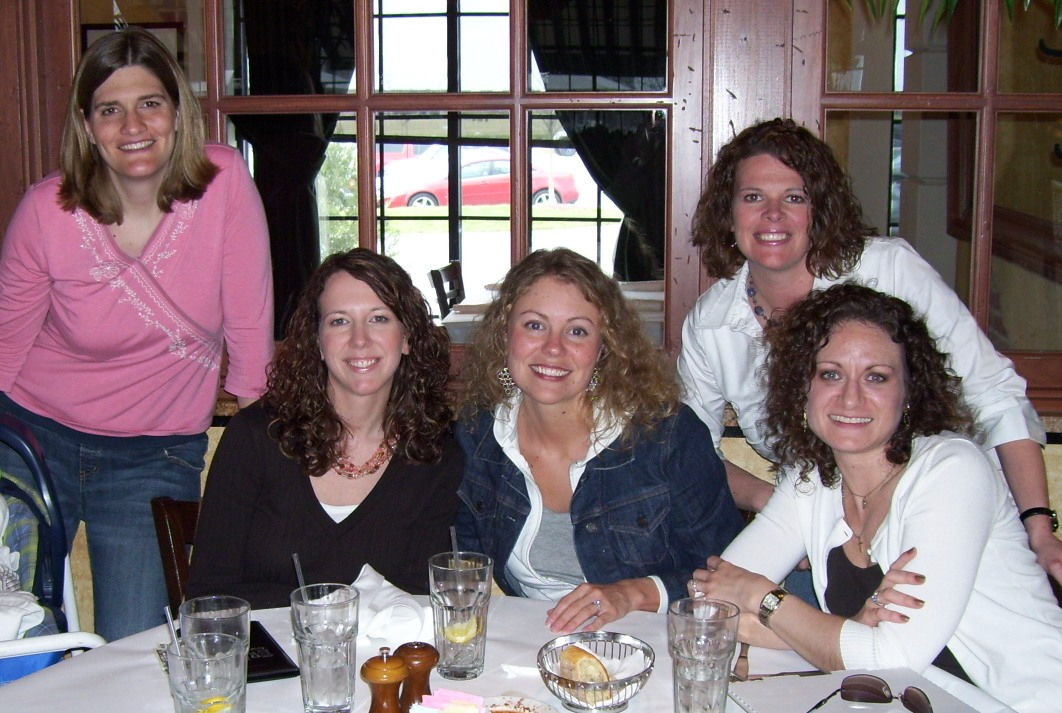
I mentioned in yesterday’s post that Wendy had her friends over this past Saturday night. This group of ladies became friends when they were all single in their twenties. They have shared life together ever since. They have been part of one another’s weddings and have celebrated and supported one another through babies, toddlers, children, and teens. They regularly communicate, make a point of seeing one another, and have enjoyed girls’ weekends together. They are “the Golden Girls.”

As a husband, it has been a quiet joy for me to watch these ladies do life together so well. And, I really mean that they do life with one another. I’ve watched them share with one another in their pain, struggles, and tragedies. They go deep, dig in, and encourage one another in every part of life. Wendy is blessed to have them. I’m blessed that she has them.

In today’s chapter, I thought it fascinating that Paul describes his and his compatriots (Timothy and Silas) brief time among the new Thessalonian believers by metaphorically naming all the key members of a nuclear family within a few verses of one another:

…”we were like young children among you.” (vs. 7a)
“Like a nursing mother cares for her children.” (vs. 7b)
“Surely you remember, brothers and sisters…” (vs. 9)
“…we dealt with each of you as a father deals with his own children.” (vs.11)

As I meditated on this in the quiet this morning, I was reminded of the time when Jesus was speaking to a house that was absolutely packed with people listening. When His mother and siblings showed up to see him, they couldn’t get in and sent a message to Him.

Standing outside, they sent someone in to call him. A crowd was sitting around him, and they told him, “Your mother and brothers are outside looking for you.”

“Who are my mother and my brothers?” he asked.

Then he looked at those seated in a circle around him and said, “Here are my mother and my brothers! Whoever does God’s will is my brother and sister and mother.”


Mark 3:31-34 (NIV)

Along my life journey, I have experienced and observed exactly what Jesus was getting at. Individuals who spiritually share life together for a period of time become a type of family. What Paul was telling his spiritual Thessalonian “children” was that he purposefully embraced all facets of family in his relationship with them. He was innocent and honest as a child. He nurtured and spiritually fed them the “milk” of God’s word. He was, at the same time, like a father as he spiritually instructed, encouraged, and equipped them. He considered them his brothers and sisters in God’s family.

I am blessed with a great nuclear family. The further I get on life’s road and hear the stories of others, the more grateful I’ve become for this. At the same time, both Wendy and I recognize that we are doubly blessed to have an extended family of individuals and couples we do life with. Along the way, I have found that Spirit goes deeper than blood in binding lives together. Jesus alluded to this multiple times.

In the quiet this morning, I find my heart whispering prayers of gratitude for my family members, both blood and Spirit. I’m thankful for a big, big family of individuals on this life journey who have nurtured me like mothers, encouraged and equipped me like fathers, and walked alongside me as siblings. I pray that I have and continue to do the same nurturing, loving, encouraging, and equipping in others’ lives.

I love that genetic science has proven that we all descended from the same woman. I have come to believe that God’s Kingdom is about embracing the reality that all of us are one big family and loving one another accordingly.

If you know anyone who might be encouraged by today’s post, please share.

Brewing Interpretation

Brewing Interpretation (CaD Ecc 11) Wayfarer

Ship your grain across the sea;
    after many days you may receive a return.
Invest in seven ventures, yes, in eight;
    you do not know what disaster may come upon the land.

Ecclesiastes 11:1-2 (NIV)

A couple of chapters ago, I discussed the challenges and mysteries that accompany the translation of ancient Hebrew text into modern English. As I spent some time in today’s chapter, I encountered another mysterious challenge that has spawned a very interesting interpretation.

The translators of the NIV have given the interpretation of the first two verses of today’s chapter a decidedly commerce-driven slant. The Hebrew does not so much allude to shipping grain across the sea, but more simply says to throw/cast ones bread/grain on water. The interpretation of invest is also a choice for a Hebrew word that is more simply translated as give. Here are a couple of other ways other translations or paraphrases say these same verses:

Cast thy bread upon the waters: for thou shalt find it after many days.
Give a portion to seven, and also to eight; for thou knowest not what evil shall be upon the earth.
(KJV)

Don’t be afraid to release your bread upon the waters,
        for in due time you will find it.
    Divide your portion—put seven here, maybe eight there—
        for you can never be sure when or where disaster will strike.
(Voice)

Cast your bread upon the waters,
    for you will find it after many days.
Give a portion to seven, or even eight,
    for you do not know what calamity may happen on the earth.
(CEV)

Over the past couple of decades, the craft of brewing beer has exploded into a 22 billion dollar industry with about 9,000 different breweries. I know several individuals who enjoy making their own home brews to share, and I always enjoy sampling when I’m invited to do so. Along with this heightened interest, some craft brewers have delved into investigating the ancient brewing practices of different cultures. For example, there’s an ancient Akkadian text that describes the process of brewing beer in which dates and bread are “thrown into water” as part of the mix of ingredients.

This has led a few scholars (whom I suspect might be craft beer lovers themselves) to consider that the interpretation of these verses of Ecclesiastes may mean that when you throw your bread into the water and it comes back to you in a barrel of beer, be sure to share it with seven or eight others, so that when tough times come they will share their beer with you.

As I consider these translations and interpretations in the quiet this morning, I humbly conclude that I can’t be certain either way. Both the NIV’s decidedly pointed interpretation in favor of commerce and the beer-lovers decidedly pointed interpretation in favor of sharing your beer could be what the Sage of Ecclesiastes intended.

What is clear to me is the general spiritual principle the Sage was getting at, to which all the various translations and paraphrases point: invest, produce, and generously share the profitable returns with many. In doing so, I’m insuring myself for lean times which may certainly come.

I never know where this chapter-a-day journey is going to lead me each morning, and sometimes I’m genuinely surprised at where I end up. Today, I not only have a good spiritual principle on which to meditate and apply to my life, but I also have a pleasant bit of trivia about Akkadian brewing and Hebrew wisdom to share with some unsuspecting new friend over a pint. Cheers!

If you know anyone who might be encouraged by today’s post, please share.

Sharing the Burden, Carrying the Weight

Carry each other’s burdens, and in this way you will fulfill the law of Christ.
Galatians 6:2

…for each one should carry their own load.
Galatians 6:5

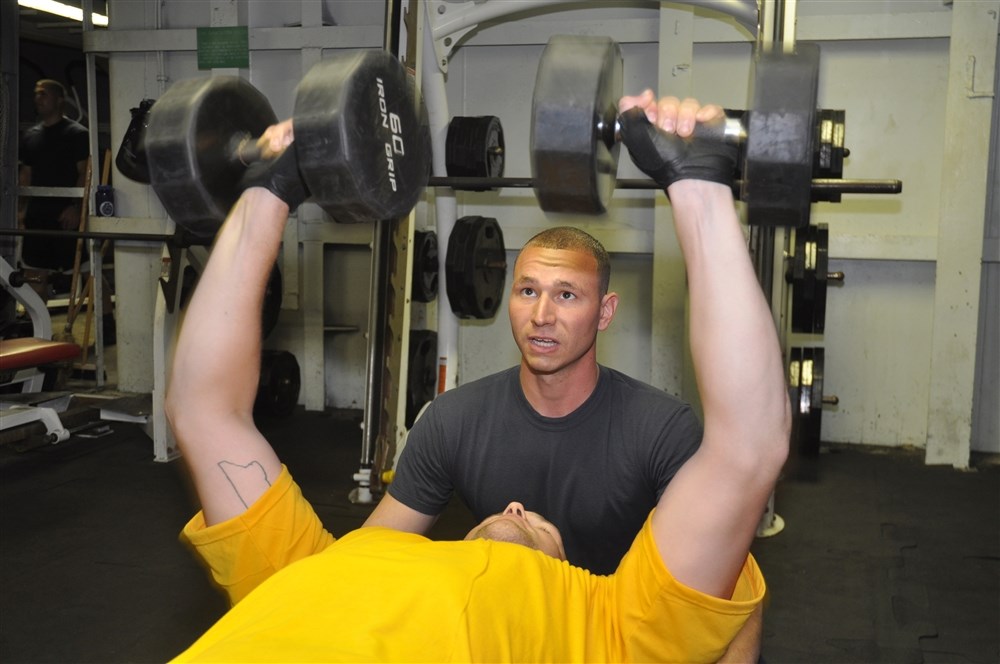
Last week I had a CrossFit workout done with a partner. There were four weight lifting exercises with 25, 35, 45 and 55 reps, respectively. These were shared. My partner and I chose to alternate doing five reps each, back and forth, until they were completed. Between each weightlifting exercise we both had do 12 “over the bar burpees” together, at the same time. Each of us was responsible to do all 12 reps, even though we did them together.

In today’s chapter, I noticed what seemed to be a contradiction in Paul’s instructions to the followers of Jesus in Galatia. First he tells them to “carry each others burdens,” but then a few sentences later he tells them that each person should “carry their own load.” So, which is it? Carry each other’s burdens or carry your own load?

Yes, and.

As I dug into the original Greek words Paul used when he wrote the letter, I found that he used two very different words for “burden” and “load.” When talking about carrying each other’s burden he used a form of the Greek word “baros” which literally means a weight. He’s just finished stating that if a brother or sister is caught in a sin we should “restore them gently.” The picture here is that we all have our own shortcomings. Everyone, even the best of us, will blow it from time to time because we’re human and we all have our faults.

This is a partner workout. When you’re struggling I’m going to be there to help you carry the weight. And you do the same for me when I’m struggling. We alternate and share the reps so that we can mutually encourage one another and allow for mutual “restoration” back and forth.

A few sentences later Paul uses the word “phortion” (for-tee-on) when he says one should carry their own “load.” This specifically means a burden that is not transferrable. It can’t be shared.

Which brings me back to the workout last week. The weightlifting exercises was “baros.” It was a shared burden as we alternated. One of us carried the weight as the other rested and was restored. Back and forth. The Burpees, on the other hand, were “phortion” and each of us was responsible to do all twelve reps. The Burpees were our own load to carry, and we couldn’t transfer the reps to our partner. (Though there was mutual encouragement as we did them together, in unison. We weren’t alone as carried our personal Burpee burden, which is a completely different spiritual lesson.)

Along this life journey I’ve found that I have different kinds of burdens to carry as I make my way along the path. Sometimes burdens are mutual and I share them with my partners and companions. Other times I have a load that is mine alone to carry and no one else can carry it for me. In the quiet this morning I’m pondering some of life’s burdens. Once again, I find myself asking three familiar questions that provide important definition to life:

What’s mine?
What’s yours?
What’s ours?