Tag Archives: Romans 1

The One Thing

The One Thing (CaD Rom 1) Wayfarer

For I am not ashamed of the gospel, because it is the power of God that brings salvation to everyone who believes: first to the Jew, then to the Gentile.
Romans 1:16 (NIV)

I had a class in college in which the professor assigned us to write a paper of at least 10 pages about a historical figure. One day in class he returned our papers with his corresponding grade written at the top with a bright red Sharpie. One of my classmates was livid that he’d received a failing grade. In front of the entire class, he called out the professor for failing him. As I recall, the professor attempted to help our classmate save face by quietly telling him to read through the notes he’d made and it would explain. The classmate pressed on, insisting that there was no way he should have been given an “F” on the paper.

“The assignment was a ten-page paper. My paper was 35 pages long!” Our classmate yelled.

“Yes,” the professor replied calmly. “You wrote a 35-page paper, but you didn’t say anything.”

Over the past several years, I have had the privilege and honor of mentoring several individuals in our local gathering of Jesus’ followers in the art and craft of preaching. It’s given me great joy. I believe I may have learned more through the process than my protégés.

Among the things I have stressed in my mentoring is that when you have to say something it’s critical to clearly articulate what it is you have to say. I call it “the one thing” and I asked them “If there was one thing you wanted every listener to walk away and remember, what is it?” Among the most common struggles I observed with my charges was having too much content. Often fueled by fear of not being able to fill the allotted time or coming across as lacking knowledge, individuals would pack their outline or message with all sorts of information, references, and illustrations. However, the more content that was packed in, the easier it was for “the one thing” to get lost.

In the rom-com Sabrina, the chauffeur’s daughter says to her billionaire father’s employer, “You know, Linus, more isn’t always better. Sometimes more is just more.”

Today this chapter-a-day journey enters Paul’s letter to the believers in Rome. Paul has a lot to say to his friends. But in his opening words he clearly articulates his “one thing:”

For I am not ashamed of the gospel, because it is the power of God that brings salvation to everyone who believes: first to the Jew, then to the Gentile.

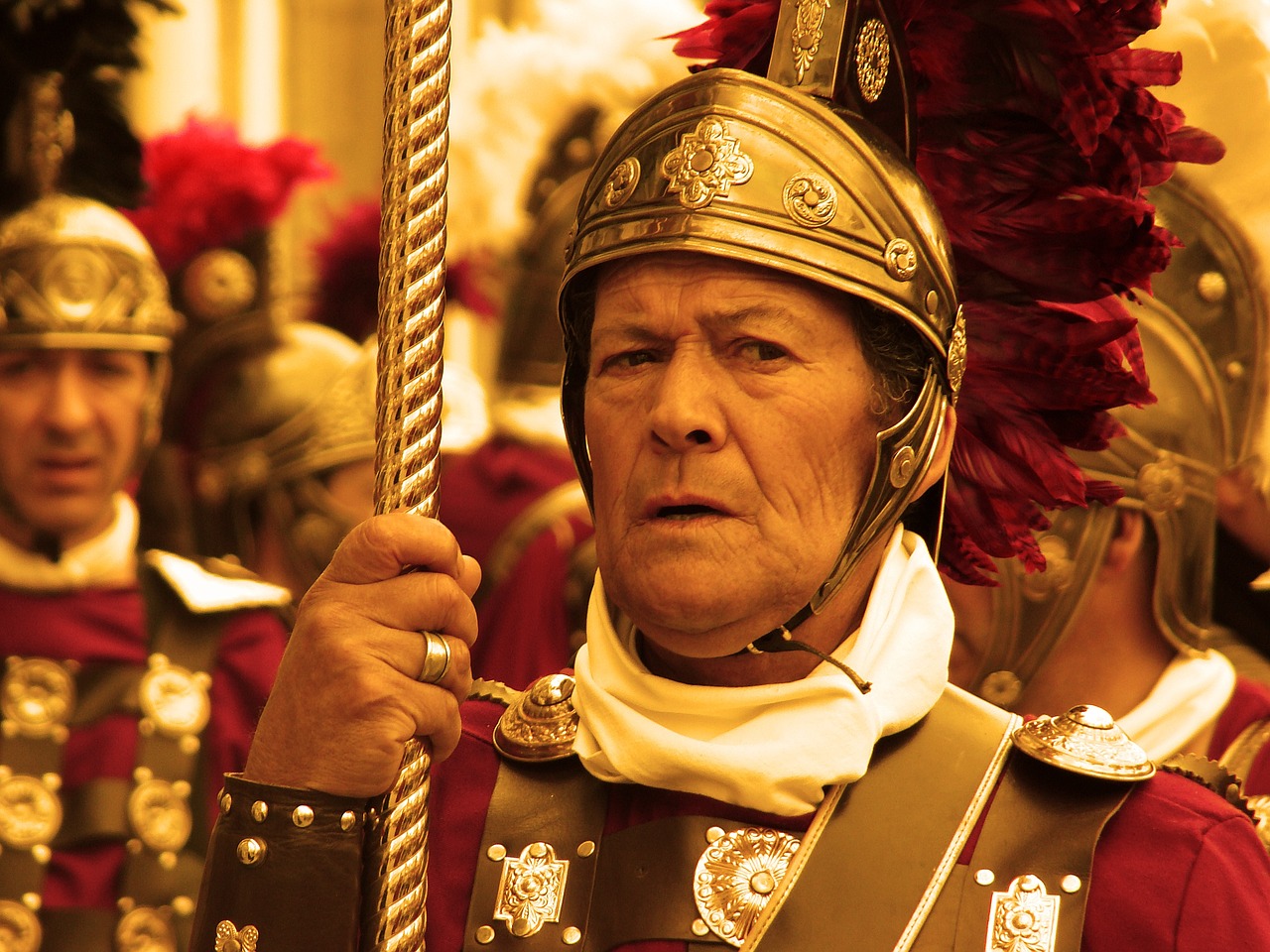
Roman society of Paul’s day was all about honor and power, shame and weakness. The idea of a suffering, servant-hearted Messiah dying on a cross was antithetical to citizens in the heart of the most powerful, most wealthy, and most worldly of human Empires. Most Romans looked down upon Jesus’ Message as foolishness. Paul is about to explain to the believers in the heart of the Roman Empire, in great detail, what real power and foolishness look like in the Kingdom of God; Power that leads from death to life, from chaos to shalom, from earth to eternity.

In the quiet this morning, I find myself meditating on my circumstances relative to the original Roman recipients of Paul’s letter. I live in the “heartland” of an American Empire in what is considered a post-Christian era. Many among the educated elite now consider Jesus’ Message not only foolish but evil. The world, they argue, would have been better off had Jesus and His followers never existed. Meanwhile, affluence affords me the luxury of focusing time, energy, and resources on a host of silly things and foolish notions. As I look back at my life journey, I’ve never felt such a contrast between the direction Jesus’ Message leads and the messages the world tells me I must believe under the threat of social and cultural cancellation.

I think it’s a good time to read the “something” Paul had to say.

If you know anyone who might be encouraged by today’s post, please share.

Art History; History Art; Art, History

For since the creation of the world God’s invisible qualities—his eternal power and divine nature—have been clearly seen, being understood from what has been made, so that people are without excuse.
Romans 1:20 (NIV)

Back in college I was required to take a visual art class as part of my major. Being a lover of history I chose to take Art History II. The fascinating thing about Professor Jeff Thompson’s class was that the text book was not an Art History textbook. It was simply a History textbook.

Professor Thompson began the class with a question: “Does art merely reflect history, or does it drive history?” If you’ve read this blog for any length of time, you’ll recognize this is a binary, “either, or” question, and the answer to his question that we arrived at was “yes, and.”

What was fascinating in the course of study was the connection between all that was going on during a certain period of time of history (politics, religion, economics, and etc.) and what we were seeing in the important artworks of that period. Not only that, but also the connection between what we saw in visual art (paintings and sculptures) and the other art mediums (music, theatre, architechture, and literature). The art of each period both reflected what was happening and drove history forward.

That class planted in me a seed which has grown over time to bear much fruit of thought. Here is the root of it: In creating art, no matter the medium, artists express themselves through what they create. It cannot be otherwise. It is inherent in that act of creation itself that artists express who they really are, what they see, what they think, what they feel, and how they’ve experienced the world around them. In expressing these things, they influence the world around them and they drive the action of this Great Story.

This morning, in this chapter-a-day journey, we make our way to Paul’s letter to the followers of Jesus living in Rome, heart of the Roman Empire and epicenter of western civilization at the time. Today, art historians flock to Rome to see remnants of the ancient city with its architecture and artwork. The people Paul wrote to were surrounded by it as it was happening all around them, and to them he wrote this:

For since the creation of the world God’s invisible qualities—his eternal power and divine nature—have been clearly seen, being understood from what has been made, so that people are without excuse.

The creator revealed themselves in what was created. The Genesis poem says that humans were created in the image of the Creator. Just as Van Gogh painted the unique way he saw light and color, just as Bach channeled his love and understanding of mathematic order and the woven details of the universe into his music, just as Shakespeare expressed the tragedy of everyday humanity in the gilded trappings of man-made royalty, so God the Creator expressed  the light, energy, life, beauty, and power of their person(s) in all creation.

In the quiet this morning I’m pondering how through much of my journey I’ve viewed faith and science as living entrenched in their “either, or” camps like the armies of World War I dug in for the long haul, reduced to hurtling grenades at one another across no man’s land. At least, that’s the perception I’ve had from what has been presented to me by media who like to simplify complex issues into simple binary groups in conflict (it sells more). As I’ve proceeded in my journey I’ve met many fellow sojourners who could be easily labeled as a members of either trench, but who have wandered out into no man’s land. They observe and study and appreciate this cosmic work of art still expanding outward, still creating, still reproducing life, and  they’ve come to a “yes, and” realization, just as we did in Professor Thompson’s Art History class.

That’s where Paul begins his letter to the followers of Jesus in Rome. He starts with the expansive canvas of the cosmos through which the Creator expresses self. From the mystery of the cosmos Paul will dive into the mystery of being human, and how he sees the Creator has interacted with creation in the Great Story.

Artist’s Date

For since the creation of the world God’s invisible qualities—his eternal power and divine nature—have been clearly seen, being understood from what has been made, so that people are without excuse.
Romans 1:20 (NIV)

Wendy and I will sometimes go on an artist’s date with friends. Often it’s just another couple, though we have done it with slightly larger groups. We typically go to the Des Moines Art Center because it’s close, it’s free, and it has an amazing collection of 19th and 20th century artwork. Here’s how the artist’s date works:

First, we wander together through the Art Center quickly browsing through each gallery. Each person is to be open  and mindful to pay attention to what particular piece of artwork strikes them for whatever reason.

Once we’ve made it through the Art Center, we then spread out, each person to the one piece that struck them the most as we browsed. This time, we stand or sit in front of that piece of artwork and look at it for 30 minutes.  There are no particular rules. You might look at it from different angles. You might get in close to inspect the brushwork. You might just sit in one spot and stare at it. I personally like to bring a journal (and a pencil, the Art Center doesn’t like you using a pen!) and write my thoughts.

When the 30 minutes are up, everyone meets back at the lobby. We go to a nice restaurant, order some good food and drink, and then take turns sharing what art work we looked at and what we gleaned from our 30 minutes with it. It’s always fascinating to hear others share.

When you look at an artist’s work, really look at it, you eventually begin to catch a glimpse of that artist. The painting, the photograph, the drawings, the sculpture are an expression of what’s inside the heart and mind of the artist.

We often forget that God first reveals Himself to us as Creator. “In the beginning, God created….” God is an artist, and the universe is an ongoing work of art as the heavens expand out into the seemingly endless canvas of space and time. When you look at creation, really look at it, you begin to catch a glimpse of the Artist. Detailed, ordered, and infinitely particular while at the same time infinitely playful and diverse in subject, composition, line, color, and form.

Today, I have the fortune of driving for several hours through forecasted rain and snow as I make my way home. My artist’s date today is in the Art Center of nature and I will focus my attention on God’s artwork: Prairie Winter. I can’t wait to see what new things there are for me to glean as I study the landscape.

chapter a day banner 2015