Tag Archives: Rich

“Luxury Beliefs”

“Luxury Beliefs” (CaD Ezk 28) Wayfarer

By your great skill in trading
    you have increased your wealth,
and because of your wealth
    your heart has grown proud
.
Ezekiel 28:5 (NIV)

Spiritual maturity is pronounced in pain, it is arrested in affluence.

Over the past year, Wendy and I have been reading what has been an emerging theme in the news outlets we read. The theme is Luxury Beliefs and it came from the observations of a writer named Rob Henderson. We often think of the luxury wealth and affluence affords simply in terms of the tangible goods that come with luxury. Henderson argues that in the 21st century there has been a shift. The wealthy and affluent see their beliefs as much a status symbol as their luxury handbag, timepiece, car, or yacht. His essay is worth a read.

Of course, the idea of wealth affecting matters of belief was a theme of Jesus. He said that it was easier for a camel to be thread through the eye of a needle than for a rich man to enter the Kingdom of Heaven.

Today’s chapter contains two more prophetic messages against the ancient King of Tyre. As discussed in the previous two chapter-a-day posts, Tyre was a tremendously wealthy port city, and Zeke points out in both of the messages that the King of Tyre’s wealth and affluence has affected his beliefs. It has given him as sense of hubris and pride. In his Luxury Beliefs he considers himself a god. He is wiser and more understanding than all the poor, ignorant minions under his authority. God’s message to the wealthy ruler is that what he doesn’t see is that his “wisdom” and Luxury Beliefs have been corrupted by his affluence and pride.

In the quiet this morning, I find myself in a familiar and uncomfortable place. In relative terms I am wealthy. I am affluent. I live in the richest and most affluent of nations. One of the things I’ve observed on this earthly journey is that I will always be able to point to people I know and people I know of who have tremendously more wealth than me. The insidious effect of this is that I can always consider myself humbly poor compared to the guy I ran into at the restaurant last night who lives in the biggest mansion in town. And that is just one of his many residences.

The problem, of course, is that I’m looking in the wrong direction. Jesus taught me this. He teaches all His disciples this. We’re always looking up the cultural and economic ladder at those more rich, powerful, wealthy, famous, and affluent than we are. We are obsessed as a culture with fame and fortune. But our ways are not God’s ways.

Jesus told me to turn around and look down the economic ladder. Look at the little old widow who put her last two pennies in the collection plate. Look at the lame beggar. Look at the leper who everyone shames and avoids. When I look down the economic ladder, I begin to realize just how rich I really am. I realize that I can afford to be far more generous than I have been. It begins to sow in my soul seeds of contentment rather than envy, gratitude rather than greed. As those seeds take root, they change my perspective, my thoughts, my actions, and my beliefs. Then, I might just be making some progress toward spiritual maturity.

If you know anyone who might be encouraged by today’s post, please share.

The Sting

The Sting (Cad Am 2) Wayfarer

“For three sins of Israel,
    even for four, I will not relent.
They sell the innocent for silver,
    and the needy for a pair of sandals.
They trample on the heads of the poor
    as on the dust of the ground
    and deny justice to the oppressed.
Father and son use the same girl
    and so profane my holy name.
They lie down beside every altar
    on garments taken in pledge.
In the house of their god
    they drink wine taken as fines.”

Amos 2:6-8 (NIV)

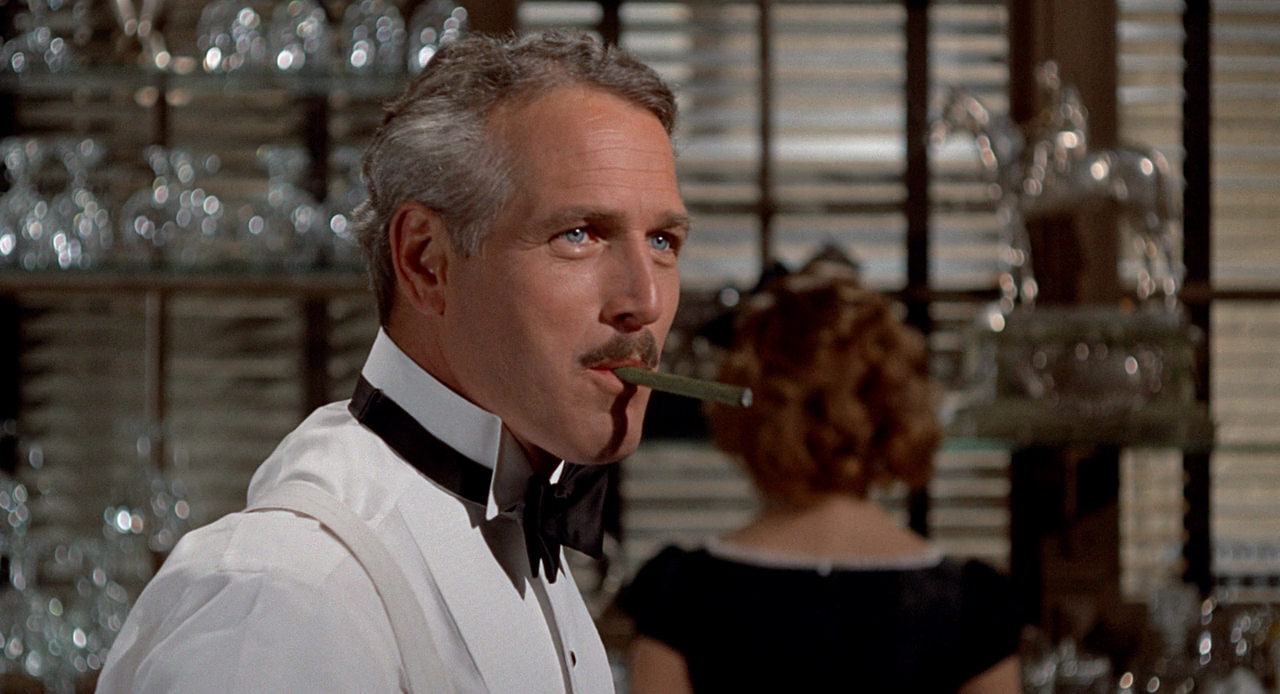
Wendy and I were watching Jeopardy! the other day and one of the questions referenced a classic movie of the 70s The Sting with Robert Redford and Paul Newman. The movie tells the tale of two small-time street hustlers and con-men who run a “sting” operation, “the big con” against a big-time gambler and Irish mob boss, played by Robert Shaw. The movie won seven Oscars including Best Picture. It’s a great film.

I thought about The Sting this morning as I meditated on the first two chapters of Amos. As I mentioned in yesterday’s chapter, Amos was not from nobility and he didn’t have high social status. He was a working class prophet from Judah whom God called to prophesy against the northern kingdom of Israel. Amos is from Judah, so him marching into Israel with God’s Message will be as well received as a Cyclone sweatshirt in Kinnick Stadium.

What Amos does in these opening chapters is as shrewd as a street hustler working a prophetic sting. Amos begins with a series of prophesies against neighboring kingdoms. Under King David and Solomon, these territories were part of the united kingdom of Israel, but when Solomon died and the nation divided, these neighbors went back to self-rule. Nevertheless, they are neighboring states and they probably had all of the rivalries and border jokes that exist between neighboring states today.

As Amos’ prophesies criss-cross geography of these neighboring states, he is inviting his audience in Israel to agree with him.

“Yeah, Amos! You tell ’em! Give those no-good cheaters in Tyre an ear full!”

His audience in Israel would have especially loved it when Amos prophesies against his own team in Judah. At that point, he’s got them sucked in. The people of Israel are loving this street preacher from down south. He’s got them hooked. Then he pulls the sting.

His audience in Israel can’t gloat over the prophetic doom Amos’ has proclaimed for all the rival teams in the region and then suddenly excuse themselves. They are just as guilty. They do the same things.

Amos’ opening message to the people of Israel paint a picture of affluent Israelites using their power and prestige to oppress the poor, ignore God’s law, act immorally, and corrupt God’s people.

God’s law was designed to care for those who had little. For example, if you loaned money to a poor person and took their cloak as collateral, you were supposed to return it by sunset. You don’t leave a poor person without a blanket on a cold night. The rich of Israel were ignoring this.

God’s law also had strict codes of conduct for how one treats those under your care. Fathers and sons were using their power to sexually abuse the same female bond-servants in their own households.

Faithful followers of God in that day sometimes took a “Nazarite Vow” not to drink wine or cut their hair for a period of time. The people of Israel were mocking this, urging those who had taken the vow to break it. They were telling prophets to keep their mouths shut.

As I meditated on this in the quiet this morning, I couldn’t help but hear Jesus’ words echo in my soul: “Truly I tell you, it is hard for someone who is rich to enter the kingdom of heaven.” Along my own life journey, I’ve experienced both what it’s like to have much and what it’s like to have little.

When I have much, it is easy to get used to the status and perks that go along with it. It’s easy to begin thinking I deserve them. It’s easy to expect that I will, and should, always have them. It’s easy to forget what it’s like to have little, and it’s easy to begin overlooking those who have little. It’s easy for me to think that I’m different in my affluence than everybody else.

Then comes along a street hustler of a working man’s prophet name Amos. Amos reminds Israel, and reminds me, that I’m no different than any other person from any other people group from any other place. God calls me to take an honest look at my own heart, motives, thoughts, words, and actions. How has affluence subtly corrupted me and turned me into a person I don’t want to be?

There’s a great line in The Sting when Henry Gondorff asks Johnny Hooker if he’s sticking around to collect his share of the take. “Nah,” Johnny answers, “I’d only blow it.”

And, that’s the thing. With all that I’m blessed to have, how do I not “blow it?”

If you know anyone who might be encouraged by today’s post, please share.

Give and Live

Give and Live (CaD James 5) Wayfarer

Now listen, you rich people, weep and wail because of the misery that is coming on you.
James 5:1 (NIV)

The times in which James wrote his letter to scattered believers was tumultuous. Jesus railed against the aristocrat Pharisees and religious leaders who lived in luxury while they exploited the poor. He cleared out the temple moneychangers who were getting themselves and the priests rich by charging poor pilgrims exorbitant exchange rates. Jesus’ criticism and the favor it gained him among the poor and marginalized was what got him crucified. Jesus wasn’t crucified for religious reasons. He was crucified because He threatened the religious racket’s cash cow, and stirred up resentment that already ran deep.

Thirty years later, the situation has not changed. It’s only gotten worse. James was the leader of the Jesus Movement in Jerusalem. He was well respected as he tried to manage the political powder keg between the Jewish religious leaders, local ruler Herod Agrippa II, and Rome. The gap between rich and poor continued to grow further and further apart. The aristocratic priests lived in spacious homes in the city’s upper city while the poor lived downwind of the local sewers. Exorbitant taxes pushed poor farmers out of business and wealthy landowners took over everything. The rich sided with the Romans in an effort to keep stability. This gave the poor more reason to hate them. Tensions were high, and about to spill over.

Reading today’s chapter with this context, it’s easy for me to feel James’ situation. The Jesus Movement exploded in part because it addressed the disparity of members. The wealthy generously gave. The poor and marginalized were welcome at the table with the rich and noble. James calls out the wealthy who are exploiting the poor. He calls on poor believers to persevere in chaotic, desperate circumstances. His instructions are about maintaining simple, daily ritual: Keep praying, keep praising, keep healthy, and stay in community with other believers. Pray for one another, confess to one another, forgive one another.

In the quiet this morning, I am reminded that the current chaotic times are a cakewalk compared to what it would have been like to be a poor day laborer in Jerusalem back in James’ day. History is always good for providing me with much needed context. At the same time, the same general principles and forces are at work today as they were then. Generosity, equality, deference and humility are still the tangible ways that the love of Christ is to flow through me to others. As a follower of Jesus, I’m to live out my faith daily in simple rituals that channel those same values. I’m called to view my current earthly circumstances in the eternal perspective of the Great Story.

James’ warnings in today’s chapter were incredibly prescient. The rich in Jerusalem continued to hoard more and more wealth. The rich priests withheld tithes from poor priests, forcing them into day labor. There were 18,000 day laborers who worked to finish construction work on the temple who didn’t get paid. James was condemned by the religious leaders and stoned to death. In 66 AD a revolt broke out. Priests and the Roman Garrison on the Temple mount were massacred. The four-year revolt against Rome would end in 70 AD when the Romans invaded Jerusalem and destroyed it along with the temple.

“Some of his disciples were remarking about how the temple was adorned with beautiful stones and with gifts dedicated to God. But Jesus said, “As for what you see here, the time will come when not one stone will be left on another; every one of them will be thrown down.”
Luke 21:5-6 (NIV)

If you know anyone who might be encouraged by today’s post, please share.

Envy: The Pretty Sin

Envy: The Pretty Sin (CaD Ps 73) Wayfarer

When I tried to understand all this,
    it troubled me deeply
till I entered the sanctuary of God;
    then I understood their final destiny.

Psalm 73:16-17 (NIV)

Wendy and I were having a conversation early in our relationship and she used a metaphor that I’d never heard before. She spoke to me of “ugly” sins and “pretty” sins. It gave language to something I’ve always inherently understood but never really knew how to simply express.

Ugly sins are those types of moral failures that, when brought to light, are typically accompanied by public shame and humiliation. Ugly sins generate scarlet letter status within a community. We not may make modern day Hesters stitch the letter on their clothing anymore, but it doesn’t mean others haven’t stitched it there with their hearts and minds. Ugly sins generate gossip, slander, and hushed whispers behind the sinner’s back long after the secretly committed sin was made public and created sensational community headlines.

Pretty sins, in contrast, are shortcomings we largely ignore because we all do it and so there is an unspoken social and spiritual covenant we have with one another to turn a blind eye. No need to notice the speck of it we might perceive in the eye of another so that no one will point out the log of it in my own. Pretty sins are typically overlooked, dismissed if noticed on occasion, and sometimes we even find ways to make them virtuous.

Envy is one such pretty sin, and it’s at the heart of the song lyrics of today’s chapter, Psalm 73.

With Psalm 73, we start Book III of the Psalms. What’s cool is that the editors who compiled the Psalms put three symmetrical groupings together: six songs, five songs, six songs, with the middle song as the “center” of Book III. It’s the same way an individual Hebrew song would be structured. So they made Book III one giant psalm with individual songs as the “verses” of the structure. Psalms within psalms.

Psalm 73 is an instructional psalm in which Asaph confesses to the sin of envy. He looks at the lives of the wickedly rich and famous living in their Beverly Hills mansions, driving their Maserati, and jetting off to their summer homes on Martha’s Vineyard or their yacht in the Caribbean. Life is so easy for them. They don’t know what it means to struggle. On top of that, they are so arrogant looking down their noses on the rest of us.

I’m reminded of a conversation I had a week or two ago with a friend of mine who is a retired CEO. He lives near an elite golf club that caters to the jet-set and took a part-time job driving club members from their private jets to the luxurious private golf club. He told me how amazing it was to drive these billionaires around and routinely get treated like crap and stiffed for a tip. That’s the kind of people Asaph is singing about. Like Asaph, I confess that I’m envious to know what that kind of life must be like, even as I feel contempt for them.

As Asaph’s song continues, he goes into God’s Temple and it’s as if the Spirit of God gives him an attitude adjustment. He stops looking at the objects of his contemptuous envy with earthly eyes, and he opens the eyes of his heart to view them with an eternal, spiritual perspective.

Jesus taught that we who follow Him should maintain a similar spiritual perspective. On multiple occasions, he told parables warning about spending our lives “gaining the whole world” while we “lose our souls.”

Asaph ends his song of instruction understanding that it’s “good to be near God.” Along my journey I’ve discovered that contemptuous envy of others leads to destructive ends on many different levels. When I stick close to God, as Asaph instructs, it’s easier for me to keep both the eyes of my body and the eyes of my heart focused on things of eternal value. I can see my contemptuous envy for what it is, and can better perceive the spiritual price paid to gain this world and the things of this world.

In the quiet this morning I am looking forward to a simple feast with a few family members tomorrow. I’m looking forward to being home surrounded with love, joy, peace, and gratitude.

Wherever this finds you, I wish you and your loved ones a Happy Thanksgiving. I’m taking the next few days off. See you back on this chapter-a-day journey next week.

Cheers!

The Perplexing Mystery

The Perplexing Mystery (CaD Ps 10) Wayfarer

The Lord is king forever and ever;
    the nations shall perish from his land.
O Lord, you will hear the desire of the meek;
    you will strengthen their heart, you will incline your ear
to do justice for the orphan and the oppressed,
    so that those from earth may strike terror no more.

Psalm 10:16-18 (NRSVCE)

We don’t talk much about evil anymore. It gets used as a weapon-word fired at the political “other” in the empty, name-calling wars on social media. It is referenced in conversations about acts so heinous that everyone agrees that they reached a depth of depravity so dark as to be inhuman. I observed, however, that even people of faith are dismissive of the notion that evil is set up in active conflict against good in the spiritual realm of this world.

Again, the devil took [Jesus] to a very high mountain and showed him all the kingdoms of the world and their splendor; and he said to him, “All these I will give you, if you will fall down and worship me.”
Matthew 4:8-9

The evil one was able to offer Jesus the kingdoms of this world and their splendor because this Level 3 world is where evil holds dominion until the final chapters of the Great Story. At every level of the socio-economic ladder from the grade school playground to Wall Street and Washington D.C. are those who will exploit anyone to advance their personal power base and portfolio of wealth. Unlike Jesus, they have knelt before the evil one and taken him up on his offer. These are the ones David writes about in the lyrics of today’s psalm.

As I mentioned in yesterday’s post, today’s psalm is connected to yesterday’s. Like We Will Rock You and We are the Champions by Queen, or Journey’s Lovin’, Touchin’, Squeezing and City of the Angels the two songs are were meant to go together. One of the common conventions of Hebrew songs and poems that is lost in translation to English is the fact that each line begins with each letter of the Hebrew alphabet in order just as if you wrote a poem and each line began with A, B, C, D, and etc., Psalm 10 picks up with the next letter of the Hebrew alphabet where Psalm 9 left off. In addition, there is no header or title to Psalm 10 like there has been for every other psalm we’ve read since Psalm 1. Psalms 9 and 10 go together.

With that in mind, King David is writing both psalms from his position as King of Israel. The thing I find most fascinating is that he is writing from a position of power. He’s at the top of the food chain. He holds more power in the kingdom than anyone else, and he is lamenting the wicked highway robbers who oppress the poor in the rural villages of his own country. He’s complaining about the wealthy brokers of power in his own kingdom who “prosper all the time” and establish their legacy for their descendants.

Why doesn’t he do something about it?

Along my journey I’ve observed that there is only so much that one can do in a world where evil has dominion. Not that I shouldn’t do everything that I can to act in the circles of influence in which I operate. I should. Nevertheless, I have witnessed good people, followers of Jesus, who have ascended the ladder of earthly power and influence only to find that there is only so much that they can do.

That’s the point I believe King David is getting to in his songs that read like a leader’s lament. His position of ultimate power in his kingdom cannot stop the wickedness of every rural bully bent on taking advantage of poor villagers. Even as King he is surrounded by the wealthy and powerful who have their own personal kingdoms built to oppose him.

It’s interesting that towards the end of today’s psalm David appeals to God as “King forever and ever.” At the end of his personal, earthly power that has fallen short of bringing justice to everyone, David appeals to God as the only higher authority who can step in and do something about it.

Welcome to one of the most perplexing spiritual mysteries of the Great Story. Jesus comes to earth and refuses to operate in worldly systems of the evil one’s dominion where injustice and wickedness reign and oppress the poor and the weak.

Why didn’t he do something about it?

Instead of confronting evil on earthly terms, Jesus goes instead to the rural, the poor, and the simple. He reaches out to individuals, encourages the personal transformation of individuals from self-centered evil to a life of self-sacrificing service to others. He triumphs not over earthly kingdoms but over Death. He wages war not against flesh-and-blood but against principalities, powers, and forces of spiritual darkness behind flesh-and-blood power. It leads me to consider that ultimately, the Great Story is not about this Earth. It’s not about this world. It’s not just about this 20,000 to 40,000 days I will spend journeying through this lifetime. It’s about something greater, something deeper, something more eternal.

In the quiet this morning I find myself identifying with David’s lament. At the end of the song, David expresses his trust that God sees the acts of evil and hears the cries of the oppressed. He entrusts the King of all with ultimately making things right. I have to do the best I can as an ambassador of God’s Kingdom on this earth in the circles of influence I’ve been given. Beyond that, I can only make an appeal to the King forever, and trust He will see this Great Story to its conclusion, joyfully ever-after.

If you know anyone who might be encouraged by today’s post, please share.

The Call to Contentment

Not that I was ever in need,  for I have learned how to be content with whatever I have. I know how to live on almost nothing or with everything. I have learned the secret of living in every situation, whether it is with a full stomach or empty, with plenty or little. Philippians 4:11-12 (NLT)

Jesus never told poor people to seek after earthly riches.
Jesus told certain rich people to give up all their earthly riches.
Jesus told all people to seek after heavenly riches.
God’s Message tells us all to learn to be content.

I have come to believe that God’s call to contentment is one of the most critical spiritual concepts we have most consistently ignored.