Tag Archives: Numbers 13

The Adopted One

Then Caleb silenced the people before Moses and said, “We should go up and take possession of the land, for we can certainly do it.”
Numbers 13:30 (NIV)

Just a month or two ago Wendy and I watched the Paramount Plus series Mobland starring Pierce Brosnan and Helen Mirren. It is a classic epic story of a mob family, this time set in the UK. It is gritty and raw like most mob family epics. One of the main characters in the film is played by Tom Hardy, who is not a biological son, but a fiercely loyal “fixer” who in many ways is more stable and trusted by the father than any of his biological children.

The theme of the adopted son is familiar. In The Godfather it was an Irish orphan named Tom Hagen who becomes the Godfather’s consigliere and fixer. In Yellowstone, it’s an orphan named Rip who becomes the right-hand man that John Dutton can depend on to fix things. Coincidentally, The Godfather, Yellowstone, and Mobland are all produced by Paramount. They know a successful storytelling formula when they see it.

The theme of the adopted one is much older, however. It’s ancient, and it has a deep spiritual context throughout the Great Story. In fact, in today’s chapter it is hiding in plain sight.

Ancient people groups were tribal by nature, and the Hebrews tribes were no different. It carried on through the centuries. The greatest struggle of the Jesus Movement after Jesus’ resurrection and ascension was the inclusion of non-Jewish believers, or Gentiles, into the flock of believers. It was so conflictive that it sparked terrible persecution. Jesus stood against His own people’s prejudice and persecution of those who didn’t belong to the tribe, and told His disciples, “I have other sheep that are not of this sheep pen. I must bring them also. They too will listen to my voice, and there shall be one flock and one shepherd.”

In today’s chapter, the Hebrews are already at the boundary of the land of Canaan, the land God promised to His people. They send 12 spies into the land to check things out. The tribe of Judah sends a man name Caleb. Caleb was a son of “Jephunneh the Kenizzite.” The Kennizite tribe were Edomites who were descendants of Esau, the impetuous and deceived brother of Jacob. Caleb was not a descendant of Jacob. Caleb didn’t belong to the tribe of Judah by blood. Caleb was adopted into the tribe.

When the spies return to report that the Promised Land was a land of plenty but that the people groups living there were large and intimidating, most of the spies said that they shouldn’t go in and take the land. Only Joshua, Moses’ chosen right-hand man, and Caleb the adopted one, who have the faith to suggest they move into the land immediately and trust God’s promise.

That’s the theme of the adopted one like Tom Hagen, Rip, and Tom Hardy’s character, Harry. Technically, they don’t belong to the family. They are hopeless orphans and outcasts who have been graciously adopted into the family. They see things from a different perspective than the rest of the family. They become gratefully loyal to the father. Caleb fits right in there, especially given that he is adopted by the tribe of Judah from which both King David and Jesus will spring.

But the theme of the adopted one flows spiritually to every believer. Paul, who was born into the Hebrew tribe of Benjamin and was at one time fiercely prejudiced against all non-Hebrews and the “blood traitors” of the Jesus Movement who welcomed Gentiles as equals. Paul, having met Jesus on the road to Damascus, learned what Jesus was doing. He saw the sheep of the other pen that Jesus had talked about. He became the most outspoken evangelist to those outside the tribe. And he was always writing about adoption.

For those who are led by the Spirit of God are the children of God. The Spirit you received does not make you slaves, so that you live in fear again; rather, the Spirit you received brought about your adoption to sonship. And by him we cry, “Abba, Father.”The Spirit himself testifies with our spirit that we are God’s children.
Romans 8:14-15 (NIV)

Paul’s extensive education also gave him the understanding that the adoption was not just non-Jewish Gentiles. The reality is that even the Jewish people were descendants of Abraham, with whom God graciously chose to make a covenant. Jew or Gentile, all believers are sinful outcasts and orphans in this fallen world, graciously adopted as children of the Heavenly Father through the grace and mercy of Jesus’ sacrifice.

As I meditate on the theme of the adopted one, it strikes me that this ancient theme resonates so deeply in us that Hollywood continues to tap it in their story-telling. I have observed along my spiritual journey that those believers who fully understand and acknowledge their own depravity, sinfulness, and shame become the most loyal and trusting of God. Those who approach faith with the smug self-righteousness and sense of privilege of the biological children tend to miss the point entirely. In fact, it was those smug, self-righteous, privileged children who murdered God’s own Son.

So, in the quiet this morning I find myself grateful to have been among the adopted ones. I am grateful for God’s grace. I didn’t earn a thing. I didn’t deserve a thing. I was graciously adopted into the family. Not only that, but I was made a co-heir with Jesus. As Paul continues in Romans 8:

The Spirit himself testifies with our spirit that we are God’s children. Now if we are children, then we are heirs—heirs of God and co-heirs with Christ, if indeed we share in his sufferings in order that we may also share in his glory.
Romans 8:16-18 (NIV)

The more deeply I absorb this, the more grateful I become, and the more it motivates me to be faith-fully obedient to anything and everything Father God asks of me.

I am the adopted one.

If you know anyone who might be encouraged by today’s post, please share.

Promotional graphic for Tom Vander Well's Wayfarer blog and podcast, featuring icons of various podcast platforms with a photo of Tom Vander Well.
These chapter-a-day blog posts are also available via podcast on all major podcast platforms including Apple, Google, and Spotify! Simply go to your podcast platform and search for “Wayfarer Tom Vander Well.” If it’s not on your platform, please let me know!
An illustration representing the biblical passage of Caleb encouraging the Israelites to take possession of the Promised Land.

The Bewitchment of “Group Think”

 But the men who had gone up with him said, “We can’t attack those people; they are stronger than we are.”
Numbers 13:31 (NIV)

In today’s chapter Moses sends out twelve men, one from each tribe, to spy out the land of Canaan. Two of the spies, Joshua and Caleb, come back with a report that the Hebrew tribes should press forward and conquer the land. The other ten spies reported exaggerated claims of giants living in the land whom the Hebrews could not defeat. Their report stoked fear in the hearts of the people.

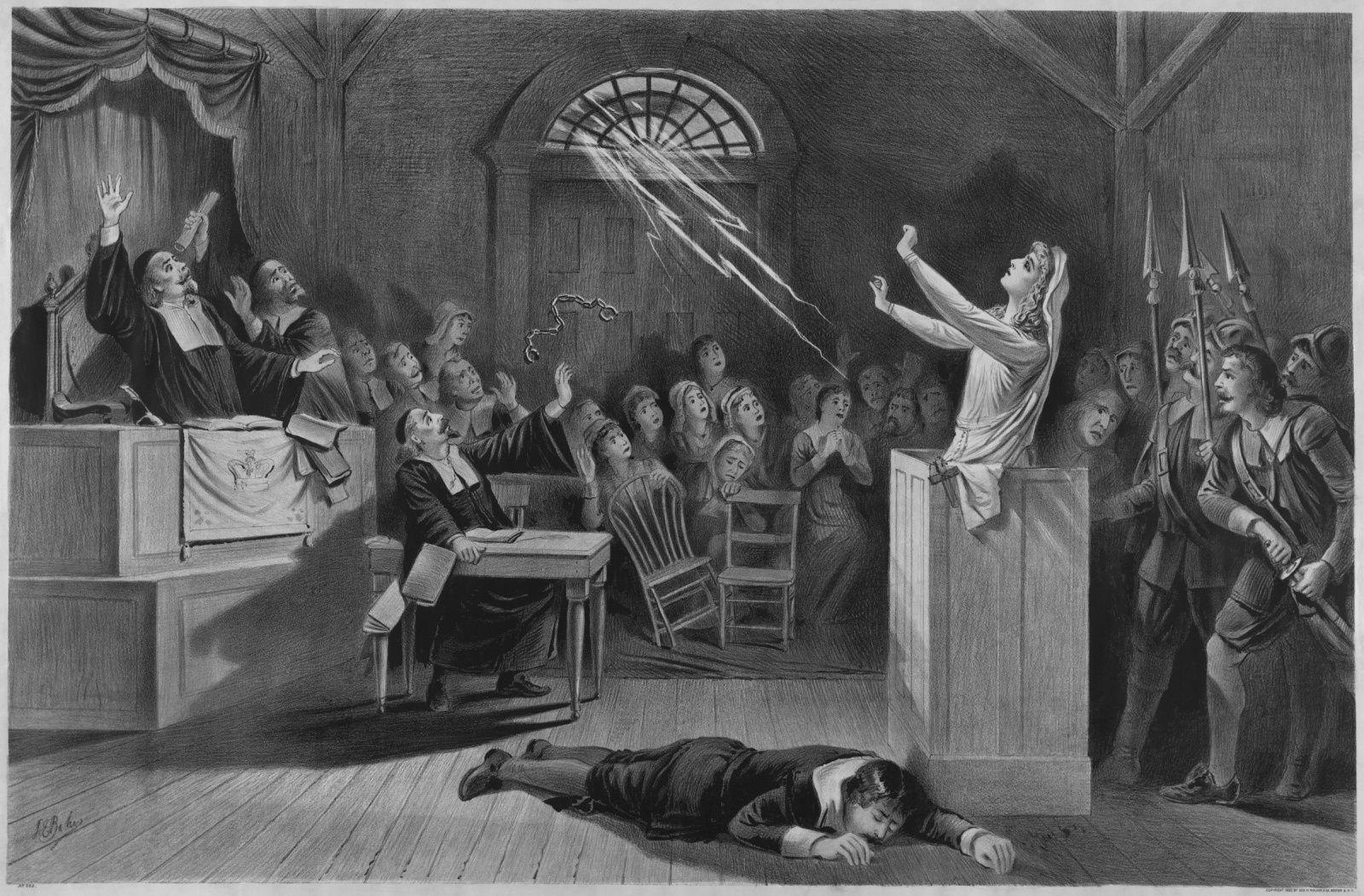
It’s fascinating how susceptible the majority can be to “group think.” It happens to be the morning of All Hallow’s Eve, or Halloween, as I write this. Perhaps that’s why the ten spies swaying the nation of Hebrews with their exaggerated claims reminds me of a handful of schoolgirls convincing the people of their village that they saw upstanding members of the community in cahoots with the devil. Nineteen people were eventually hanged as a result of the Salem witch trials. It’s amazing how bewitching “group think” can be (pun absolutely intended).

The social psychologist Gustave Le Bon theorized that there were three stages of crowd think. A group of people submerge themselves in the collective whole, losing a sense of individual thought and responsibility. Individuals are then susceptible accept, without question, the contagion of popular thought within the group, opening themselves up to suggestion of different kinds. Even in a nation and culture that celebrates freedom of thought and speech we are prone to follow the crowd in all sorts of ways.

As an enneagram Type 4 I tend to be a fierce individualist. Nevertheless, this morning I’m reflecting back along my journey. It’s funny to think about fads, social trends, and popular thoughts I’ve observed and even found myself a part. The further I get in my journey the more desirous I am to think and act independently, rather than allow myself to be submerged in the bewitching trends of the group think of the moment. It’s hard to do. The unconscious draw of group think is often subtle and subconscious as it was for the ancient Hebrews, the puritans of Salem and still is today.

I’m preparing to deliver a message on Sunday morning and one of the key verses on which I’ve been meditating is this: “Do not be conformed to the patterns of this world, but be transformed by the renewing of your mind.”

God, grant me open eyes, open ears, perceptive spirit, and a mind increasingly renewed by Divine Truth and Lady Wisdom.

Chapter-a-Day Numbers 13

These are the names of the men Moses sent to scout out the land. Moses gave Hoshea (Salvation) son of Nun a new name—Joshua (God-Saves). Numbers 13:16 (MSG)

Oneo of the over-arching themes I’ve discovered in my journey through God’s Message is that God is a God of transformation. We grow and we change. I am not exactly the same person I was 30 years ago, or 20 years ago, or 10 years ago, or even last year. I am not perfect, but with life experience and God’s never ending work in my soul, I am growing in love, joy, peace, patience, kindness, goodness, faithfulness, gentleness, and self-control.

Another over-arching theme in God’s Message that points to this work of transformation is the giving of new names. Moses gave Hoshea a new name, Joshua. God gave Abram and new name, Abraham. Jacob was given the new name Israel. Jesus gave Simon a new name, Peter. Saul was given a new name Paul.

In God’s Message, the giving of a new name always pointed to a life transformation. You were this, now you are this.

Today, I’m asking myself many questions:

How am I growing?
How am I different today than this time last year?
Is God doing anything in my heart and life? If so, what?
How has my life transformed over time?
If God were to give me a new name, what would I want it to be?