Tag Archives: Martha

A Good Question for the Week

…but few things are needed—or indeed only one.
Luke 10:42a (NIV)

Most mornings as I sit in the quiet and meditate on the chapter there is one thing that jumps off the page. Other mornings, like this morning, there is a flow and a thread that runs through the episodes.

Today’s chapter contains four episodes. Each episode has its own lesson, but together they have a cohesive thought to send me into another work week.

First, Jesus expands the mission. Not just the Twelve now—others. Seventy-two unnamed, ordinary people.

He sends them out with almost reckless simplicity:

  • No purse
  • No bag
  • No sandals

In other words: No safety net but Me.

And what happens?
They come back breathless—“Lord, even the demons submit to us in your name!”

Jesus smiles, but gently redirects their joy:

“Do not rejoice that the spirits submit to you, but that your names are written in heaven.”

Jesus is saying, “Your identity isn’t in your power… it’s in your belonging.”

I love measurable wins—success, influence, outcomes.
Jesus whispers, “Tom, that’s not your truest scoreboard.”

My worth today is not in what I accomplish but in the quiet, unshakable reality that I am known and named.

In the second episode, Jesus grieves the towns that were centers of His ministry. They saw and heard everything… and they shrugged.

Jesus compares them to Tyre and Sidon—ancient enemies of Israel. It’s a shocking reversal: The outsiders would have responded… but you didn’t.

Familiarity can numb the soul.

I don’t drift from God because I lack information.
I drift because what was once electric becomes… ordinary.

The danger isn’t rebellion. It’s indifference.

I need to pay attention to what I’ve grown used to—grace, truth, the quiet nudges. I need to let them surprise me again.

Speaking of familiar, the third episode is the well-worn parable of the Good Samaritan.

A lawyer wants Jesus to define the limits of his responsibility. Jesus blows up the boundary lines.

A man is beaten on the road and left half-dead.
A preacher passes by…
An upstanding church member…
Then stops…one of those people… a Samaritan.

Samaritans and Jews had centuries of hostility. This isn’t just unlikely—it’s offensive. Jesus casts the enemy as the hero.

And notice the verbs:

  • He saw him
  • He felt compassion
  • He went to him
  • He bandaged
  • He carried
  • He paid

Love is not an attitude.
It’s an action, a movement toward.

My neighbor today isn’t theoretical.
It’s the inconvenient interruption right in front of me.

The road to Jericho winds its way through my day.

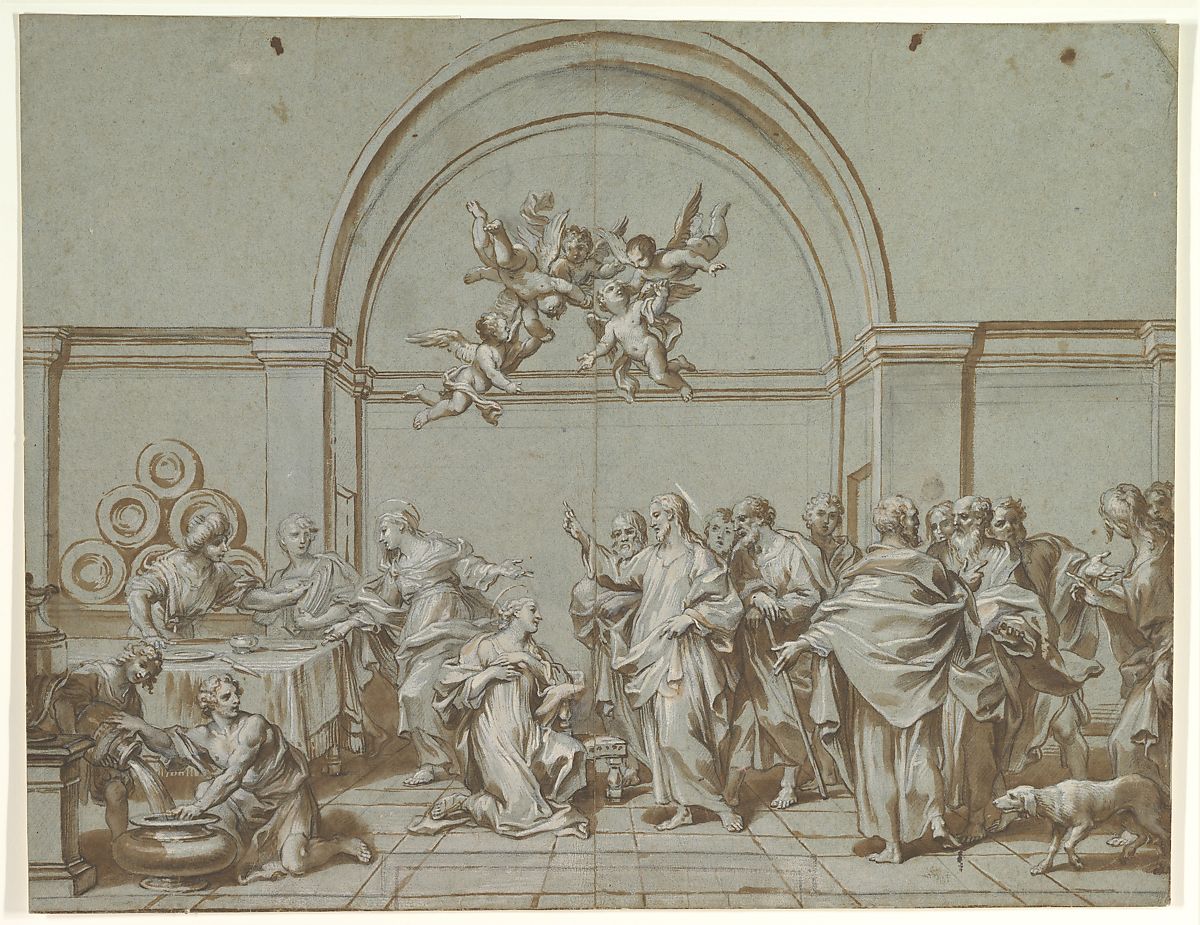
In the final episode, Jesus is having dinner at Mary and Martha’s house.

Martha is busy.
Mary is present.

Martha’s frustration spills out:

“Lord, don’t you care?”

Ugh! How many times have I whispered that question?

Jesus responds with tenderness, not rebuke:

“Martha, Martha… you’re worried and upset about many things, but only a few are needed – or indeed only one.”

“Many things” vs. “one thing.” The Greek carries the sense of fragmentation vs. wholeness.

Martha is pulled apart.
Mary is centered.
I can be very productive… and very divided inside.

The invitation isn’t to do less for Jesus.
It’s to be with Him first.

Before the emails.
Before the noise.
Before the long task list of responsibilities…

Sit down at the table.
Listen.
Let my soul breathe, and center.

And the through-line of these four episodes is an important question for my day and my week: Where is my center?

  • Is it in what I do? (the seventy-two)
  • In what I’ve grown used to? (the cities)
  • In where I draw my boundaries? (the lawyer)
  • In how busy I keep myself? (Martha)

Or…

Is it in being with Jesus—and letting everything else flow from there?

If you know anyone who might be encouraged by today’s post, please share.

Promotional graphic for Tom Vander Well's Wayfarer blog and podcast, featuring icons of various podcast platforms with a photo of Tom Vander Well.
These chapter-a-day blog posts are also available via podcast on all major podcast platforms including Apple, Google, and Spotify! Simply go to your podcast platform and search for “Wayfarer Tom Vander Well.” If it’s not on your platform, please let me know!
Icon featuring an open book symbol on an orange background.

Watershed Moment

Watershed Moment (CaD Jhn 11) Wayfarer

“But Rabbi,” they said, “a short while ago the Jews there tried to stone you, and yet you are going back?”
John 11:8 (NIV)

Certain movie scenes stand out in my memory because of the way the entire storyline of a movie hinges on that one moment. For example, in The Godfather, it is Michael’s late-night visit to the hospital to find his father alone. In the darkness, he whispers to his father, “It’s okay. I’m with you now.” From that point on, the son who wanted nothing to do with his father’s business will be on a trajectory to become the very thing he once despised.

Today’s chapter contains a similar dramatic and pivotal episode in Jesus’ story. This is the seventh and final miraculous “sign” that John chooses to share before shifting to Jesus’ fateful and final days. It is not only the most dramatic of the seven because of the miracle itself, but because the event pushes Jesus’ enemies into a conspiracy to commit murder and rid themselves of Jesus once-and-for-all.

The conflict between Jesus and the chief priests in Jerusalem was already at a boiling point. Jesus had escaped attempts to arrest Him and stone Him the last time He had been in Jerusalem. Because of this, He left the region altogether. But now Jesus gets word that His good friend, Lazarus is gravely ill. Lazarus and his sisters live in Bethany, a stone’s throw from Jerusalem and the Chief Priests.

By the time Jesus arrived, Lazarus had been lying in the grave for four days. Mourners from Jerusalem had gathered to comfort the family. There is a big crowd on hand.

Part of the drama of the moment for me is in John’s careful crafting of the human emotion of the moment. He emphasizes Jesus’ love for Lazarus and his sisters. There’s the wailing and lamenting of the friends gathered with the sisters at the tomb. John also records Jesus’ own emotions with the simple declaration “Jesus wept.” And then, amid the grief and despair, Jesus orders the stone rolled away and loudly commands Lazarus to exit the grave.

The raising of Lazarus from the dead was a watershed moment on multiple levels. The crowd of witnesses and the public display ensured that word would spread like wildfire. The proximity to Jerusalem ensured that word would quickly reach Jesus’ enemies. With this particular sign, Jesus also foreshadows the impending end of His own earthly journey through death to resurrection. Lazarus, meanwhile, would be a living witness to Jesus’ miraculous power, leading Jesus’ enemies to conspire to send him back to the grave as well.

As I meditated on this dramatic scene in the quiet this morning, it once again seemed clear to me that Jesus was not a victim of circumstance. He was very clearly driving the action. Jesus had already declared how His earthly journey would end. With the raising of Lazarus, He was putting the wheels into motion that would lead right where He always knew things would end up.

Along my own earthly journey as a disciple of Jesus, I have been able to look back on my journey and see how certain watershed moments in my story were instrumental in driving the action. Even difficult and hard times have resulted in spiritual growth, deeper levels of maturity, and they have led to places where I’ve experienced life in greater and more fulfilling ways.

The story of Lazarus is really a microcosm of the Great Story itself. Death leads to new life just as winter leads to spring. Or, as David penned in his lyrics of Psalm 30, weeping may last for the night, but joy comes in the morning.

I find this a good reminder for the start of a new work week. Just as Jesus shared with Lazarus’ sisters, if I believe Jesus truly the Resurrection and the Life, I am assured that the darkest of earthly circumstances eventually end in light, the saddest of times ultimately give way to joy, and even death itself is simply a gateway to new life.

If you know anyone who might be encouraged by today’s post, please share.

Mary and the Dudes

Mary and the Dudes (CaD Mk 14) Wayfarer

While he was in Bethany, reclining at the table in the home of Simon the Leper, a woman came with an alabaster jar of very expensive perfume, made of pure nard. She broke the jar and poured the perfume on his head.
Mark 14:3 (NIV)

In today’s chapter, Mark provides a Cliff Notes summary of the fateful night of Jesus’ arrest. As I read the familiar episodes, I was struck at the contrast between Mary’s anointing of Jesus (she is not named in Mark’s biography of Jesus, but John names her, the sister of Lazarus) with expensive perfume, and the actions/behaviors of the Twelve.

Jesus has now been speaking of His arrest, suffering, and death for some time. The response of the Twelve has ranged from silence to confusion to outright disapproval. Mark’s version of events in today’s chapter reveal the behavior of the Twelve to be disagreeable and inattentive to the weight of the moment.

Mary, on the other hand, seems to see what no one else sees. She alone embraces what is about to happen, understands the weight of it, and responds by embracing what Jesus has said would happen. Mary alone acts as a willing participant. Her actions are to bless Jesus before His passion and to metaphorically prepare Him for death. Mary is the only person who seems to see and humbly accept. And, she’s criticized for it.

Jesus’ chosen disciples, meanwhile, can’t believe one of them would betray Him. They can’t stay awake with Him, even after He asks of them this small favor. They can’t stay and stand with Jesus in His moment of need. They can’t even admit they know Him, when confronted with multiple opportunities to do so.

In the quiet this morning, I can’t help but imagine myself in the roles of both Mary and the Twelve. Luke shares that Mary was one to sit at the feet of Jesus and hang on His every word to the point that her sister was indignant (everyone, it would seem, gets indignant with Mary). As much as I would like to think that I would have Mary’s insight, I am reminded that it came at the cost of ignoring urgent things in order to invest in important things. Her devotion to “asking, seeking, and knocking” appear to be the precursor to her spiritual perception.

Have I sacrificed things distracting and urgent to invest myself in Jesus as Mary did?

I have to confess that I identify with the dudes…

Present, but imperceptive.

Great intentions, but greatly inattentive.

Braggadocios during warm-ups, but bungling in the game.

Of course, today’s chapter is not the end of the story. The dudes will keep following. They will learn. They will turn the world upside down.

I’m looking out the window at the lake as I type this. Another day has dawned, and so my story isn’t over either. I take hope in that this morning. Like the dudes, I’ll keep following, too. I’ll keep learning. Who knows? Maybe I’ll even turn a few things upside-down before this wayfaring stranger’s journey is over.

If you know anyone who might be encouraged by today’s post, please share.

Mary and the Dudes

Mary and the Dudes (CaD Mk 14) Wayfarer

While he was in Bethany, reclining at the table in the home of Simon the Leper, a woman came with an alabaster jar of very expensive perfume, made of pure nard. She broke the jar and poured the perfume on his head.
Mark 14:3 (NIV)

In today’s chapter, Mark provides a Cliff Notes summary of the fateful night of Jesus’ arrest. As I read the familiar episodes, I was struck at the contrast between Mary’s anointing of Jesus (she is not named in Mark’s biography of Jesus, but John names her, the sister of Lazarus) with expensive perfume, and the actions/behaviors of the Twelve.

Jesus has now been speaking of His arrest, suffering, and death for some time. The response of the Twelve has ranged from silence to confusion to outright disapproval. Mark’s version of events in today’s chapter reveal the behavior of the Twelve to be disagreeable and inattentive to the weight of the moment.

Mary, on the other hand, seems to see what no one else sees. She alone embraces what is about to happen, understands the weight of it, and responds by embracing what Jesus has said would happen. Mary alone acts as a willing participant. Her actions are to bless Jesus before His passion and to metaphorically prepare Him for death. Mary is the only person who seems to see and humbly accept. And, she’s criticized for it.

Jesus’ chosen disciples, meanwhile, can’t believe one of them would betray Him. They can’t stay awake with Him, even after He asks of them this small favor. They can’t stay and stand with Jesus in His moment of need. They can’t even admit they know Him, when confronted with multiple opportunities to do so.

In the quiet this morning, I can’t help but imagine myself in the roles of both Mary and the Twelve. Luke shares that Mary was one to sit at the feet of Jesus and hang on His every word to the point that her sister was indignant (everyone, it would seem, gets indignant with Mary). As much as I would like to think that I would have Mary’s insight, I am reminded that it came at the cost of ignoring urgent things in order to invest in important things. Her devotion to “asking, seeking, and knocking” appear to be the precursor to her spiritual perception.

Have I sacrificed things distracting and urgent to invest myself in Jesus as Mary did?

I have to confess that I identify with the dudes…

Present, but imperceptive.

Great intentions, but greatly inattentive.

Braggadocios during warm-ups, but bungling in the game.

Of course, today’s chapter is not the end of the story. The dudes will keep following. They will learn. They will turn the world upside down.

I’m looking out the window at the lake as I type this. Another day has dawned, and so my story isn’t over either. I take hope in that this morning. Like the dudes, I’ll keep following, too. I’ll keep learning. Who knows? Maybe I’ll even turn a few things upside-down before this wayfaring stranger’s journey is over.

If you know anyone who might be encouraged by today’s post, please share.

“The Woman”

While he was in Bethany, reclining at the table in the home of Simon the Leper, a woman came with an alabaster jar of very expensive perfume, made of pure nard. She broke the jar and poured the perfume on his head.
Mark 14:3 (NIV)

In today’s chapter, Jesus was at a dinner party given in His honor. Mark wrote the shortest of the four biographies of Jesus, and his efficiency in story-telling requires that details be left out in order to get to the heart of the matter. In this case, however, I found that the omission of certain details also reduced the power of the moment.

Mark states that “a woman” anoints Jesus with some audaciously expensive perfume. John, who was present at the dinner party, explains in his account (John 12) that the person Mark calls “a woman” was Mary, the sister of Lazarus, whom Jesus had just raised from the dead. The other thing we know about Mary is that much earlier when Jesus paid a visit to the home of Mary, Martha, and Lazarus she had been chastised by her sister, Martha, for not helping with dinner (see Luke 10). Mary was intent on sitting near Jesus and listening to Him while Martha dutifully prepared supper. In John’s account of the dinner party, Martha was once again focused on serving. Mary was focused on Jesus.

I had a couple of observations as I contemplated the scene this morning.

Jesus said that Mary, in anointing him with the perfume, was preparing Him “for burial.” Because of the lack of modern embalming methods, bodies were covered in perfumes and ointments that would counteract the stench of death that the body would emit relatively quickly. Yet, Mary’s act is happening a couple of days before Jesus would be arrested and executed.

While #TheTwelve and Jesus’ other followers are deaf and defensive to Jesus repeatedly insisting that He would suffer, die, and be resurrected, Mary embraces what Jesus has been saying. She shows faith and trust that no one else did. Her act metaphorically tells Jesus, “If this is what must be done, then I’m in. I’m going to trust you, that it will be just as you said. Allow me the honor of preparing you for what you say you must do.”

Mary does this immediately after she witnessed Jesus literally calling her brother out of the grave. Mary was standing there when Jesus said to her sister Martha: “I am the resurrection and the life. The one who believes in me will live, even though they die; and whoever lives by believing in me will never die. Do you believe this?” Mary’s anointing of Jesus also symbolically says “I believe. I believe you are the Resurrection and the Life. I believe you will die and that you’ll be raised from the dead just as you said.”

It is, ironically, Judas who questions the “waste” of the expensive perfume (worth an entire year of typical wages in those days) which he says could have been sold and used for more “practical” purposes. Jesus rebukes Judas sharply. To paraphrase: “Judas, shut up and leave Mary alone. This woman understands what I’m doing better than you and the other eleven.” I can’t help but hear the echoes of Jesus repeatedly asking #TheTwelve in previous chapters: “You still don’t understand?” It was Mary, who had been intent on watching and listening to Jesus, who saw it better than anyone else. It was this rebuke that sends Judas over the edge. He leaves the dinner party to arrange his betrayal.

I also hear the echoes of Jesus’ repeated admonition, “If you have ears to hear.” Mary’s spiritual ears were wide open to hear what no one else heard. Her spiritual eyes saw what no one else did. She was the only one connecting the spiritual dots between what Jesus had said and done raising her brother from the dead, and what Jesus said was going to happen to Him. And, she was the one who had been intent on sticking close to Jesus to watch, listen, and learn.

In the quiet this morning, I find it poignant that the person who seemed to “get it” was a woman outside of #TheTwelve. In those days, women were considered second rate to men. They were often treated as possessions and they typically had little education or social standing. It is a recurring theme in the Great Story for God to choose and to use the least, the youngest, the broken, the weak, and the marginalized to demonstrate His power. At the beginning of the Great Story is was “the woman” who was blamed for Adam and Eve’s disobedience. In this case, it was “a woman” who understands what Jesus is doing. In a few days, it will be “the women” who first hear of the resurrection. It will be “the women” who are the first to believe it. It will be “the women” who are entrusted to share the good news with #TheTwelve. I believe that there is an important lesson for me in this.

I have observed along my journey that even today it is often “the women,” like Mary, who show a greater interest in and sensitivity to the things of the Spirit, as well as a greater understanding of what God is up to. I have come to embrace that I have a lot to learn from them. I also have come to embrace the reality that it is sometimes those whom I’d least expect who get the things of God better than I do. Mary reminds me that in this spiritual journey, humility is required.

Chapter-a-Day Luke 10

Painting by Bueckelaer via Flickr and Jim Forest

As they continued their travel, Jesus entered a village. A woman by the name of Martha welcomed him and made him feel quite at home. She had a sister, Mary, who sat before the Master, hanging on every word he said. But Martha was pulled away by all she had to do in the kitchen

. Luke 10:38-39 (MSG)

My wife, Wendy, and I are blessed to spend more time together than most couples I know. We both work out of a home office, so a normal day is spent in the house together. We eat breafast together, we eat lunch together, and we eat dinner together. If I take a break from my work, I usually walk down stairs to talk to Wendy. Much of our free time is spent working together on stage or in administrating the local community theatre. We worship together and serve together on the visual tech team at church. Wendy and I have an intimate relationship that is built on the foundation of shared time, shared space, shared interest, and shared conversation.

The story of Mary and Martha, and the simple lesson of it, keeps popping in my path the past few weeks. I was reminded of it once again in worship yesterday morning. So often I approach my relationship with Jesus like Martha, in which my relationship is really about doing things around him. Yet, Mary had the more initimate relationship with Jesus because she spent time centered on conversation with him.

My relationship with Jesus and my relationship with my wife are really no different. If I want to find intimacy in the relationship, then it’s going to require a foundation of time, proximity, and focused communication.

Chapter-a-Day Luke 9

Christ in the House of Martha and Mary
Image via Wikipedia

The apostles returned and reported on what they had done. Jesus took them away, off by themselves, near the town called Bethsaida. Luke 9:10 (MSG)

One time when Jesus was off praying by himself, his disciples nearby…. Luke 9:18a 9 (MSG)

About eight days after saying this, he climbed the mountain to pray…. Luke 9:28a (MSG)

Jesus often used the phrase “he who has ears, let him hear.”

Listen.
Be open.
Pay attention.
Keep your antennae up.

Earlier this year, I told Wendy that I wanted to be more intentional in spending time together in prayer. As we’ve spent hours in the car between home and the lake, I’ve attempted to prompt us to spend a little of that time praying together.

This past week my daughter Taylor and I were doing a study wrapped around the painting Christ in the House of Mary and Martha by Johannes Vermeer. In the course of our conversation, I once again felt the conviction to be less of a busy-Martha and more Mary-like in spending time with Jesus, sitting and listening and spending time in conversation.

Today, as I read the chapter I couldn’t help notice the recurring theme of Jesus getting away by himself to pray.

I find that lessons from God’s message are sometimes those things which are woven through the text; His callings then weave those lessons through life in a recurring theme. I’ve found that when God promps me, it often comes in whispers as a still-small voice, but we have to quiet our lives enough to hear them (and, if you’re like me, turning your hearing aid on helps, as well).

I hear you, God. I hear you.

Enhanced by Zemanta