Tag Archives: Luke 8

My Part in Jesus’ Ministry

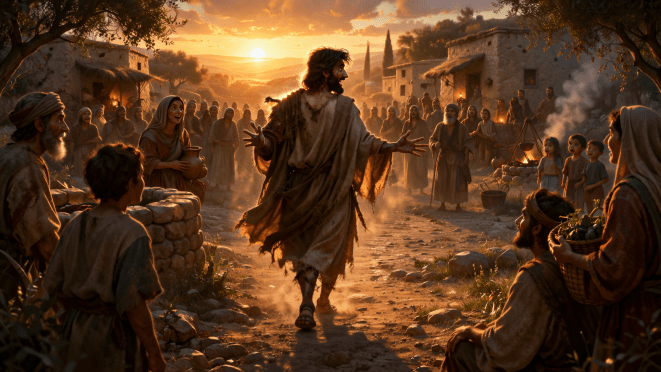
The man from whom the demons had gone out begged to go with him, but Jesus sent him away, saying, “Return home and tell how much God has done for you.” So the man went away and told all over town how much Jesus had done for him.
Luke 8:38-39 (NIV)

I regularly get addressed as “Pastor Tom” by people locally, even though I have not been on a church staff for 33 years. I do regularly teach among our local gathering of Jesus’ followers, however, and so many people place the label on me. I’m fine with that. I consider it an honor.

When I was a child I had a very narrow definition of God’s purposes and callings. This came, in part, from the denominational paradigm in which I was raised. Humanity was spiritually divided into two camps: clergy and laity. Ministry was a profession and only those in the profession could do certain spiritual things. Laity, or “everyone else” was a catch-all. A layperson might attain to more-or-less spirituality, but you were still not in the rarified air of being a “minister.”

This was childish thinking — and it took me a while to outgrow it.

In today’s chapter, I was struck by all of the people around what Jesus is doing…

  • There’s the twelve, who are without question Jesus’ officially designated disciples.
  • Within the twelve only Peter, James, and John are allowed to go into the house of Jairus to witness the raising of his daughter. These three would regularly be Jesus’ “inner circle” within the Twelve.
  • There were several women in Jesus’ entourage. Luke names three but states there were “many” others supporting Jesus’ ministry operationally and financially.
  • Jesus’ family were also present, and Jesus seems a bit dismissive in today’s chapter, but they will have a large part to play in the Jesus Movement later on. His brother James will lead the Movement in Jerusalem and write the book of James.
  • The demon-possessed man Jesus heals begs Jesus to let him follow, but Jesus sends him with a mission to tell everyone in his hometown all that Jesus had done for him. Proximity to Jesus was obviously not required for participation in His mission.

As I meditated on these things in the quiet this morning, I was struck by the fact that all of these people had a part to play in what Jesus was doing. Jesus needed the support of the ladies in His entourage. He needed people to spread the word about what He’d done for them. He needed disciples, but He also needed a few disciples that He could entrust with more than others.

They all had a purpose.

Each one had a part to play in what God was doing.

Along my journey I’ve continued to observe individuals who still see the Kingdom of God through the binary lens of professional ministry and everyone else. Being in the “everyone else” camp causes some people to feel diminished regarding God’s purpose for their lives — like they’re sitting in the cheap seats in the Kingdom while others get called onto the field. I’ve observed that some feel it exempts them from even considering things of the Spirit.

Dr. Mary Neal had an extraordinary Near Death Experience she shares in her book To Heaven and Back. She was physically dead for several minutes and experienced going to heaven. In that experience she shared how she was shown how things she had said and done had a ripple effect in the lives of people all over the world. Even her mistakes and failures had redemptive impact in the lives and stories of others in ways she could never have fathomed.

Paul wrote to the believers in Corinth that every one is a part of the “body” of Christ. We may be different parts. We may operate in very different systems required to make a healthy body function. Like each person in today’s chapter, everyone has a part to play in what God is doing. Peter had a part to play. So did Joanna. So did the man healed from demon possession. Each was very different, but all were part of God’s operation.

It begins with…
A loving gesture
A kind word
Peace in my posture
Joy in my smile
A gentle response
Patience with that annoying person
Faithfully doing what I’ve been asked or have promised
Doing a good deed when the opportunity presents itself

If I focus on these things, God will use me in ways I can’t even fathom for purposes I may never realize this side of heaven.

No theology degree or ministerial certificate required.

Take it from Pastor Tom.

If you know anyone who might be encouraged by today’s post, please share.

Promotional graphic for Tom Vander Well's Wayfarer blog and podcast, featuring icons of various podcast platforms with a photo of Tom Vander Well.
These chapter-a-day blog posts are also available via podcast on all major podcast platforms including Apple, Google, and Spotify! Simply go to your podcast platform and search for “Wayfarer Tom Vander Well.” If it’s not on your platform, please let me know!
An orange icon featuring an open book on a black background.

Listen Carefully

Listen Carefully (CaD Lk 8) Wayfarer

Therefore consider carefully how you listen.
Luke 8:18a (NIV)

Along my life journey, there are so many people I have met and with whom I have shared the journey for a particular season of life. Over forty years I have spent stretches of my journey amidst at least eleven different local gatherings of Jesus’ followers across two states. In each case, I had some opportunity to use the gifts I’ve been given in some kind of spiritual leadership.

I woke up this morning and the lake. My father and I made a quick trip down yesterday to winterize things and button the place up for the winter. As I sat in the quiet this morning, watching the sun come up over the cove, I let my mind linger in the memory banks. I thought of each of those gatherings. Faces and names came to me that I had not thought about in so very long. There are so many lives and stories.

There were so many individuals that I have no idea where their journeys led them or what has become of them.

A beautiful, intelligent, and personable young woman whom I visited in the suicide watch section of a mental health clinic. The death in her eyes concealed so many secrets.

A young man with so much happening inside of him, and he didn’t know what to do with all of his anger. He had flaming red hair to match that anger and he struggled as the only child with a single mother and absent father.

The rough, rebellious, foul-mouthed, drug-using offspring of a fundamentalist family system. Man, I loved him. His rough exterior, which put so many people off, hid a heart of gold. Come to think of it, I imagine Simon Peter was a lot like him.

The beautiful trophy wife of a wealthy, prominent attorney. No amount of expensive clothing and cosmetics could hide the loneliness and pain that had her dying inside. Her exterior was so put together for someone so spiritually desperate.

Then there are those whose stories I’ve known or learned about along the way.

The prank-pulling, immature dude who was not serious about anything ended up getting his act together, succeeding in business, and being a great husband and father to his kids.

A different beautiful, intelligent, and personable young woman whom I watched walk through her suicide attempt, struggle with her inner demons, and find her way.

Several individuals came out of the closet, (some to me personally) and found very different roads leading to very different places.

Multiple seemingly wise individuals made very different tragic and foolish decisions that led to painful consequences affecting so many others, which also led to very different places.

In today’s chapter, Luke presents a series of episodes from Jesus’ ministry, when the crowds were huge and He was riding a wave of popularity. The chapter begins with a parable Jesus told about a sower who scatters his seed. The seed falls in different places on different types of soil which leads to very different results. Jesus tells His disciples that the parable is about how God’s Word lands with different individuals which leads to very different results.

As I meditated on the chapter, I thought about all the different individuals mentioned in the chapter:

The wife of Herod’s house manager who became a member of Jesus’ entourage and a financial supporter of His ministry.

The man possessed by many demons, who after being delivered by Jesus, asks to join His entourage. In this case, Jesus tells him to stay home and tell his story to the people in his community.

The angry pig farmer whose pigs (and livelihood) the evicted demons entered and killed.

Jesus’ own biological family members trying to get in touch with him (and who, at the moment, think he’s crazy).

The little girl who dies and whose spirit leaves her body, only to be called back by Jesus. What did she experience while she was absent her body?

So many individuals encounter Jesus, hear Him, touch Him, and witness His interactions with others. So many different lives. So many different experiences. So many different outcomes.

Each person has their journey. Each person has their story. Each person ends up in different places with different outcomes.

I found it fascinating that after the parable of the sower, Jesus tells His followers: “consider how carefully you listen.” With each story choices are being made about listening, receiving, and responding. With each choice, different directions lead to different places. My story, my journey, and my trajectory in life that led to intersections with all of these different individuals I mentioned are rooted in how carefully I listened, how receptive my heart had been, and how I chose to respond. It led me to each of those people.

Indeed, that process continues today and each day of this earthly journey.

Lord, help me listen well, be receptive, and respond appropriately to Your Word and Spirit.

If you know anyone who might be encouraged by today’s post, please share.

Do I Want Him to Come, or Go?

Then all the people of the region of the Gerasenes asked Jesus to leave them, because they were overcome with fear. So he got into the boat and left. Luke 8:37 (NIV)

Now when Jesus returned, a crowd welcomed him, for they were all expecting him. Luke 8:40 (NIV)

Life is filled with mysterious paradoxes. As a follower of Jesus for almost 40 years, I have witnessed many debates and intense conversation spring up over the years among theologians, zealous followers, and various boxes of institutional Christianity who argue perpetual questions of faith and life. There are those questions that produce endless debates which are endlessly renewed and rehashed with every subsequent generation.

At the top of the list of these perpetual debates is a simple question. Does God choose us, or do we choose God? In theological terms it is worded: Are our lives predestined, or do we have free will to make our own choices?

Don’t worry, I’m not about to jump into the deep end of theology on you here to renew and rehash the question in this post. You’ll have to buy me a pint if you want me to discuss my thoughts on the matter. I simply raise the matter because of an observation in today’s chapter.

As Dr. Luke continues his biography of Jesus, he continues in today’s chapter to relate stories from Jesus’ miraculous ministry tour. He’s in one region along the shores of Galilee. There’s a local in the area who has been a lunatic his whole life and everyone in the town knew it. The man’s insanity was rooted in things spiritual. He was possessed by numerous demons. Jesus casts out the demons. The people of the town, rather than being impressed, are freaked out completely. They beg Jesus to leave them.

Jesus and his entourage get in their boat and sail back across the Sea of Galilee, returning to a town that had become a sort of base of operations for Jesus’ tour. When they arrive, a crowd is there at the dock waiting expectantly for Jesus to arrive.

Here is my simple observation from within the quiet this morning:t my spirit’s attitude towards God matters. The people in the region of the Gerasenes were afraid and freaked out. They asked Jesus to leave, and He did. The people on the dock, in contrast, were eager, expectant, seeking, desiring, and waiting for Jesus’ return. Immediately a woman is healed and a girl is raised from the dead.

Followers of Jesus around the world are in the middle of a five week ancient tradition called the season of Advent. In simple terms, it is about the attitude of one’s heart toward Jesus. It is a time of heart preparation, expectation, seeking, and longing for Jesus’ arrival like the people at the dock. We celebrate His first arrival at Christmas, and we look expectantly towards His second arrival which He promised on a day and hour that is, itself, one of this earthly life’s perpetual mysteries.

Along my spiritual journey, I’ve discovered that under the weight of endless theological debate I often find a very simple spiritual truth.

I can ask Jesus to leave and stay away.

I can seek, desire, and expectantly welcome Jesus in.

Jesus responds accordingly.

A Small Detail of Culture and Economics

healing of maryAfter this, Jesus traveled about from one town and village to another, proclaiming the good news of the kingdom of God. The Twelve were with him, and also some women who had been cured of evil spirits and diseases: Mary (called Magdalene) from whom seven demons had come out; Joanna the wife of Chuza, the manager of Herod’s household; Susanna; and many others. These women were helping to support them out of their own means.
Luke 8:1-3 (NIV)

I mentioned last week that I appreciate Luke for the small details he researched and added into his telling of Jesus’ story. The opening of today’s chapter is an example. Luke is careful to point out that Jesus was accompanied, not only by the twelve, but also by some women whom Jesus had healed. When reading “Joanna the wife of Chuza, the manager of Herod’s household,” Luke’s contemporaries would have read that description and immediately understood that Joanna was a woman of means. Herod was a regional king ruling under the authority of the Roman Empire, and managing Herod’s household would have been a well paying position. Luke points out that the women were traveling with Jesus and helping to support Jesus ministry financially. This little detail fascinates me.

In Jesus day, women in Palestine had very low social status. The Jewish culture at that time, it can be argued, was misogynistic. Women were treated with contempt and good Jewish men could be heard reciting ritual prayers thanking God that they had not been born Gentiles (non-Jews), dogs, or women. I can’t imagine how that made women feel when they heard their husbands reciting such a thing.

Jesus, however, cut against the grain of the contemporary culture. He spoke with women in public which scandalous in that day. He socialized with broken women of ill-repute and treated them with love, compassion, and forgiveness. He did not discriminate in performing miracles. He was not only seen publicly healing men, but also touching and healing women of their infirmities both physical and spiritual. Jesus didn’t fear wrath and ridicule for these things, and He received a generous dose of both. Jesus did what was right in the face of popular culture and treated women with the love, honor, and respect that is due to all daughters of Eve. THAT is the Jesus I follow and strive to be like.

In giving us this detail, Luke also clues us in to how Jesus’ traveling ministry operated financially. At least part of the funds required to support Jesus and his followers came from the financial means of his followers, women of means in particular. The principle here is simple. Jesus followers and those whom He healed gave out of their gratitude to support Him and His ministry. It should be no different today. I give regularly to the on-going work of Jesus, not out of blind obedience, guilt, or shame, but out of gratitude for what Jesus has done in my own life.

Another thing this little detail makes me think about is the case of Joanna. Her money was coming directly from Herod’s palace. Herod was a corrupt, evil, murderous tyrant. I can hear the conversations of Jesus’ followers around the fire at night arguing whether Jesus should accept such “dirty” money. Doesn’t that come from evil means? Isn’t accepting that money just a vote of support for Herod and his evil ways? There is no mention of Jesus having any qualms about accepting Joanna’s gifts, despite the fact that it flowed from Herod’s coffers.

There is a timeless, on-going debate about the financial inequalities among peoples and social groups. Financial inequalities existed in Jesus’ day. In fact, it can be argued that the inequalities were even more extreme than what we experience in modern western culture. Yet Jesus’ own ministry would not have been possible were it not for the financial support of followers who were among the rich of that day. I find it interesting that while Jesus taught constantly about money, the teaching was almost always focused on the spiritual connection between individuals and their finances. Jesus never spoke out about the corrupt Roman tax system, but He spoke to individual tax collectors about not using the system to extort money from others. Jesus did not condemn the rich for having money, but He did warn individuals that their love of money was leading them down a spiritual path to condemnation. The only time Jesus made any kind of broader statement was with regard to the extortion racket being carried out by the religious leaders in the temple.

This morning I’m thinking about Jesus, who showed love and compassion to those His culture did not love. I’m thinking about Jesus, who was not as concerned about the macro economic and political issues of this world, as He was about the micro-spiritual connection between our money and our hearts. I’m thinking about Jesus, whom I want to emulate in my thoughts, words and actions this day.

Chapter-a-Day Luke 8

Gollum in Peter Jackson's live-action version ...
Image via Wikipedia

Jesus asked him, “What is your name?”

“Mob. My name is Mob,” he said, because many demons afflicted him. And they begged Jesus desperately not to order them to the bottomless pit.

A large herd of pigs was browsing and rooting on a nearby hill. The demons begged Jesus to order them into the pigs. He gave the order. It was even worse for the pigs than for the man. Crazed, they stampeded over a cliff into the lake and drowned.

Just the other day I finished a trilogy of books by Brent Weeks [I plan to write a post about them]. They wove an amazing story of good and evil and within there was a character who made conscious choices to embrace evil, yet those choices were ultimately woven into the climactic good of all. Wendy and I ended up in a long discussion about the theme of good and evil in some of our favorite stories.

In the Lord of the Rings, the character of Gollum is a mischeivous, evil character. To the very end he is offered opportunities to turn from his ways, but instead chooses into his lust for the ring. Yet, without that choice, evil would have ultimately have triumphed.

In Harry Potter, the character of Wormtail is a despicable character who has chosen into the darkness, yet his actions ultimately pave the way for good to prevail.

I thought of these literary reflections of the Great Story as I read today’s chapter. I found it interesting that Jesus had the power to cast the mob of demons into the abyss and the demons knew it. Surely they deserved such and end. Yet they pleaded with Jesus not to do so and Jesus acted with compassion.

I’m perplexed at his decision, and challenged.

The further I travel in the journey, the less likely I find myself to render quick judgement on any person. I can’t see all ends, and I find that God weaves His good  purposes through despicable individuals and their acts.

Today, as I mull over these things, my heart whispers the serenity prayer:
God, grant me the serenity to accept the the things (and persons) I cannot change, the courage to change the things I can, and the wisdom to know the difference.

Enhanced by Zemanta