Tag Archives: Leviticus 24

Keep the Flame Burnin’

Keep the Flame Burnin’ (CaD Lev 24) Wayfarer

Outside the curtain that shields the ark of the covenant law in the tent of meeting, Aaron is to tend the lamps before the Lord from evening till morning, continually. This is to be a lasting ordinance for the generations to come.
Leviticus 24:3 (NIV)

It was a bitterly cold night forty-four years ago last month. I was just a snot-nosed fourteen year-old kid. I was a middle-schooler for crying out loud. I walked down the aisle, knelt down, and prayed a prayer of total surrender. As did this, everyone sang,

“I have decided to follow Jesus. No going back. No going back.”

Young people, especially adolescents, make a lot of silly statements at that stage of their lives. If you had asked me then, I’d have probably told you that I was going to study Law and go into politics. Perhaps I would be President of the United States someday. That was what my yet to be fully formed brain was thinking before that night. But something happened in that prayer of surrender that penetrated far deeper than the fog of adolescent angst, dreams, and natural delusion.

“Though none go with me, still I will follow. No going back. No going back.”

Here I sit in the quiet, forty-four years later. I’m still following. The spiritual reality is that I’m following Jesus closer than ever, even though it looks very different than I could have even conceived forty-four years ago. It’s less religious and more relational. It is intensely personal and organic rather than being communal and tied to an organization. It is less sure and more real. It has grown in intimate mystery as I have slowly learned to relax my fingers clinging to human dogma. I’m loving far more, and judging far less than I ever have before. Forgiveness comes easier. So does generosity.

“I have decided to follow Jesus. No going back. No going back.”

A few days ago, in my post/podcast entitled Ritual and Spiritual, I talked about the 40-watt light-bulb inside the candleholder above the altar of the church in which I grew up. I was taught that it was “the eternal flame” that illuminated the altar always.

In today’s chapter of God’s priestly manual for the ancient Hebrews we learn where the Methodist church learned about eternal flames and altars. There were golden lamp stands that God had Moses and the Hebrews make and place outside the “Most Holy Place” of his traveling tent temple. Others stood by the altar outside the tent temple. Aaron the high priest, and his priestly sons were to tend the lamps and keep them burning around the clock. This required constant attention, making sure the wicks were trimmed and replaced and that they never ran out of oil. If they weren’t vigilant in these mundane tasks of checking, adding, replacing, and maintaining, the fire would go out.

What I once again find so profoundly simple is that God gave this metaphorical lesson to His people in the toddler stages of humanity that we humans might grow-up, mature, and learn the spiritual lesson that the metaphor had to teach us. Jesus made it clear that the lesson was not that we should replicate this practice of building altars in churches and hanging 40-watt light bulbs over them. This, by the way, requires nothing from the humans responsible for them other than telling the janitor to replace the bulb once every year-or-two to make sure it doesn’t burn out and no one notices until Sunday morning worship. That’s not quite the spiritual lesson of vigilance, discipline, and maintenance that God was giving Aaron and the boys.

The lesson of the “continuous flame” was a spiritual lesson for the day when Jesus would come, indwell, and illuminate my 14-year-old heart, mind, and soul.

“Here’s another way to put it: You’re here to be light, bringing out the God-colors in the world. God is not a secret to be kept. We’re going public with this, as public as a city on a hill. If I make you light-bearers, you don’t think I’m going to hide you under a bucket, do you? I’m putting you on a light stand. Now that I’ve put you there on a hilltop, on a light stand—shine! Keep open house; be generous with your lives. By opening up to others, you’ll prompt people to open up with God, this generous Father in heaven.”
Matthew 5:14-16 (MSG)

How do I keep the Light of the World burning within and shining out in my words, actions, and relationships for forty-four years? This is where the routine of spiritual vigilance, commitment, investigation, and mundane perpetual maintenance that God taught Aaron and the boys comes in. Being a disciple of Jesus has not been simply a process of hooking up the wires, flipping the switch, and changing the bulb every few years. Keeping the spiritual flame burning and the Light shining has required more diligence, discipline, and perseverance than that. Not that I haven’t had my own struggles to maintain it in the ebb and flow of this life journey. I’m human like everyone else. Some seasons I’ve done better than others.

Still, here I am in the quiet this morning, still tending the internal spiritual flame. Another chapter, another hour of meditation, reflection, and internal conversation with God’s Spirit. Another day on this earthly journey.

“I have decided to follow Jesus. No going back. No going back.”

If you know anyone who might be encouraged by today’s post, please share.

These chapter-a-day blog posts are also available via podcast on all major podcast platforms including Apple, Google, and Spotify! Simply go to your podcast platform and search for “Wayfarer Tom Vander Well.” If it’s not on your platform, please let me know!

Of Twisties and Pantry Lights

Command the people of Israel to bring you pure oil of beaten olives for the lamp, that a light may be kept burning regularly. Aaron shall set it up in the tent of meeting, outside the curtain of the covenant, to burn from evening to morning before the Lord regularly; it shall be a statute forever throughout your generations.
Leviticus 24:2-3 (NRSV)

Wendy and I live together quite comfortably, but we are no different from every other couple on the planet. We have our differences, which don’t always become acutely clear until you live together for a period of time. Wendy and I were both raised in our Dutch heritage, and we both exemplify the legendary frugality of Hollanders. Our frugality, however, is exhibited in very different ways.

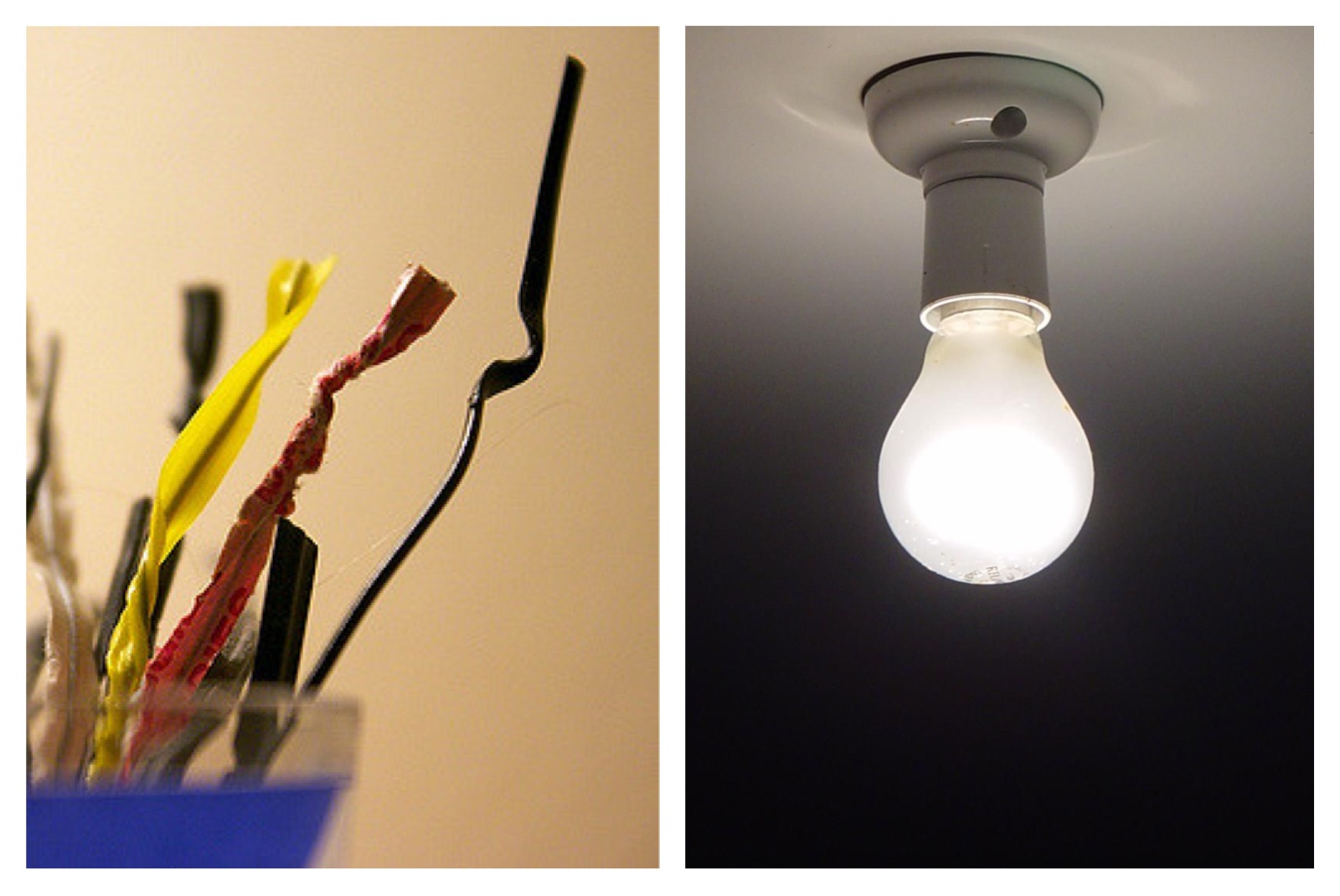
My wife’s frugality is exemplified in the hoarding of things that might  be useful in her kitchen. For example, one should never throw away a “twisty” (the little colored paper covered wire that binds the bag on a loaf of bread). You never know when you might need a million or three of these incredibly useful utensils. The same principle can be applied to sacks (especially the ones with little handles on them), and zip-loc bags. I may roll my eyes at the piled rainbow of twisties in the kitchen drawer, Wendy will remind me, but I know without a doubt that there is one (or 12) available when I need it, and I know exactly where to find them.

My frugality (thank you, Dad) is exemplified by my compulsive desire to turn out lights that are illuminating empty rooms (and the accompanying rage that rises in my soul when I see it). Wendy has no problem keeping a room illuminated if there’s the possibility that she might enter it some time during her waking hours. When I see lights on in empty rooms I go into panic just short of cardiac arrest. After all, the unnecessary illumination of empty rooms will certainly be our financial ruin. They will drain our retirement fund of necessary pennies and lead to us living in a dark, cold, rat-hole of an apartment in our old age in which we will rock in our chairs and grieve long hours over this stark reality: If we’d have simply turned out more lights in empty rooms all those years, we might be able to afford turning on the furnace to ease our frigid, arthritic appendages.

So, where am I going with this? Well, just yesterday in the middle of a bright, sunny summer day I walked down to the kitchen to get a cold beverage. Sure enough, I found that the light in our empty kitchen pantry was on. Wendy was in her office working away at her desk. My frugality alarm went off and, as usual, my blood pressure went into its rapid, steep ascent. In a moment of lucidity, however, I reminded myself that entering an argument over turning out the pantry light was futile. We’ve been down that road to nowhere before. I am also frugal with arguments (especially those I’ll never win).

I asked myself: How do I get over my obsessive frustration over turning out the pantry light so that I can live in peace and avoid the cardiologist’s bill?

That’s when I remembered the eternal flame.

Growing up in the Methodist church, there hung a large cross over the altar at the front of sanctuary. From the bottom of the cross hung what looked like a large candle holder. I was taught as a child that this was the “eternal flame” which was always lit (except, of course, when the light bulb burned out) as a word picture of God’s eternal presence and Light.

I laughed as I thought to myself that I needed to stop thinking of the pantry light (which is the light I find most commonly lit unnecessarily) as the bane of our financial freedom. Instead, I need to think of it as the eternal flame that illuminates God’s blessing and provision (as evidenced by a stocked pantry).

In a moment of synchronicity, this morning’s chapter is the source of the “eternal flame” concept. It began with the Levitical law commanding that the high priest (Aaron) keep a lamp burning in the temple, just outside the curtained area which metaphorically represented God’s presence.

Today I’m thinking about frugality and eternal flames. I’m thinking about our individual differences and the compromises we learn to make in living together harmoniously. I can think of compromise as a negative (e.g. I’m having to “give up” or “give in” to something) or I can choose to find something beneficial in the process. The illumination of a pantry void of humans is also a pantry illuminating the evidence of God’s blessings and faithful provision. Perhaps that reminder is worth the pocket change it costs me.

Chapter-a-Day Leviticus 24

Dictionary

 It makes no difference whether he is a foreigner or a native, if he blasphemes the Name, he will be put to death. Leviticus 24:16 (MSG)

blas·pheme

/blæsˈfim, ˈblæsfim/[blas-feem, blas-feem] verb, -phemed, -phem·ing.
–verb (used with object)
1. to speak impiously or irreverently of (God or sacred things).
2. to speak evil of; slander; abuse.

Those who faithfully read these chapter-a-day posts are likely sick of hearing me say that God is a God of metaphor. And yet, in our journey through God’s Message I am continually amazed at how deeply this truth is woven into the very fabric of life. Words themselves are metaphors. A word, whether spoken or written, is something which stands for something else without using “like” or “as.” God’s Message refers to Jesus as the “Word.”

Consider that each morning we wake up with a blank verbal canvas, and the words that we choose to utter become brush strokes which paint a metaphorical self-portrait; they paint a metaphorical expression out of our deepest thoughts, emotions, and beliefs.

Think about all that you did yesterday. Recall, as best you can, all of the words that came out of your mouth: the conversations, the exclamations, the idle gossip, the song lyrics you sang along with in the car, the curses under your breath, the complaints, the arguments, the demands, the insults, the compliments, the private moments, and the deragatory remarks.

What kind of self-portrait do those words paint? Would others look at a summary of the words that came from your mouth and say that it is a portrait of love? Anger? Contentment? Hatred? Dissatisfaction? Gentleness? Pride? Greed? Compassion? Lonliness? Humility? Fear? Patience? Anxiety?

God takes the word we use very seriously. In fact, I believe God takes them far more seriously than we care to think about.

“A good man brings good things out of the good stored up in his heart, and an evil man brings evil things out of the evil stored up in his heart. For the mouth speaks what the heart is full of.” – Luke 6:44-46

“But I tell you that everyone will have to give account on the day of judgment for every empty word they have spoken.” – Matthew 12:36

“My dear brothers and sisters, take note of this: Everyone should be quick to listen, slow to speak and slow to become angry….” James 1:19

I read today’s chapter and scratch my head at the extreme reaction God had towards one man’s curse. My first reaction is to think “how can God be so upset about words?” The longer I meditate on it, the more I hear God’s return question: “How can you so easily profane the power and meaning of words themselves?”

Enhanced by Zemanta