Tag Archives: Jeremiah 19

The Essential Ingredient

The Essential Ingredient (CaD Jer 19) Wayfarer

“Then break the jar while those who go with you are watching, and say to them, ‘This is what the Lord Almighty says: I will smash this nation and this city just as this potter’s jar is smashed and cannot be repaired.” 
Jeremiah 19:10-11 (NIV)

This past weekend, I took a couple of days to spend with my friend Matthew at the lake. We both have April birthdays, so it was a mutual birthday celebration.

One of the things I love about the lake is that the combination of quiet and separation from daily routines allow for a level of contemplation and conversation that normal daily schedules don’t afford. In those conversations this weekend, Matthew and I peeled back deeper layers of knowing and being known.

One of the things I love about my Enneagram Five friend, Matthew is his natural curiosity that leads to a depth of knowledge and understanding about how humans feel, think, and behave. This feeds his work as a therapist. Matthew unpacked for me some of the things being studied on the cutting edge of his field in the area of neurobiology, the study of the brain.

Matthew shared with me how the brain, like a computer, has both hardware and software. In our earliest years, our experiences and the feelings they stir in us lead to the hard-wiring which becomes our mental hardware. As we grow, the emotional center of our brain (how we feel) and the resulting hardware center of the brain (how we think) combine to determine how we see everything around us (what we believe). As he described this, it sounded awfully hopeless to me. If my brain becomes hard-wired in these patterns at an early age, is re-wiring it even possible?!

“Yes!” Matthew answered emphatically. “God made our bodies with the ability to heal, and that includes the brain. But there is one ingredient that is essential in facilitating the rewiring process: pain.”

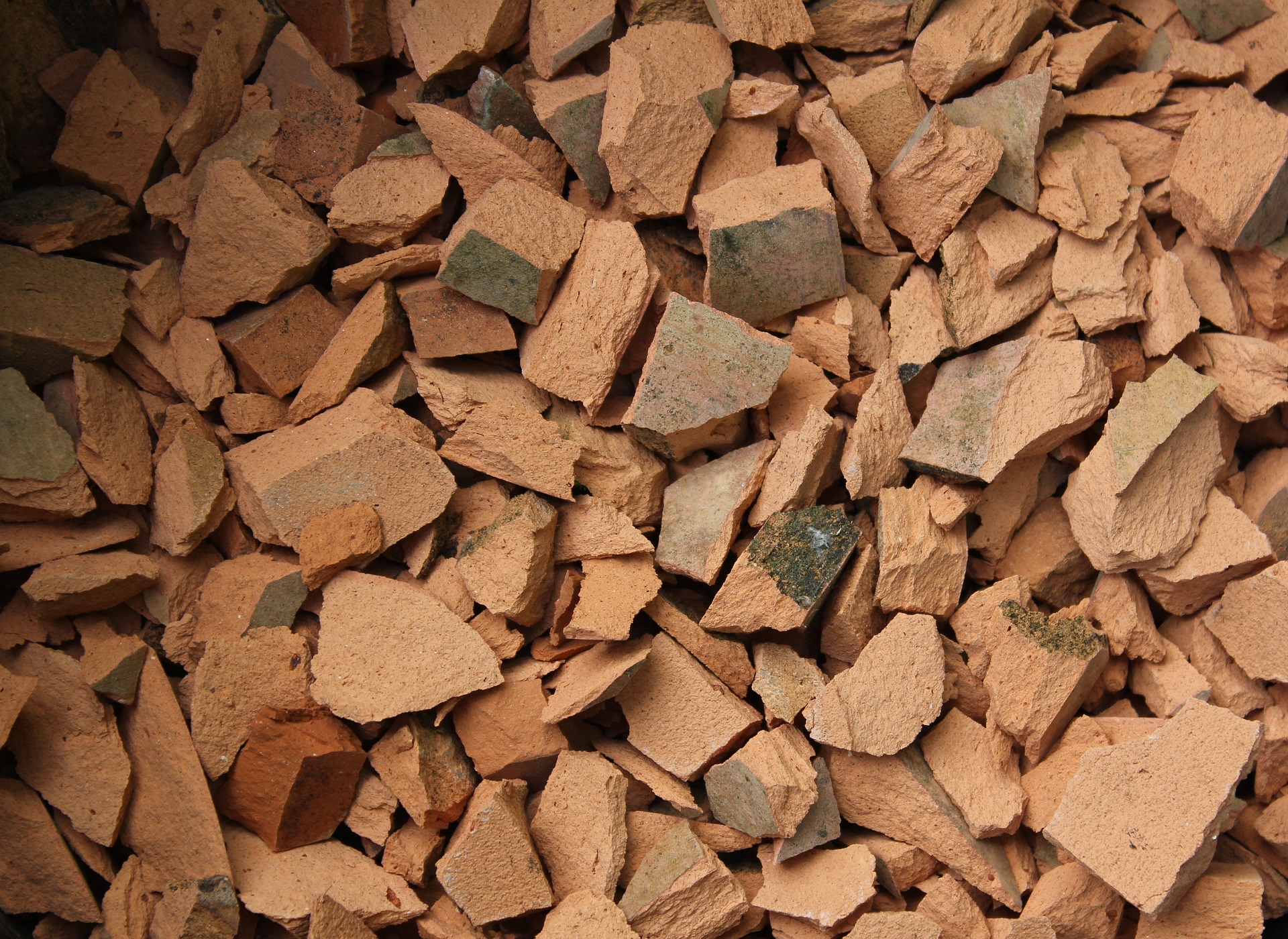
In today’s chapter, the ancient prophet Jeremiah is told by God to take a clay jar from the local potter, gather some civic and priestly elders, and take them to the “Potsherd Gate” of Jerusalem which overlooked the Valley of Hinnom. The Potsherd Gate was so-called because the area right outside the city wall was a garbage dump for people’s broken and useless pottery. The Valley of Hinnom had long served as an area where citizens of Jerusalem met to worship pagan deities like Baal, which included the sacrifice of first-born children to the god Molech.

Having reached the gate and overlooking the Valley, Jeremiah smashed his clay jar and prophesied that God was going to lay waste to Jerusalem because of her unwillingness to turn away from the worship of their false gods and their detestable practices. This prophetic word picture had a layer of meaning for the elders he brought along with them. Rulers in that region, particularly Egypt, would write the names of their enemies on pottery and then smash them as a curse.

God was sending His people through a painful siege followed by a painful captivity in Babylon. God ultimately wanted to rewire His people’s thinking and beliefs, their minds and hearts, which had become hard-wired to hold fast to their duplicitous worship system while stubbornly rejecting God’s ways. As I read this in the quiet this morning, I heard Matthew’s words echoing in my own heart: “…there is one ingredient that is essential in facilitating the rewiring process: pain.”

Matthew and I spent some time talking through some of the most painful experiences in our respective life journeys. In doing so, we learned some intimate details about one another, things we’d never shared before. We were not only able to extend grace to one another, but we were able to appreciate and articulate how God used those deeply painful experiences to teach us important qualities like faith, endurance, patience, joy, and hope.

In the quiet this morning, as I get ready to head into another work week, I am reminded that God repeatedly reminds me throughout the Great Story that I am to rejoice, exult, and “consider it all joy” when life gets shattered like an earthenware jar. If I am willing to respond to those painful stretches of the journey with spiritual openness, God will use them rewire my heart and mind in ways that are otherwise impossible.

If you know anyone who might be encouraged by today’s post, please share.

How Little I Can Possibly Fathom

They have built the high places of Baal to burn their children in the fire as offerings to Baal….”
Jeremiah 19:5 (NIV)

Let’s be real. There’s a smorgasbord of negativity out there. Media and a 24/7/365 news cycle continually bombards us with sensational cries of things for us to fear or be anxious about. The right cries for us to fear the left. The left cries for us to fear the right. Beyond politics there is a steady stream of anxiety stirring doom we’re told to perpetually fear from nuclear war, global warming, gun violence, terror attacks, product safety, GMOs, cancer, Zika virus, flu, vaccinations, poverty, earthquakes, floods, oil spills, pollution, asteroid hits, and etc, and etc, and etc.

A month or two ago Wendy and I read a fascinating article in the Wall Street Journal by a Harvard professor. He attempted to provide some much needed perspective on our current life and times.

A few excerpts:

Globally, the 30-year scorecard also favors the present. In 1988, 23 wars raged, killing people at a rate of 3.4 per 100,000; today it’s 12 wars killing 1.2 per 100,000. The number of nuclear weapons has fallen from 60,780 to 10,325. In 1988, the world had just 45 democracies, embracing two billion people; today it has 103, embracing 4.1 billion. That year saw 46 oil spills; 2016, just five. And 37% of the population lived in extreme poverty, barely able to feed themselves, compared with 9.6% today. True, 2016 was a bad year for terrorism in Western Europe, with 238 deaths. But 1988 was even worse, with 440.

The world is about a hundred times wealthier today than it was two centuries ago, and the prosperity is becoming more evenly distributed across countries and people. Within the lifetimes of most readers, the rate of extreme poverty could approach zero. Catastrophic famine, never far away in the past, has vanished from all but the most remote and war-ravaged regions, and undernourishment is in steady decline.
A century ago, the richest countries devoted 1% of their wealth to children, the poor, the sick and the aged; today they spend almost a quarter of it. Most of their poor today are fed, clothed and sheltered and have luxuries like smartphones and air conditioning that used to be unavailable to anyone, rich or poor. Poverty among racial minorities has fallen, and poverty among the elderly has plunged.
During most of the history of nations and empires, war was the natural state of affairs, and peace a mere interlude between wars. Today war between countries is obsolescent, and war within countries is absent from five-sixths of the world. The proportion of people killed annually in wars is about a quarter of what it was in the mid-1980s, a sixth of what it was in the early 1970s, and a 16th of what it was in the early 1950s.

Please don’t read what I’m not writing. There is still no lack of very real and hard work to be done to make this world a better, more peaceful, and just place. What I increasingly have come to understand, however, is that it has become harder and harder for a person like me, living in the first-world of the 21st century, to understand how absolutely brutal life was in the days of the ancient prophets like Jeremiah. Reading through the writing of the ancient prophets can feel like a long slog. It’s whole lot of doom and gloom from a time and place that is very, very different than my reality.

I struggle with the harsh images and the violence in Jeremiah’s messages. But I also have to remember that I have no clue how harsh and violent daily life was in the middle east in 500 B.C.

Amidst today’s chapter, Jeremiah hints at what was happening, even within the walls of Solomon’s Temple, in his day. The God of Abraham, Moses, and David had been almost completely forgotten. Solomon’s Temple had become an open, free-market for the worship of local gods. In the case of Baal, people would sacrifice their own children and burn them alive as a form of worship. Just let the image of that sink in for a moment.

There’s a reason that God was angry. He commanded his people to love their children, to raise them up well. God commanded his people to teach their children and grandchildren His word, and to teach them to keep His commands about being honest, pure, just, content, and faithful. Now God’s people are worshiping local fertility gods with religious prostitution and drunken sex orgies. They are burning their own children alive as a sacrifice to Baal. And, when God raises up a prophet like Jeremiah to speak out against what is happening they tell him to shut-up and threaten to kill him.

This morning in the quiet I’m mulling these things over in my head. I’m not foolish enough to believe that things are perfect in this day and age, but I also don’t want to be equally foolish by denying the fact that I live in a world that is far better off than when my parents and grandparents were my age. I live in a world in which daily life is infinitely better off than it was for humans who lived centuries and millennia before. I can’t really imagine a day in the life of Jeremiah.

These thoughts lead me to look at Jeremiah’s writing differently. Rather than trying to layer Jeremiah’s poetic prophecies with my 21st century first-world understanding I want to let go of my preconceived notions. I want to cut Jeremiah some slack and try to see his world from his perspective. As a parent I addressed my daughters differently when they were five than I do when they are twenty-five, so it seems reasonable for me to conclude that God addressed humanity differently in the days of the Jeremiah than He does today.

I feel myself increasingly led to embrace the reality of just how little I can possibly fathom. Yet that doesn’t absolve me from responsibility. My job on this spiritual journey is to keep asking, seeking, and knocking on the door of understanding what God has been saying to humanity throughout the Great Story.  Perhaps that sounds hard to do given how different my life is compared to Jeremiah, but I also happen to live in a time and place where I have almost all of the research and resources in the entire world literally at my fingertips.

And that’s a daily reality I daresay Jeremiah couldn’t possibly fathom.

Tom’s Miscellaneous Messages on Audio and YouTube