Tag Archives: Isaiah 37

Unexpected Twists of Plot

“But I know where you are
    and when you come and go
    and how you rage against me.
Because you rage against me
    and because your insolence has reached my ears,
I will put my hook in your nose
    and my bit in your mouth,
and I will make you return
    by the way you came.
Isaiah 37:28-29 (NIV)

Things did not look hopeful for the residents of Jerusalem. The city was under siege by the Assyrians. The trash-talking parley of the Assyrian field commander had instilled fear in the hearts of the men on the walls, standing in defense of the city. Inside Jerusalem’s temple courts the king of Judah, Hezekiah, held conference. The ancient prophet Isaiah was there. Once again, we have a front row seat, and eye-witness account of history.

There are two things I find fascinating about the events described in today’s chapter.

First, Isaiah repeats an earlier prophetic message: The Assyrians had been acting as agents of God. Even the field commander in yesterday’s chapter claimed that they were acting at the behest of Israel’s God:

“‘Furthermore, have I come to attack and destroy this land without the Lord? The Lord himself told me to march against this country and destroy it.'”

One of the lessons that I have learned along my journey through God’s great story is that things aren’t always as cut and dried, black and white, or simple as some would like it to be. God using the “bad guys” as His agents? Really?!

This isn’t the only place in the Great Story in which this happens. The subsequent Babylonian empire would also be prophetically tapped as God’s agents. Reading the story of Daniel, we find that God took keen and special interest in Nebuchadnezzar, the evil king of Babylon. In the story of Israel’s greatest King, David, God seemingly pulls his support of the sitting King (Saul) and sends the anointed King David as a mercenary to fight for Israel’s enemies.

The second thing that strikes me in today’s chapter is the eucatastrophic deliverance of Jerusalem. Isaiah tells King Hezekiah that the Assyrians had been acting as agent’s of God, but now the jig was up and God was going to deliver Jerusalem from Assyria’s hands. At the moment when things seemed darkest for the people of Jerusalem, hope was going to miraculously break.

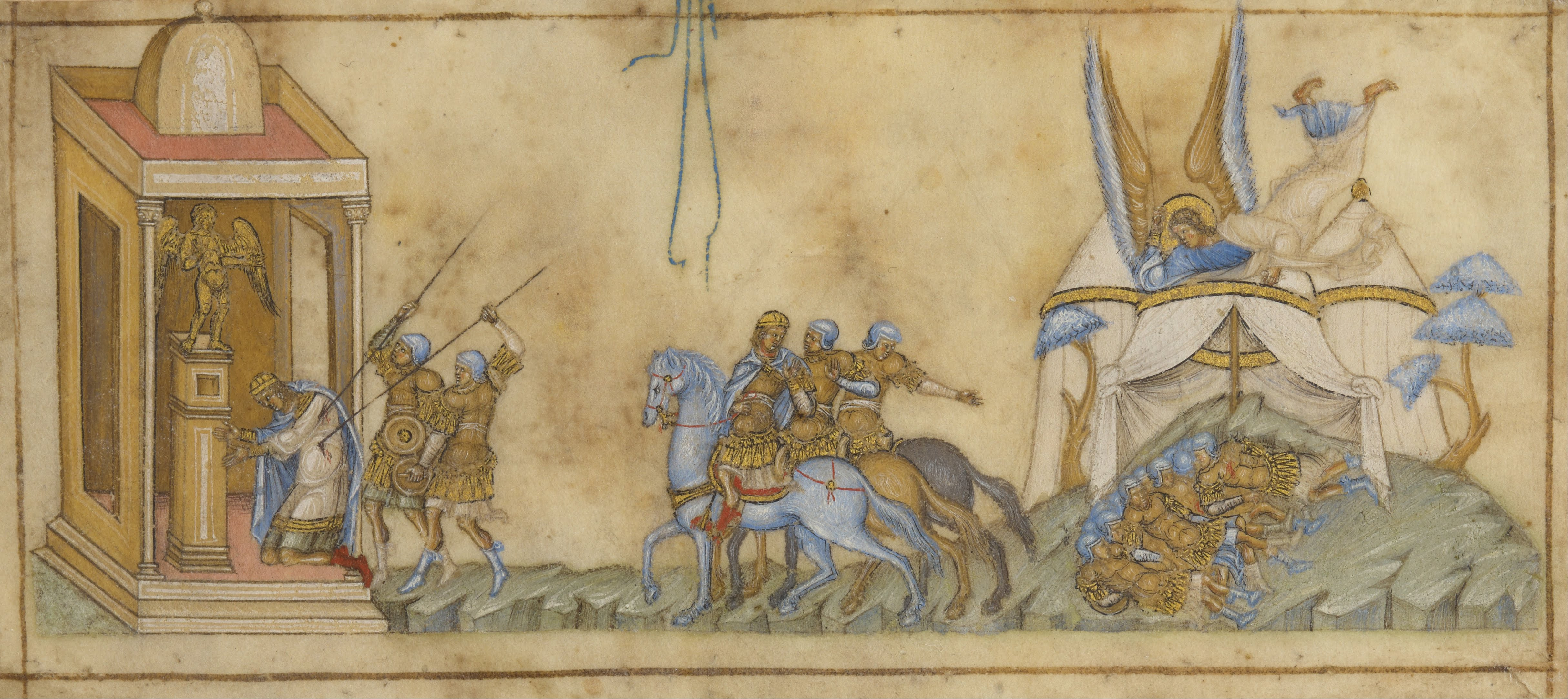
The next morning when light dawns, the Assyrian army were all laying dead.

The Assyrians had actually divided their army to conquer two different cities. King Sennacherib was laying siege to Lachish while his field commander was laying siege to Jerusalem. Isaiah records that when Sennacherib hears of the mysterious death of his forces at Jerusalem he withdraws from the region and heads home.

This morning I’m once again reminded not to place God in a box. I don’t completely understand why the Author of Life uses certain characters such as Nebuchadnezzar and Sennacherib in the plot line of the Great Story. I don’t understand why God miraculously delivers Jerusalem from Assyria and then allows Babylon to destroy it. It reminds me, however, to hold on loosely in judgement of current events on a grand scale. The Great Story is often a thriller with unexpected plot twists. Just ask the Assyrian field commander.

Chapter-a-Day Isaiah 37

The boss' office. Hezekiah took the letter from the hands of the messengers and read it. Then he went into the sanctuary of God and spread the letter out before God. Isaiah 37:14 (MSG)

In earlier years, as an employee, I would have different types of interaction with my boss. Sometimes, as with team meetings, I merely listened to the information or marching orders. There might be the occasional small talk conversation or pleasantry in passing. I might pick up the phone to call with a quick question. There were times, however, when I had an issue which required a deeper conversation. I might make an appointment so I could have my employers dedicated attention for a period of time. I would prepare and spread out my issue or question in great detail.

Our relationship with God is often like that of any other authority figure in our lives. Sometimes I sit back and take in what God has to tell me. Sometimes my conversation with God is not much more than small talk. I might call him up in a popcorn prayer to ask a quick question. And then there are times when I find myself in Hezekiah's position. My situation calls for more earnest conversation.

I like the way Hezekiah approached God. He went to the sanctuary and "spread the letter out." I'm reminded of Jesus going to the mountain side in the early morning hours. Sometimes it's good for me to physically go to a place where I can have a private appointment with God. It's good to take the time to "spread out" my thoughts and feelings in detail.

If I made an appointment with my employer and spread out my issue in a private setting, I think I received a better hearing than if I tried to say something in passing or catching him in the hallway. The quality of the response I received was generally better as well. Why would it work any differently with God?

Creative Commons photo courtesy of Flickr and seaworldsa