Tag Archives: Holy Catholic Church

Inclusive vs. Exclusive

Exclusive vs. Inclusive (CaD Matt 9) Wayfarer

But the Pharisees said, “It is by the prince of demons that he drives out demons.”
Matthew 9: 34 (NIV)

In yesterday’s post, I wrote about the spiritual revival that broke out while I was in high school. I wrote about the fact that I was merely an observer of the revival because I had insulated myself inside of my fellow holy huddle with other believers.

I’d like to unpack that experience a bit further as I meditate on today’s chapter. In it, Jesus begins to experience opposition from the institutional religious leaders of His day. They have their own holy huddle going.

I have observed along my spiritual journey the difference between an inclusive spirit and an exclusive spirit.

An inclusive spirit is one that is outreaching, arms wide open in anticipation of God who can do exceeding, abundantly beyond all that we ask or imagine. An inclusive spirit fully embraces the Apostles Creed when it says “I believe in the holy catholic church,” which means the expansive true church made up of all believers of every nation, tribe, language, race, people, and denomination of which God alone truly knows the number and the full membership. An inclusive spirit sees God working in His enemies like Nebuchadnezzar, the Roman Centurion in yesterday’s chapter, and Saul of Tarsus, and drawing them to Himself. An inclusive spirit understands that Jesus is not slow in returning, but rather patient wanting everyone (including my personal enemies) to repent and believe.

An exclusive spirit, on the other hand, is one that feels that it is right and only those who agree are acceptable. An exclusive spirit has arms extended in a defensive and warning posture. Only those who pass the litmus test, are pure in their doctrinal agreement, and visibly shun unacceptable actions, words, beliefs, and political/social affiliations are accepted in. Most people are excluded, and exclusive thinkers are convinced that God thinks and acts in lock-step with them.

Jesus was being inclusive when, in yesterday’s chapter, He healed the Roman Centurion’s servant and handed His enemy an invitation to the feast of Abraham, Isaac, and Jacob in God’s Kingdom. Jesus was being inclusive when He and His disciples feasted at Matthew’s house with unacceptable tax collectors (e.g. politically incorrect Roman collaborators) and their sinful social circle. He was certainly being inclusive when He called Matthew to become one of The Twelve.

His political and religious opponents were exclusive in their thinking. They alone were exclusively “God’s people,” “Children of Abraham,” and anyone who disagreed or believed differently was obviously not “of God.” Jesus refused to walk, speak, act, and believe in lock-step with their exclusive religious world-view. Therefore He could not be of God despite the miracles He performed. If He is not of God, then He must be of Satan.

So, in the quiet this morning, I look back at that revival in high school. It taught me another important spiritual lesson. Yes, I missed out on being a part of it because I was too busy in the exclusivity of my holy huddle. At the same time, me thinking that I needed to be a part of it is a different brand of exclusive thinking. God was doing something amazing and He didn’t need me to be involved. He was working through others whom He had prepared, raised up, and through whom He was flowing. I could be envious, jealous, and think (exclusively) that anything I wasn’t a part of doesn’t count. I could also open my arms, rejoice, and embrace that God was at such powerful work in others all around me. I chose the latter.

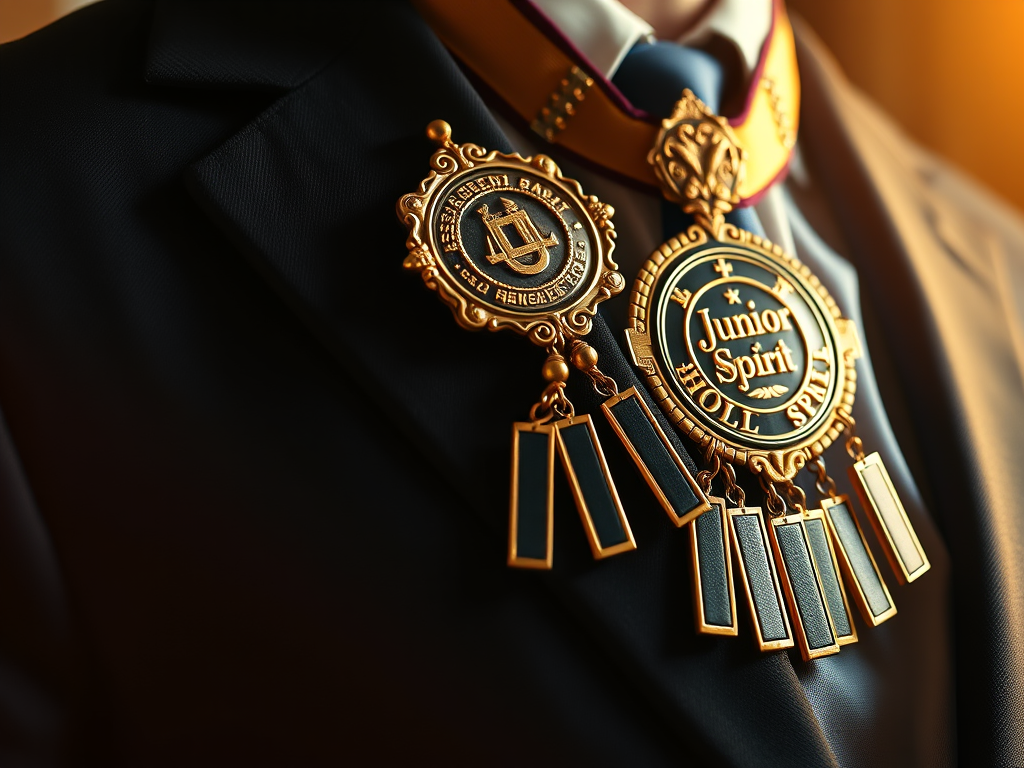
The further I get in my journey, the more open my spirit has become to God doing whatever He wants to do in whomever He wants to do it in order for all things to work together for good and accomplish His ultimate purposes in this Great Story. I long ago took off my Junior Holy Spirit badge pretending that I had exclusive rights, insight, or editorial control of that Story for myself or anyone else. The result is that I approach each day of this journey with a sense of awe and wonder.

God, what are you going to do today?

I’m open.

Surprise me.

If you know anyone who might be encouraged by today’s post, please share.

These chapter-a-day blog posts are also available via podcast on all major podcast platforms including Apple, Google, and Spotify! Simply go to your podcast platform and search for “Wayfarer Tom Vander Well.” If it’s not on your platform, please let me know!

Essentials and Non-Essentials

Now if there is no resurrection, what will those do who are baptized for the dead? If the dead are not raised at all, why are people baptized for them?
1 Corinthians 15:29 (NIV)

Along my spiritual journey, I have worshipped and served in a number of different denominations and traditions. While they all shared that salvation was by grace through faith in Jesus, they varied in other thoughts, in their rituals, and in their worship. In some cases, I didn’t agree with some of what I considered to be non-essential beliefs, but I chose to respect them and to learn as much as I could. My experiences helped hone my own beliefs, taught me things I would have never otherwise learned, and gave me a far broader love for and understanding of what the Apostle’s Creed refers to as the “holy catholic church” which does not refer to the Roman Catholic denomination but rather to all believers everywhere, no matter their particular tradition or denominational bent.

For Paul and the other Apostles, one of the biggest challenges they faced was a combination of lack of human control, poor communication lines, and all sorts of competing religious thoughts and philosophies that crept into the local gatherings.

In today’s chapter, there are two fascinating things mentioned by Paul in one verse (the one at the top of today’s post). It refers to one major issue that became a major issue in the church in the first few centuries. The other is a curious and largely forgotten ritual. Let’s start with the major issue.

Gnosticism was an emerging religious philosophy in Paul’s day and took on many different thought traditions of its own. Basically, it taught that humans and the material world were the lesser meaningless creation of a minor god, and that the spiritual realm was the only thing that mattered. It also taught that salvation came from “secret knowledge” of one’s true and spiritual identity. So, gnostics denied Jesus was God (no spiritual being would choose to become human), Jesus died for sin (there is no sin, only ignorance), or rose from the dead (there is no bodily resurrection, only leaving the material behind to attain the spiritual). In today’s chapter, Paul is addressing some within the local Corinthian gathering of believers who are embracing the notion that there is no resurrection and undermining the essential core beliefs of Christianity.

In making his argument for resurrection, Paul mentions that some of the Corinthian believers were being “baptized for the dead.” He doesn’t explain it. He doesn’t condemn it. He just mentions it in passing as part of his argument and it doesn’t appear anywhere else in the Great Story. Apparently, Corinthian believers were being baptized on behalf of people who were physically dead in hope and anticipation of effecting that person’s after-life status in some way. We don’t know and the ritual obviously was not perpetuated, though the practice was curiously “resurrected” (pun absolutely intended) as part of the theology of Latter Day Saints in the 1800s.

A few days ago I quoted St. Augustine who taught that there should be unity in the “essentials” and liberty in the “non-essentials.” In the quiet this morning, I couldn’t help but think about the fact that we have in one verse a rather interesting combination of the two. For Corinthians to deny that Jesus rose from the dead undermines the foundational and essential belief of the faith itself and what Jesus Himself claimed and taught. At the same time, Paul references this curious practice of baptizing people for the dead, a non-essential ritual that was not widely practiced, never referenced anywhere else, and died away with time.

Along my spiritual journey, I’ve learned and benefitted from understanding the difference between essentials of my faith and belief in Jesus and His teaching, and the non-essentials of ritual and tradition that vary widely all over the world. I have learned from and even spiritually benefitted from learning and practicing non-essentials from traditions that are different than mine. I confess that some of them didn’t resonate with me or I found them silly. In all those different experiences, I met brothers and sisters who shared the same essential beliefs with me and whom I will enjoy seeing in heaven.

If you know anyone who might be encouraged by today’s post, please share.

These chapter-a-day blog posts are also available via podcast on all major podcast platforms including Apple, Google, and Spotify! Simply go to your podcast platform and search for “Wayfarer Tom Vander Well.” If it’s not on your platform, please let me know!

Members Only (or Not)

Members Only (or Not) [CaD Gal 1] Wayfarer

I did not receive [the Gospel] from any man, nor was I taught it; rather, I received it by revelation from Jesus Christ.
Galatians 1:12 (NIV)

I have an issue with church membership.

Let me explain.

Many years ago I was hired to be the pastor of a church. I accepted the call, moved my family, and began leading a wonderful group of people. About a year-and-a-half into my three-year commitment, I received a call asking for an emergency meeting of the church elders. For those of you who have never been on the staff of a church let me tell you that an emergency meeting of the elders is never a good sign.

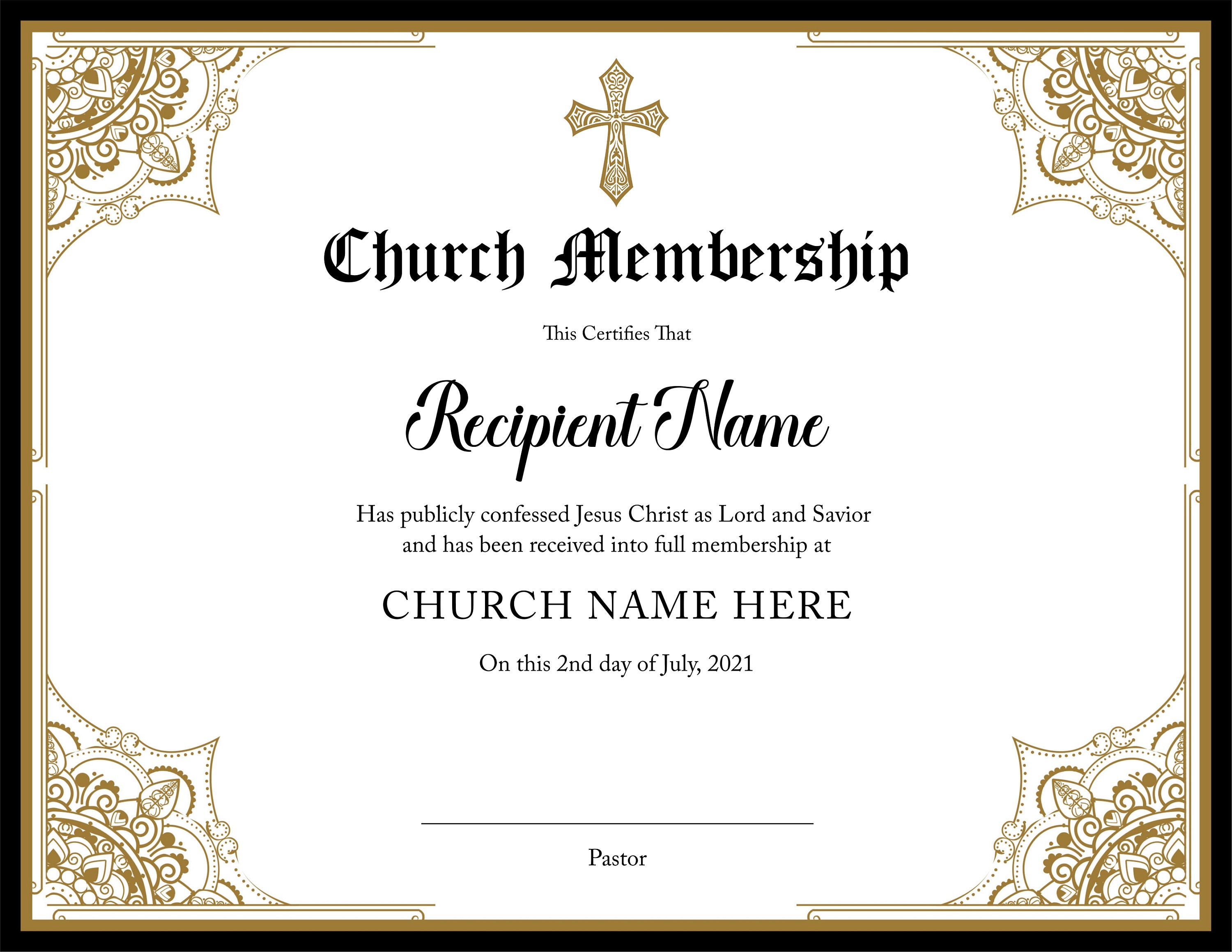
I joined the elders in my office and found out that the “emergency” was that I, the pastor that they asked to lead them and had been doing so for over a year, was not a member of the church. What the elders with their undies in a bunch were getting at is that I had not gone through the official, denominational bureaucratic hoop-jumping steps of church membership. Forget that they hired me to be their pastor and that I had been faithfully and passionately serving them for over a year. I hadn’t checked a legalistic denominational box which called my loyalty and leadership into question.

At the next congregational meeting, I officially and dutifully jumped through the hoops and requested that I be accepted into membership of the church. I’m happy to say that my request was almost unanimously approved.

I wish I could say that this was a one-time anomaly. Actually, I have two almost identical stories involving churches in different denominations and locations. I’ve learned that church “membership” carries a lot of weight with some people despite it being a human institutional invention with no Biblical authority or priority. My struggle is not that the institution wants to do things that bring order to the organization. I get that. My struggle is that somewhere along the line individuals place a greater priority on institutional human rules than the clearly stated life priorities God gave us in His Message. It’s at best silly and at worst an indicator of deeply messed up spiritual priorities.

This morning, our chapter-a-day journey enters Paul’s letter to believers in the region of Galatia today. These are local gatherings of Jesus’ followers whom Paul founded when he traveled through there years before. It was Paul who preached Jesus’ message to them. It was Paul who lived among them and helped them establish and organize their local gathering. Paul is writing to his spiritual children.

But there’s a problem.

The Jesus Movement came out of orthodox Judaism. Paul himself was an orthodox Jew. The believers in Galatia, however, were mostly non-Jewish Gentiles. Some orthodox Jewish believers from Judea began visiting these local gatherings in Galatia with their undies in a bunch and calling emergency meetings of the elders. They proceeded to claim that 1) Paul was not an officially and institutionally sanctioned apostle of the Jesus Movement and that 2) If any non-Jewish person wanted to be an official believer in Jesus they must first go through the orthodox Jewish hoop-jumping steps to get their orthodox Jewish membership certificate, and only then would they be official, card-carrying members of the Jesus Movement. What were the hoops they had to jump through? For men, the major hoop was having the foreskin of your penis cut off.

As you might imagine, this stirred up some conflict and confusion.

These are the circumstances in which Paul picks up his papyrus and stylus to write his friends back in Galatia.

In today’s chapter, Paul addresses the concerns raised about him not being an official apostle of Jesus. Paul reminds the Galatian believers that he was once more zealously orthodox in his Jewishness than any of those who were questioning his authority. He then establishes that it was the risen Jesus who appeared to him and called him to take Jesus’ message to the non-Jewish people. Third, Paul explains that while he had established a relationship and understanding with Peter and James (the recognized, apostolic leaders of the central Jesus Movement in Jerusalem) he was largely unknown to those who were now questioning his card-carrying membership in the Movement.

In the quiet this morning, I find myself meditating on the tension between divine purpose and human organization. When I was a child, most of those who considered themselves Christians were certificate-wielding members of large denominational institutions of human origin. Most of those institutions have now fractured and imploded into small fragmented networks of like-minded congregations. Many believers have abandoned denominational loyalties. I have personally found it fascinating to observe and experience. I don’t grieve the change.

The Apostle’s Creed states, “I believe in the holy catholic church.” “Catholic,” by the way, translates to “universal.” It is not a reference to the institution of the Roman Catholic Church. Rather, it means that I am part of the Church (capital “C”) made up of every other believer in the world as determined by the indwelling Holy Spirit in each believer and having nothing to do with jumping through hoops, attending a class, and receiving a certificate of church membership. It means that I am part of what God is doing in the Great Story on a grand scale and that I have a Church family made up of all believers, regardless of human denomination, nationality, tribe, ethnicity, political views, or local church (lowercase “c”) membership.

Along my spiritual journey, I have personally been led not to sweat my church membership, and to prioritize being a part of what God is doing in His

Along my spiritual journey, I have personally been led to not worry so much about my local church membership certificate, and rather prioritize being a part of what Jesus is doing in His Church.

If you know anyone who might be encouraged by today’s post, please share.

Note: The featured photo is of an editable church membership certificate that can be purchased and downloaded at Etsy.