Tag Archives: Gratitude

A Satisfying Meal

A Satisfying Meal (CaD Hos 13) Wayfarer

“When I fed them, they were satisfied;
    when they were satisfied, they became proud;
    then they forgot me.

Hosea 13:6 (NIV)

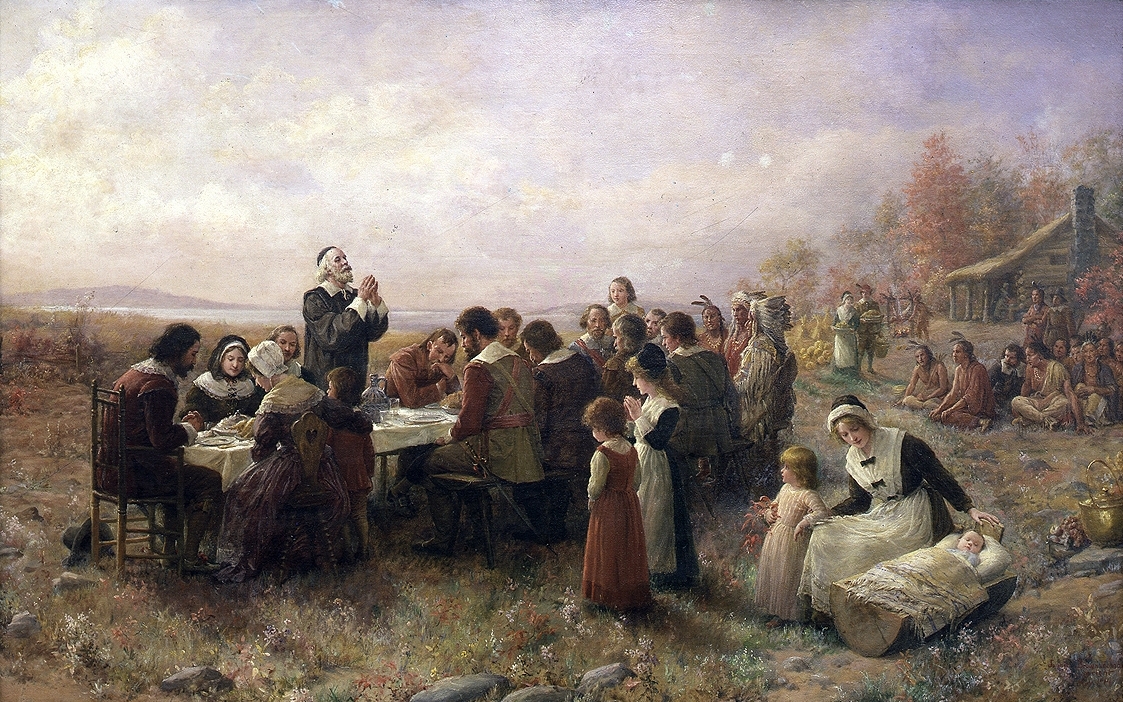
Wendy and I got to celebrate Thanksgiving with our daughter Madison and her husband, Garrett, in South Carolina last week. Madison is pregnant with grandchild #3, a girl, due in late January. It was so much fun to be able to hang out with them and enjoy a family feast together. It was so good.

Thanksgiving is perhaps my favorite holiday in its simplicity, and in the fact that it’s core meaning hasn’t been diluted and profaned by mass commercialization. It’s about having a meal with loved ones and being grateful. When I stop to meditate and truly contemplate all that I have to be thankful for, it’s like a spiritual chiropractic adjustment. It helps my spiritual alignment.

Many, many years ago I was reading through the book of Deuteronomy and stumbled upon a verse that immediately leapt off the page and embedded itself in my soul:

“When you have eaten and are satisfied, praise the Lord your God for the good land he has given you.”
Deuteronomy 8:10 (NIV)

Anyone who knows Wendy and me, or has followed this blog for any length of time, knows that enjoying a good meal with good people having good conversation is one of our greatest joys in life. At the end of such a meal, Deuteronomy 8:10 almost always rises up my soul, reminding me to en-joy the moment and praise the One who has so richly blessed me with such goodness. It reminds me of what David said in Psalm 16, my boundary stones have fallen in pleasant places.

As we near the end of Hosea’s prophetic messages, there is little mincing of words. God through Hosea indicts the people of Israel for straying so far from the One who had delivered them from slavery in Egypt and allowed them to prosper. He references rule number one of the Top Ten He’d given them: No other gods. Not only had they worshiped other gods, but they’d committed human sacrifices to these idols. Add murder to the idolatry.

What I found fascinating in today’s chapter was God’s observation that amidst God’s goodness and blessing, the people of ancient Israel forgot God. Their affluence, prosperity, and blessing led to them forgetting their entire history and the God who graciously revealed Himself, rescued them from slavery, and blessed them abundantly.

As Wendy and I sit and read the news, I often think to myself that many of our cultural ills are rooted in our affluence. Life becomes very small if and when you’re simply and literally trying to survive each day. When I have far more than I need in every way, especially time, it’s easy for my soul and mind to wander into silly and foolish places. I believe that is the very thing God was reminding the people of ancient Israel, and me, in today’s chapter.

In the quiet this morning, I continue to ride the wave of gratitude that last week prompted when, once again, I ate and was so blessedly satisfied in a multitude of ways.

If you know anyone who might be encouraged by today’s post, please share.

The Value of “Another”

The Value of "Another" (CaD Ecc 4) Wayfarer

There was a man all alone;
    he had neither son nor brother.
There was no end to his toil,
    yet his eyes were not content with his wealth.
“For whom am I toiling,” he asked,
    “and why am I depriving myself of enjoyment?”
This too is meaningless—
    a miserable business!

Ecclesiastes 4:8 (NIV)

A few weeks ago I happened upon a post on LinkedIn. It was one of those heart-warming stories that almost sounds too good to be true. It made me curious. I dug into the story. I’d like to share with you what I learned.

Dale Schroeder was an Iowan from my hometown of Des Moines. He grew up poor, and couldn’t afford college. After high school he got a job as a carpenter and showed up at work every day for the same company for 67 years. It appears that retirement wasn’t something he considered worthwhile. Dale lived simply. He owned two pair of jeans. He had one pair of jeans for work and one pair of jeans for church.

One day, Dale showed up at the office of his friend and attorney. He told his friend he’d been thinking. He didn’t have the money to go to college and he’d like to give kids who couldn’t afford it the opportunity he never had. He wanted to set up a fund and invest all his savings for the project.

“How much are we talking, Dale?” his attorney asked.

“Oh, just shy of three million,” Dale answered.

Dale’s fund paid for the college education of 33 young people before the funds ran out. Calling themselves “Dale’s Kids” the strangers, who are now doctors, therapists, and teachers because of Dale’s gift, meet periodically to honor his legacy.

A simple man, Dale asked only one thing in return for his generosity. He asked that they pay-it-forward. “You can’t pay it back,” his attorney would explain, “because Dale is gone, but you can remember him and you can emulate him.”

If I pull back and look at today’s chapter from a distance, I find that the Sage has divided his wisdom into two parts. In verses 1-6, the Teacher describes the cold futility of self-centric lives and the tragic fruit of living lives of envy, greed, and hatred. In verses 7-16 the focus shifts. Verse 8 describes Dale sitting on his three million in the bank, asking himself “What am I going to do with all this money I’ve stored up my entire life?”

Verses 9-12 describes the value of living, not for self, but for another.

“Do something for someone else,” the Sage proposes as he whispers to me in my soul. “Invest the fruit of your labor into someone else’s need. Step out of the chill of self-centered isolation and warm another person with your kindness, then feel the warmth of their gratitude take the chill out of your own soul. Tom, if you look below in order to reach down and lift another person up your gaze won’t be fixated enviously on the height of other people’s stacks of stuff.”

In the quiet this morning, I find myself pondering Dale Schroeder showing up to work every day in his work jeans for 67 years in order to invest everything into the lives of 33 strangers. It’s an act of extravagant generosity that has not only changed the lives of those 33, but also their families, patients, students, and descendants. Who knows how it will be gratefully paid forward to affect the lives of countless others that you and I will never know about.

The Sage has me silently asking myself this morning:

“What is truly valuable in this life?”

“What does my life reveal about what I truly value?”

If you know anyone who might be encouraged by today’s post, please share.

Small Things, Big Consequences

Small Things, Big Consequences (CaD Jos 16) Wayfarer

[The tribe of Ephraim] did not dislodge the Canaanites living in Gezer; to this day the Canaanites live among the people of Ephraim but are required to do forced labor.
Joshua 16:10 (NIV)

Over the next couple of days, I’m going to be working with a client and teaching them strategies for handling escalated customers over the phone. It’s the number one training and coaching request that our team gets. There are no magic pills when it comes to handling an angry customer, but there certainly are strategies that work in many, if not most, situations. Using the right voice tone, and choosing the right words to communicate both empathy and ownership are important. They can turn a potentially explosive situation around.

Beyond business, I have found this same principle to be true in everyday relationships. Early in our marriage, Wendy and I established a couple of small habits without ever talking about them or discussing them. We just did it, and over time I believe it has helped fill one another’s love tank.

One of these tiny habits is the simple and repetitive expression of gratitude for the things one another does as part of the division of labor in our household. Every time Wendy spends the day doing laundry, I always thank her. Likewise, she always expresses her gratitude to me for taking care of the lawn and landscaping. A little gratitude goes a long way.

The other tiny habit is expressing a positive willingness when either of us asks the other for assistance, help, or a favor. It’s amazing how powerful the phrase “I’d be happy to do that for you” is when it is both said and exemplified. It subtly says, “You’re not a burden. I love you, and I’m happy to assist with whatever you need from me.”

Small things, but I believe they have had a huge positive impact on our relationship.

In today’s chapter, the tribe of Ephraim receives their allotment of the Promised Land. As with yesterday’s chapter, the Family Patterns are telling. Ephraim and Manasseh were the sons of Joseph, who was his father Jacob’s favorite son and was sold into slavery by his brothers. Now, 600 years later, the tribes of Joseph are still getting preferential treatment.

So far, three tribes have received their Promised Land inheritance and at the end of each property’s legal description, there is a report as to whether the tribe was able to conquer the remaining peoples located within their boundaries. Caleb drove the Anakites from Hebron (chapter 14), Judah was unable to dislodge the Jebusites from the fortress of Jerusalem (chapter 15), and Ephraim was unable to dislodge all of the Canaanites living in their territory in today’s chapter.

The tag regarding the Canaanites being subject to forced labor is actually a legal wording of that time. It appears in other land documents from that region in the Bronze Age. Forced labor was a common form of taxation in those days. Instead of paying money, subjects of a local or regional ruler were required to work on building projects.

While these lines about not dislodging the inhabitants of the land appear as legal footnotes of the chapter, they will actually have far-reaching, consequences that are not always positive. The tribes will be influenced by the other peoples and cultures living among them. Throughout the rest of Israel’s story, idolatry will plague the nation as the tribes adopt and worship local deities along with the Lord, breaking the first of the ten commandments given through Moses. This will have negative repercussions.

When David becomes King of Israel, he will make Jerusalem the capital city. This was, in part, because of the presence and local power of the Jebusites who still lived and thrived there. After conquering Jerusalem, David makes it the seat of his power which was essentially a political move to appease and align the Jebusites to his rule.

In the quiet this morning, I find myself pondering the reality that small things can have large, far-reaching consequences. The principle works both in the negative and the positive. A bad habit allowed to perpetuate can ultimately lead to tragic ends. Likewise, a small daily choice to express kindness and gratitude can result in a fruitful relationship.

Today, I want to be mindful of the small words of gratitude, the little acts of kindness, and simple generosities I can express to everyone with whom I interact. Simple words, gratitude, and affirmations repeatedly expressed can have huge consequences on both my attitude and in those in my circles of influence.

If you know anyone who might be encouraged by today’s post, please share.

The Old Couple Who Lived Up on the Hill

The Old Couple Who Lived Up on the Hill (CaD Matt 20) Wayfarer

“…they began to grumble against the landowner.  ‘These who were hired last worked only one hour,’ they said, ‘and you have made them equal to us who have borne the burden of the work and the heat of the day.’

“But he answered one of them, ‘I am not being unfair to you, friend. Didn’t you agree to work for a denarius? Take your pay and go. I want to give the one who was hired last the same as I gave you. Don’t I have the right to do what I want with my own money? Or are you envious because I am generous?’”

Matthew 20:11-15 (NIV)

I was surprised to get the call. I barely knew the old couple who lived up on the hill. I’d visited them once or twice, despite people telling me not to waste my time. They’d been described as cold, grouchy, and cantankerous, but I found them pleasant enough. I don’t think they ever learned my name. I was always just “Preacher,” which I discovered happens a lot when you’re the pastor of the only church in a small town.

Granted, I don’t ever remember talking to them about much of anything except the safe pleasantries of rural Iowa conversation between acquaintances. I asked them about their lives and their stories. We drank coffee and enjoyed the quiet majesty of the view from their house, which overlooked the rolling Iowa countryside. I never invited them to church. I don’t recall that Jesus ever came up in our conversations.

The call came late in the afternoon, asking me to come immediately to the ICU unit of the regional hospital about a half-hour’s drive away. The moment I walked into the room and saw the old man who lived up on the hill, I knew the situation. I reached out and took his hand.

“You’re dying, aren’t you?” I asked gently as I took his hand and smiled.

He nodded, wordlessly.

“You don’t know where you’re going when it happens, do you?” I asked.

He shook his head.

I shared about Jesus in the simplest of terms. He listened. I asked if he’d like me to pray with him for Christ to come into heart and life.

“Yes,” he said.

By the time our short, child-like prayer was done, the tears were streaming down his cheeks. He was suddenly filled with an energy that seemed absent in his mind and body just moments before,

“Preacher!? You have to go visit my wife. Right now. Tell her what you told me. Tell her I want her to have Jesus in her heart, too. Go. Now. Right now.”

So I went, and I did as he asked. I shared in the simplest of terms. I offered to lead her in prayer as I had her husband. She prayed. She cried. I told her I would come back and visit to check on them, but I never got the chance.

He died in the ICU unit a few hours later,

A few hours after he passed on, she followed him, dying quietly at home.

I did the funeral in our little Community church with both caskets sitting in front of me. It was a tiny gathering. They hadn’t built many positive relationships in their lives. I got to share about the call, our visit, their prayers, and I talked about it never being too late to give one’s life to Christ.

After the service, I was approached by an elderly couple who told me that they had, for many years, ceaselessly visited the old couple on the hill. They’d loved on them, they’d shared Jesus with them, they’d begged them to ask Jesus into their hearts. They’d been rejected time and time again. And while they seemed glad to hear that the old couple on the hill had finally made the decision, I felt a hint of indignation underneath the surface. They’d done all the work and seemingly experienced no reward for their spiritual labor. I showed up at the last minute to harvest what they’d been sowing for all those years.

That experience came to mind this morning as I read Jesus’ parable of the workers in the vineyard. I find that there are certain parables that mean more to me the further I advance in this life journey, and this is one of them. Each group of workers agrees to work for the same wage, but when the workers who slaved away all day watch those who pitched in for the final hour receiving the same reward, they become indignant. I find it such a human response. It is neither fair nor equitable in human terms.

The economics of God’s Kingdom, however, doesn’t work like the economics of this world. That was Jesus’ point, and He famously pins this epilogue to His parable: “So the last will be first, and the first will be last.”

In the quiet this morning as I mull over the story of the old couple who lived up on the hill, I find myself asking about the motives of my own heart. Why have I followed Jesus these forty years? I find that reward is not something I think much about. I have been so blessed in this life I just assume that I’ll be among the “the first shall be last” crowd, and that’s okay with me. The reward is not my motivation. It’s gratitude for what I received that I never deserved that fuel’s my journey. It’s Paul’s words of motivation that ring true in my soul: “Christ’s love compels us.”

If you know anyone who might be encouraged by today’s post, please share.

It Stinks to Be Right

It Stinks to Be Right (CaD Lam 4) Wayfarer

Your punishment will end, Daughter Zion;
    he will not prolong your exile.

Lamentations 4: 22 (NIV)

At the beginning of every NFL season, I look at the Vikings’ schedule and predict how many wins and losses they are going to have. I’ve been a fan for fifty years, endured four Super Bowl losses, and survived many forgettable seasons. I am a realist when it comes to my prognostications. This year, I figured they’d struggle to win half of their games or more. I predicted them to end the season 8-9 or 9-8.

It stinks to be right.

In today’s chapter, Jeremiah pens his fourth of a five-poem cycle lamenting the fall of Jerusalem. In reading the words of the prophet, we’re reading a first-hand account of a historical event that took place in 586 B.C. The Babylonian army had surrounded Jerusalem and laid siege to the city a year before. With no way to get supplies in or out of the city, the people eventually grew weak and starved. Social order began to break down. At that point, the Babylonians stormed in, tore down the walls of Jerusalem, destroyed Solomon’s Temple (one of the seven wonders of the ancient world), and set the city on fire. The Babylonians took the young royalty and nobility into captivity (Daniel was one of those), killed off anyone who might pose a political threat after they left, and they left those who were weak and dying in the rubble.

Jeremiah was one of those left behind.

What we read in today’s chapter is gruesome stuff.

Children, their tongues sticking to the roof of their mouths, beg for bread that no one has to give.

Formerly affluent people lie destitute on ash heaps of rubble.

Women cook and eat the flesh of their own children to survive.

Emaciated people, skin shriveled to the bone, wander aimlessly.

As I read the chapter, I imagined myself standing in the sandals of Jeremiah. He prophetically predicted the entire thing. If you go back to Jeremiah 25-27, he prognosticated that all of this would happen. The rise of Nebuchadnezzar, the destruction of Jerusalem, along with seventy years of captivity and exile for God’s people in Babylon. No one believed him. The corrupt political and religious machines refused to repent of their crooked ways. They doubled down on their profiteering. They made Jeremiah public enemy number one. They threw him in the bottom of a well to die.

Woven into the poetic horror of today’s chapter is a not-so-subtle “I told you so.”

The kings of the earth did not believe,
    nor did any of the peoples of the world,
that enemies and foes could enter
    the gates of Jerusalem.

But it happened because of the sins of her prophets
    and the iniquities of her priests,
who shed within her
    the blood of the righteous.

Now they grope through the streets
    as if they were blind.
They are so defiled with blood
    that no one dares to touch their garments.

It stinks to be right.

Yet this I call to mind: Jeremiah’s prophecy was not hope-less. Jeremiah may have prophetically predicted Jerusalem’s fall, but he also predicted her return and restoration, and that’s how the chapter ends: “Your punishment will end, Daughter Zion.”

In the quiet this morning, I find myself sobered by the chapter. I like to think that good times will last forever and calamity will forever be held at bay. I like to think that the Vikings might surprise me and win a Super Bowl. Then reality descends. Jeremiah stands in the middle of the very devastation he predicted. I’m no prophet, but I also know that there are no guarantees in this life.

I’m in a position to care about the record of a silly football team. Today is a good day. I am grateful.

I couldn’t help but think of this video we watched earlier this week. A man whose house was blown away by the tornadoes in Kentucky this past week sat at his piano and played There’s Just Something About that Name amidst the rubble.

If you know anyone who might be encouraged by today’s post, please share.

Santa God

Santa God (CaD Gen 15) Wayfarer

Abram believed the Lord, and he credited it to him as righteousness.
Genesis 15:6 (NIV)

This is the problem: It’s too easy to mix-up God and Santa Claus.

Life is a meritocracy from a young age. In my earliest cognitive memory around ages 3 to 4, I find myself under the authority of parents who make it quite clear that if I’m obedient and do what they say, then I’m golden, but if I’m disobedient, then I’m going to be punished.

By the time I’m five, the biggest gift giving holiday of the year solidifies this meritocracy in my brain with Santa Claus as the omniscient authority figure determining if the annual balance of my goodness and badness warrants me receiving a stocking full of candy and socks and a bunch of presents under the tree. If the scale tips to the badness spectrum, it’s coal for me.

Within just two years, I become involved in scouting program which rewards my good deeds and behavior with awards, badges, and medals. I continue to develop an understanding of meritocracy. There is a reward for ambition and good behavior, those who excel are on display for the whole world to see with their medals, badges, and awards. If I have less, shame enters the equation. I’m not as good. I don’t have as many badges. I am less than.

And, each year Santa drives home the “naughty or nice” lesson.

At the same time, my earliest experiences in organized sports adds yet another object lesson in meritocracy. The kids who are naturally coordinated, developed, and have knowledge of the game are successful. Meanwhile, I increasingly ride the bench and watch the coach’s wife score the game. (For the record, my little league baseball career lasted two years, but to this day I like scoring games.)

And, Santa, my stocking, and gift haul remind me annually that gifts are a reward for good behavior.

I’m twelve by the time I have my first serious discussions about God. Yes, I grew up attending Sunday School most Sundays and Vacation Bible School each summer, but it wasn’t very exciting and seemed to be a lot about stories that support the good behavior business. In my journey, it was confirmation class in 7th grade that was a year-long primer on the Bible and God.

In retrospect, I had already a well-developed sense of how God worked based on my life experiences. And, it looked a lot like the Santa. If I’m good, then God will answer my prayers, my life will go well, and I’ll end up in heaven. If I’m bad or fall short then my prayers will not be answered, bad things will happen, and I’ll end up in the fires of hell (burning with Santa’s coal, no doubt). As a child, I was pretty darn sure that all four of the Minnesota Vikings Super Bowl losses were my fault, God’s punishment for something I’d done.

I’m sure that Mrs. Washington’s confirmation class attempted to teach me about God’s grace and love, but my brain and soul were already branded by the Santa principle.

In today’s chapter lies a simple verse that is almost never talked about among Jesus’ followers even though it is foundational to understanding Jesus’ core message. Paul uses it to argue that Jesus’ message was God’s message from the beginning. The author of Hebrews does so, as well. For followers of Jesus, this verse is crucial to know, digest, and cling to:

Abram believed the Lord, and he credited it to him as righteousness.

No meritocracy.

No addendum talking about being good, pure, and holy.

No mention of achieving, doing unto others, going to church, or giving money.

Just believe. That’s what faith is. To believe.

“Yet to all who did receive him, to those who believed in his name, he gave the right to become children of God” John 1:12

“Believe in the Lord Jesus, and you will be saved.” Act 16:31

“For it is by grace you have been saved, through faith—and this is not from yourselves, it is the gift of God— not by works, so that no one can boast.” Ephesians 2:8-9

If you declare with your mouth, “Jesus is Lord,” and believe in your heart that God raised him from the dead, you will be saved.” Romans 8:9-10

Along my spiritual journey, I’ve observed that it is so hard to get out of the God as Santa mindset. God says “My ways are not your ways” and this applies to perhaps the most important question of all: How can I be saved?

Humanity’s way:

“Be good, work hard at it, keep all the rules, and maybe you’ll earn salvation like a present under the tree.”

God’s way:

“Just believe. Ask me to come in. Receive my love and forgiveness. That’s it. You see, once you’ve truly experienced My unmerited love, grace, forgiveness, and mercy, I trust you’ll be inspired and motivated to choose and practice obedience out of your own freedom and gratitude. That’s how I roll. That’s how I’ve always rolled, like I did with Abram.”

In the quiet this morning, I find myself thinking about all the ways I still wrestle with “Santa God” after 40 years. It still creeps in to haunt me. Meritocracy is a hard habit to break, both in the way I see God and myself, but also in the way I see, approach, and treat others.

I’m also reminded that I can’t do anything about previous days. I’ve only got this day that lies before me. I’ve got this day to just believe Jesus, to receive His love and grace, and then to let that love and my gratitude flow in goodness.

If you know anyone who might be encouraged by today’s post, please share.

The Value of “Another”

The Value of "Another" (CaD Ecc 4) Wayfarer

There was a man all alone;
    he had neither son nor brother.
There was no end to his toil,
    yet his eyes were not content with his wealth.
“For whom am I toiling,” he asked,
    “and why am I depriving myself of enjoyment?”
This too is meaningless—
    a miserable business!

Ecclesiastes 4:8 (NIV)

A few weeks ago I happened upon a post on LinkedIn. It was one of those heart-warming stories that almost sounds too good to be true. It made me curious. I dug into the story. I’d like to share with you what I learned.

Dale Schroeder was an Iowan from my hometown of Des Moines. He grew up poor, and couldn’t afford college. After high school he got a job as a carpenter and showed up at work every day for the same company for 67 years. It appears that retirement wasn’t something he considered worthwhile. Dale lived simply. He owned two pair of jeans. He had one pair of jeans for work and one pair of jeans for church.

One day, Dale showed up at the office of his friend and attorney. He told his friend he’d been thinking. He didn’t have the money to go to college and he’d like to give kids who couldn’t afford it the opportunity he never had. He wanted to set up a fund and invest all his savings for the project.

“How much are we talking, Dale?” his attorney asked.

“Oh, just shy of three million,” Dale answered.

Dale’s fund paid for the college education of 33 young people before the funds ran out. Calling themselves “Dale’s Kids” the strangers, who are now doctors, therapists, and teachers because of Dale’s gift, meet periodically to honor his legacy.

A simple man, Dale asked only one thing in return for his generosity. He asked that they pay-it-forward. “You can’t pay it back,” his attorney would explain, “because Dale is gone, but you can remember him and you can emulate him.”

If I pull back and look at today’s chapter from a distance, I find that the Sage has divided his wisdom into two parts. In verses 1-6, the Teacher describes the cold futility of self-centric lives and the tragic fruit of living lives of envy, greed, and hatred. In verses 7-16 the focus shifts. Verse 8 describes Dale sitting on his three million in the bank, asking himself “What am I going to do with all this money I’ve stored up my entire life?”

Verses 9-12 describes the value of living, not for self, but for another.

“Do something for someone else,” the Sage proposes as he whispers to me in my soul. “Invest the fruit of your labor into someone else’s need. Step out of the chill of self-centered isolation and warm another person with your kindness, then feel the warmth of their gratitude take the chill out of your own soul. Tom, if you look below in order to reach down and lift another person up your gaze won’t be fixated enviously on the height of other people’s stacks of stuff.”

In the quiet this morning, I find myself pondering Dale Schroeder showing up to work every day in his work jeans for 67 years in order to invest everything into the lives of 33 strangers. It’s an act of extravagant generosity that has not only changed the lives of those 33, but also their families, patients, students, and descendants. Who knows how it will be gratefully paid forward to affect the lives of countless others that you and I will never know about.

The Sage has me silently asking myself this morning:

“What is truly valuable in this life?”

“What does my life reveal about what I truly value?”

If you know anyone who might be encouraged by today’s post, please share.

Praise-to-Plea Ratio

Praise-to-Plea Ratio (CaD Ps 18) Wayfarer

Great triumphs he gives to his king,
    and shows steadfast love to his anointed,
    to David and his descendants forever.

Psalm 18:50 (NRSVCE)

I was just shy of middle school when the classic rock tandem We Will Rock You and We are the Champions came out. I’ll never forget playing them pretty much non-stop (Because they must be played together!). It became the song everyone broke into after winning a game of kick-ball on the playground or basketball during “Rec.”

As we’ve spent a couple of weeks now in our journey through Psalms, there’s definitely been a pretty strong blues theme in David’s lyrics. We’ve had the “Why me?” blues and the “How long?” blues. David has lamented sickness and hardship.

Reading Psalm 18 this morning there were two things that jumped out at me. First, it’s a long song compared to most of David’s ditties we’ve been read so far.

Second, the theme of this psalm is not the blues but David’s own version of We are the Champions. The liner notes of the song state that David wrote this song after a victory of his enemies and, in particular, his royal predecessor Saul who had been relentlessly trying to kill David for a long time.

What is different between King David’s ancient victory anthem and Queen’s contemporary victory anthem is where the attribution lies in the triumph. Queen’s anthem is all ego, bravado, and self-congratulation. David, however, spends 50 verses giving God credit for basically everything in his life: his life, the battles he’s won, the times he’d escaped his enemies, deliverance from calamities, all the blessings of his life, his strength, his royal position, his successful navigation of political strife, and the blessings of his family. David gives all the credit to God.

So that has me thinking this morning about my own attitude and conversations with God. I’m really good at reaching out to God when I’m singing the blues. When times are tough and life is not going my way, I’m quick to bend God’s ear with my frustrations, exasperation, confusion, and needs.

But what about the good things in my life? What about the countless ways I have been and am blessed? My life journey reads like a dream in so many ways. Great family, great place to live, great education, great community, great friends, good health, and a great job. God has been so good to me. How often do I stop to give credit where credit is due? The blessing in my life far outweighs the struggles in my life, and I’m asking myself in the quiet this morning: Does my praise and gratitude to God outweigh my self-centered pleas when I’m singing the blues?

David’s “Why Me?” Blues (Psalm 7): 17 verses long.

David’s “How Long?” Blues (Psalm 13): 6 verses long.

David’s victory anthem today giving God all the credit: 50 verses long.

That’s a “praise” to “plea” ratio of 2:1.

I think the ratio in my conversations with God are honestly opposite that.

I need to fix that.

If you know anyone who might be encouraged by today’s post, please share.

What’s Your Story?

In all that has happened to us, you have remained righteous; you have acted faithfully, while we acted wickedly.
Nehemiah 9:33 (NIV)

Everyone has a story.

In recent years, I have started asking people a simple question:

“What is your story?”

I find that those I ask are often taken aback by the question. It’s not unusual for a person to sit quietly for a moment and size me up. I imagine that, at times, the person is questioning my motives for asking. I also assume that some individuals are pondering just how much they really want to reveal to me. A person’s story, the revelation of self, is an intimate gift. What an individual chooses to share with me, and how they frame their own story, says way more about the person than his or her mere words.

In today’s chapter, the Hebrew exiles gather on what was known as a “Day of Atonement.” They recounted the story of their people from creation, through Abram, slavery in Egypt, Moses, the giving of the law, the wilderness, conquest, kings, prophets, captivity, and exile. At the end of their story, they summed things up:

“In all that has happened to us, you have remained righteous; you have acted faithfully, while we acted wickedly.”

Nehemiah 9:33 (NIV)

I have been a follower of Jesus for almost forty years. No one knows my own story, my own journey, as well as I do. Like the returned exiles in today’s chapter, like everyone else, my life journey is a tale that contains both incredible blessing and tragic mistakes. I have witnessed and experienced the miraculous, and I have willfully exhibited misdeeds and immorality.

I find in today’s chapter a good example to follow. It’s a healthy thing to remember and to recount my story warts and all. In all of the joy and pain, the triumphs and trials, the blessings and mistakes of my journey I am reminded of God’s faithfulness, guidance, goodness, and abundant grace despite my many missteps.

In the quiet this morning, I’m recounting my story to myself. It leaves me with feelings of gratitude and humility in light of God’s goodness. It reminds me that the story is still being told. Thanks for being part of it.

So, what’s your story?

Seasonal Companions

My fellow prisoner Aristarchus sends you his greetings, as does Mark, the cousin of Barnabas. (You have received instructions about him; if he comes to you, welcome him.)
Colossians 4:10 (NIV)

“There are friends who are friends for a season, and there are friends who are friends for life.” Thus said a  wise woman to me while I was a Freshman in college. It was the first time I remember really thinking about the purpose and tenure of friendship in life’s journey.

Everyone knows that Jesus had twelve disciples, but Luke records that there was a wider circle of seventy-two disciples that Jesus sent out (Luke 10:1). Among the twelve it was only Peter, James, and John that Jesus called out to join Him when He was transfigured, when He raised Jairus’ daughter, and when He was in His deepest despair in Gethsemane. Like most of us, Jesus had concentric circles of relationship from the intimacy of His inner circle of three to the wider and less intimate relationships He had with the twelve, the seventy-two, and an even larger group of 500 followers to whom He appeared after His resurrection.

Along my life journey, I’ve had a number of friends, mentors, and protégés who became part of my “inner circle” during a particular stretch. Looking back, I observe a certain ebb and flow of pattern and purpose in relationships. As the wise woman stated, some paths converge for a season and then organically lead in opposite directions. Conflict, sadly, severed some relationships. In a few cases, I’ve realized it’s best to leave be what was. In others, reconciliation brought differing degrees of restoration. There is longing to experience reconciliation in yet others when the season is right. Then there are a few in which time ran out, and only memories both bitter and sweet will remain with me for the rest of my earthly journey.

Most readers of Paul’s letters skip through the personal greetings with which he typically tagged his correspondence at the beginning and/or end. This morning, it was one of these oft-ignored greetings at the end of the chapter that jumped off the page at me. Mark, the cousin of Barnabas, sends his greetings to the believers at Colossae. There is a back story there.

Mark, otherwise known as John Mark, had been a boy who was part of Jesus’ wider circle of followers. Mark’s mother was a prominent woman who also followed Jesus and likely supported His ministry financially. When Peter escaped from prison it was to the house of Mark’s mother that Peter fled. It was Mark’s cousin, Barnabas, who brought the enemy turned believer, Saul (aka Paul) into the fold of Jesus’ followers. Barnabas and Mark were part of Paul’s inner circle on his first missionary journey.

Then, it all fell apart.

In the middle of the journey, Mark left Paul and Barnabas and went back home. Paul felt abandoned and betrayed. Years later when it came time to make a return journey, Barnabas wanted to take Mark along. Paul, still angry that Mark wimped out and abandoned them, would have none of it. There was a big fight. There was a bitter separation. Paul went one way with Silas. Barnabas went the other way with Mark. The season of Paul, Barnabas, and Mark was over.

As Paul writes his letter to the Colossians it has been many years since the conflict with Barnabas and Mark. Paul is in prison and is nearing the end of his life. Mark is with him. We don’t know how the reconciliation happened or what brought them back together again, but Mark is there sending warm greetings through Paul. It’s nice to know that sometimes in this life we get over our conflicts. We let go of the past and embrace the present. Seasons of friendship can come back around.

In the quiet this morning I’m looking back and thinking of all the companions I’ve had along my journey. I’m whispering a prayer of gratitude for each one brought to my life and journey, despite where the ebb and flow of relationship may have led. And, in a few cases, I’m praying for the season when the journey might lead divergent paths back together, like Paul and Mark.